


Research suggests that turmeric can help alleviate inflammation, improve joint health, and support digestion. (Getty Images)
(10’000 Hours via Getty Images)
Your closest encounter with turmeric might be the once-viral coffee shop drink known as a turmeric latte, which has gained popularity in recent years for its bright colour and anti-inflammatory properties.
Or maybe you’re someone who uses the spice regularly, whether stirred into hot honey and lemon to soothe flu symptoms, or as a go-to ingredient in homemade curries.
Either way, it’s a spice most of us recognise, but don’t fully appreciate for its health benefits.
While more evidence is still needed, numerous studies suggest that incorporating turmeric into your daily diet could be beneficial for your overall health. However, as with any food, turmeric is not a cure-all.
Bini Suresh, a dietitian and head of dietetics and therapy services at Cleveland Clinic London, says, “Turmeric works best as part of a very balanced diet, not just a standalone solution”, describing it as a “functional culinary spice” rather than a “superfood”.
How to maximise the benefits of turmeric
Originating from India, turmeric has been used for over 4,000 years and contains a natural compound known as curcumin, which is said to offer a range of health-related benefits.
These include helping to reduce inflammation and effectively treating indigestion. Curcumin is also what gives turmeric its yellow colour.
Typically, turmeric contains only a small percentage of curcumin, making it difficult for the body to absorb. To improve absorption, several studies suggest taking it with piperine, a compound found in black pepper, which helps increase the amount that enters the bloodstream.
“If you are going to add turmeric to your meals, it is better absorbed with black pepper and a source of fat,” Suresh recommends.
“Curcumin is a fat soluble compound, so it on its own, it’s naturally low absorbing,” she adds. “When you mix [turmeric] with fat and black pepper, which contains a component called piperine, both of them allow the absorption to be maximised.”

Turmeric contains a natural compound known as curcumin, which has proven antioxidant and anti-inflammatory properties. (Getty Images).
(Rawlstock via Getty Images)3 health benefits of turmeric you might not know about1. It could help reduce inflammation
There are several studies that claim curcumin – the key ingredient in turmeric – is effective at treating inflammation. It works by blocking the harmful molecules that cause inflammation in the body, which could help those who suffer from chronic diseases like arthritis, inflammatory bowel disease (IBD), and diabetes. As well as neurological and autoimmune diseases.
Suresh says, “The strongest evidence that we see for turmeric is around inflammation and oxidative stress. It can help regulate inflammatory pathways, which is why turmeric is often discussed in relation to joint health.”
2. It could support joint health
Suresh identifies that there is moderate evidence that curcumin can help with joint pain and stiffness. She explains that some studies show that people with osteoarthritis who have taken curcumin have shown signs of symptom improvement without the same GI risks as low-dose anti-inflammatory medication.
“I would make a note that it’s not great to be used as a complete alternative. It can be used in conjunction as the medication is there for the anti-inflammatory purposes. You’re not going to get that drastic impact from turmeric, but it could help somewhat”, the British Dietetics Association spokesperson clarifies.
This review also suggests that tumeric’s effects are comparable with non-steroidal anti-inflammatory drugs (NSAIDs) used to treat pain and function.
3. It could help with digestion
Turmeric may be a good option if you’re someone who suffers from indigestion. A 2025 Study found that the spice may help reduce excess stomach acid and can provide relief similar to medications often prescribed for indigestion and heartburn, like omeprazole.
Other research shows that it can also help support gut health by increasing the amount of good bacteria in the guts.
Suresh adds that there is emerging evidence turmeric could aid digestion. “There’s some evidence that suggests it can help with bile flow. Bile is important for fat digestion, so this may help some people experience less bloating or digestive discomfort after meals,” she notes.
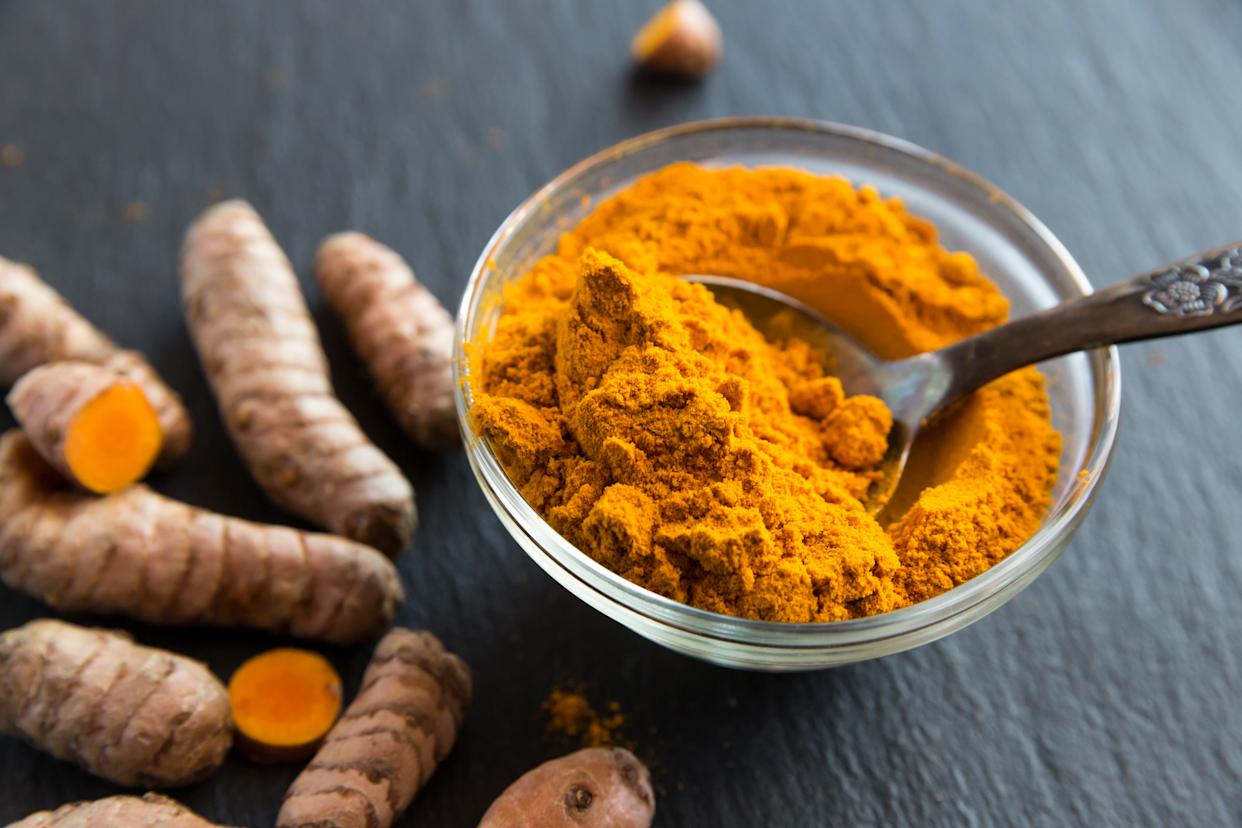
In its root form, turmeric closely resembles ginger. (Getty Images)
(Westend61 via Getty Images)Can turmeric help treat cancer?
At present, there is no proven evidence that turmeric can be used to prevent or cure cancer, but there are several studies that show promising results as an alternative treatment method.
A 2013 investigation into bowel cancer cells found that combined treatment with curcumin and chemotherapy might be better than chemotherapy alone. Another review in 2019 observed that curcumin could help treat mucositis – a side effect of chemo that causes inflammation inside the mouth.
However, Caroline Geraghty, senior information nurse at Cancer UK urges caution. “There isn’t enough evidence to show that turmeric can be used to treat cancer,” she tells Yahoo UK.
“Some studies have suggested that curcumin, an ingredient found in turmeric, may be able to kill some cancer cells – but more research in large scale clinical trials is needed to understand the potential benefits for cancer patients.
“It’s important that people with cancer treat any information promoting unconventional treatments with caution, and talk to their doctor or cancer team before considering new therapies.”
When to consider taking turmeric supplements
If you’re someone who suffers from chronic inflammation, you may consider taking turmeric supplements. Though it’s always a good idea to speak to your GP for professional guidance.
You should avoid taking turmeric supplements if you’re on any blood thinners, have gallbadder disease or are pregnant or breastfeeding.
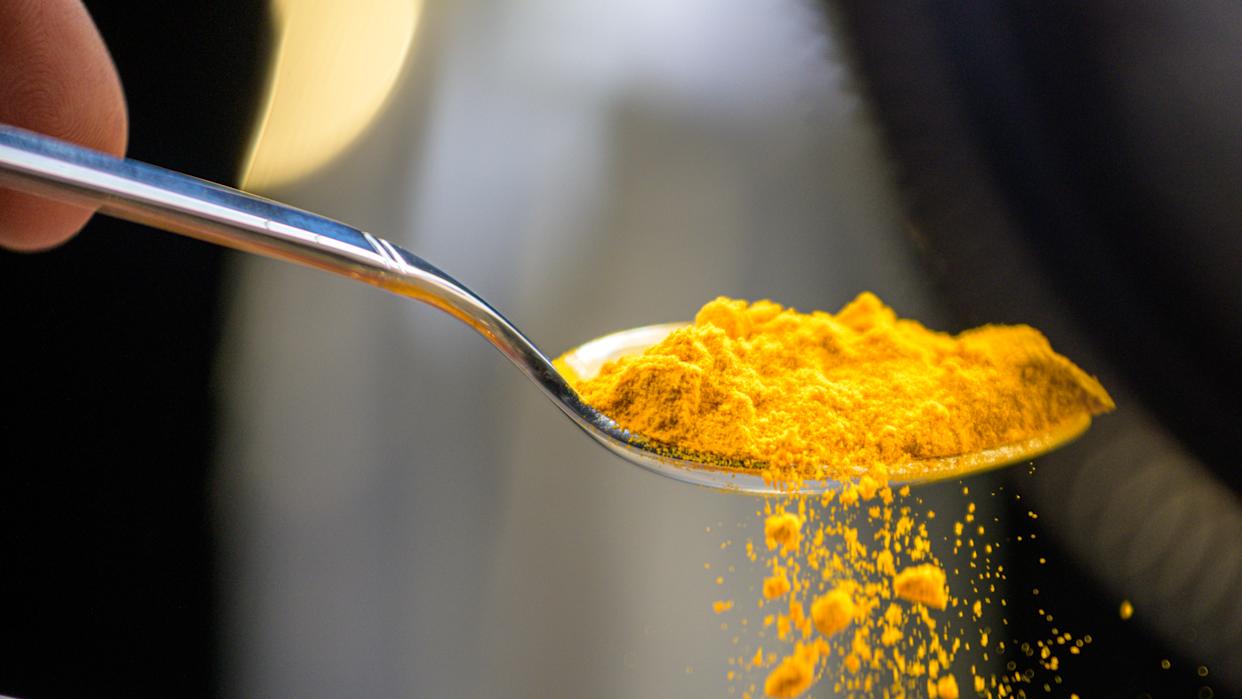
It’s so easy to incorporate turmeric into your diet. (Getty Images)
(simonkr via Getty Images)Simple ways to add turmeric to your diet
From a food perspective, Suresh points out that turmeric can be helpful if you want to “enhance your diet quality using herbs and spices rather than excess salt.”
She recommends having around ½–1 teaspoon of turmeric daily as part of meals to reap long-term benefits.
✔️ Infuse it into homemade curries and sauces
✔️ Blend some turmeric into a smoothie
✔️ Add a pinch to your favourite salad dressing
✔️ Sprinkle some turmeric over scrambled eggs
✔️ Use in soups, stews, lentils or dhal