

More than 8 million people in the UK are estimated to be living with cardiovascular disease – the scientific term for a group of diseases affecting the heart and blood vessels.
Left unchecked, heart disease can cause symptoms including shortness of breath, chest pain and dizziness, and it can lead to more serious complications, such as heart attacks and strokes.
While smoking, stress and drinking too much alcohol are three of the biggest risk factors, your diet can also play a major role, with salts, saturated fats and sugars all putting extra strain on your ticker.
However, just like there are foods we should limit to protect our cardiovascular health, there are also foods that can be heart-healthy, providing our bodies with the specific nutrients and antioxidants needed to keep arteries clear and blood pressure stable.
One such food you might have overlooked on your weekly shop is tinned sardines. Studies have found that eating this oily fish regularly can protect against heart disease, while another suggests that women can reduce their risk by more than 30% if they eat two to four portions per week.
Here, we ask nutritionist Rob Hobson to explain sardines’ heart health benefits and why we may want to add more of them to our diet.
Why are sardines good for heart health?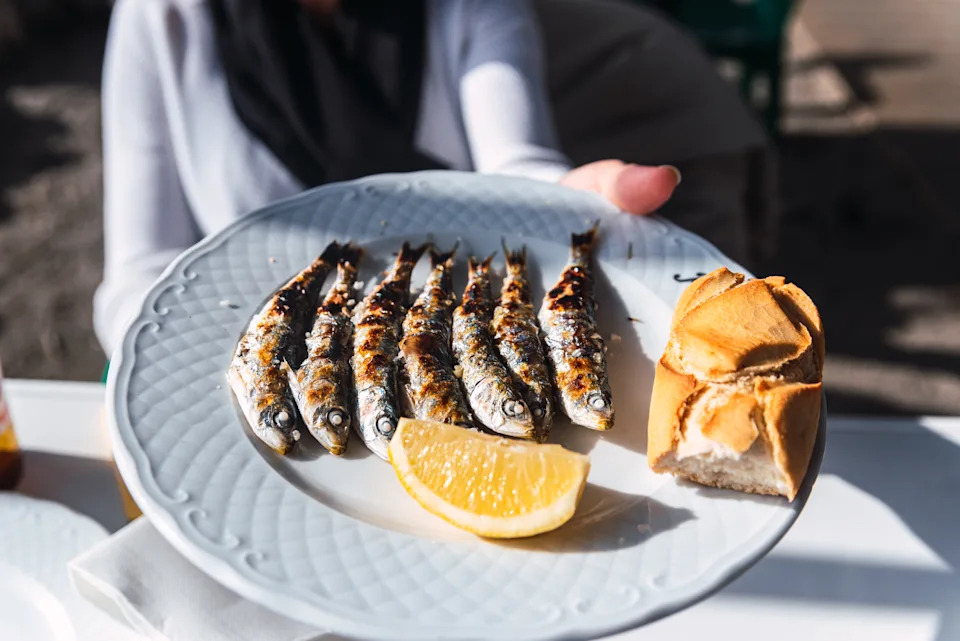
Sardines provide protein and healthy fats, which we need to stay healthy.
(Antonio Hugo Photo via Getty Images)
Sardines, also known as pilchards, are a species of oily fish found in the Atlantic and Mediterranean Oceans.
While they may be small, Hobson says they make a great addition to a heart-healthy diet.
“Sardines are rich in long-chain omega-3 fatty acids (EPA and DHA), which are the forms most strongly associated with cardiovascular benefits,” he explains.
“These fats help lower triglycerides (blood fat), support healthy blood pressure and have anti-inflammatory effects that are relevant to conditions like atherosclerosis – a disease in which plaque builds up inside your arteries.
“They are also one of the few dietary sources of vitamin D, as well as selenium and B12,” the Unprocess Your Life author adds.
What are the other health benefits of sardines?
“Sardines provide around 20 to 25 grams of high-quality protein per tin, which supports muscle growth and maintenance,” says Hobson.
He adds that this is particularly important in midlife and beyond, as muscle mass naturally decreases with age (by as much as 3-5% per decade), so pairing a high-protein diet with resistance exercises like lifting weights can help replenish what’s lost.
The omega-3 content in sardines is also closely linked to brain health. “DHA in particular plays a structural role in brain cell membranes and, while no single food is a ‘magic bullet’, regular intake of oily fish is associated with better long-term cognitive health,” Hobson notes.
“Also, because you eat sardines with the edible bones, they are a practical calcium source which is useful for bone health – especially for older adults and people who don’t consume much dairy,” he adds.
How often should you eat them to reap the health benefits?
Current UK guidance recommends at least two portions of fish per week, one of which should be oily fish.
“A portion of oily fish is around 140g, which is roughly one standard tin of sardines – so including sardines once a week would meaningfully contribute towards meeting your omega-3 recommendations,” says Hobson.
“Some people may choose to eat oily fish twice weekly, rotating options like sardines, mackerel, salmon or herring.”
Don’t like sardines? 6 ways to make them taste better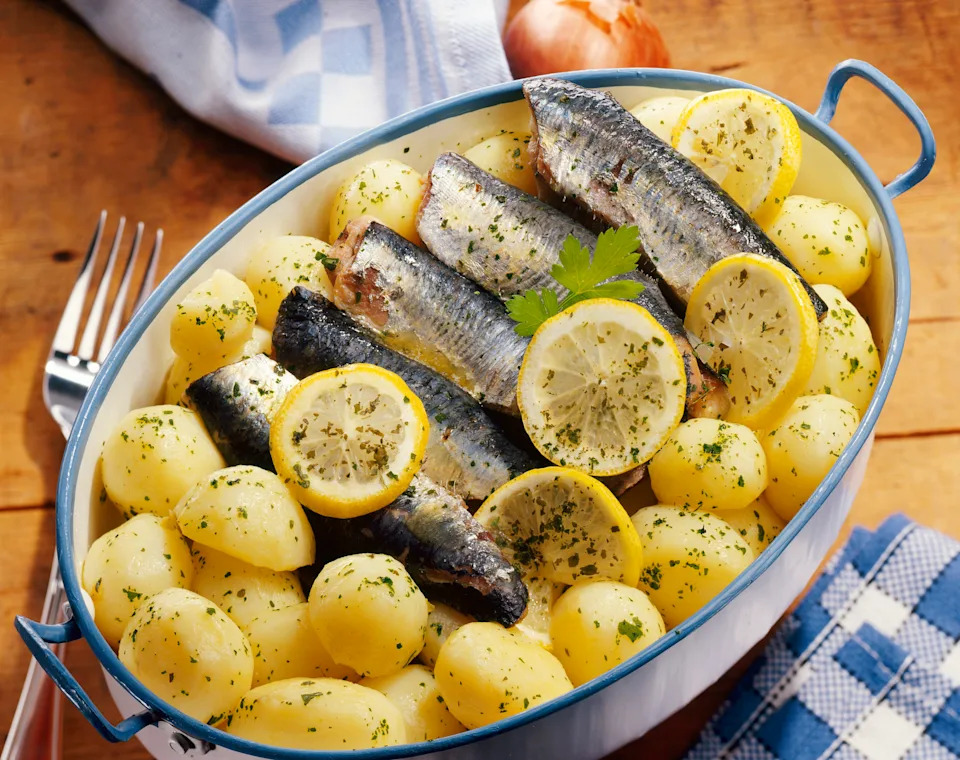
Sardines are divisive, but cooking and preparing them in different ways can make them easier to stomach for those who aren’t fans.
(Image Professionals GmbH via Getty Images)
Tinned sardines are a bit of a Marmite food item, with some people finding the fishy flavour and briny taste overpowering. But you don’t need to write them off altogether, even if the idea of tucking into a can turns your stomach.
“Strong flavours, acidity and texture changes can completely shift how sardines taste,” assures Hobson.
If you want to give sardines a second try, he shares a few smart ways to incorporate them into your diet:
Mash them with lemon juice, black pepper and a little Dijon mustard; the acidity softens and brightens the flavour.
Mix them into mashed potatoes with capers and grated lemon rind, then shape them into simple fish cakes and pan-fry. The potato dilutes the intensity while the capers and citrus lift everything.
Serve on sourdough toast with tomato and fresh herbs.
Stir into a puttanesca-style pasta sauce where olives, capers and garlic balance the richness.
Blend into a pâté with Greek yoghurt and parsley.
Add chilli flakes as the heat helps distract from stronger flavours.
Alternatives to sardines
Finally, if sardines still pack too powerful a punch, Hobson says you could opt for other oily fish in tinned form instead.
“Kedgeree (a traditional rice dish) made with tinned mackerel works well, as the curry spices help mask the fishiness and make it more approachable,” he notes.