
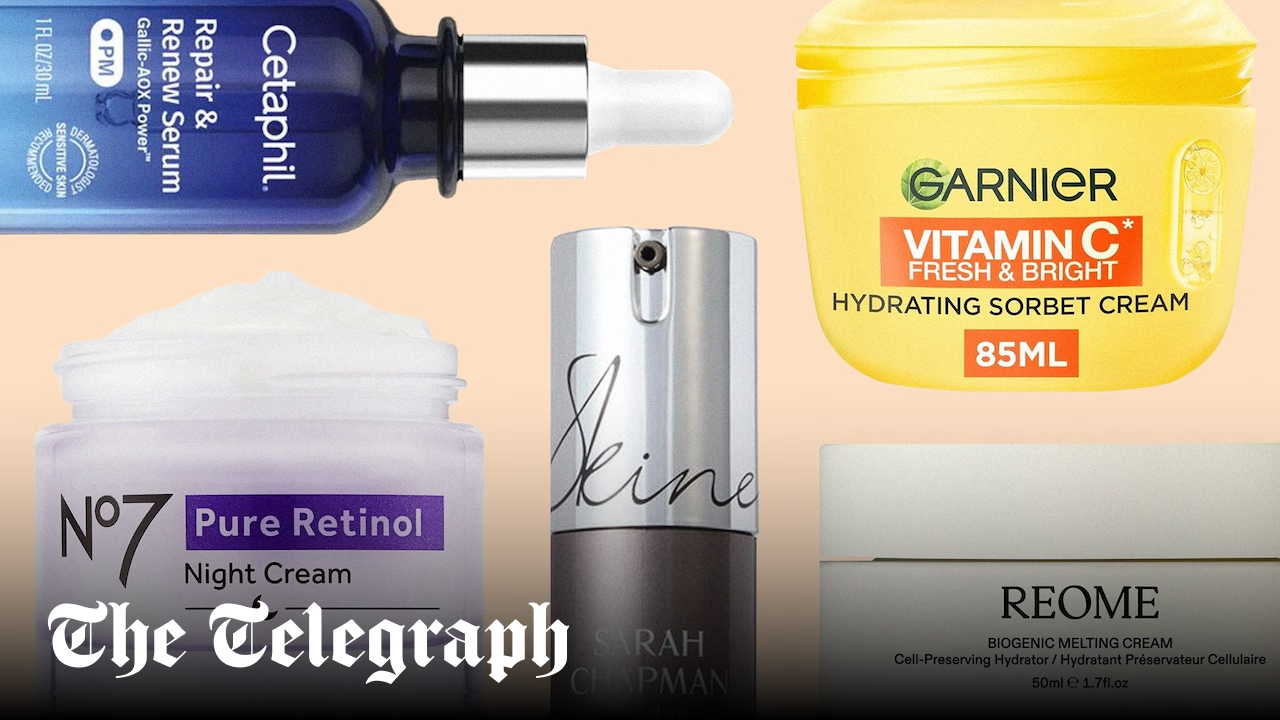
We asked Dr Rishika Sinha, a consultant dermatologist for the NHS who also treats private patients at Dr Sam Bunting & Associates in Harley Street, to break down the science behind each step. More than just hyperbole, the ubiquitous skin goal of “glowing” is based on how the light hits our skin. “Glow refers to radiant, hydrated skin that has a smooth complexion,” says Dr Sinha. “The reason that gives you a glow is because light reflects evenly from the skin. When people want to achieve a glow, those are the things to focus on: hydration, smooth complexion, radiance.”
LED
Fry, professor of the public understanding of mathematics at the University of Cambridge, is a committed user, “at least five times a week”, of a red light mask, and the science, while nuanced, supports the habit. LED light therapy works through a process called photobiomodulation: the skin absorbs light energy, which triggers biological changes within the skin. Different wavelengths have different effects. Red light, specifically, has anti-inflammatory properties and may also support your collagen and elastin. Blue light, meanwhile, targets the bacteria associated with acne.
The catch? Evidence is strongest for professional, in-clinic devices, which operate at a higher energy output and deliver uniform light exposure. “The home LED masks generally have a lower irradiance,” says Dr Sinha. “They will not provide the same level of outcome as clinic devices.” That said, she acknowledges they are a useful supplement with low side-effects. “They can work to support your skincare routine, they’re a nice adjunct, but won’t be the one thing responsible for addressing all your skin concerns.” Fry’s five-times-a-week usage aligns with the consistency that underpins most of the clinical data.
What to try