

For strength coach and content creator Meg Gallagher (@megsquats), prioritising strength training is non-negotiable. But frustrated by increasingly unrealistic fitness expectations – from lifting three to four times a week to hitting 10,000 steps a day and squeezing in 150 minutes of cardio – she decided to challenge herself to improve her cardio fitness.
Meg took to her YouTube channel to document the experience. ‘It has been a minute since I incorporated any type of cardio into my routine. And I’ll be honest, I feel very out of shape. But here’s the thing: when it comes to cardio, I need something simple, quick and effective because I’m really busy,’ she said.
So, she set herself a challenge: one mile a day, every day, for 30 days. But was this fairly simple, achievable task enough to make a difference? Here’s what she noticed – and the benefits that came from the challenge.
Her goals
Meg had a couple of goals in mind when she set herself the challenge – ones she could reflect on once it was over.
First, she wanted to find creative ways to fit cardio into life as a busy mum of two. After constantly seeing running content online, she often found herself wondering: ‘Where are your kids? I know you have them. Where are they?’ So, she tested a range of approaches – hitting the track while her kids watched from the sidelines, attempting the dreaded stroller run, and carving out ‘distraction time’ so she could squeeze in a mile on the treadmill at home.
Her second goal was performance-based: to see if she could improve her mile time. She even set herself the ambitious target of getting five seconds faster with each run.
Finally, she wanted to increase her daily step count. While 10,000 steps has long been considered the gold standard (though newer research suggests it may be closer to 7,000), Meg found that target less realistic after becoming a mother. Incorporating dedicated daily cardio became another way to help bridge that gap.
What she noticed throughout
Throughout the challenge, there were some interesting effects.
She discussed the concept of the ‘interference effect’. This refers to how adding significant cardio on top of a strength programme may impact the results you see from that training.
This happens because your body is being asked to adapt to two different goals at once. Endurance training encourages efficiency, energy conservation and, in some cases, a lighter body, while strength training focuses on building muscle and increasing power. In certain situations, these adaptations can compete with each other.
In practice, this is usually only an issue when cardio volume or intensity is high – for example, during marathon training. More moderate cardio is unlikely to significantly affect strength progress, which is why Meg noted it probably wouldn’t interfere with her usual routine.
She did, however, notice tighter calves and Achilles during recovery, which meant placing more emphasis on mobility and rest. Overall, though, she didn’t experience a major impact on her strength training.
Her resultsImprovements in daily step counts
One of Meg’s main goals was to improve her step count. She noted that one mile equates to roughly 2,100 steps. By the end of the challenge, she saw an average increase of 3,422 steps per day – not only adding the predicted 2,100 steps from the mile, but an additional 1,000 on top.
‘It’s getting me to within striking distance of that elusive 10k steps per day, which since becoming a mom just has not been something that I’ve been able to do,’ she said. ‘It shows that aiming for a reasonably small change can yield even larger results.’
Body composition changes
Before starting the challenge, Meg underwent a body composition scan, which provided some interesting results by the end.
Body fat
Starting with a body fat percentage of 19.6%, this increased slightly to 20% by the end. While this change is minimal, it’s worth noting that body fat measurements can fluctuate due to factors such as water retention from muscle repair and increased glycogen storage from higher training volumes. These changes don’t necessarily reflect a true increase in body fat, so it’s best to view this as a data point rather than a cause for concern.
Visceral fat
However, she did reduce her visceral body fat by 0.35 by the end of the challenge, which many viewers found inspiring. Visceral fat is considered ‘hidden’ fat, stored deeper within the body around vital organs, and in excess it can increase the risk of conditions such as diabetes, heart disease and inflammation. Although Meg had very little to begin with, it’s an interesting data point that highlights how consistent exercise can help reduce this type of fat.
Improvement in speed
Another goal was to reduce her mile time, ideally shaving off five seconds each day.
Starting at 9:49 on day one, she managed to hit that five-seconds-per-day target until day 17. Progress then slowed towards the end of the challenge, rising to around a 12-minute mile, before she finished strong on day 30 with her fastest time yet: an impressive 8:21.
The mental benefits
The biggest benefit Meg noticed, however, was the mental variety.
‘The mental change is something I’m enjoying more than anything else. I have even resorted to completing the run with no headphones, no music, no podcast – just me and my thoughts, which is crazy,’ she said.
She found the opportunity to unplug and connect with her body helped her notice more positive feelings, despite going through personal challenges.
The verdict
Meg finished the challenge by saying she would continue with these small bursts of cardio – not so much for the physical benefits, but for the positive impact on her mental wellbeing.
‘One mile per day for someone like me is probably not that big of a feat,’ she said. ‘It was a challenge that I knew I could commit to, and it ended up being better than what I could have imagined.’
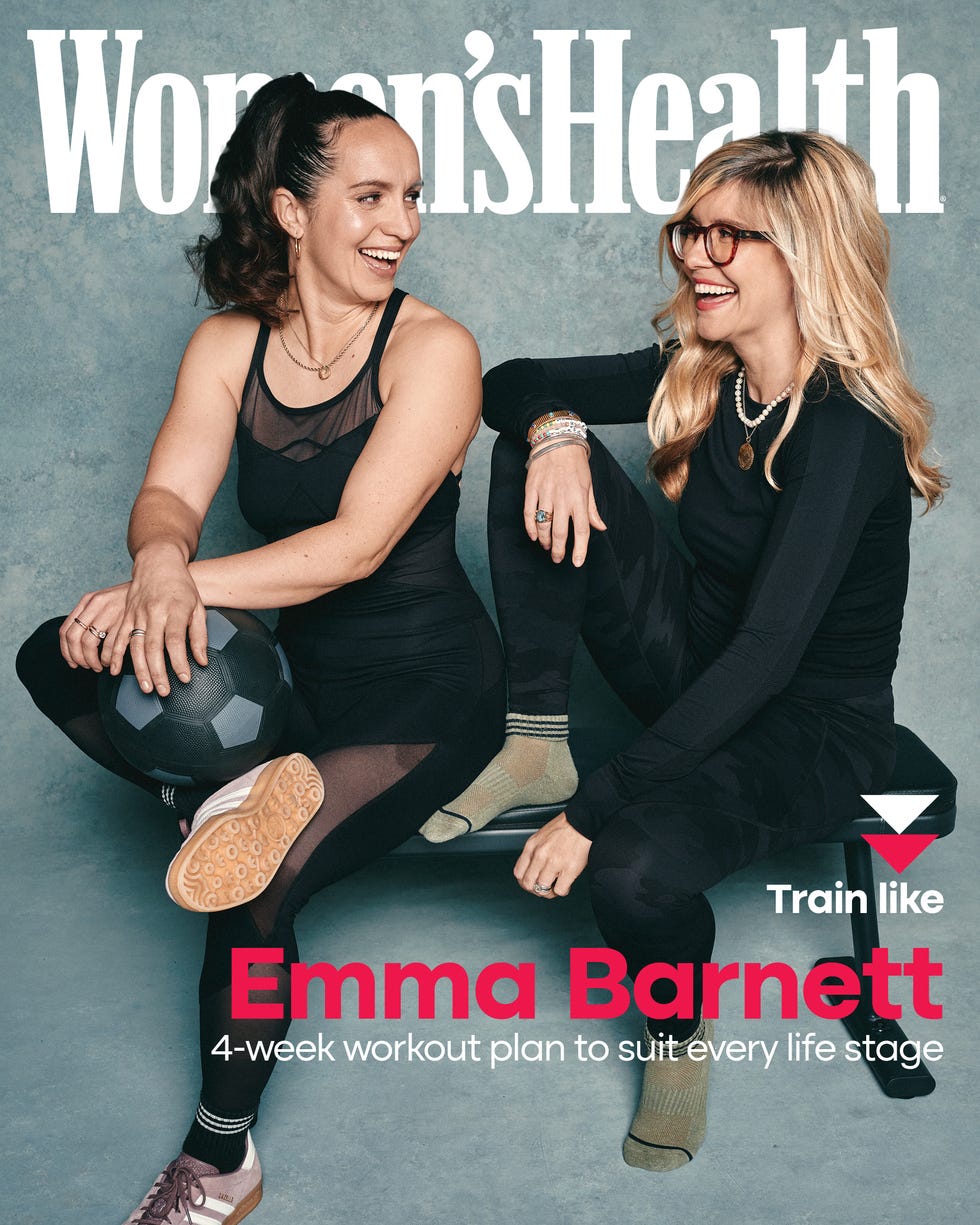
After years living with endometriosis and undergoing seven rounds of IVF, Radio 4 presenter Emma Barnett turned to training with PT Frankie Holah to rebuild strength and a more positive relationship with her body. Download the Women’s Health UK app to access Frankie’s full training plan.
 More fitness challenges
Isabelle Knevett is the Fashion Features Editor at Women’s Health, bringing a wealth of experience in media and fashion since 2019. She has led high-impact PR campaigns for global giants like Adidas and Reebok and has reported on everything from fashion analysis and shopping trends, to deep dive features and investigative reporting. A former professional dancer, she understands the value of quality gym and activewear, making her a true expert in the field. Her work has been featured in Marie Claire Australia, ELLE Australia, Australian Women’s Weekly, WHO and more. When she’s not buried in a fashion magazine or sweating it out the gym or dance studio, you’ll find her reading or writing about fashion, feminism and global politics.