
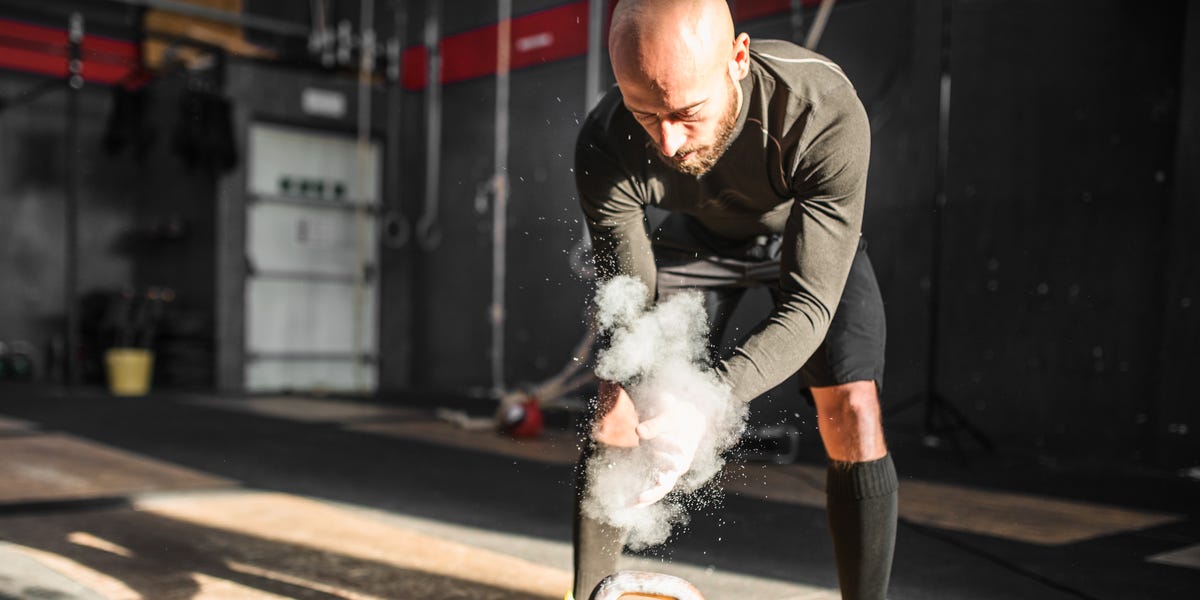
When looking back at Soviet wrestlers’ training from the 1970s and ’80s, it’s clear that kettlebell movements were a fundamental part of their programmes. Their training cut no corners, was well structured and wouldn’t feel out of place in a modern strength and conditioning setting.
These effective methods are something strength and conditioning coach James Pieratt of Wild Hunt Conditioning has taken a keen interest in – particularly the kettlebell exercises that delivered superior muscular endurance and conditioning.
‘If you want insane functional strength, you need to know about this lost Soviet exercise,’ he says. ‘It’s called the kettlebell deficit high pull.’
The kettlebell deficit high pull was a staple in Soviet Olympic workouts, Pieratt explains, because it does two things most exercises do not. ‘First, it hits the entire posterior chain – where most of your body’s strength lives – in a single, unified, dynamic movement,’ he says.
‘Second, the deficit high pull trains full-body vertical torque, a training focus that contributed massively to Soviet wrestlers’ insane strength.’ Pieratt adds that it’s an intermediate-to-advanced movement, so it’s worth starting with standard kettlebell high pulls from the ground, or practising the movement in a controlled way with little or no weight. ‘If you want insane functional strength, you need to know about this lost Soviet exercise,’ he says.
How to Do the Soviet Deficit High Pull Kettlebell Exercise
While the move is often performed with a more rounded back and larger hinge in historical footage, to perform it safely and effectively, follow Pieratt’s approach:
Begin with a wide stance, feet slightly turned out, with the kettlebell slightly in front of you between your legsHinge forward with a flat back, bending your knees to grab the handle with both handsShrug your shoulders and straighten your legs as you snap your hips forward simultaneouslyThe kettlebell should travel upwards in a straight line, close to your body, rising to shoulder height or aboveReverse the movement back to the floor under control
To use the move in your workouts, aim for 3-5 sets of 10-15 reps.
Related Stories