
For the past two decades, anxiety has been my constant companion. A deep gnawing worry that can, at any moment, tip over into full-blown panic.
I could be standing on the train or at the supermarket, and suddenly I’m consumed by the fear that I’ve left the back door wide open and a fox has wandered in, knocked over a candle (that I’d already blown out) and caused a fire.
One panic attack was so terrifying that I lost my vision for a few minutes.
For a long time, I didn’t know how to tackle my daily terror. After a diagnosis of Obsessive Compulsive Disorder (OCD) in my late 30s, I tried therapy and medication – but still, the tightness in my chest never budged. Until now.
At 42, I’ve finally found a solution that works for me – albeit one some might view as controversial.
These days, as I make myself a pre-work coffee come 7am, I also reach for my vape… and a few dried buds of cannabis flower.
Trust me, I’m as surprised as you are to find myself a regular user of the drug. But the way I take it is perfectly legal.
Perhaps you’re frowning as you’re reading this, wondering what the difference is between what I do and smoking a joint.
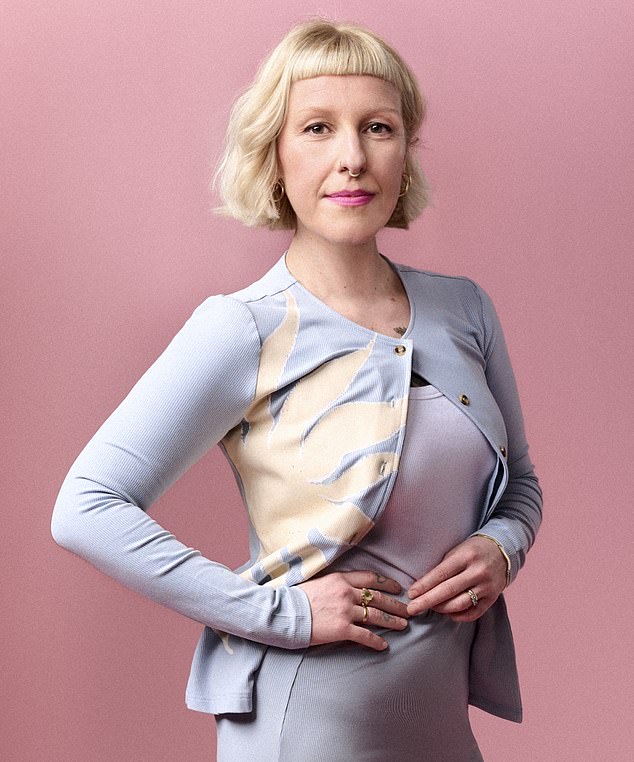
For the past two decades, anxiety has been my constant companion. A deep gnawing worry that can, at any moment, tip over into full-blown panic, writes Alice Snape
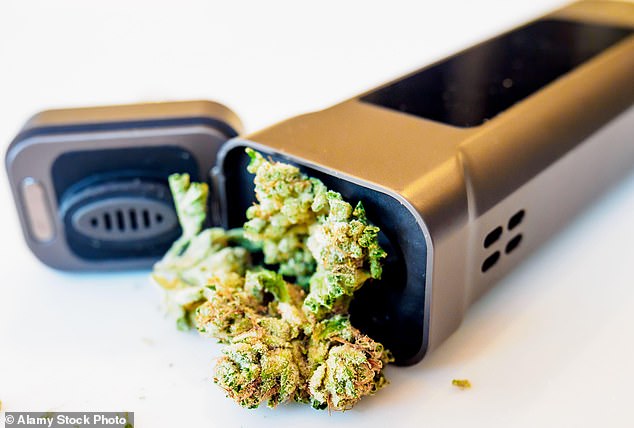
These days, as I make myself a pre-work coffee come 7am, I also reach for my vape… and a few dried buds of cannabis flower
But medical cannabis was legalised in 2018, and licensed products can be prescribed in limited cases on the NHS for severe epilepsy, nausea from chemotherapy, or muscle spasms caused by multiple sclerosis.
Private clinics can also legally prescribe products for a wider range of conditions, including endometriosis, Crohn’s, anxiety and depression. And a growing number of people like me are using these services.
There are now around 25 private clinics supplying cannabis products to some 80,000 people across Britain, according to Releaf, a licensed London-based medical cannabis provider.
This rise in use has sparked worry for some within the medical profession, who fear the ‘normalisation’ of cannabis might see a surge in illegal use – and a corresponding rise in cases of cannabis- induced psychosis.
I’m not a doctor, so I can only speak of my own experience. But this is why I have joined the ranks of those turning to cannabis to tackle medical problems.
What started as stress at university gradually took hold of my life.
Over the years anxiety has kept me confined to my home, meaning I’ve missed out on birthdays, holidays, even friends’ weddings. I’ve been forced to call therapists from office toilets when my work stress has spilled over into panic attacks.
And I’ve fallen out with those who can’t imagine why it’s sometimes so impossible for me to step outside my front door.
Over the years, I tried Cognitive Behavioural Therapy and group therapy, as well as antidepressants. In essence, all the recommended treatments for OCD and anxiety that the NHS offers.
While they worked initially, I’d always spiral back to burnouts and breakdowns.
Then, in July 2022, I went on holiday to Canada with my husband to celebrate my 39th birthday.
There, I discovered that cannabis – legal in Canada since 2018 – had been hailed as a balm for worried minds.
Curious, given that nothing else had worked for me, I visited a specialised shop where I explained my symptoms.
They recommended a strain of cannabis that could be vaped. It was equal parts THC (the psychoactive component that increases feel-good brain chemicals) and CBD (the non-psychoactive element that can decrease inflammation and ease pain).
It was instantly transformative. I’d use the vape at breakfast, then top up with little puffs throughout the day.
There was no longer a hum of ruminating activity in my brain, no endless loop of disastrous scenarios.
Of course, back at home I assumed I wouldn’t be able to buy cannabis legally and forgot about it.
But my anxiety and OCD returned with a vengeance, and it was having a crippling effect on my daily life and well-being.
That’s when I started on sertraline, an antidepressant. It worked, but I was hit by an unpleasant array of side-effects: my libido dropped, my mouth became dry and my emotions curiously flattened.
Then, a year or so after that trip to Canada, I became aware of private cannabis clinics, which are often advertised on the Tube in London, where I live.
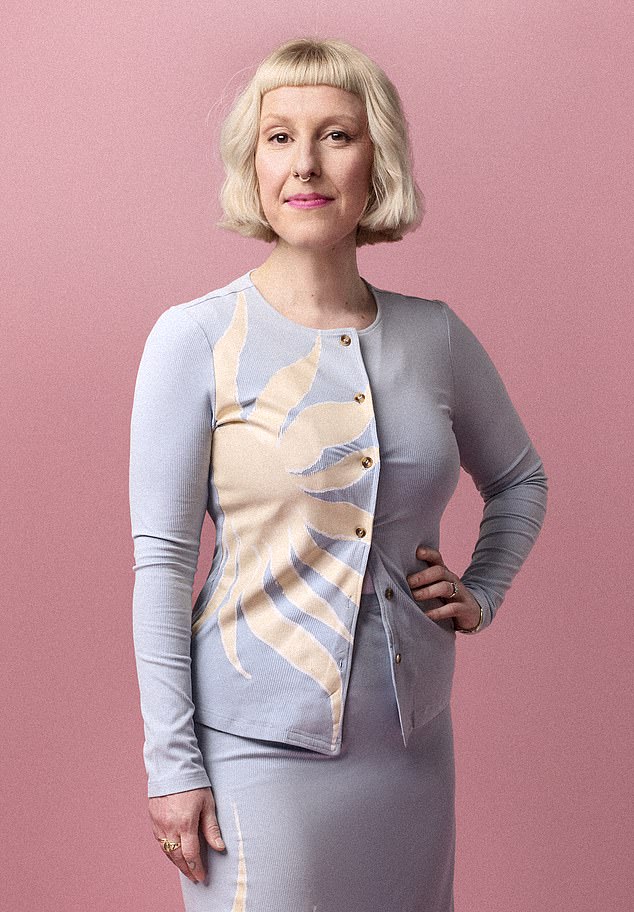
Despite what people may imagine, it doesn’t make me feel high; it makes me feel human. Without it, there’s a chance I wouldn’t still be here. And I’m ever so thankful for that
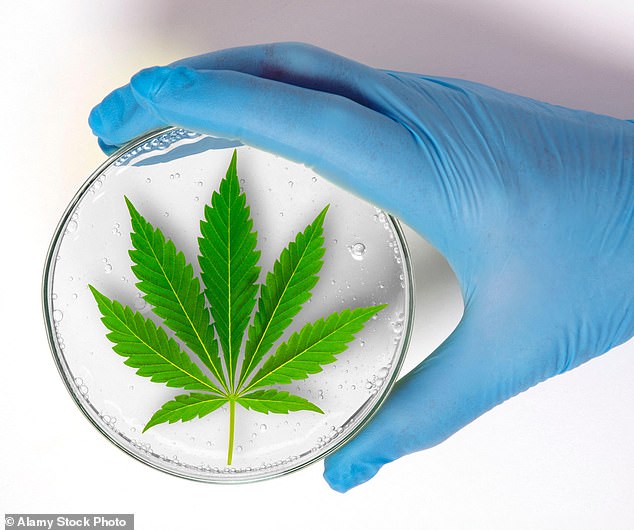
While I’m aware it’s not risk-free (medication rarely is), I’ve done my research and found studies that have shown cannabis can reduce symptoms of OCD
I checked my eligibility on Alternaleaf’s website, which has operated in the UK since 2023. As someone who had already tried two or more treatments for my condition – medication and therapy – I qualified for a video consultation with a doctor.
He said he could find me a vape similar to the Canadian one, a balance of THC and CBD, costing around £70 per vape, which I’ve found lasts about six months.
I also take it in edible form; a bag of pastilles is £34, and I chew them so discreetly no one would ever know.
I take it in very small doses of 10mg daily, sometimes much less, compared to the 300-500mg in your average spliff.
Despite what people may imagine, it doesn’t make me feel high; it makes me feel human. And while I’m aware it’s not risk-free (medication rarely is), I’ve done my research and found studies that have shown cannabis can reduce symptoms of OCD.
I’ve now been able to move on to a lower dose of my antidepressants, and plan to taper off entirely.
Many readers will remain unconvinced of the wisdom of using cannabis as a medical treatment.
But in my case, without it, there’s a chance I wouldn’t still be here. And I’m ever so thankful for that.