
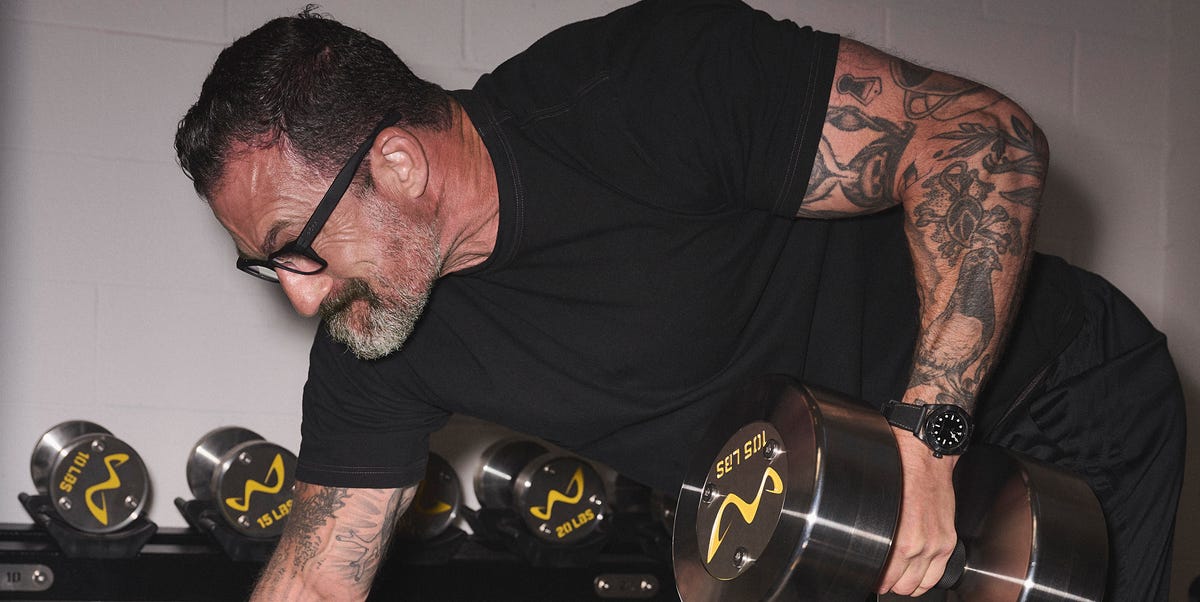
If you’ve spent any time listening to Andrew Huberman‘s podcast, you might assume the neuroscientist follows a complicated fitness routine packed with endless protocols and optimisation tricks.
The reality is much simpler.
Speaking to Men’s Health ahead of the release of his new book, Protocols: An Operating Manual for the Human Body, Huberman revealed that his weekly training plan centres around just three strength sessions, three cardio workouts and plenty of walking.
‘Walk as much as possible every day, strength train three times per week, do cardio three times per week, and do two to four short bouts of mobility and flexibility work.’
The routine reflects Huberman’s broader training philosophy. Rather than trying to maximise every workout, he’s focused on staying strong, maintaining muscle and keeping himself athletic well into his 50s.
Andrew Huberman’s Weekly Training Split
Huberman also outlined exactly how he structures a typical training week:
Long, slow runLeg dayRecovery dayChest, back and neck (‘torso’ day)30-minute tempo cardio30-minute HIIT-cardio Tabatas on an AirDyneArms and shoulders
While that might sound like a lot on paper, the sessions themselves are relatively conventional. His gym philosophy, which he’s followed for more than 30 years, revolves around progressive overload, training each muscle group directly once per week while allowing plenty of recovery before repeating the cycle.
Protocols: Simple, essential tools to transform your health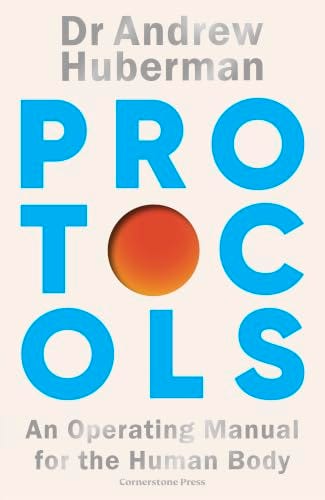 Protocols: Simple, essential tools to transform your health
Now 50% Off
He’s Still Chasing One Fitness Goal
Despite turning 51 this year, Huberman still has one performance target in mind.
‘Crack a sub-7-minute mile again. I ran cross-country in high school, and my best time was 4 minutes 57. But I’m heavier and older now!’
It’s another reminder that, despite his reputation for dissecting every aspect of human performance, Huberman’s own approach to training remains refreshingly uncomplicated: lift weights, do your cardio, stay mobile and keep walking.
Or, as he put it elsewhere in the interview:
‘Rise, eat, move, hydrate, sleep: What I’m about is trying to do the little things that cost nothing, take very little time, and that give you an outsized positive effect on the big thing.’