

A pharmacist explains what you need to know before making any changes
Charlotte Smith Senior Lifestyle Content Editor
14:58, 23 Sep 2026Updated 15:34, 23 Sep 2026
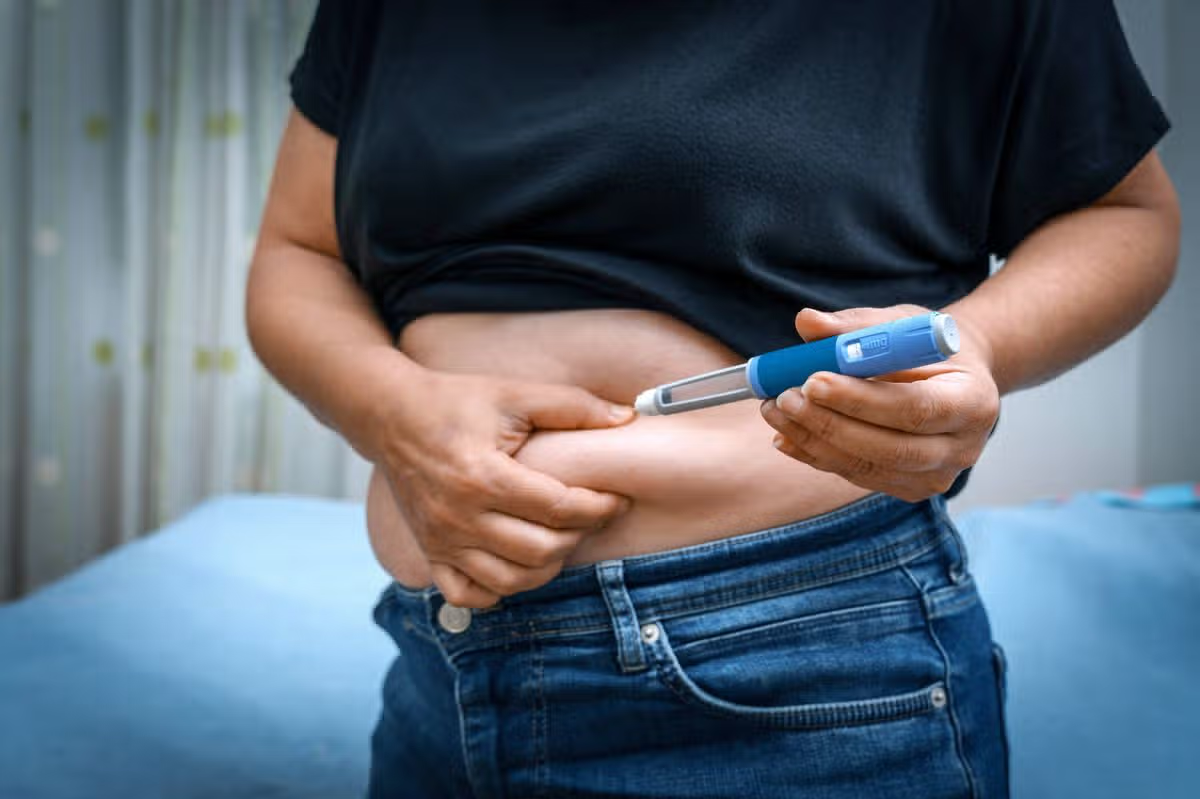
The study found that stopping these medications is linked to a significant increase in the risk of heart attack and stroke (stock image)(Image: Getty )
A pharmacist has issued a warning to anyone thinking about stopping weight-loss jabs such as Mounjaro and Wegovy. The caution follows a study of more than 330,000 patients, which discovered that the heart-protective benefit of the drugs can start to diminish within months of the final dose.
The research, published in BMJ Medicine and spotlighted by ScienceDaily this week, revealed people who remained on the medicines had an 18 per cent lower risk of heart attack, stroke or death. However, those who discontinued them for two years lost nearly all of that protection, ending up with a risk up to 22 per cent higher than people who continued. Even a six-month gap before restarting left the risk four to eight per cent higher, reports the Mirror.
A summary of the study reads: “A large study suggests the cardiovascular benefits of GLP-1 drugs such as Ozempic, Wegovy, Mounjaro, and Zepbound can disappear surprisingly quickly when treatment stops. After two years off the medications, patients had a 22% higher risk of heart attack, stroke, and death compared with those who stayed on them.”
Palvinder Deol, superintendent pharmacist at Happy Pharmacy, a UK online pharmacy, said the findings are good news for people on the jabs, with one important caveat. He said: “This study is really a reminder of how much these medicines do beyond the number on the scales.”
“Blood pressure, cholesterol and inflammation all improve, and that is what protects the heart. The catch is that those benefits fade when treatment stops, and they fade long before the weight comes back, so you cannot see it happening.
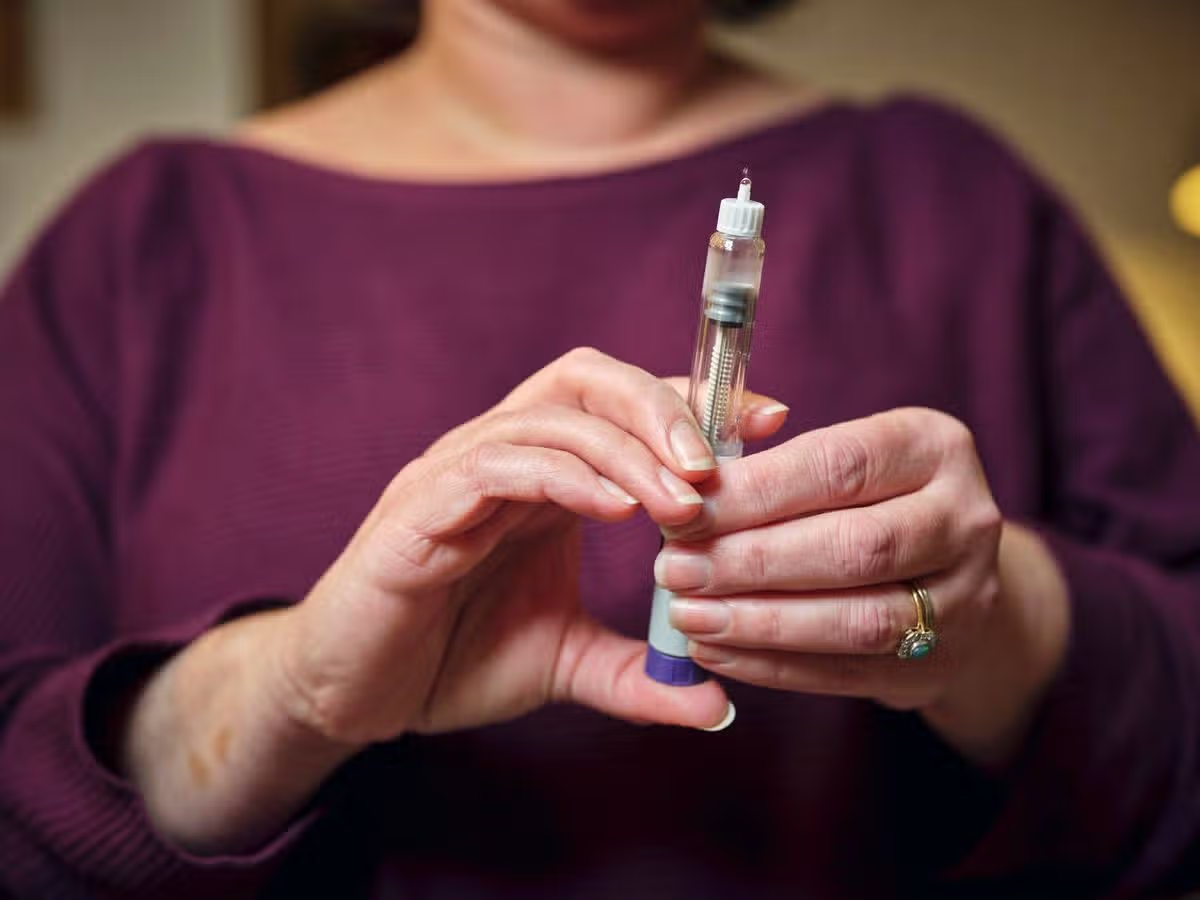
Study finds stopping GLP-1 drugs like Ozempic, Wegovy, Mounjaro, and Zepbound may have consequences that go well beyond regaining weight (stock image)(Image: Getty)
“Nobody has to stay on a jab forever. Plenty of our patients reach their target and come off it well. The difference is that they do it as a plan with their pharmacist or prescriber, rather than letting the pen run out and hoping for the best.”
What did the new study uncover?
Researchers at Washington University School of Medicine in St Louis tracked 333,687 US military veterans with type 2 diabetes over three years. Of these, 132,551 had been prescribed GLP-1 drugs, including semaglutide (Wegovy and Ozempic) and tirzepatide (Mounjaro), while 201,136 were taking sulfonylureas, an older type of diabetes tablet.
Patients who remained on GLP-1 medication throughout the full three years had an 18 per cent reduced risk of a major cardiovascular event compared to the comparison group. This translated to roughly four fewer heart attacks, strokes, or deaths per 100 people.
Those who discontinued for a year without resuming treatment faced a 14 per cent greater risk than those who persisted, climbing to 22 per cent after two years off the medication. Anyone who stopped before 18 months showed no meaningful cardiac benefit over the older tablets by the study’s conclusion.
Resuming treatment proved helpful, recovering some of the protection, though not entirely. Senior author Dr Ziyad Al-Aly, a clinical epidemiologist at WashU Medicine, said: “There is enormous exuberance about starting GLP-1 drugs, but not nearly enough attention to what happens when people stop. Many quit after a few months because of cost, side effects or shortages.
“When they stop, it’s not just weight that comes back; they experience a resurgence in inflammation, blood pressure, and cholesterol. Weight regain is visible; the metabolic reversal is not.”
If you have any questions or concerns, speak to your GP. Never stop taking prescribed medication without speaking to a doctor first.

Continuous use of GLP-1 medications is linked to an 18% lower risk of major cardiovascular events (stock image)
What does it mean for users in the UK?
Approximately 1.6 million adults across the UK took weight-loss drugs over the past year, according to findings from University College London (UCL). The UCL study, published in BMC Medicine, revealed that usage was twice as prevalent amongst women compared to men, and was most widespread amongst middle-aged adults.
According to data, Glasgow is the UK city that uses weight-loss injections the most, with approximately 30% of active dieters in the city reporting the use of GLP-1 medications like Mounjaro, Wegovy, and Ozempic. Manchester follows closely at 28%, Belfast at 26%, and Liverpool at 25%.
The latest research examined people living with type 2 diabetes, meaning the precise figures may not be directly applicable to those using the jabs solely for weight loss. However, the medications are identical, and Mr Deol said the lesson is the same too: coming off treatment is a stage of it, not the end of it.
He said: “The medicine takes four to five weeks to clear, so nothing changes overnight. Appetite usually starts creeping back around week three or four, and by then our patients already have their eating, activity and follow-up plan in place.
“If cost is the reason someone is thinking of stopping, tell your pharmacist. There are usually better options than stretching out doses, and this research shows why even a few months off matters. And if you have type 2 diabetes or take other medicines for blood sugar, never stop without medical advice, because your levels can rise quickly.”
Mr Deol said the message for the many people currently on the injections is a reassuring one: “You are doing more for your heart than you can see. Keep it that way by making the decision to stop a planned one, with the same care that went into starting.”