
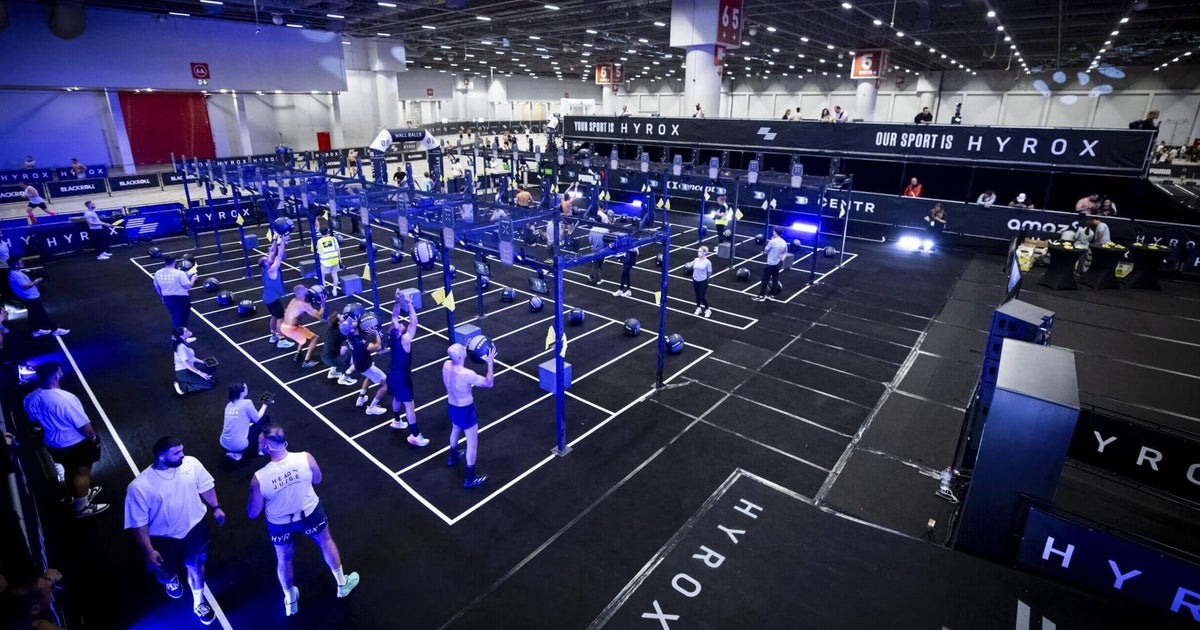
It is already a multi-billion-dollar industry and one of the fastest-growing sectors in sports. And now a new front is opening up in the battle to dominate it.
Christian Toetzke, the man who helped turn Hyrox — a sport that combines running with functional endurance exercises — into a global phenomenon, has his sights set on CrossFit.
Toetzke wants to introduce the standardized mass appeal of Hyrox, where every event follows the same format, to the estimated four million fitness fans who practice CrossFit in gyms around the world.
Along with his business partner, former Olympic field hockey medalist Moritz Fürste, Toetzke is backing a new CrossFit-inspired competition, Xenom, which launched with a two-day event at the Dallas Cowboys’ Ford Center in June.
Branding itself as the “Decathlon of fitness,” Xenom pits entrants against one another in 10 events spread over two days. They include weightlifting, running, gymnastics and other high-intensity workouts, many taken directly from the CrossFit copybook. Its second event took place in London in August before heading to Miami and Malaga in its mission to attract CrossFit devotees, who have helped create a brand worth an estimated $4 billion (£3.01bn).
Toetzke and his team want to replicate the winning formula of Hyrox, which this year attracted 1.5 million participants across 34 countries and is projected to generate $270 million in revenue. Participants pay an average of $168 per ticket for an event that aims to make them feel like professional athletes.
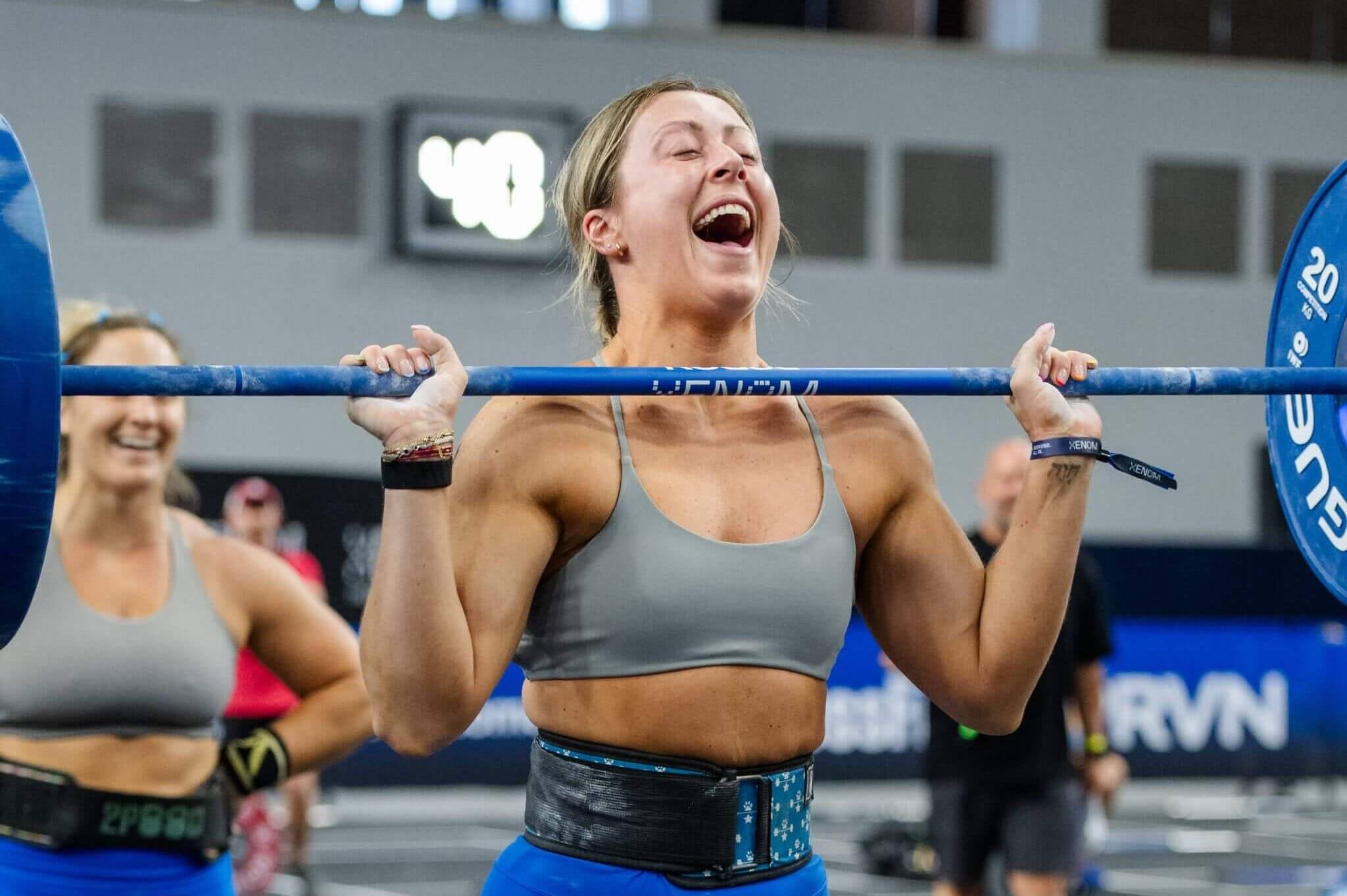
A competitor competes in Xenom, the latest brainchild from the creators of Hyrox (Xenom)
Hyrox’s growth has been rapid, but not without its challenges. Last month, the company apologized and changed its rules after an athlete was allowed to continue competing despite soiling herself during an event in Beijing.
Australian elite racer Joanna Wietrzyk, 24, who holds the world record time in her age category, became ill while competing. Images of her continuing the race, which she won, with feces running down the back of her legs went viral and brought a backlash from other competitors over hygiene and safety concerns. She subsequently apologized and forfeited the points she earned from her victory.
When asked this week about the incident and the ensuing public relations crisis it triggered, Hyrox declined to comment and referred The Athletic to Fürste’s statement at the time. In an Instagram post, he apologized for “not reacting immediately during the race” and took responsibility for not foreseeing “these potential incidents.” He also confirmed that new rule changes and procedures would “prevent situations like this from happening again.”
Some of the competitors from that day — many of whom would need to pass through the same stations and use the same weights as Wietrzyk — had their tickets refunded by Hyrox. But the incident caused an uproar in the online fitness community, which criticized Hyrox’s initial approach.
The damage inflicted on Hyrox from a public relations perspective was clear, but it has not dampened the company’s ambitions.
Toetzke, Fürste and the British entrepreneur Keith Barlow are now focusing on their new venture — and capitalizing on the cultural force that fitness and mass-participation competitions have become.
Xenom has been bolstered by $15 million in capital, raised largely from tech investment firm WndrCo, which is run by former Disney chair Jeffrey Katzenberg.
Katzenberg is a renowned Hollywood producer who worked on classic films such as Dead Poets Society and Pretty Woman. He later founded DreamWorks, the animation giant behind the Shrek series.
Alongside the movie mogul betting that Xenom can follow Hyrox’s trajectory is fellow investor Sujay Jaswa, the former chief financial officer of tech giant Dropbox.
“It’s funny because when we started Hyrox, we did it not to create any competition for CrossFit,” says Toetzke from Thailand, speaking to The Athletic before the Wietrzyk controversy stemming from the Beijing race.
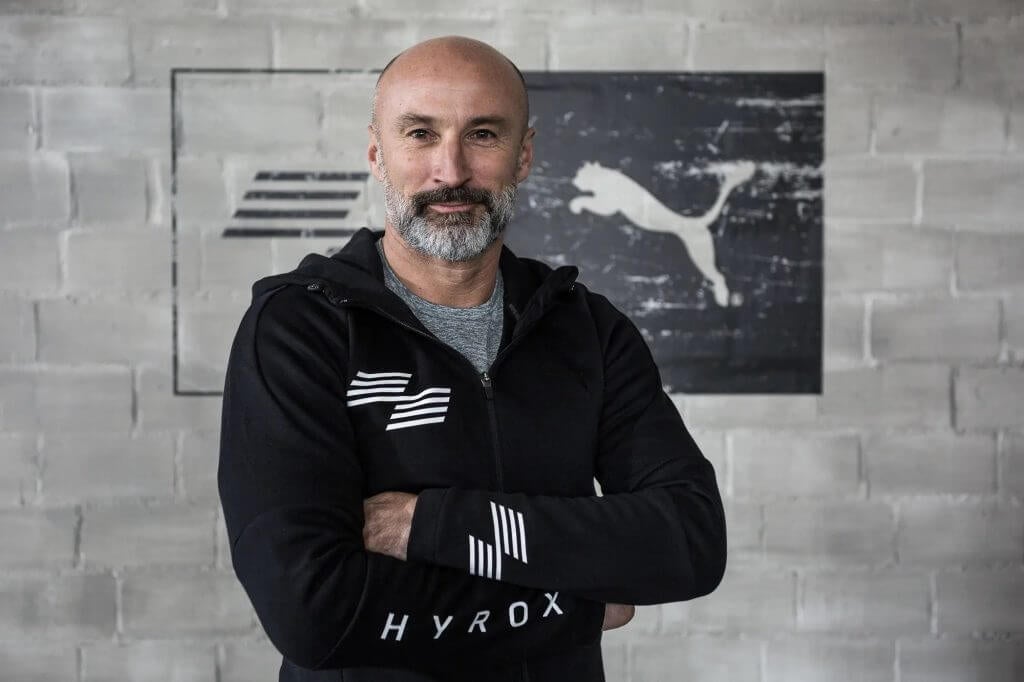
Hyrox co-founder Christian Toetzke. (Hyrox)
“But we noticed we had a big influx from CrossFit. Not because they think our training is so much better but because they don’t have mass events where everyone can train hard and go compete.
“If you are a runner, you can do a marathon. If you are a Hyrox athlete, you can race at an event most weekends of the year somewhere in the world, and you feel a bit like a professional or a star. You’re chasing a time, there are people watching you, you can even get on a podium, but you don’t need to be the best in the world. So we had all these CrossFitters coming because they want events.”
CrossFit was founded in California in 2000 and grew into a global phenomenon with an estimated 10,000 affiliated gyms in more than 250 countries.
Its only recognized competitive event is the annual CrossFit Games. While anyone can enter by submitting videos of themselves performing benchmark workouts at qualifying times, most contestants at the Games are semi-professional or fully professional athletes.
Toetzke and Barlow see Xenom as a gateway to mass participation at numerous events, but to make their model work, they have had to abandon a major tenet of CrossFit.
The latter prides itself on giving contestants no prior notice of the competition format, encouraging them to excel in a wide range of technical and complex movements from gymnastics and weightlifting to be ready for anything.
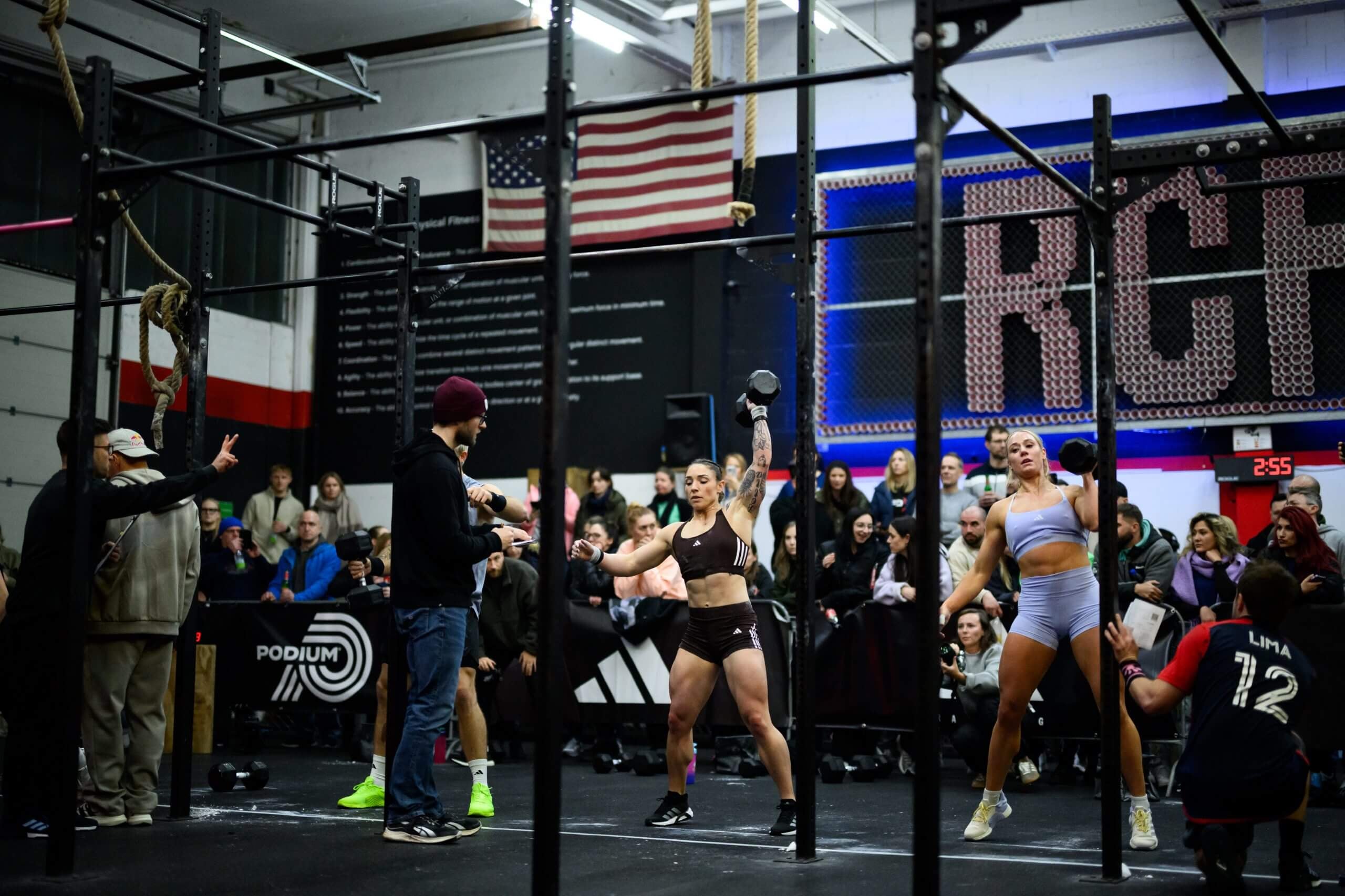
CrossFit competitors in Nuremberg, Germany, in 2025. (Sebastian Widmann / Getty Images for adidas)
“It’s the one principle that you have to throw overboard,” says Toetzke. “With Xenom, you know what the workouts are.”
Barlow is an avid CrossFitter himself and the pair insist they have a friendly relationship with the sport, which has led to an official partnership.
“I’ve spent time with Bruce (Edwards), the new (CrossFit) CEO in recent weeks,” he says. “We believe competition drives the underlying ecosystem.
“Our event will give purpose to training for millions of people. You can talk to a gym owner and say, ‘Hey, we will attract new members and help you retain those you have already.’ As soon as someone is committed to training for an event, they won’t quit their membership.
“They work out with their friends and bring their community to the event.”
That demographic — gym-goers who want to build friendships and push themselves — is also driving growth for other hybrid race companies.
Jason Curtis is the founder and CEO of the Deadly Dozen fitness race. He’s a former British Army physical training instructor and gym owner who watched Hyrox grow from its modest beginnings in Hamburg, Germany, in 2017. Curtis decided he could carve his own space in the market.
“I was like, right, what Hyrox has pioneered now is mass participation fitness racing, like gym sport,” he says from his firm’s headquarters in Macclesfield, north-west England.
“So CrossFit was a $4billion brand but highly specialized, and it can include anything. Hyrox asked: ‘How do we turn it into a mass participation sport?’ and they nailed it. So I just looked at them and felt it’s a no-brainer that I can make the most scalable race on the planet.”
Instead of hiring costly indoor venues as Hyrox does, Curtis uses ordinary athletics tracks to stage the most popular version of his event, which consists of 12 laps of 400 meters interspersed with 12 functional exercises in the central area inside the track.
“Every country on the planet has an athletics track,” he says. “They’re built for mass participation in sport, and they’re cheap to rent. When we started, we didn’t get any investment, so it was zero starting capital. The tickets I sold paid for my kit. Now we’re in 35 countries.”
Curtis says Deadly Dozen made £344,000 in ticket sales in its first year and £1.8 million last year, with costs kept down by using basic kit such as dumbbells, weight plates and kettlebells.
For him, along with the simplicity of his concept, the firm is also riding a boom in both running and female fitness.
“You’ve had a gym boom and a running boom; everyone is running,” he says. “The natural progression of the fitness industry has been when strength guys start to plateau, and all the running education now tells people they need to do resistance. You need to do resistance training for bone density.
“Older adults, women through the menopause can lose like 20 percent of bone density, so all that education is there, so all the runners now are going, you need to do a little bit of resistance training. Hybrid training gives you both.”
It is a style of training, he says, which has been especially popular with women.
“At any of our conditioning classes at the gym, it’s probably 60/40 women to men, if not more,” says Curtis. “So traditionally, lots of women were already doing that training, but there was still that little bit of sexist bias with women in the weight room. Not so much these days. Women want to train both ways.”
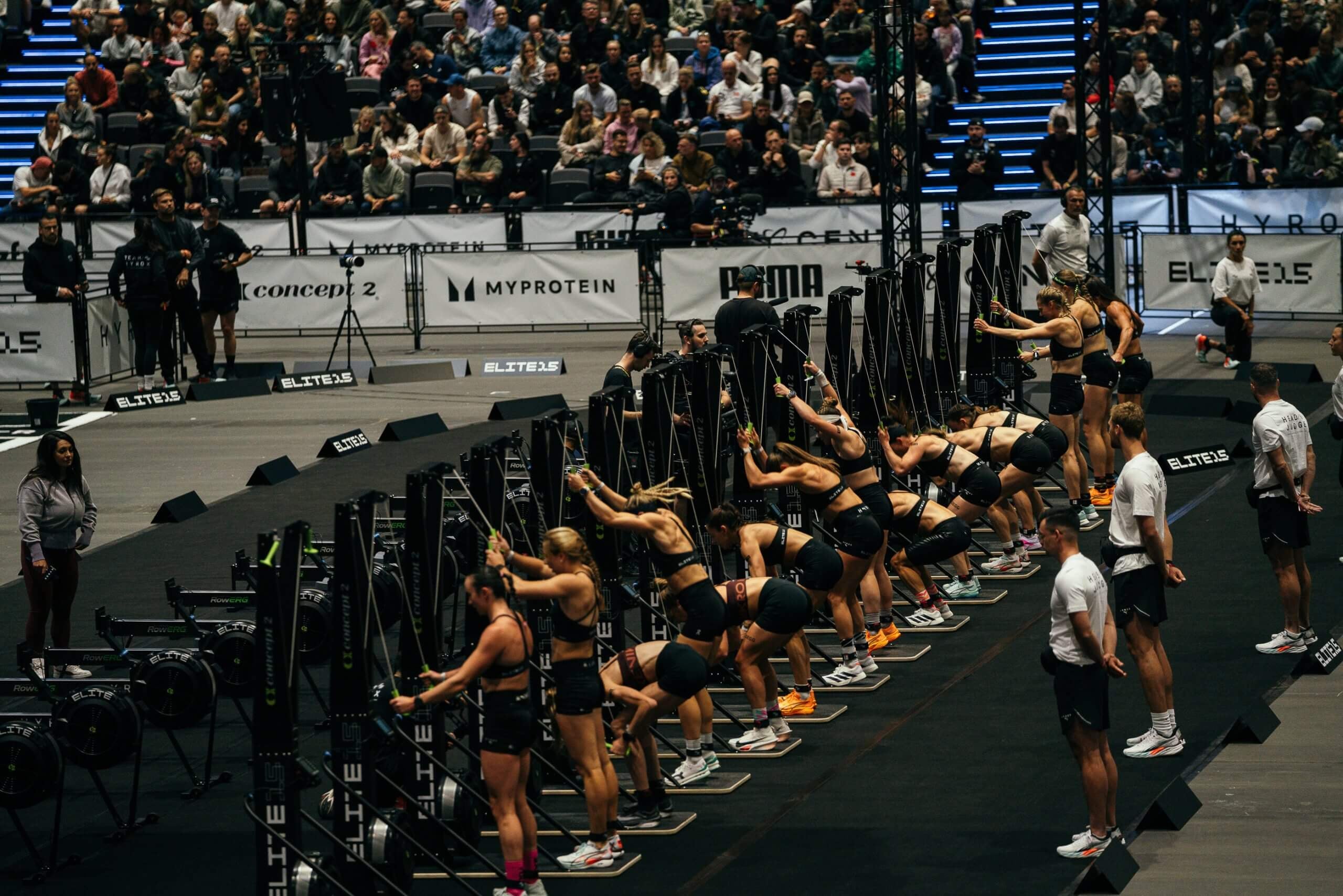
Women competing in Hyrox in Hamburg. (Hyrox)
“Fitness racing in many ways attracts women who are more willing to take the leap. The female doubles element of Hyrox and Deadly Dozen is hugely popular.”
Social media also drives sign-ups.
“The millennial generation grew up in quite an entrepreneurial-inspired culture,” he says. “They look up to people like that, but it isn’t just about financial success; it’s about physical success.
“People want to portray that they are living their best life, and fitness racing taps into that. Then there’s a travel aspect to it — people go to all these races at locations around Europe.
“It’ll dwarf most of the trends within fitness. You’ve had the trend of HIIT training, insanity, the bodybuilding era — fitness racing will be the No 1 adult participation sport.”
For Hyrox, the aim of global domination continues. Toetzke is unconcerned by the rival brands, such as Deadly Dozen, Deka or Ireland’s Tryka. He sees them as imitators tweaking his format for a “piece of the business.”
He is targeting more expansion into China, where the event is growing in popularity — a point that perhaps underlines why what happened in Beijing was such a difficult moment for the firm — and expects to reach 300,000 participants in China by 2027. Toetzke says he is also in talks with several broadcasters over the rights to show Hyrox’s elite world championship finals.
He and Fürste are also back in control of the company they founded. Along with private equity firm L Catterton, they have bought back their majority shareholding, which they had sold to Infront Sports & Media in 2022. Hyrox and Swiss firm Infront did not disclose the financial details.
Katzenburg’s WndrCo was also involved in funding the buy-back, underlining its belief in Toetzke’s insistence “that fitness had the potential to become one of the largest sports in the world.”
For Barlow, the challenge of turning Xenom into a similar success story is enticing.
“It’s rare that new sports are created,” he says. “If you think about the last 50 years, maybe padel, CrossFit, UFC (the mixed martial arts Ultimate Fighting Championship), and Hyrox. We believe Xenom is one of them.
“If you look at the way Christian and Mo scaled Hyrox concurrently in dozens of countries at a time and spoke to someone with an MBA, they would say you want to concentrate on one market at a time, get profitable in one market, and be steady and slow.
“To go and say the conviction is there to build it everywhere, all at the same time, is a bold play that isn’t in the textbooks. But they did it.”