
The future of Malaga’s Carmen Thyssen Museum has reached a crucial juncture. The baroness’s collection may no longer remain at the Palacio de … Villalón unless the two sides can reach an agreement in negotiations that have now run into a major stumbling block over money.
Carmen Thyssen wants the city council to pay her three million euros in return for the loan of her collection. She first made the collection available free of charge in 2011, under an agreement that ran for 15 years and expired in June.
The two sides then agreed to a six-month extension, which now runs out at the end of December. The baroness’s demand has widened the gap between her position and that of the city council, which believes the money it has invested over the years to establish and maintain the museum should count towards the negotiations. Far from proving straightforward, the talks have turned into a difficult process, despite both sides wanting the museum to remain in Malaga.
“The baroness doesn’t want to leave and Malaga doesn’t want her to go,” sources close to the talks said. They stressed that both sides want to preserve one of the city’s leading cultural institutions.
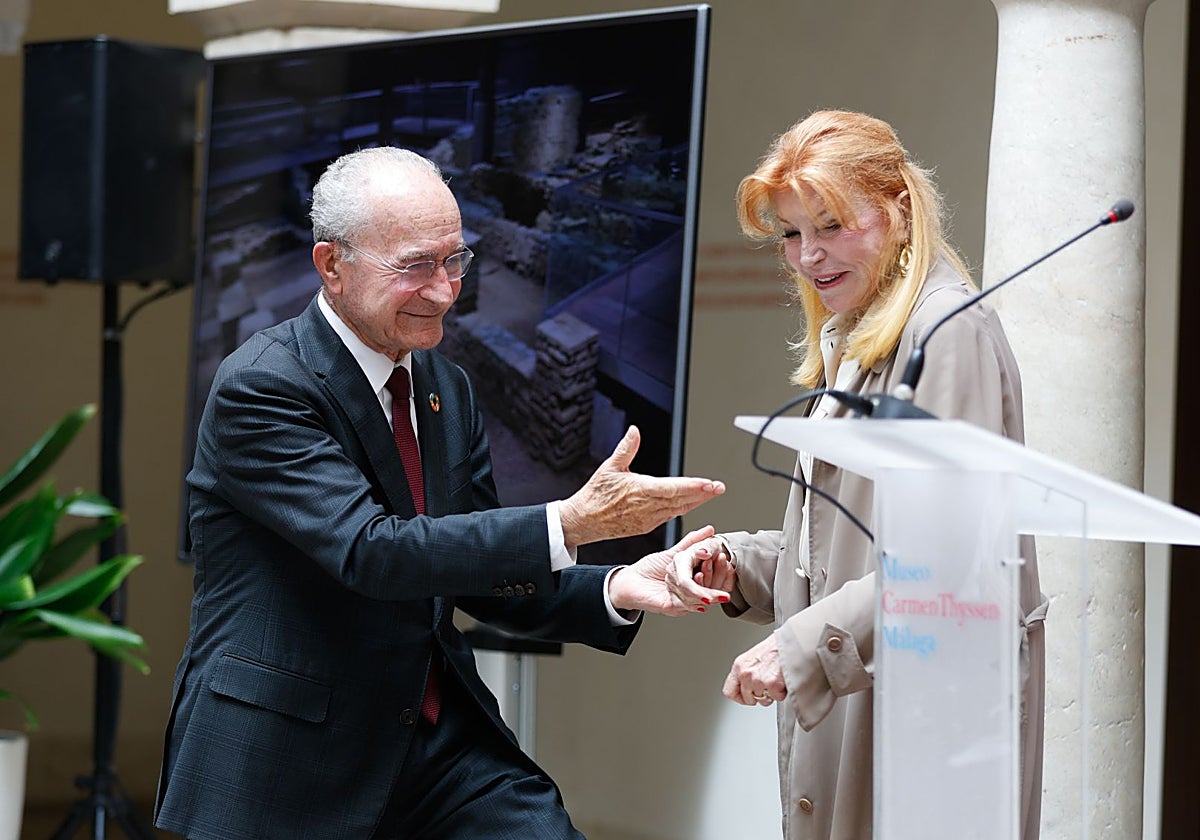
The city council’s negotiating team is led by Mayor Francisco de la Torre, who has entrusted the task to councillor for culture Mariana Pineda and municipal director of museum facilities Luis Lafuente. The baroness, meanwhile, has handed the negotiations over to her closest family members and legal representatives. However, she herself sets the terms and has the final say.
Until now, the city council has had the use of more than 200 artworks without paying a fee of the kind it pays for other museums. The city has, however, made a substantial financial commitment to the project. This includes renovating the Palacio de Villalón, maintaining the museum’s staff and carrying out recent work to restore the building’s archaeological remains and make them accessible to visitors.
In the last financial year, the city council awarded the Palacio de Villalón Foundation a grant of 2.46 million euros to cover running costs and support the museum’s day-to-day activities.
A dilemma on the negotiating table
This raises a dilemma that the two sides have already discussed: how should they value each other’s contributions to a project from which both have benefited? The baroness’s collection has given Malaga a museum that enjoys considerable popularity among Spanish tourists and local residents alike, while helping to revitalise the historic centre.
In return, the city has provided the infrastructure, resources and institutional backing needed to establish the Carmen Thyssen name. Malaga has become the brand’s main platform for visibility and recognition.
Fifteen years after the museum opened, both sides claim much of the credit for its success. It is precisely this disagreement over their respective contributions that has brought the negotiations to a standstill.
The three-million figure has a precedent in the city council’s budget: it is roughly the same amount that Malaga spends on the Centre Pompidou. However, the two agreements are not comparable. In the case of the French institution, the city’s contribution covers the services of the Paris-based team, the programme of temporary exhibitions, the transport of artworks and other expenses. Other public authorities also contribute.
With negotiations at an impasse, the two sides are now considering arrangements that go beyond simply paying for a renewed loan of the collection. One possibility involves linking financial compensation to the right to purchase certain artworks, which would then become the property of the city council. In this way, some of the money Malaga might otherwise pay could go towards acquiring individual pieces from the collection, which includes works by painters such as Francisco de Zurbarán, Mariano Fortuny, Joaquín Sorolla, Julio Romero de Torres and Ignacio Zuloaga.
The negotiations also have a family dimension. For the first time, all three of Carmen Thyssen’s children are taking part in discussions about the future of the collection, as the mayor himself confirmed in May. Borja Thyssen and his sisters, Carmen and Sabina, have joined the process because they see it as a matter affecting the future of their family’s art collection. Guillermo Cervera, the baroness’s nephew and trusted adviser, continues to play a key role within the family circle.
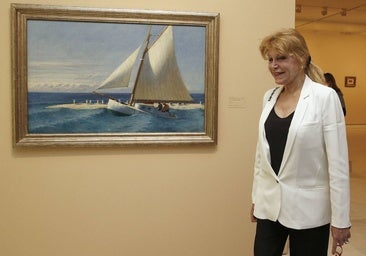
Meanwhile, Carmen Thyssen has pursued several initiatives in recent months to generate income from parts of her wealth. The most significant involves the forthcoming auction of The “Martha McKeen” of Wellfleet, an Edward Hopper painting that Sotheby’s will put up for sale in New York this very week, with an estimated value of around 20 million euros.
She has also begun renting out her motor yacht, Mata Mua (named after Gauguin’s painting), at rates of up to 50,000 euros a week. She has changed tack over her Mallorca mansion: after almost a decade on the property market without finding a buyer, she now offers the property for rent.
The mayor admits that positions remain far apart
Speaking to Sur, Malaga Mayor Francisco de la Torre offered little detail about the negotiations.
“I know there has been progress, but I have no specific news,” he said, declining to clarify the current state of the discussions. The mayor expressed his “conviction” that Carmen Thyssen feels a strong connection with the museum and pointed to the gallery’s success, with more than 2.4 million visitors since it opened. “The natural thing would be for it to continue,” he said.
Nevertheless, the mayor made no attempt to hide the fact that the two sides remain far apart, with only a few weeks left before the current extension expires. The original 15-year agreement, signed in 2011, came to an end in June. For now, De la Torre describes a final agreement only as a “shared wish” between both parties.
He also accepts that the two sides might reach the current extension’s expiry date (31 December) without an agreement. In that case, he would consider extending the deadline again to allow negotiations to continue.
“We have an extension to the contract, and the sensible thing is to try to reach a new agreement. If that proves impossible, we have the option of agreeing a further extension,” he acknowledged.
Negotiations over a second contract began in 2021, according to Carmen Cervera herself, who explained the situation to Surat the time. However, that initial momentum soon faded when the two sides failed to reach an agreement.