
The South Bay has long been secluded from much of Los Angeles County, having to use the congested 405 Freeway to get to areas like Downtown Los Angeles or LAX.
But that could all change. That depends, however, on whether the Los Angeles Metro Board of Directors votes on Thursday, Jan. 22, to move forward on a project that would extend the Metro light rail K Line about 4.5 miles so that it ends at the Torrance Transit Center.
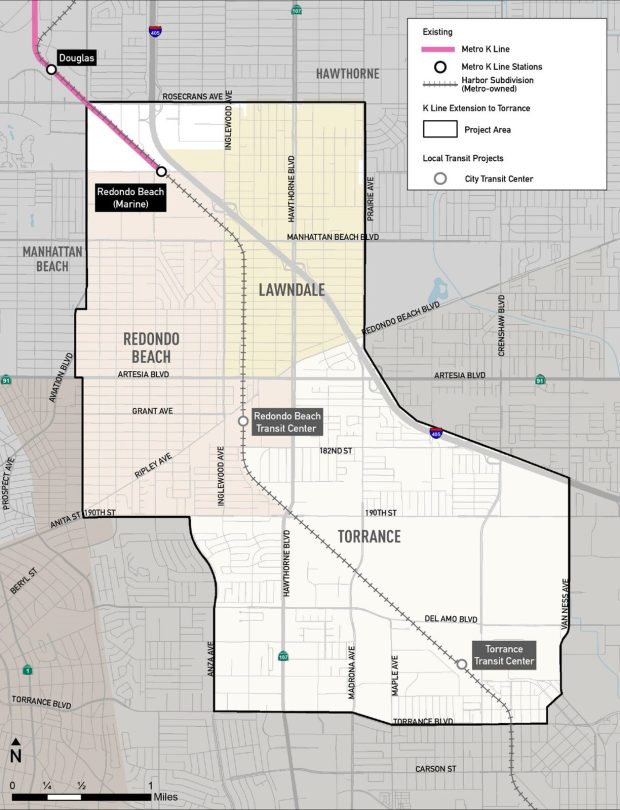 The 4.5-mile stretch where the C Line Extension to Torrance will be. (Map courtesy of Metro, STV)
The project is estimated to reduce air pollution and greenhouse gas emissions by about 2,639 metric tons of carbon dioxide annually, according to the Torrance Traffic Commission, in addition to creating 65,000 jobs by 2042.
Thursday’s vote will not only be whether the extension should be built, but also where the two tracks supporting high-speed light rail trains will go. And those decisions will change South Bay residents’ lives for better – or for worse.

Niki Negrete-Mitchell describes the proposed Metro K Line extension near her home in Redondo Beach on Monday, Oct. 20, 2025. (Photo by Drew A. Kelley, Press-Telegram/SCNG)
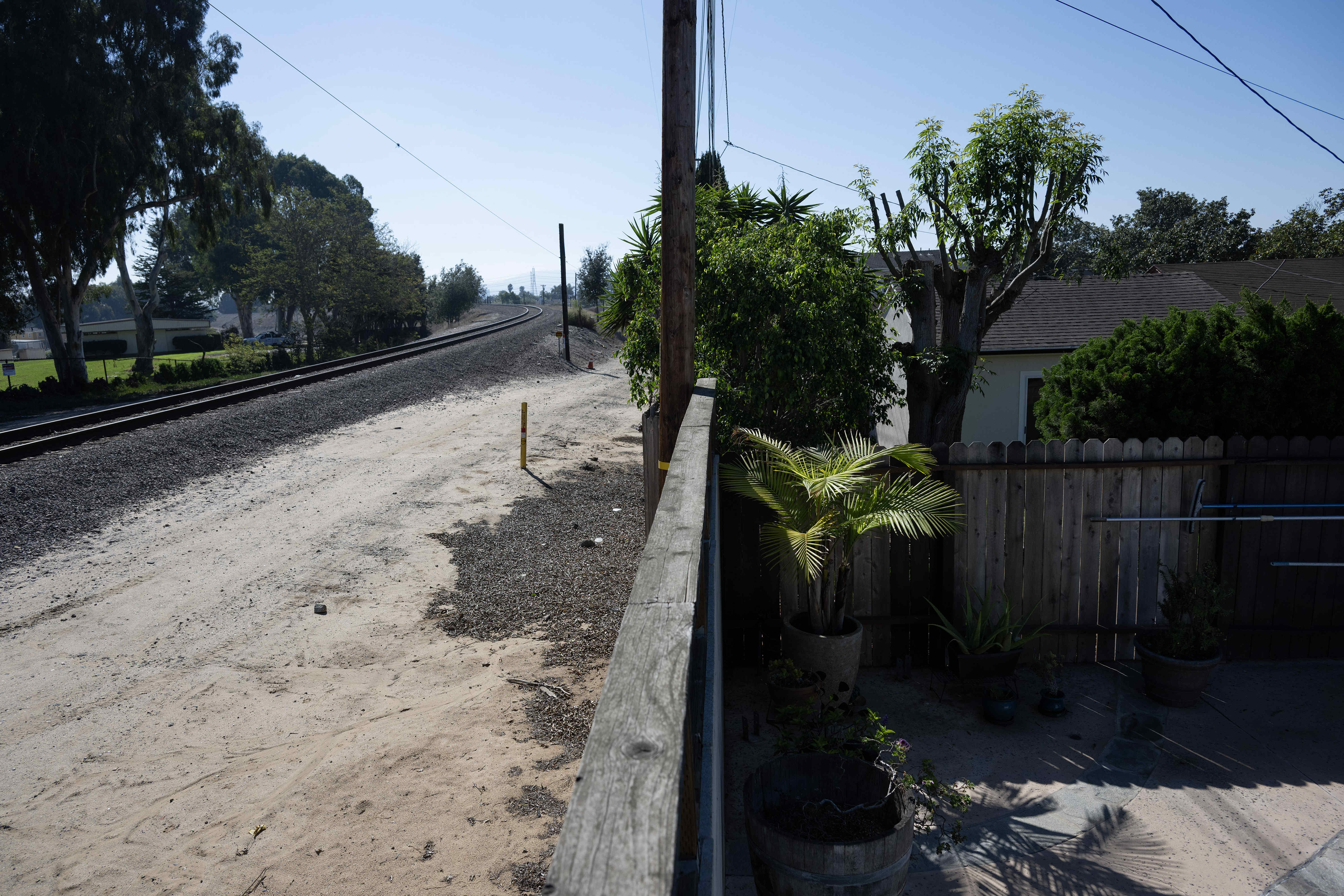
The distance from Niki Negrete-Mitchell’s backyard to the existing freight rail line in Redondo Beach on Monday, Oct. 20, 2025. (Photo by Drew A. Kelley, Press-Telegram/SCNG)
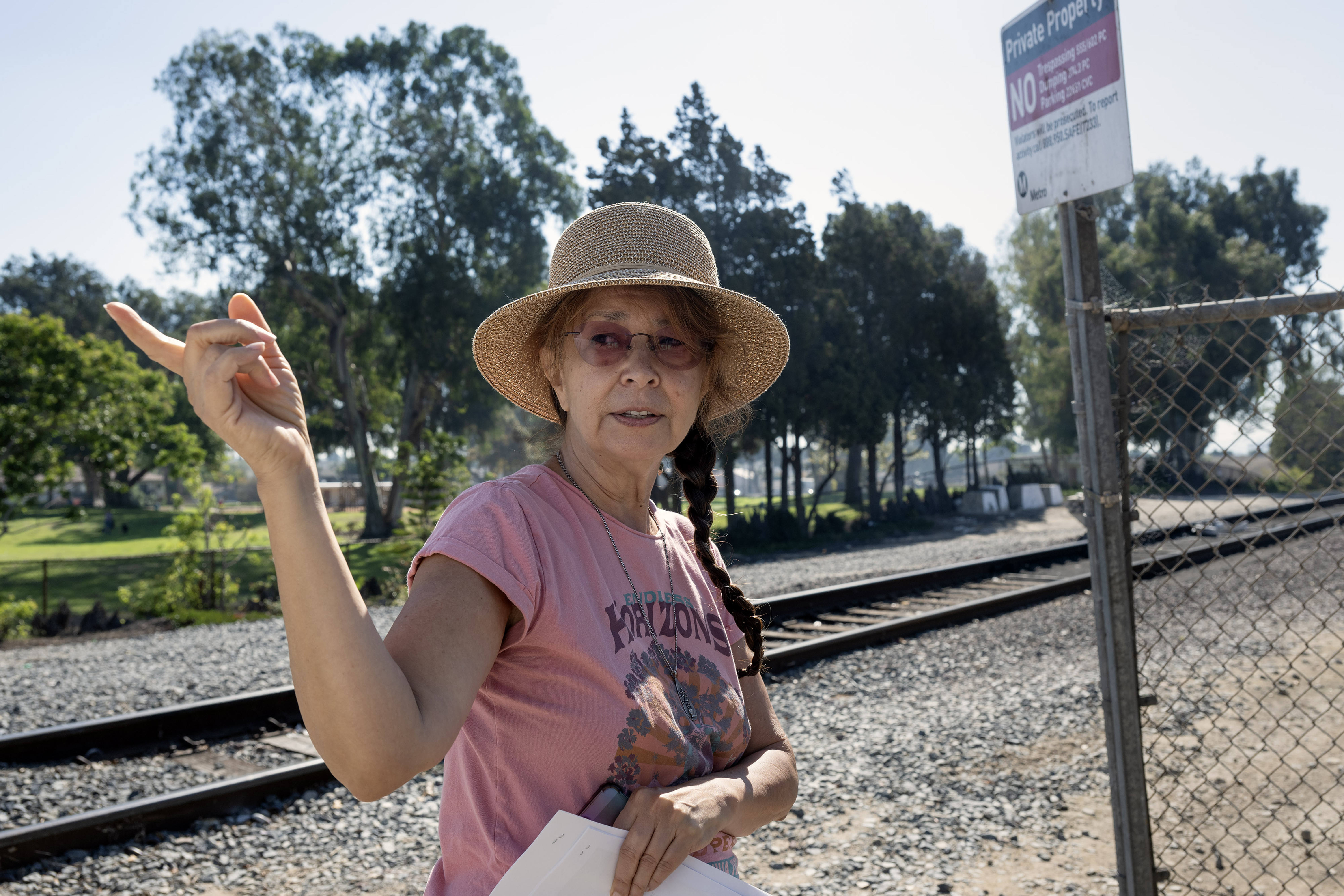
Niki Negrete-Mitchell describes the proposed Metro K Line extension near her home in Redondo Beach on Monday, Oct. 20, 2025. (Photo by Drew A. Kelley, Press-Telegram/SCNG)
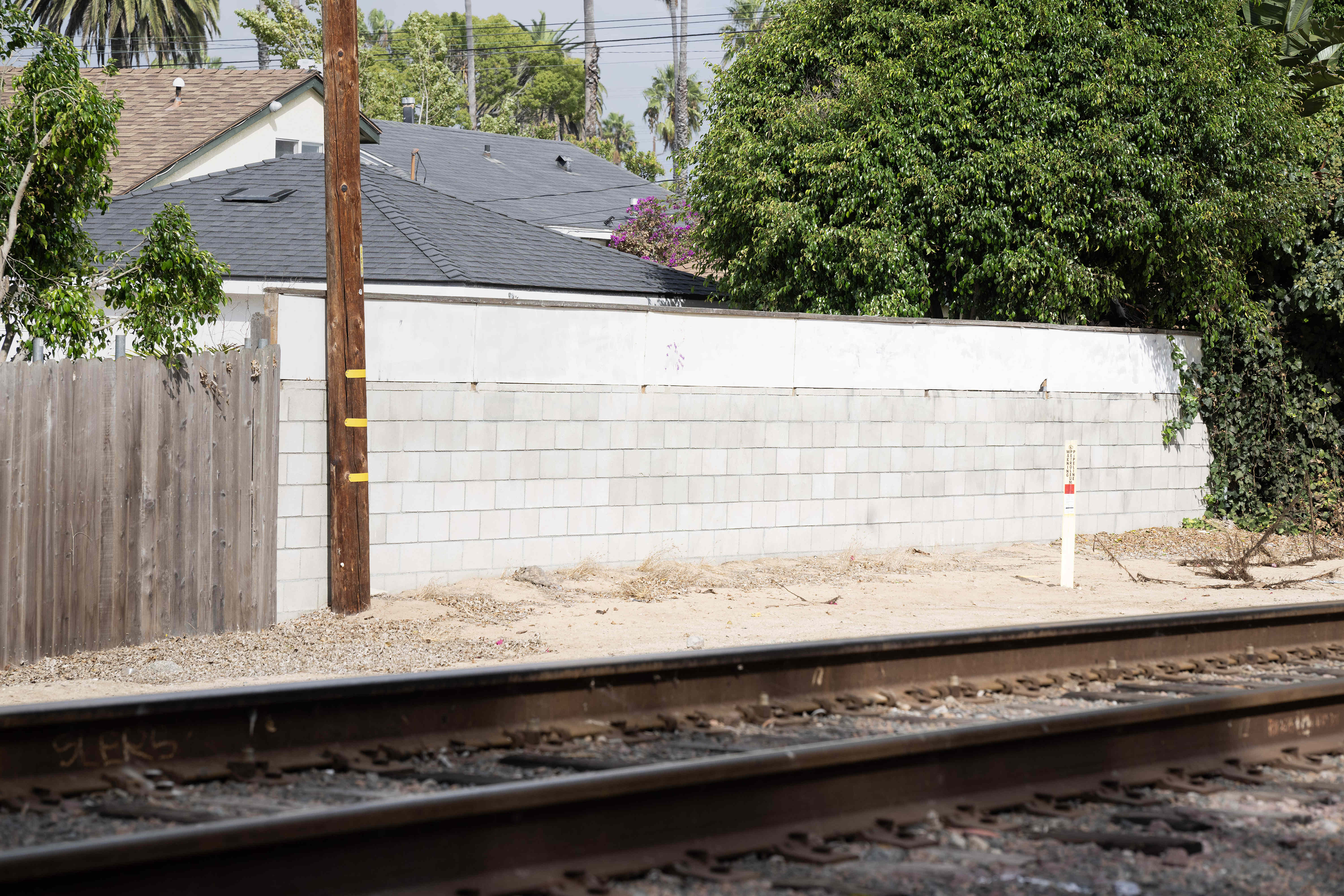
The freight rail line near 182nd St. in Redondo Beach on Monday, Oct. 13, 2025. (Photo by Drew A. Kelley, Press-Telegram/SCNG)
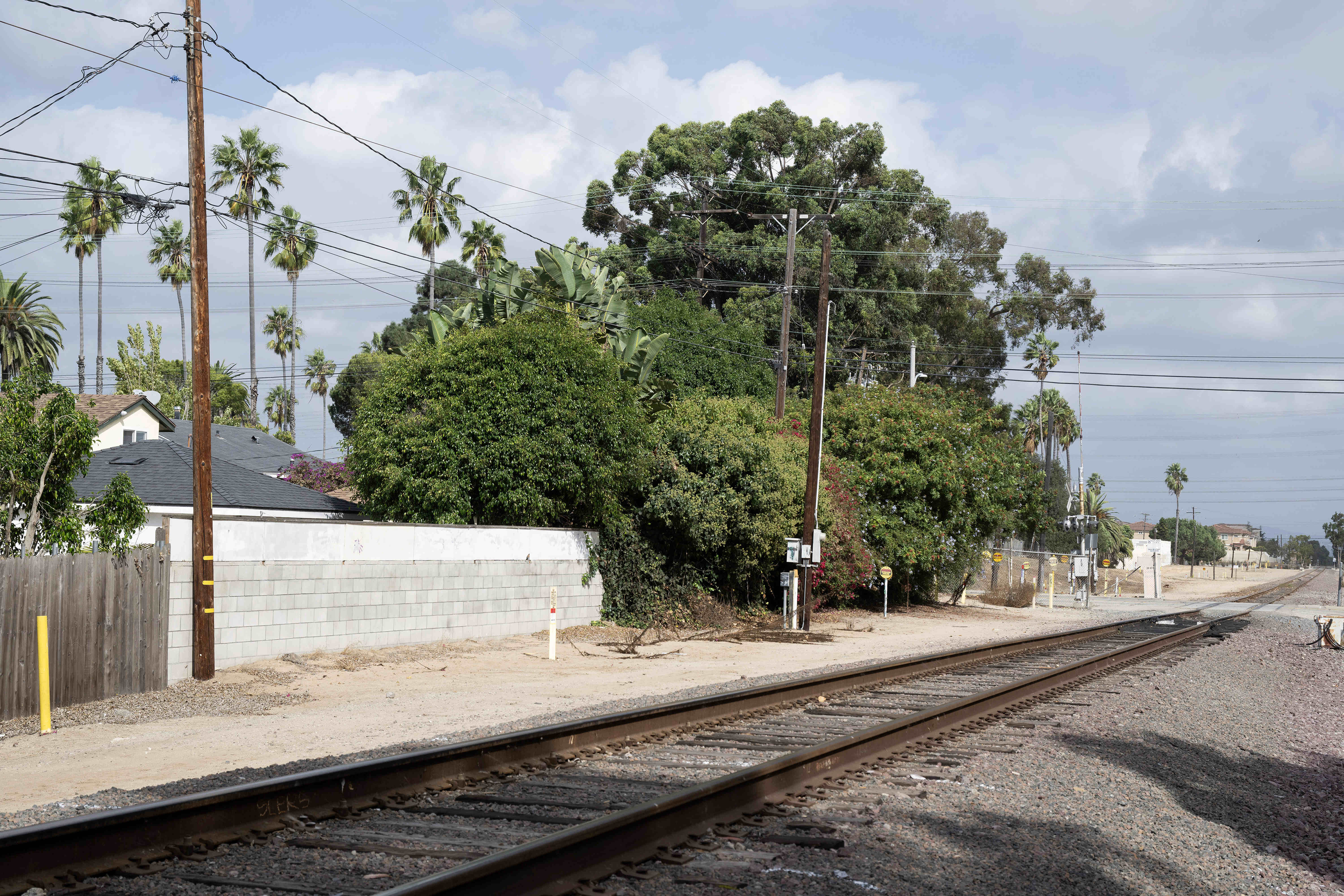
The freight rail line near 182nd St. in Redondo Beach on Monday, Oct. 13, 2025. (Photo by Drew A. Kelley, Press-Telegram/SCNG)
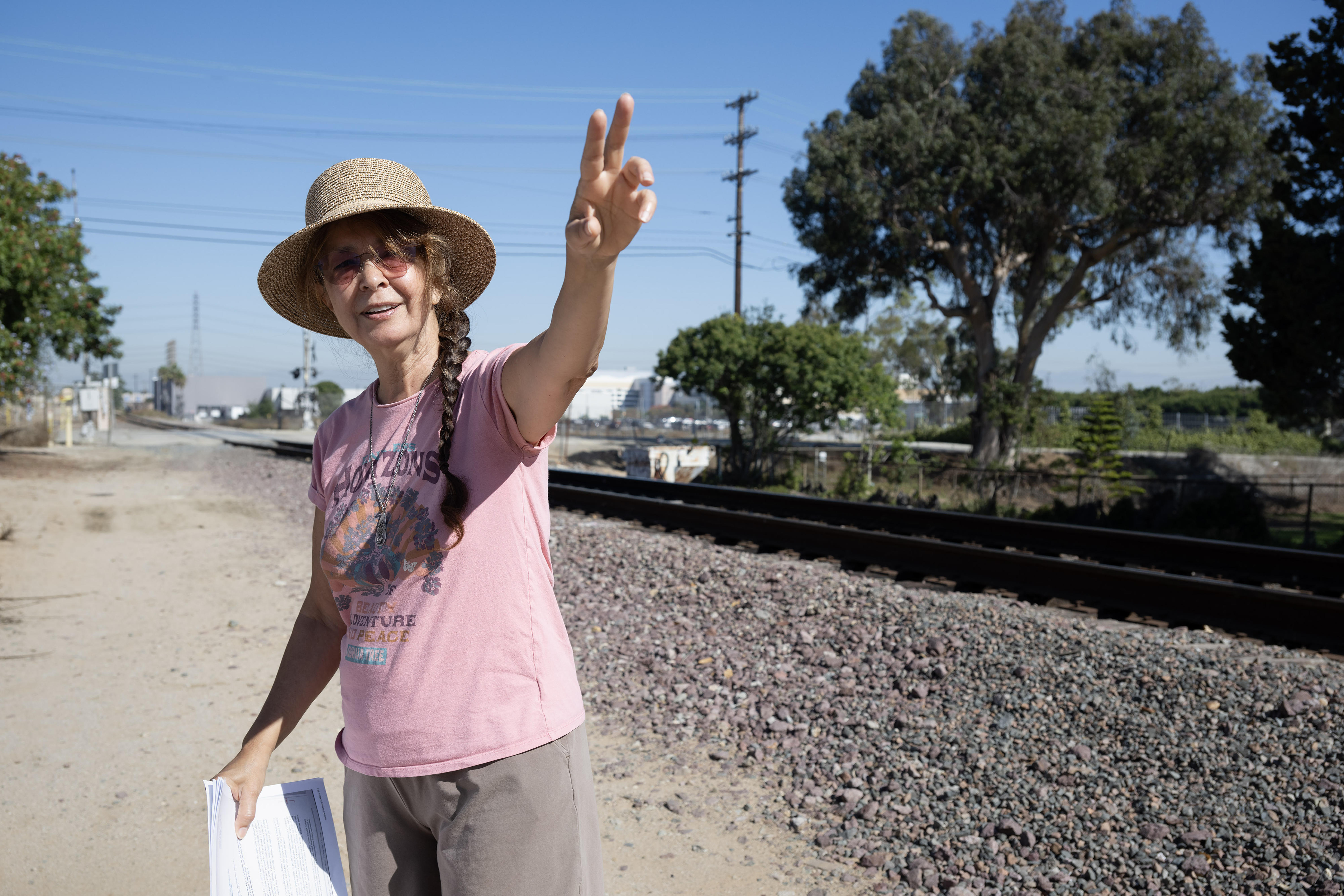
Niki Negrete-Mitchell describes the proposed Metro K Line extension near her home in Redondo Beach on Monday, Oct. 20, 2025. (Photo by Drew A. Kelley, Press-Telegram/SCNG)
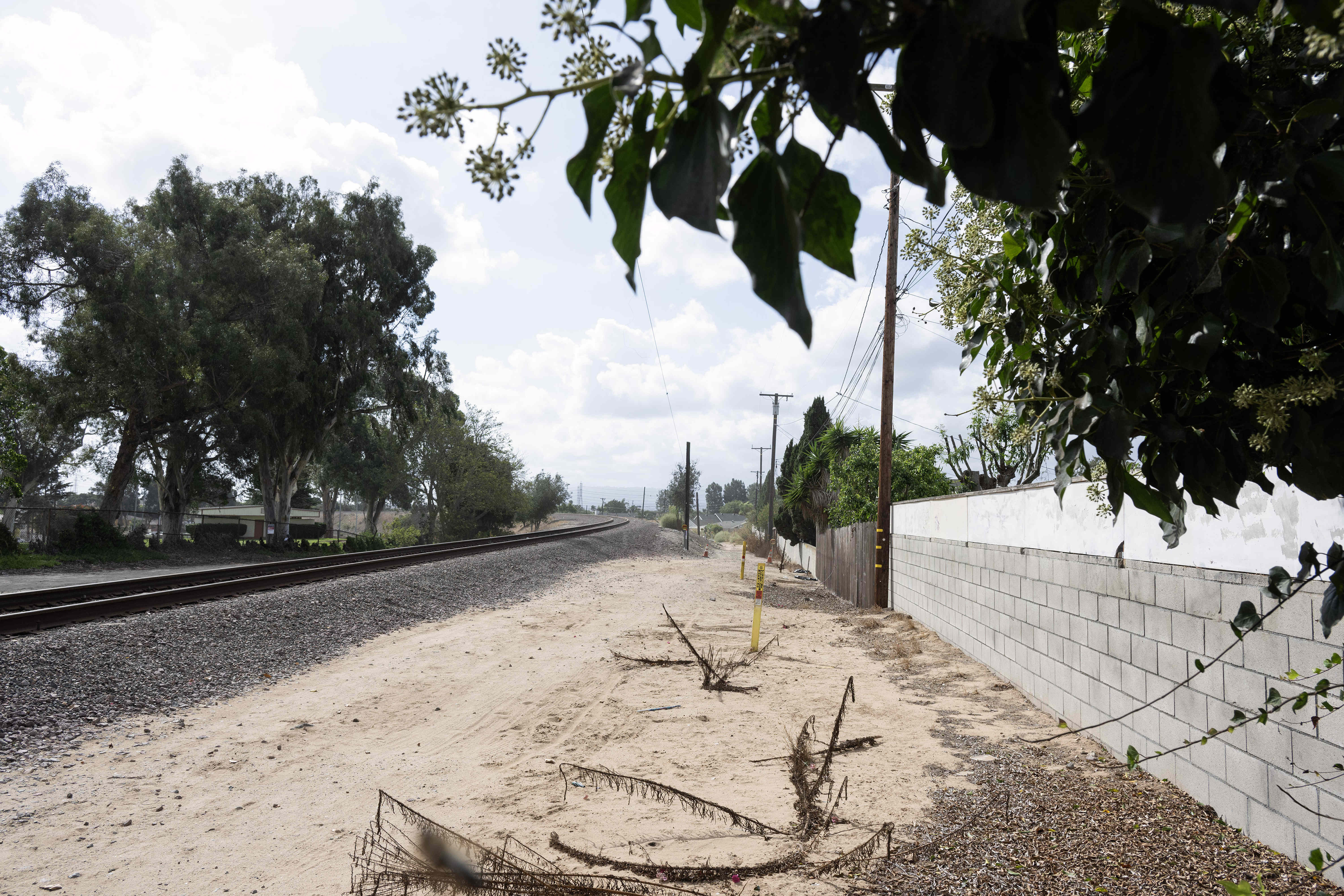
The freight rail line near 182nd St. in Redondo Beach on Monday, Oct. 13, 2025. (Photo by Drew A. Kelley, Press-Telegram/SCNG)
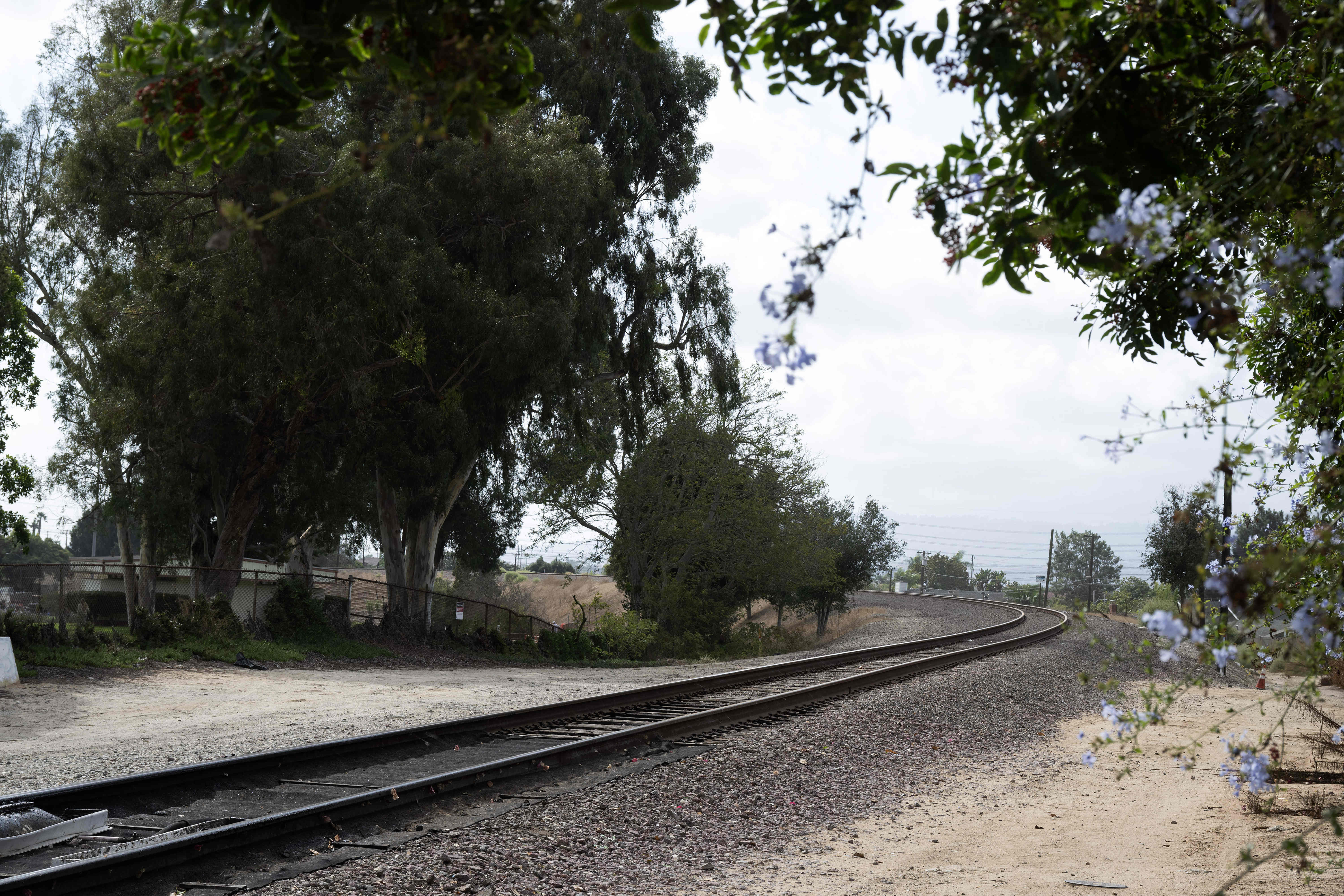
The freight rail line near 182nd St. in Redondo Beach on Monday, Oct. 13, 2025. (Photo by Drew A. Kelley, Press-Telegram/SCNG)
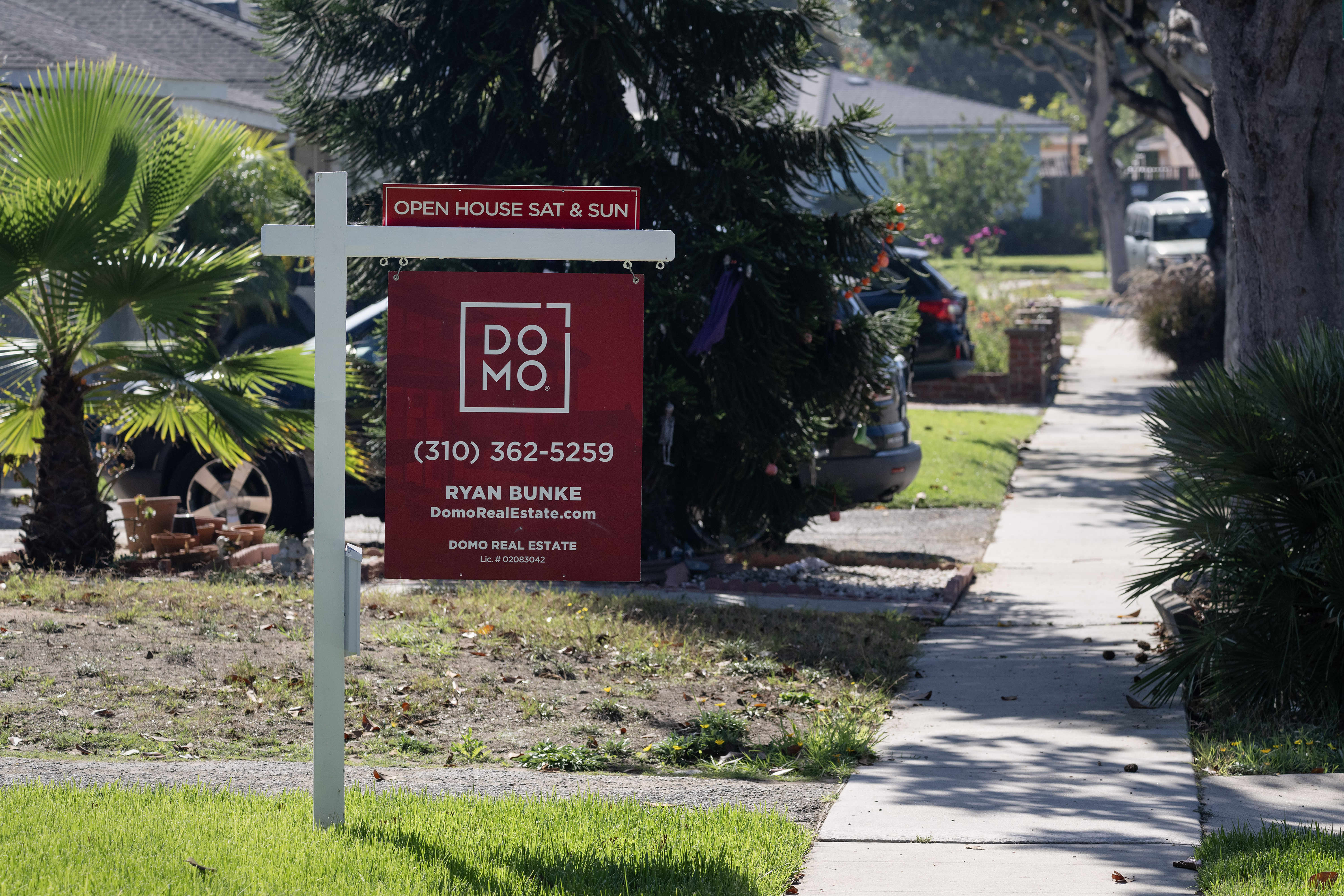
A home for sale near the proposed Metro K Line extension in Redondo Beach on Monday, Oct. 20, 2025. (Photo by Drew A. Kelley, Press-Telegram/SCNG)
Show Caption
1 of 9
Niki Negrete-Mitchell describes the proposed Metro K Line extension near her home in Redondo Beach on Monday, Oct. 20, 2025. (Photo by Drew A. Kelley, Press-Telegram/SCNG)
Niki Negrete-Mitchell, for example, has lived in her Redondo Beach home for almost 20 years, and every day, twice a day, a freight train passes by — just 30 feet from her backyard. Negrete-Mitchell and her husband knew the train passed behind their house when they bought it, but what they didn’t expect was the possibility of having two more trains passing by close to 300 times per day. But that’s what would happen if the Los Angeles Metro Board of Directors votes to certify the final environmental impact report for the K Line extension and approves what the metro staff has presented as the “locally preferred alternative.”
The K Line extension, formerly the C Line, has been in the works since 2009, but the process has been slow because of a lack of funding. In 2018, however, the Metro Board directed staff to begin an environmental review after the project received voter-approved Measure M funds. Then, in 2023 the draft environmental impact report, identifying potential routes and subsequent environmental impacts, was released and after months of meetings and thousands of public comments, the FEIR was released on Sept. 11, 2025.
The FEIR identified an LPA – a route and construction plan that Metro staff created, which includedinput from local governments, business owners and residents – that takes two trains (going both directions) and puts them in the 75-foot wide stretch of dirt behind Negrete-Mitchell’s house, next to the freight rail. That would displace her, her husband and her daughter from their home, she said.
While the Burlington Northern Santa Fe Railway has utilized those tracks for decades to transport isobutane, butane and gasoline to the El Segundo Chevron Refinery, it is actually a Metro right-of-way, meaning Metro has the authority to utilize that space however it deems fit.
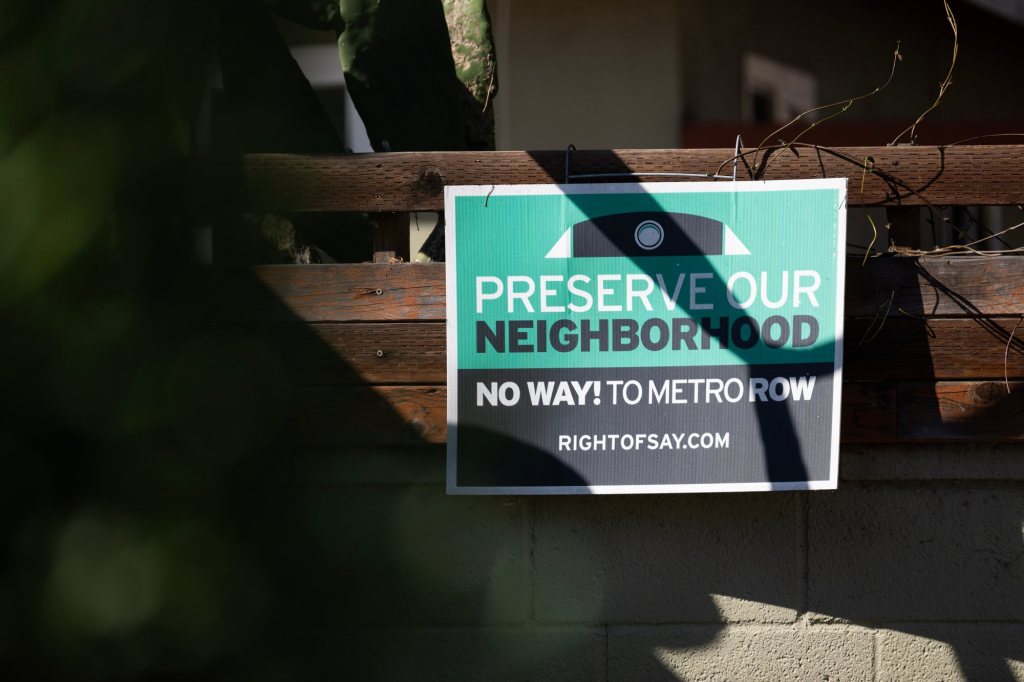
Negrete-Mitchell is not the only one who doesn’t want to see the K Line extension go down the ROW. There are, after all, hundreds of homes in Lawndale and Redondo Beach adjacent to or near the ROW, with many residents saying they would likely be forced to move should the Metro Board vote to use the ROW.
“Nobody got to vote on it from the community,” said Chelsea Schreiber, a Lawndale resident who lives on 163rd street adjacent to the ROW. “So, it’s not locally preferred; it’s Metro preferred.”
Schreiber also noted that moving the freight train over and making room for the light rail along the ROW would mean the removal of hundreds of trees and greenspace in the area.
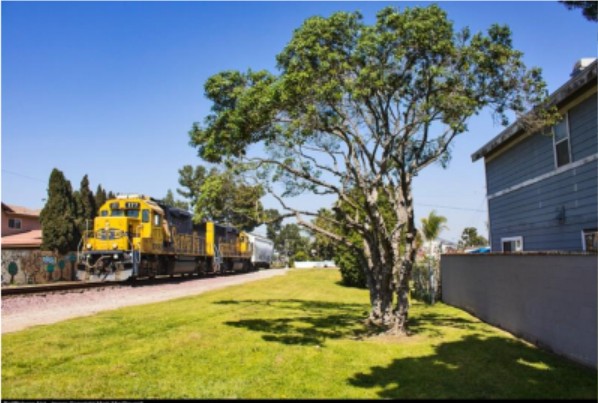
A photo of the Metro ROW in Lawndale. (Photo courtesy of Chelsea Schreiber)
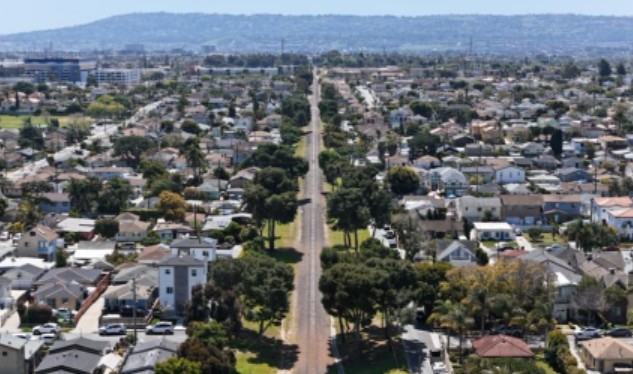
A photo of the Metro ROW in Lawndale. (Photo courtesy of Chelsea Schreiber)
Show Caption
1 of 2
A photo of the Metro ROW in Lawndale. (Photo courtesy of Chelsea Schreiber)
The entire LPA layout is a hybrid alignment, with various portions of the track elevated, at-grade or below-grade. The light-rail would begin with an elevated segment starting at the Redondo Beach Transit Center before shifting to an at-grade segment along the ROW, with tracks going below ground at 170th and 182nd streets to limit noise impacts at road crossings. Metro also said in the FEIR that there would be sound walls constructed where possible to mitigate noise during the near seven-year construction process.
Negrete-Mitchell, however, said the construction may be the worst part for her because of the digging that would need to be done not only for the underground portion of the tracks, but also to move the freight train tracks and seven pipelines funneling oil, including jet fuel, approximately 12 feet to make room for the at-grade tracks. And the upheaval of all that dirt could spread potentially toxic chemicals.
These tracks have been along the ROW for more than a century, according to Barry Ogle, a retired BNSF engineer, who noted a time when he was analyzing the tracks and found nails dating back to 1909.
Railroad ties have historically been treated with chemicals to protect against pests and other environmental conditions, according to the California Department of Toxic Substances, and removing those ties can kick up those chemicals into the air. The soil along the ROW has not been analyzed or treated, so it would not be known if there are any toxic levels of dangerous chemicals present until Metro surveys the area prior to construction.
Those against the ROW option have also expressed concerns over the relocation of pipelines carrying highly flammable material and the freight train running closer to their homes — as close as eight feet in some instances. Derailments are a big concern, especially after the same train derailed in Torrance in 2023.
Metro, however, has said that they will replace the freight rail infrastructure, which should address the concern, since old tracks are typically the culprit of derailments.
When it comes to the relocation of pipelines and utilities, Metro said this isn’t its first time having to do so for a transit project.
“Metro has relocated gas utilities on major projects such as the Purple Line Extension,” Metro said in a written statement, “where gas lines along Wilshire Boulevard were moved to support tunneling and station construction, and the Regional Connector, which required gas line relocations beneath downtown streets to accommodate rail infrastructure and station entrances.
“Gas and other utilities were also relocated as part of the existing C (Green) Line and Crenshaw/LAX (K Line) Project,” the statement added, “which use the same freight corridor as the proposed light rail extension to Torrance, where adjustments along Crenshaw Boulevard and near Aviation/96th Street supported rail construction while maintaining uninterrupted gas service.”
The spokesperson also said that this is not an unprecedented project and there are other instances where light rail and freight share a corridor among residential areas.
“Metro has a long record of safely building and operating light rail in dense, mixed-use corridors,” the statement said, “including historic railroad rights of way that pass through established neighborhoods such as the Metro A Line between Long Beach and Pomona and the Metro E Line between Santa Monica and East Los Angeles.”
While there are those who are against the LPA, however, there are also others who are in support. Torrance Mayor George Chen and Councilmember Sharon Kalani, for example, came to the Wednesday, Jan. 14, LA Metro Planning and Programming meeting to speak in support of the LPA. That city has long backed the light rail extension, specifically the ROW, budgeting close to $100,000 for “C Line education services,” according to emails obtained through public records requests.
It’s not only the city who supports it, though. Many Torrance residents have also been anxious to see increased public transportation come to their city.
“Our quaint little business district of Downtown Torrance is excited for this project and can’t wait for it to come down to Torrance,” said Adam Schwartz, a member of the Downtown Torrance Association. “Our businesses are united in support of this project and we’ve been waiting to be reconnected with the rail network since the days of the Red Car. We host thousands of visitors regularly with our Annual Scaredown in Torrance and Holiday Stroll and can only imagine what a gamechanger this will be for us with the station in Torrance.”
A press release from South Bay Forward, a community organization enlisted by Metro for public outreach, said that this project would provide much-needed infrastructure for communities in the South Bay to get jobs, school and health care.
“South Bay Cities have invested over $45 million in two regional transit centers, more than two-thirds voter approval of Measure M and billions in local sales taxes, for this exact rail line promised for decades,” said Briana Egan, Redondo Beach resident and chair of South Bay Forward. “It’s long overdue and we desperately need high-quality rail to solve congested local traffic and serve our communities.”
Jennifer Dodge, a Redondo Beach resident who has lived adjacent to the ROW for 25 years, said that the community at large isn’t against having a train — they just don’t want it so close to their homes.
And the FEIR has provided alternative options.
One most advocated for by those against the current proposal is the Hawthorne Boulevard alignment. This alignment would leave the ROW into an elevated guideway along the 405 Freeway and travel in the center median of Hawthorne Boulevard before rejoining the ROW south of 190th Street — essentially diverting the train from the residential area.
That option, some have said, would be more beneficial to the community and local businesses since it will have higher visibility and ridership, according to the FEIR. The Hawthorne Bouelvard alignment would garner 35% more ridership than the LPA, likely due to its proximity to the South Bay Galleria. But Metro staff said the increased ridership is outweighed by the increased cost to construct the alignment.
In the FEIR, Metro predicted the LPA would cost $730 million less than the Hawthorne Boulevard option, with the costs for the two predicted as $2.7 billion and $3.4 billion, respectively. The LPA would take less time to complete. The FEIR said: The LPA is projected to be completed in March 2036, while the Hawthorne Boulevard option would be completed in December 2036. This is because Metro would have to obtain permits from Caltrans, causing delays — and building an elevated rail is more expensive.
While Torrance has supported the LPA, the other impacted cities have not. Redondo Beach, Lawndale and Hawthorne have all submitted letters opposing the LPA — with some even threatening legal action.
“The City of Hawthorne is united behind the Hawthorne Blvd Elevated Option since it brings to life the C-Line, revitalizes local businesses through higher visibility to a diverse ridership, and encourages continued development of a real destination for riders,” that city said in a letter to the LA Metro Board of Directors. “This alternative would insulate residents from noise, vibration and land subsidence impacts when the C-Line is routed along the I-405 Freeway and the median of Hawthorne Blvd. The Elevated Option would also provide an expeditious, speedy route to the Torrance Transit Center, which would likely bolster its use at a time of general Metro ridership decline.”
Redondo Beach Councilmember Zein Obagi, for his part, said during the Dec. 8 South Bay Cities Council of Governments Transportation Committee meeting that Redondo Beach is prepared to launch a “meritorious lawsuit challenging the adverse impacts associated with the soils along the Metro Right-of-Way.”
“We’ll consult our engaged legal counsel about our rights and recourse,” he said in a written statement, “and have appropriated funds to initiate legal action if necessary and warranted.”
But the reasons some people support the LPA go beyond it being cheaper and quicker to build.
The Hawthorne Boulevard alignment, for example, would require the temporary and permanent property acquisition of multiple businesses in the area, specifically, car dealerships — notably, the Volvo Cars South Bay auto dealership in Torrance. Permanent easements would also be needed at Jerome’s Furniture and the South Bay BMW/mini auto dealership, and a temporary easement would be needed at South Bay BMW – all in Torrance.
“While it is possible to avoid displacement of residents, Metro determined that the Hawthorne Option could not be built or operated without permanent acquisition of non-residential properties, which would in turn affect associated businesses,” says a document attached to the FEIR that outlines issues with the Hawthorne option. “Among the alignment options studied, the Hawthorne Option would require the greatest number of property acquisitions and result in the highest number of business displacements.
“Several commercial properties along Hawthorne Boulevard, including gas stations, auto repair shops, self-storage, furniture store, and auto dealerships,” it adds, “would need to be permanently acquired to accommodate the elevated alignment.”
While the LPA may have fewer business property acquisitions, it has much more residential due to the limited space along the ROW. According to Metro’s 2025 Real Estate Acquisitions Report, there would be 17 temporary construction easements on residential property, ranging from 231 square feet to 850 square feet.
Metro said that no permanent residential acquisitions or forced displacements would be needed through the LPA.
“North of 190th Street, only limited commercial properties would be acquired,” Metro said in its statement. “South of 190th Street, some partial acquisitions of commercial and industrial properties would be needed to widen the rail corridor for the project.
“Temporary off-site areas may be used for staging equipment and materials,” the statement added. “The light rail would be fully grade separated along the Metro ROW to avoid conflicts between trains, pedestrians, cyclists and drivers. In addition, the project includes robust freight safety improvements along the corridor at eight existing freight crossings to create a quiet-zone corridor for enhanced safety and to eliminate regular horn noise near homes.”
Although Negrete-Mitchell’s property would not be acquired, and Metro has worked to mitigate noise, vibration and environmental impacts that may come with the LPA, her family would still be displaced because of her compromised immune system being unable to handle the disturbance, she said. She does not know where they would go, though — since she still has a mortgage and lives on a fixed income.
“It’s torture,” she said. “We’d be displaced.”
Still, after years of waiting, a decision will finally be made during Thursday’s meeting — impacting the future of the South Bay and its residents.