

One hour into cruising the streets in a car near the Pacific coastline of Long Beach, the band Joyce Manor’s sightseeing leads to the destination that, to their amusement, is now a pop-punk landmark: the Joyce Manor midcentury condominium off Alamitos Avenue. With its Art Deco lettering and being a stone’s throw from Ocean Boulevard, this cozy condo complex feels like a humble monument to SoCal Americana. You could picture Elvis walking out of here in one of his classic surfing movies.
This is indeed where Joyce Manor got its name, but it’s not quite ground zero — that’s a few miles east in nearby Torrance. Bassist Matt Ebert confirms it’s a fan destination, where people post on social media about their pilgrimages.
“It doesn’t have that much meaning to me,” says frontman Barry Johnson, who often walked past this building to a former day job during the band’s early days. “It’s my whole identity, my life, but it’s just two words, you know? I’ve never been inside.”
Those two words, Joyce Manor, now embody a less-glitzy yet still-potent flavor of vital SoCal culture — L.A.’s local punk scene.
After nearly two decades together as local heroes and critical darlings — 2014’s “Never Hungover Again” is on Pitchfork’s list of the best albums of the 2010s — the members of Joyce Manor have had an especially visible past few years: tours with spiritual mentors Weezer, their signature song “Constant Headache” featured on “The Bear,” and sold-out shows at the Hollywood Palladium (where Mark Hoppus of Blink-182 joined them onstage for their song “Heart Tattoo”) headlining their local Long Beach Arena.
Later this month, they’ll release their seventh studio album, “I Used to Go to This Bar,” through longtime label Epitaph. The songs are so good that the label’s founder, Bad Religion guitarist and L.A. punk icon Brett Gurewitz, came out of semiretirement to be their producer.

“As a writer who has almost always used too many words in his songs, I just truly admire Barry’s elegance and economy of words,” says Gurewitz, who compares Johnson’s songwriting to Ernest Hemingway and Tim Armstrong. (“Sort of like the Springsteen of the punk movement, or the Dylan,” adds Gurewitz.)
Another fan is John Mulaney. The comedian booked them for their live TV debut on his Netflix talk show on an episode dedicated to L.A. punk that had surviving members from Fear, X, the Germs, Minutemen, the Cramps and Gun Club.
“They were an absolute highlight of that week,” Mulaney wrote via email. “Ted Sarandos and others at the studio were like ‘Who were THOSE dudes?’ Those guys make me really excited about drums and guitars and the necessity of loud ass music.”
“We got some serious hang time in with Richard Kind,” says Johnson, grinning when I ask about performing that night.
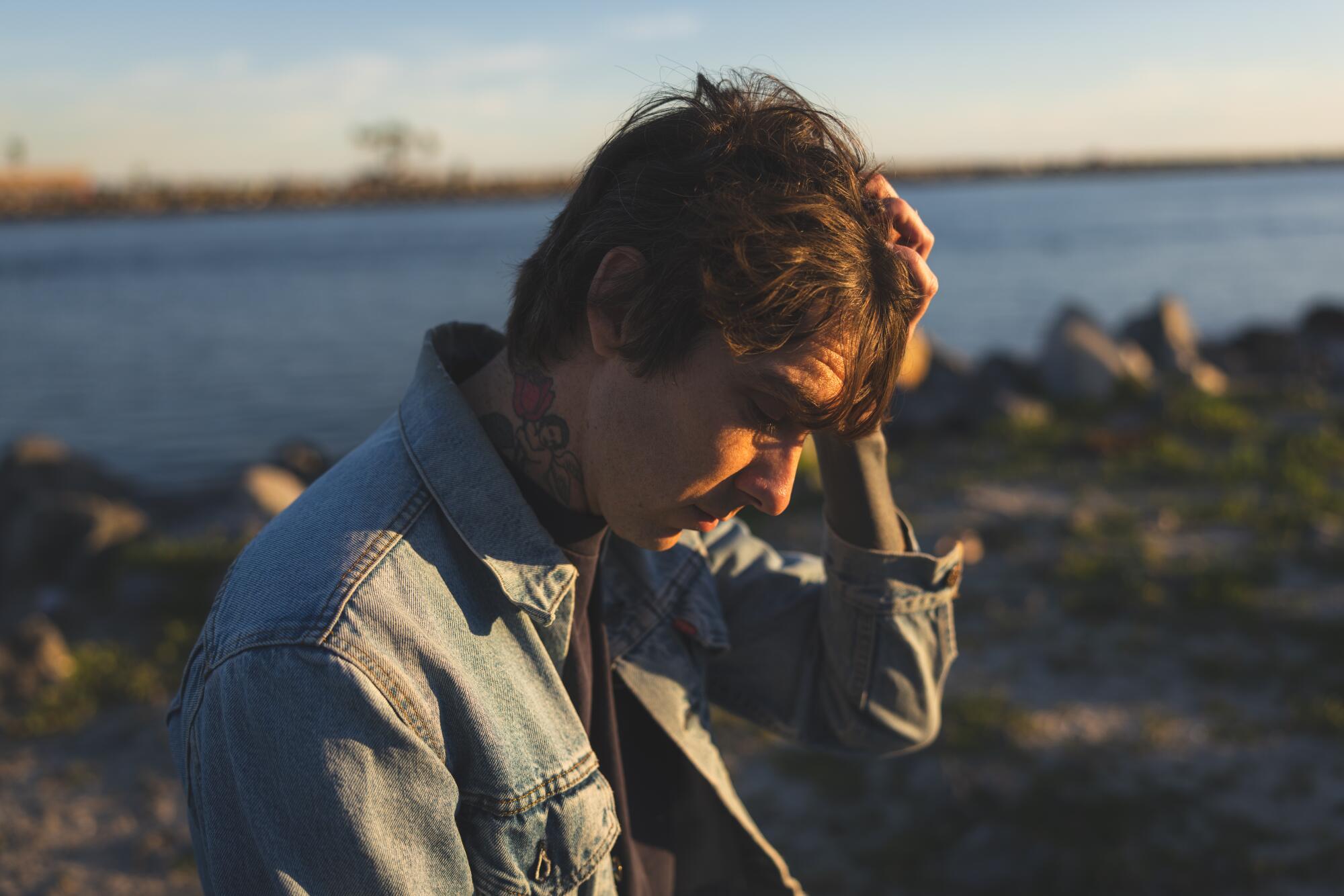
Singer-songwriter and guitarist Barry Johnson of Joyce Manor on Jan. 12 in Long Beach.
(Jason Armond/Los Angeles Times)
For a band that arrived so self-assured — their 2011 self-titled debut is especially a landmark of punk’s Four Loko-era, or as guitarist Chase Knobbe calls it, “the MGMT times” — Joyce Manor now seems to be having a moment. Call it the goodwill that comes from creating a catalog of solid and critically acclaimed albums, or a testament to the core trio of Johnson, Ebert and Knobbe still being together after all these years. Johnson, 39, is the main songwriter and talker of the group, always ready with a thorough answer regarding any bit of Long Beach or Joyce Manor lore. Knobbe, 34, is more reserved yet just as knowledgeable about the area’s history and scenes. Ebert, also 39, is the politest, a kind force who, 17 years later, remains the new guy after Johnson and Knobbe formed the band a year before.
But through all the success, the band remains in the South Bay. So, I was excited to see home through their eyes. I first suggest we tour the Torrance spots most historic to Joyce Manor.
“There is not one music venue in Torrance,” says Johnson, his tone losing some positivity. “There’s never been any kind of thing that can bring touring bands, then you can open up for bigger bands. They have that in Orange County, but there was no ecosystem for that in Torrance at all.” Ebert added that they haven’t played a show in Torrance since 2010 at the now-gone Gable House Bowl, where Johnson and Ebert originally met through a bowling league.
For our driving tour of historic spots for the band, the members opt to stay in Long Beach, with Knobbe driving us around to plenty of spots vital to their early days. One notable destination was the house known as “The Hickey Underworld.” This is where Joyce Manor played early shows (“You’re playing a living room with your socks on,” adds Knobbe) and credits its free practice space and late nights drunkenly singing along to Saves the Day for making the band feasible. We also stopped at Johnson’s apartment, where he recorded the “Constant Headache” demos and lived until signing with Epitaph and releasing “Never Hungover Again.” Other sights included Knobbe’s first Long Beach apartment, countless favorite and not-so-favorite bars and a gas station where Johnson beams, “I used to buy cigarettes there.” We also talked much about the Torrance 3 bus, Johnson’s “mental workspace” where, to and from practice in Long Beach, he wrote and workshopped many songs, including “Constant Headache.”
Having moved to Long Beach at 20, Johnson feels more at home here, though he acknowledges that Torrance is still the spirit of Joyce Manor.
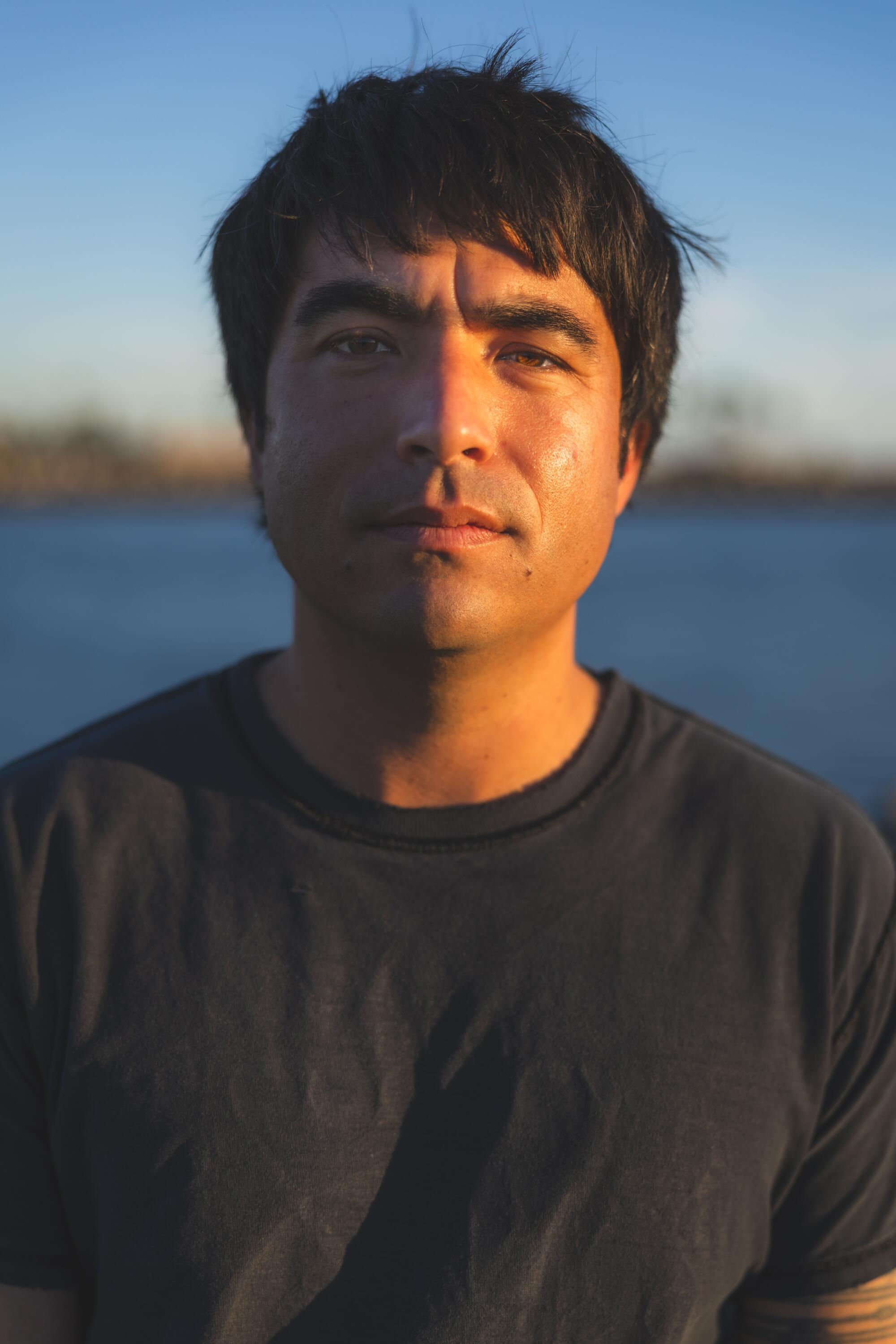
Guitarist Chase Knobbe, who formed Joyce Manor with Barry Johnson, with Matt Ebert joining a year later.
(Jason Armond/Los Angeles Times)
“I don’t have that much love for Torrance,” he says. “I like things about it. I think it’s got a lot of problems … [it’s] haunted and weird.”
Knobbe shares Johnson’s mixed affection toward Torrance; he moved to Long Beach a few years after Johnson. (“I think the first time I drove on the freeway was giving Barry a ride back to Long Beach.”) Ebert remains the accepted outsider, a longtime East L.A. resident with roots in San Pedro. When I asked if moving to L.A. was ever an option, they said the band favored visiting the older, more established pop-punk scenes of Riverside.
“My high school band tried to play a show at the Whisky a Go Go,” says Knobbe, “but it was like a pay-to-play sort of thing.”
We end our tour grabbing Modelo beers (“A few small beers,” we joke) at the V Room. Though Johnson confirms the album’s titular bar is an amalgamation of all the local bars they showed me, the V Room has become a go-to.
“I was so broke that I really relied on dollar beer night,” Johnson says. “Fern’s [now the Hideout] had dollar beer night. As a result, it had a younger crowd, college kids with not a lot of money. That’s how I met a lot of people, some I still know today.”
Since the new album is dedicated to Brian Wilson, who grew up in nearby Hawthorne, I wanted to explore what Joyce Manor and Wilson may share — or at least how the South Bay shaped them.
“The South Bay is the epicenter of the Southern California culture that became really popular in the 1950s all over the world,” says Ebert. “Surfing and then skateboarding. It’s Americana distilled. But the South Bay is also an extremely complicated, lonely suburban place. It’s very cut off from the rest of the city. It’s surrounded by oil. You have the Port of L.A., which is one of the biggest ports in the world. It’s kind of a cultural dead zone, but it also bred what a lot of people around the world know as American culture. Brian knew how to distill that.”
Johnson points to the irony of murals dedicated to legendary punk bands the Descendents and Black Flag littering the now-expensive Hermosa Beach.
“It’s just a pretty heartless place and always has been,” says Ebert.
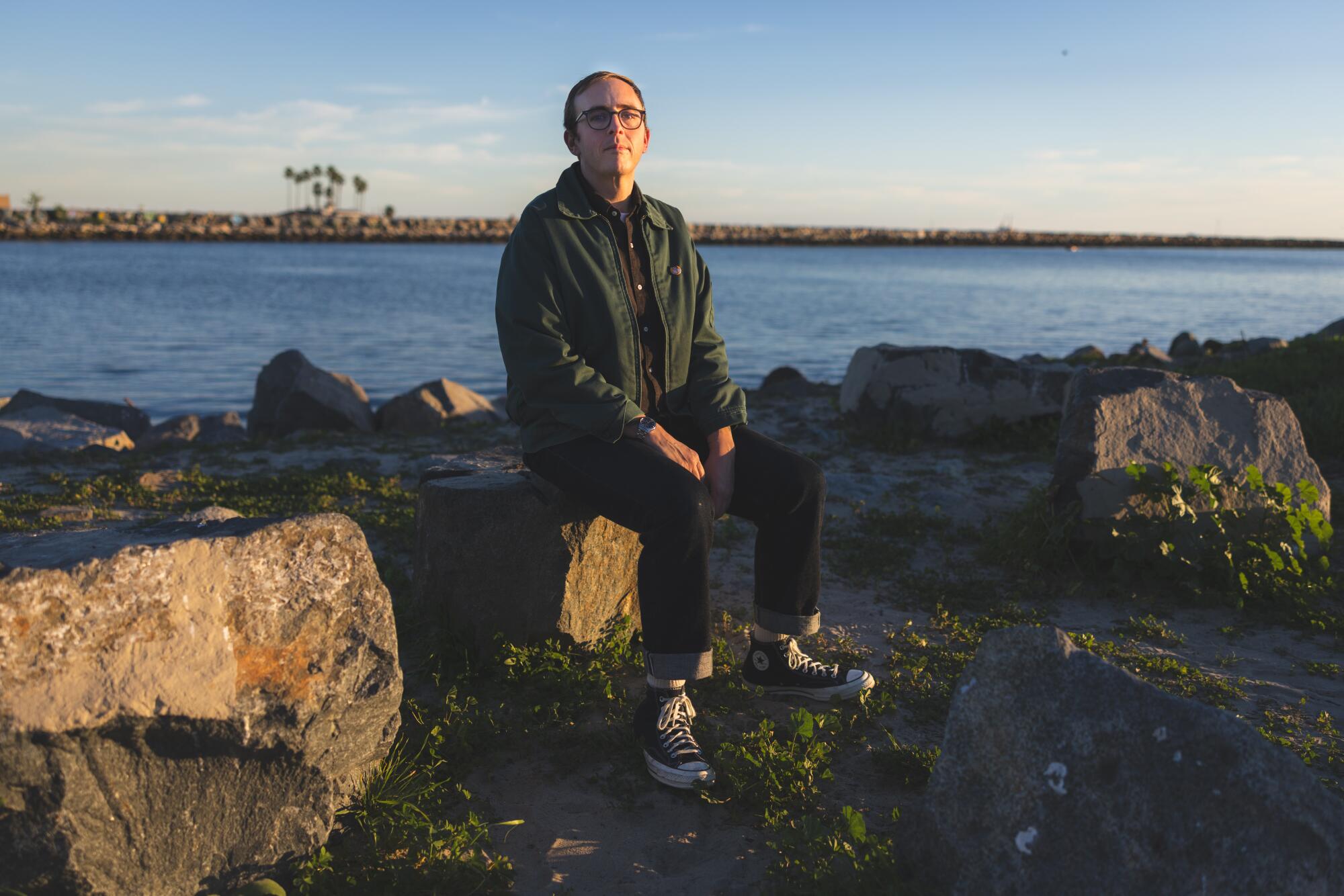
“I for years wanted to play a show in Torrance, where we’re actually from,” said Joyce Manor bassist and backing vocalist Matt Ebert. “But I just don’t know how it ever could or would. So I’ve kind of stopped thinking about it.”
(Jason Armond/Los Angeles Times)
This mindfulness of the American dream versus economic reality has always been embedded in Joyce Manor, which formed during the Great Recession.
“[We were] very influenced by the feeling like the future is not going to be good,” says Johnson. “There’s no financial security ever. I will never know it. So just try to enjoy yourself and party while you can. You have to create your own happiness because historically what should provide security is just gone.”
Those relatable feelings come across right away on “I Used to Go to This Bar.” Just read its opening lyrics: “When you can’t afford anything anymore, tell me how are you gonna swim to shore? When you can’t explain the damage done to your brain, but it’s clear that it’s severe and it’s here to stay.”
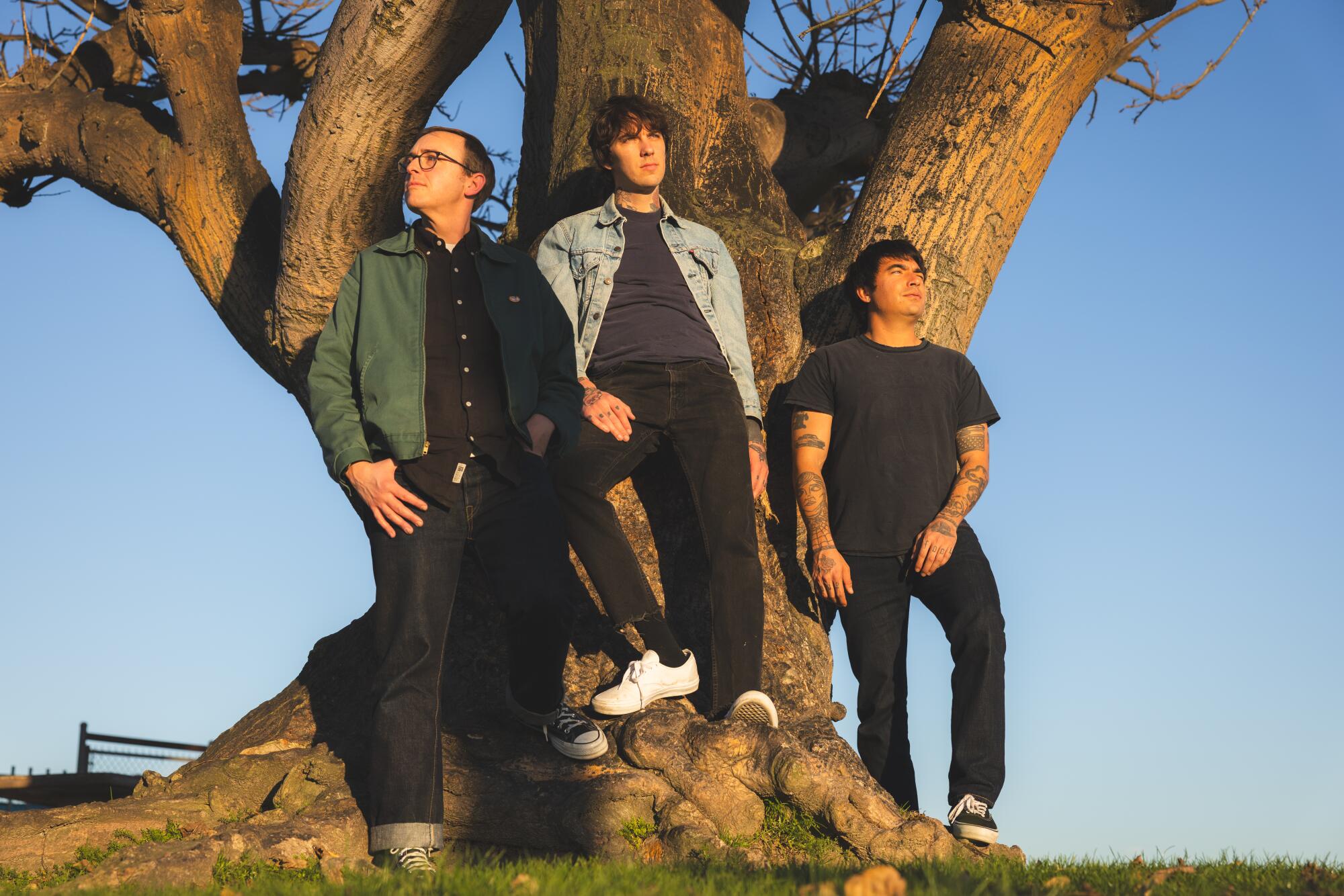
This month, Joyce Manor will release its seventh studio album, “I Used to Go to This Bar,” through longtime label Epitaph.
(Jason Armond/Los Angeles Times)
The new album includes Smiths-like desert country shuffles (“All My Friends Are So Depressed”), a bizarre (compliment) mesh of intricate classical composition and Cars-like synths (“Falling into It”), and the usual catchy, melodic pop-punk that makes Joyce Manor so great. Longtime fans will recognize “Well, Don’t It Seem Like You’ve Been Here Before?” as an update on “F— Koalacaust,” a song predating Joyce Manor that now adds Knobbe on harmonica. And then there’s “Grey Guitar,” which might rival “Constant Headache” as the band’s best album closer. Even the album’s hired drummer is notable: Joey Waronker spent last year drumming for Oasis’ reunion tour. They also worked with many of Beck’s musicians on this album.
“If you’re around L.A. long enough, you get Beck’s guys,” joked Ebert.
Up next for Joyce Manor: a spring U.S. tour and Coachella. Johnson feels confident “Constant Headache” will go over well with the Coachella flower crowd. I ask what else is on the L.A. bucket list.
“Let’s play the Forum,” says Johnson.
“I for years wanted to play a show in Torrance, where we’re actually from,” added Ebert. “But I just don’t know how it ever could or would. So I’ve kind of stopped thinking about it.”
Ebert’s words remind me of a lyric from the album’s title track: “There’s nothing special about the place, nothing too hard to recreate.” It’s the mixed blessing of still being close to where you’re from, yet sung with a wisp of yearning. It’s a feeling Joyce Manor makes timeless yet intensely relatable. Wilson would have approved.