
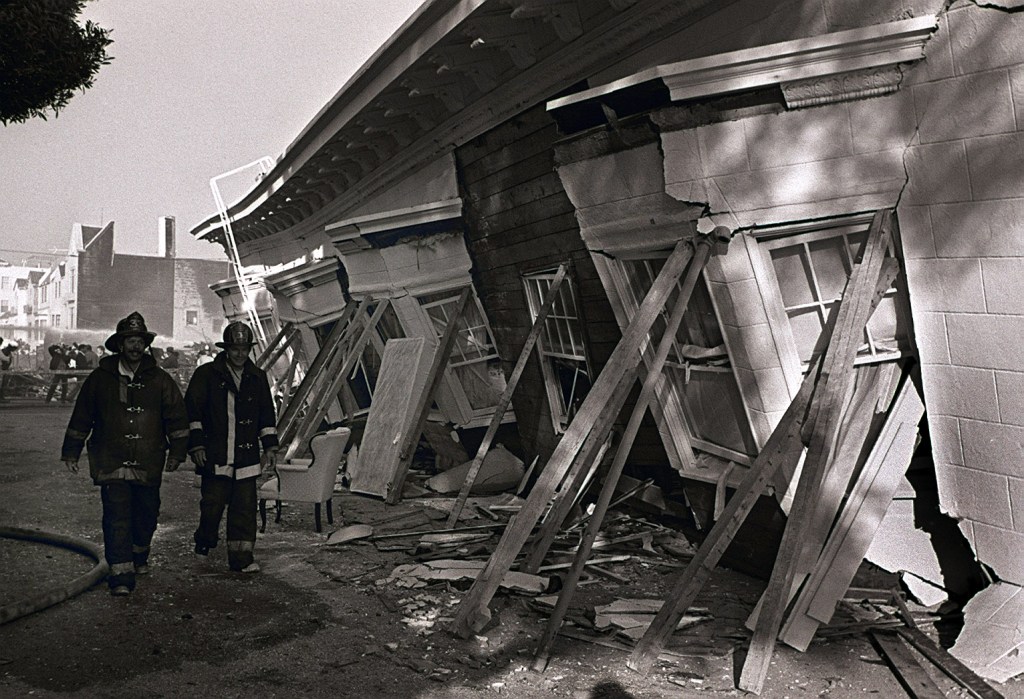
If and when the next big earthquake strikes the Bay Area, thousands of older, soft story homes in San Jose face the risk of catastrophic damage.
The city passed legislation nearly 18 months ago requiring property owners to retrofit their multi-story, wooden-frame buildings with at least three units constructed before 1990. It delayed implementation, however, when the federal government rolled back significant funding to facilitate the repairs.
But after a court-granted injunction required the release of some of those federal funds, the city approved a $1.6 million pilot financing program in hopes of rolling out a larger “critical life-safety initiative” in the future.
“We’re pulling a million dollars from housing resources to invest in this unit preservation and then, utilizing that test run, to set us up for execution of a larger FEMA grant or other resources that may come in,” Housing Director Erik Solivan said Tuesday.
When San Jose passed its seismic retrofit mandate in 2024, city officials warned that a major earthquake could cause billions of dollars in damage to its older buildings. With the city situated between the San Andreas, Hayward and Calaveras fault lines, they estimated damage could range from $4.7 billion to $14.9 billion in addition to displacing thousands of residents.
In a memo to city officials, housing staff estimated that the city had 17,000 apartment or condo buildings with at least three units, including 2,600 to 3,600 constructed before 1990. Staff estimated that those older soft buildings housed between 18,000 and 25,000 units, accounting for 5-7% of the city’s housing stock.
“I’ve always thought the soft story replacement – the seismic retrofit – is extremely important to making our housing stock safe for all of our renters and homeowners who live in them,” said Vice Mayor Pam Foley, who lost her home in the 1989 Loma Prieta earthquake.
Many of the buildings are owned by mom-and-pop landlords, with 80% comprising three to eight units and mostly tenants from lower-income families.
Although the city’s goal was to make properties safer, residents and building owners raised concerns at the time that the rents for some of the city’s most vulnerable populations could increase due to these required fixes.
To offset some of the costs, which the city estimated between $30,000 and $140,000, the housing department proposed a financing project.
While the city had applied for $25 million in FEMA grant funding more than two years ago, changes and funding cuts to FEMA’s Building Resilient Infrastructure and Communities (BRIC) Program, which impacted grant applications between 2020 and 2023, by the Trump Administration forced the city to delay its ordinance start date and financing program by at least a year.
California and a coalition of 20 states successfully obtained a permanent injunction in December that blocked the Trump Administration from cancelling those grants, which are used for natural disaster prevention.
“FEMA’s BRIC program provides critical funding that helps communities prepare for disasters before they strike,” Attorney General Rob Bonta said in a news release. “The BRIC program has bipartisan support. It saves taxpayers money. It improves our infrastructure, and it protects our communities. It’s a win-win. That’s why we went to court to protect this program when the Trump Administration attempted to unlawfully shut it down.”
The pilot program, which will start in April, will target buildings with fewer than 20 units, offering either grants or loans at around 3% over seven years. Loans would be capped at $100,000. Funding from the program can also be used for unit upgrades, including energy efficiency. Landlords would also be limited in how much of the loan costs they could pass through to tenants.
Solivan said the city expected 15 to 20 participants in the voluntary, first-come, first-served program.
Deputy City Manager Rosalynn Hughey said staff would return to the City Council in the coming months to postpone the ordinance’s effective date again, likely by another 12 months.
San Jose could also see the program increase thanks to millions of dollars secured by Congressman Sam Liccardo in the upcoming transportation and urban development bill.
Meanwhile, Solivan said that the larger pot of FEMA funding remains stalled as the city continues to navigate challenges with the Trump Administration.
“We are hopeful we will have some progress on the federal funds towards the end of this calendar year, and that would create a whole pod of $25 million with which to invest in extending out this administrative structure, “ Solivan said.