
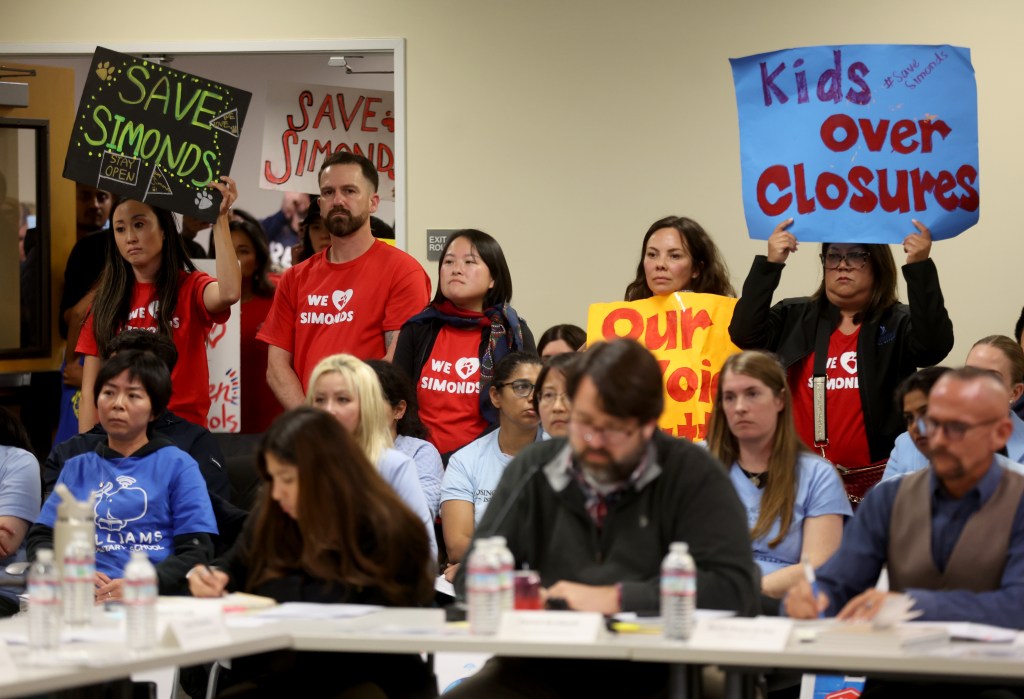
Education is not just a metrics puzzle. It is not only numbers on a spreadsheet. It is not only ratios or facilities maps or building utilization percentages.
Any educator, parent or student knows that creating a safe, stable space for children to thrive emotionally and academically goes much deeper. Yet, the San Jose Unified School District does not seem to understand this.
In response to the decline in enrollment over the last few years, the district is determined to shutter nine of our 26 elementary schools at the end of this school year.
District leadership has repeatedly assured families that this choice is not due to a financial crisis. Instead, they argue it’s a pro-active move to consolidate resources and create “ideal” schools — the “Schools of Tomorrow,” as they’ve named the initiative.
To evaluate our current schools, they’ve developed such criteria as facility capacity and utilization, enrollment and attendance patterns, and more.
This seems reasonable.
But the district has not sufficiently answered many of our community’s most pressing questions and concerns:
Besides doubling school populations, what research-based instructional, programmatic or institutional improvements will they commit to making to create significantly safer and better educational experiences for our students?
What supports will schools offer to students who are emotionally impacted by this sudden disruption, especially those who have already been shuffled around multiple times?
Why do the proposed changes mostly affect schools with the highest proportion of Black and Brown students and with the highest proportion of families that primarily speak Spanish?
How will severing Special Day Class programs from their current school communities impact those students? How will leadership at newly combined schools be determined? What will the district do with the buildings and land left behind? How will they address the myriad concerns particular to individual communities?
Change is difficult.
Large-scale change even more so. Closing and consolidating schools in the district might be the wisest way forward. The district wants us to trust that it is, and that the rushed timeline is necessary. They want us to trust that they will effectively figure out this colossal logistical undertaking in less than half a year.
They want us to trust that they have our children’s best interests at heart. We do not.
Emails to district trustees have gone almost entirely unanswered.
Responses to questions and concerns have been vague. Opportunities for meaningful two-way dialogue have been nearly non-existent. The Schools of Tomorrow committees did not include representatives from every school, and only one week passed between the release of three potential plans and the committee’s unanimous vote to eliminate one without explanation. But this initiative struck many of us as insincere from the beginning — one committee to co-sign the death sentence, another to swing the ax.
As SJUSD Parents United — a newly formed group of concerned parents from across the district — advocates, the district should delay the decision to close any schools at least one year. A more reasonable timeline would provide the opportunity to genuinely listen to the community, address unanswered or overlooked concerns, and then craft a more careful plan to ensure any truly necessary transitions will occur smoothly and benefit our children.
Instead of rushing a decision that will disrupt thousands of families’ lives across the city, let’s slow down and take this opportunity to correct the course.
Randy Ribay is the parent of a kindergartner in San Jose Unified School District and the author of “Everything We Never Had” and “Patron Saints of Nothing.”