
This column is a part of the Off Menu newsletter, our Wednesday dispatch of restaurant news, gossip, tips, and hot takes. To sign up, visit The Standard’s newsletter page.
A couple weeks before the opening for JouJou (opens in new tab), a French brasserie in the Design District debuting on March 6, co-owner Colleen Booth is ready to shoot her shot: “I think San Francisco needs a reason to dress up and get out.”
As someone who is forever complaining about our city’s Patagonified restaurant patronage, I have two gut-level responses: Hell, yes. And good luck.
If Booth gets her wish, the second restaurant she owns with chef David Barzelay — they also run two-Michelin-starred Lazy Bear — will attempt to revive the roaring ’80s. More specifically, she hopes to channel the gravitational pull of Stars, the Civic Center restaurant owned and run by the great, charismatic chef Jeremiah Tower.
Open from 1984 to 1999, Stars was where politicians mixed with opera-goers, and Giants fans sat next to servers just off their shift. From one of the city’s first open kitchens, it served a California mash-up of oysters and lamb crepinettes, brioche with bone marrow and poached garlic, and grilled sweetbreads with chile butter.
The 250-seat dining room was where socialite and philanthropist Denise Hale held court and social columnist Herb Caen scribbled notes. “Stars was Stars. There was no other place like it,” says Stanlee Gatti, who for decades has staged the city’s most high-profile galas. It would be fair to compare Stars’ perpetual popularity and timelessness to New York’s Balthazar.
It wasn’t just a place to eat. It was a klieg-lit stage for a city that still believed in spectacle.
Gallery of 5 photosExpand photoClick arrows to view
the slideshow
The entrance of the legendary Stars. | Source: Courtesy Caryl Chinn
Chef Jeremiah Tower, Julia Child, and pastry chef Emily Luchetti in 1994. | Source: Courtesy Caryl Chinn
Jeannette Etheredge of Tosca, Stanlee Gatti, and Jeremiah Tower. | Source: Courtesy Caryl Chinn
Luciano Pavarotti and Maria Manetti Shrem in 1994. | Source: Courtesy Caryl Chinn
Julianne Moore and Hugh Grant filming “Nine Months” in 1994. | Source: Courtesy Caryl Chinn
With that era long gone, the question isn’t simply whether we want that kind of scene again. It’s whether a city dominated by work-from-homers, an insular tech culture, and people canoodling on dating apps instead of at bars has the public-facing ecosystem — the gossip columnists, the robust arts crowd, the see-and-be-seen-ers — to generate that kind of social fever.
If anyone is driven enough to try, it’s Booth.
“I’m a romantic when it comes to hospitality,” she says. “I know people who worked at places like the Flying Saucer or Aqua. They’d get off just in time to rush over to Stars and get a drink and a thing of fries at the bar and watch everyone else. It was gorgeous, it was loud, it was bustling — but it was also delicious and executed at a high level.”
Booth speaks of Stars as if she actually ate there. She didn’t. She was just 15 when it closed, and working at a restaurant in Rhode Island. But according to Emily Luchetti — who started shucking in Stars’ oyster station in 1987 and became its lauded pastry chef before leaving in 1992 — Booth’s dramatic reenactment tracks.
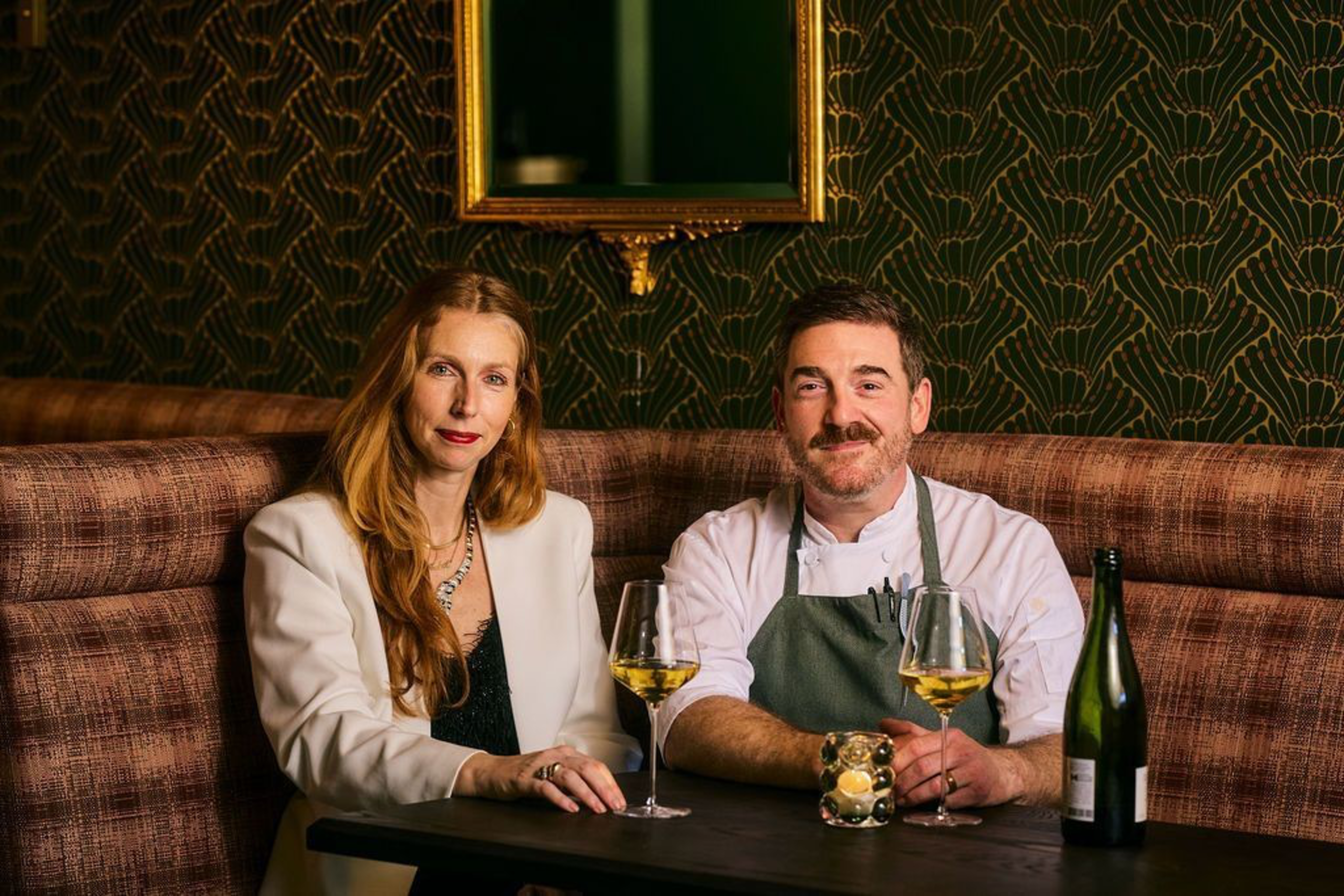 Colleen Booth and David Barzelay. | Source: Kelly Puleio
“When you opened the door, there was a set of stairs going up. You couldn’t even see the dining room from there,” Luchetti recalls. “But you could hear it. It was phenomenal. It was like you’d be caught in the energy of it before you even could see it.”
Stars was born of the big-restaurant era. It executed 650 dinners a night. “If there was an opera, we would get a full dining room — 175 people sitting down to eat at 5:30. And then at 7:45, it was like a tidal wave came and sucked all those people out,” Luchetti says. “Then it filled again with regular diners. And then the theater people would come back for desserts and cocktails.”
Tower played a huge role in its success. “He has one of the best palates that I’ve ever seen,” says Luchetti. He was also the consummate host. “Jeremiah was a draw — everybody loved him,” says Gatti.
But despite Tower’s influence, Stars wasn’t simply chef-driven. It was a restaurant built around hospitality in its most democratic form. “Everyone felt welcome,” Luchetti says. “The guy in a baseball cap didn’t feel intimidated next to the woman in her opera gown.”
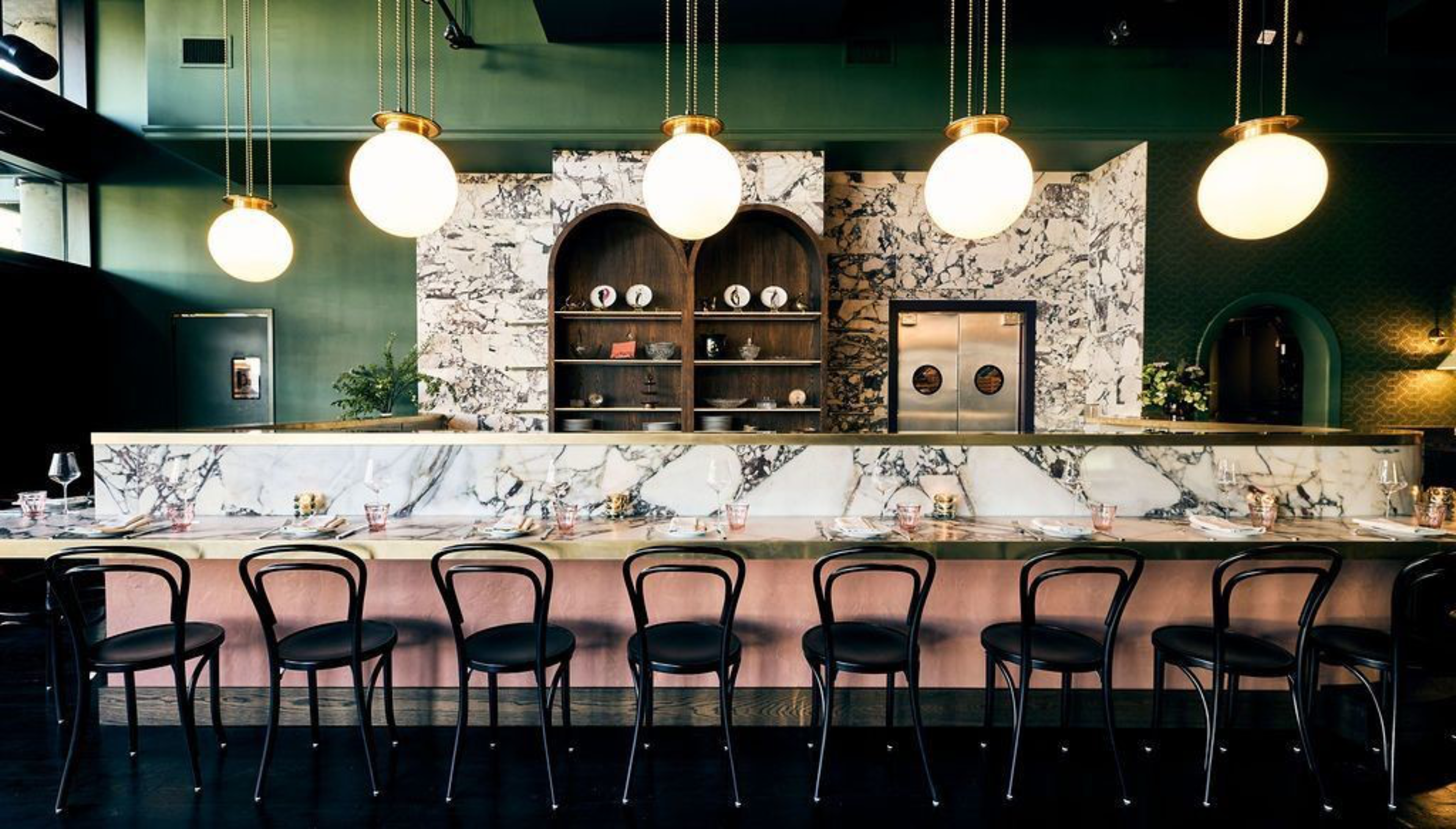 JouJou has ’80s-style brass, marble, and Laura Ashley-leaning florals. | Source: Kelly Puleio
And this is what Booth, as the front-of-house architect of JouJou, is trying to resurrect.
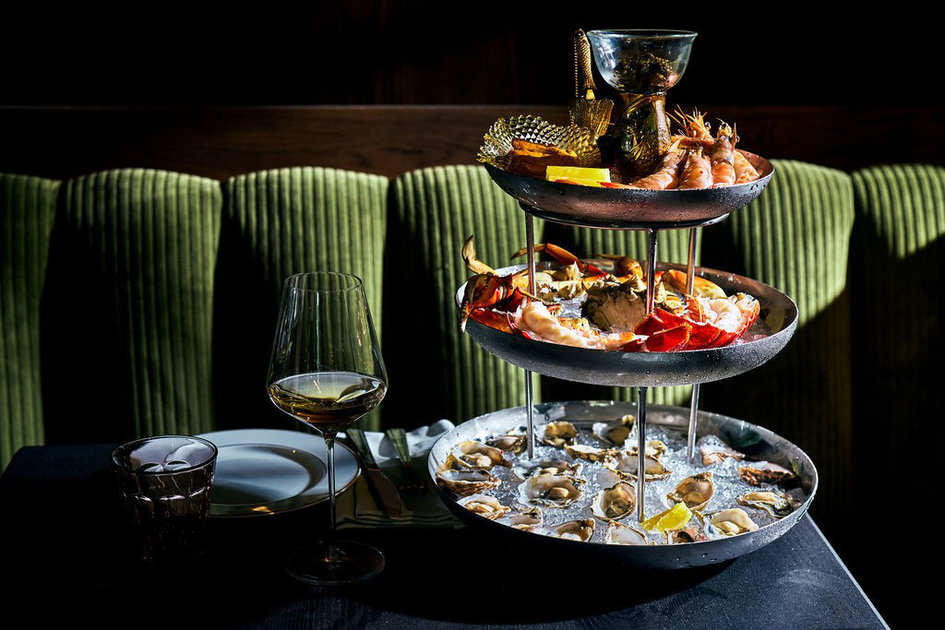
The restaurant has the looks. Though much smaller than Stars, the 116-seater is decked out in striped awnings, ’80s Laura Ashley-leaning florals, brass, an abundance of marble, and graphic cement-tile floors in soft green and gray. There are crescent banquettes for those who want to be on display. There’s a private room and a plant-filled bar encased in glass — a kind of alcoholic aquarium — ensuring that passersby can see the crowd. Barzelay’s fine-dining-adjacent menu swings from, yes, french fries to $250 seafood towers topped with lobster and caviar. Booth calls it “choose your own adventure.”
The location, on a roundabout in the quiet Design District, might not be where you’d expect the city’s hottest new restaurant to land. “I’m not going to lie and say that I don’t have a little concern about the neighborhood,” Booth admits. But then again, Stars opened on a random alleyway. “Jeremiah, in his brilliance, didn’t even make McAllister the entrance. He took Redwood Alley, which was tiny,” Luchetti says.
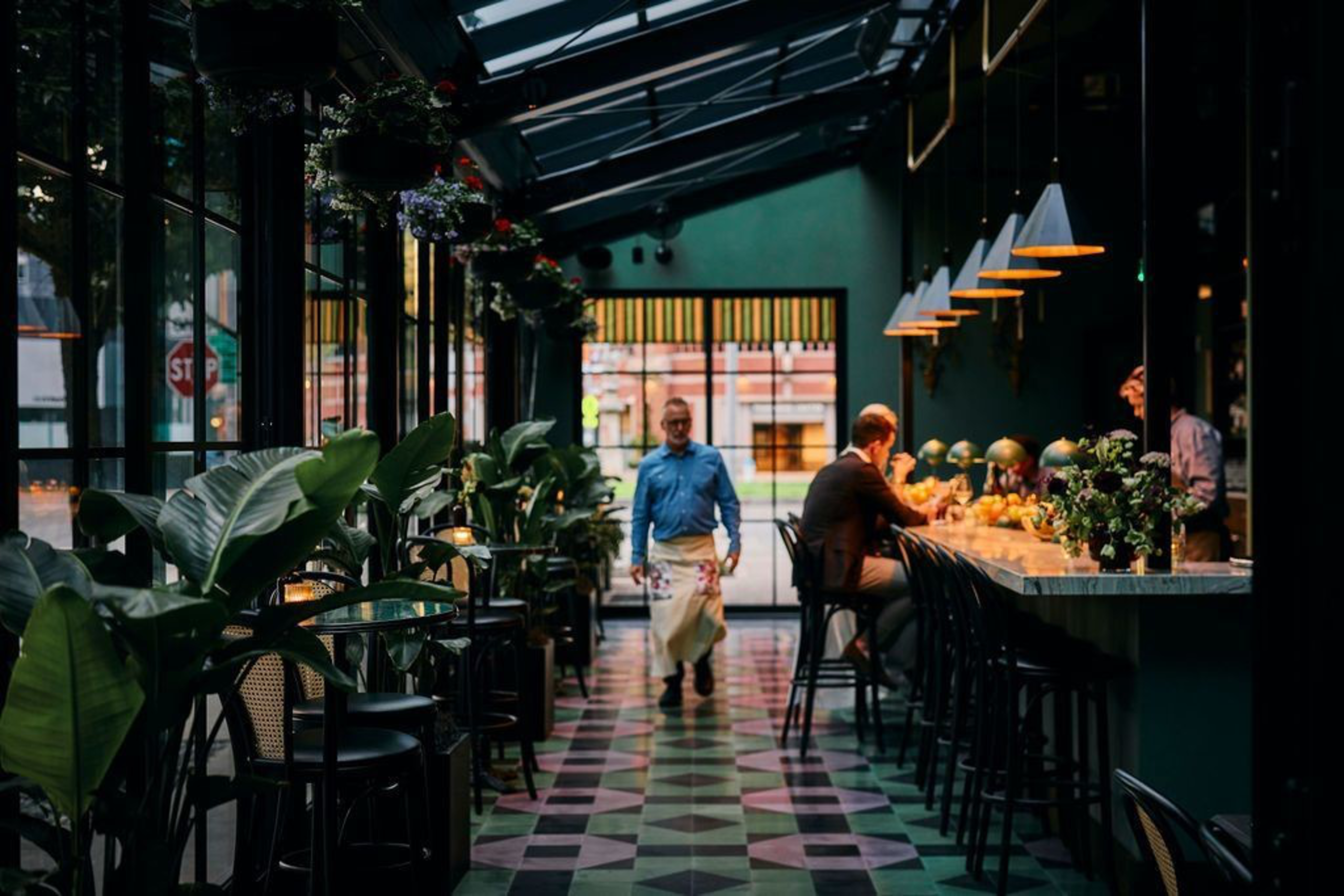 The greenhouse-like bar. | Source: Kelly Puleio
Booth clearly understands that the key to JouJou’s success will be leaning into true old-school hospitality. She bristles at what she calls “hipster-chic service” that makes diners feel as if they should be grateful to be there. At JouJou, she insists, “We will be there for the guest.”
So far, JouJou has all the parts: looks, location, pedigree. What remains to be seen is who shows up. Stars didn’t become Stars just because Jeremiah Tower wished upon it.
Luchetti believes there’s room in San Francisco for the Stars of today — but only if the core values are there. “JouJou will really have to believe in their heart of hearts that food is hospitality and hospitality is food,” she says. “If you try to run it as two separate lanes, you’re not going to get that magic. But if you get it right, a restaurant can take on a life of its own — just like Stars did.”
I’m ready for it.