
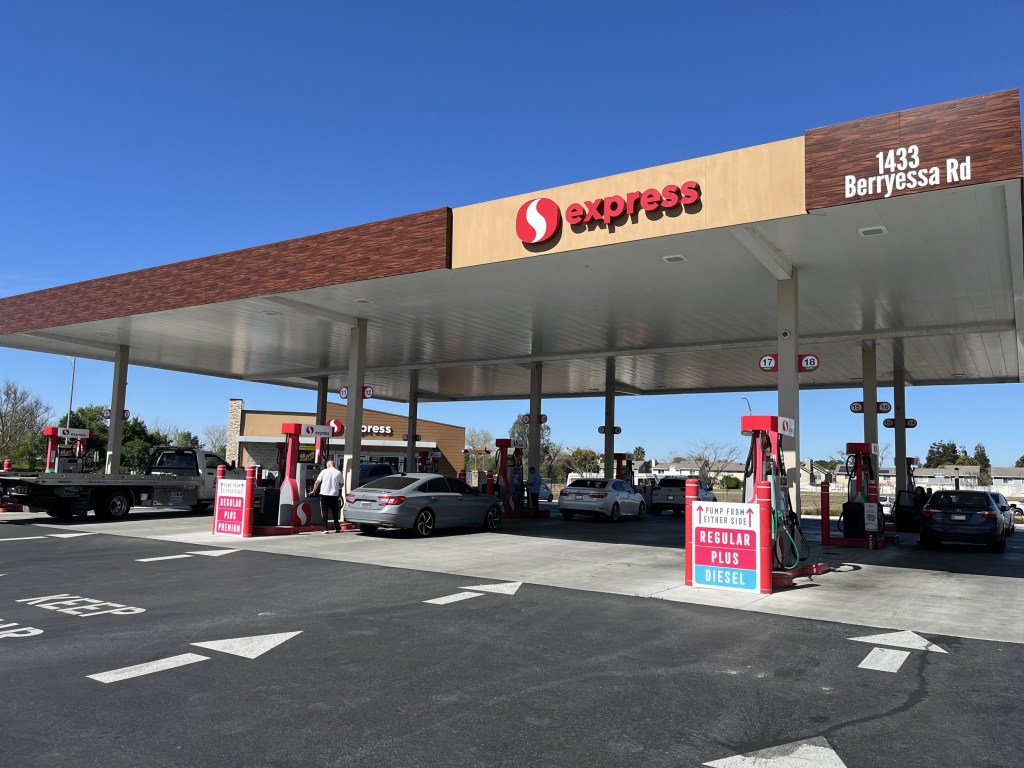
Gas prices across the Bay Area have surged nearly 17% since the U.S. and Israel began strikes against Iran late last month, pushing average prices above $5.40 a gallon in parts of the region.
Prices appeared to stabilize Thursday, though they remain sharply higher than before the conflict escalated. The slowdown in the rise coincided with assurances from President Donald Trump this week that the war would not morph into a lengthy entanglement.
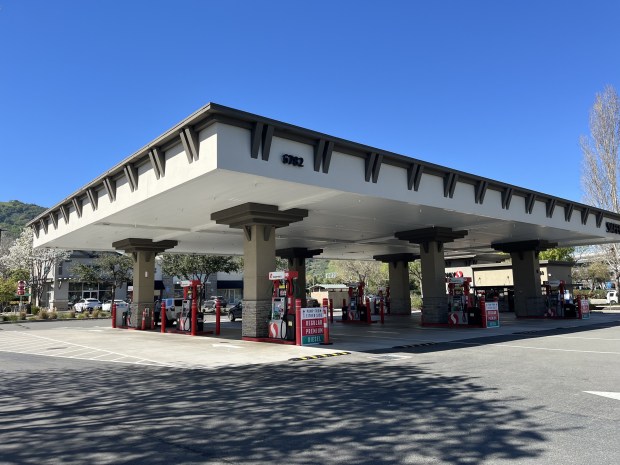 Safeway Fuel Station at 6782 Bernal Avenue in Pleasanton, seen on March 12, 2026. (George Avalos/Bay Area News Group)
The spike follows months of easing fuel costs. The latest federal inflation report showed gasoline prices had fallen 4.5% over the previous year — data compiled before the latest escalation in the Middle East.
“I just try to drive less,” said Gabby Esparza, a San Jose resident who was filling her vehicle Thursday at a Safeway on Berryessa Road in San Jose. “I also buy cars that are fuel-efficient. Gas prices do seem to be higher.”
A survey of average prices posted on GasBuddy, a national gas price tracking service, shows the cost of regular unleaded gas in the Bay Area soared to a peak Wednesday.
In the San Jose-South Bay region, the average price of gas was $5.41, up 16.8% from the March 1 average — the first full day after the war began.
In the Oakland-East Bay region, gas prices averaged $5.45, up 16.7% from the pre-war level, and in the San Francisco-San Mateo County-Marin region, prices were up 18.1% from March 1 at $5.30.
California average gas prices were $5.35 a gallon Wednesday, according to GasBuddy, up 16.3%.
The average price in the U.S. on Wednesday was $3.61, up 22.8% from the pre-war level.
California’s prices tend to be well above the national average due to higher taxes for fuel, a decline in the state’s refinery output and the reality that California imports a considerable amount of gasoline.
“I’ve noticed that prices have gone up,” said Demaurae Houston, an Oakland resident who drives for a living. “I’m blessed that I’m able to afford the increase so far.”
To save gas, Houston said he makes sure to shop at certain providers for their discounts.
During the last two years in the San Jose-South Bay, Oakland-East Bay and San Francisco regions, multiple price spikes have occurred, a review of GasBuddy data shows.
The prior spikes over a stretch going back to February 2024 occurred over a significantly longer period of time and weren’t quite as steep as the current surge in costs. The geopolitical upheaval has contributed to the price shocks.
The future direction of prices — which typically track crude benchmarks such as West Texas Intermediate — remains uncertain.
By midafternoon Thursday, the West Texas Intermediate crude benchmark for the April 2026 contract was trading higher in the range of $94 to $97 a barrel. The benchmark is at its highest since 2022.
Also on Thursday, some cargo ships were struck while attempting to slip through the Strait of Hormuz, a maritime chokepoint for shipments of crude oil from key production hubs such as Iran’s Kharg Island.
Some motorists such as Alex Beegzad, a San Jose resident, wonder what’s next for the cost of gas at the pump.
“If the war continues, we’re probably going to see higher gasoline prices,” Beegzad said.