
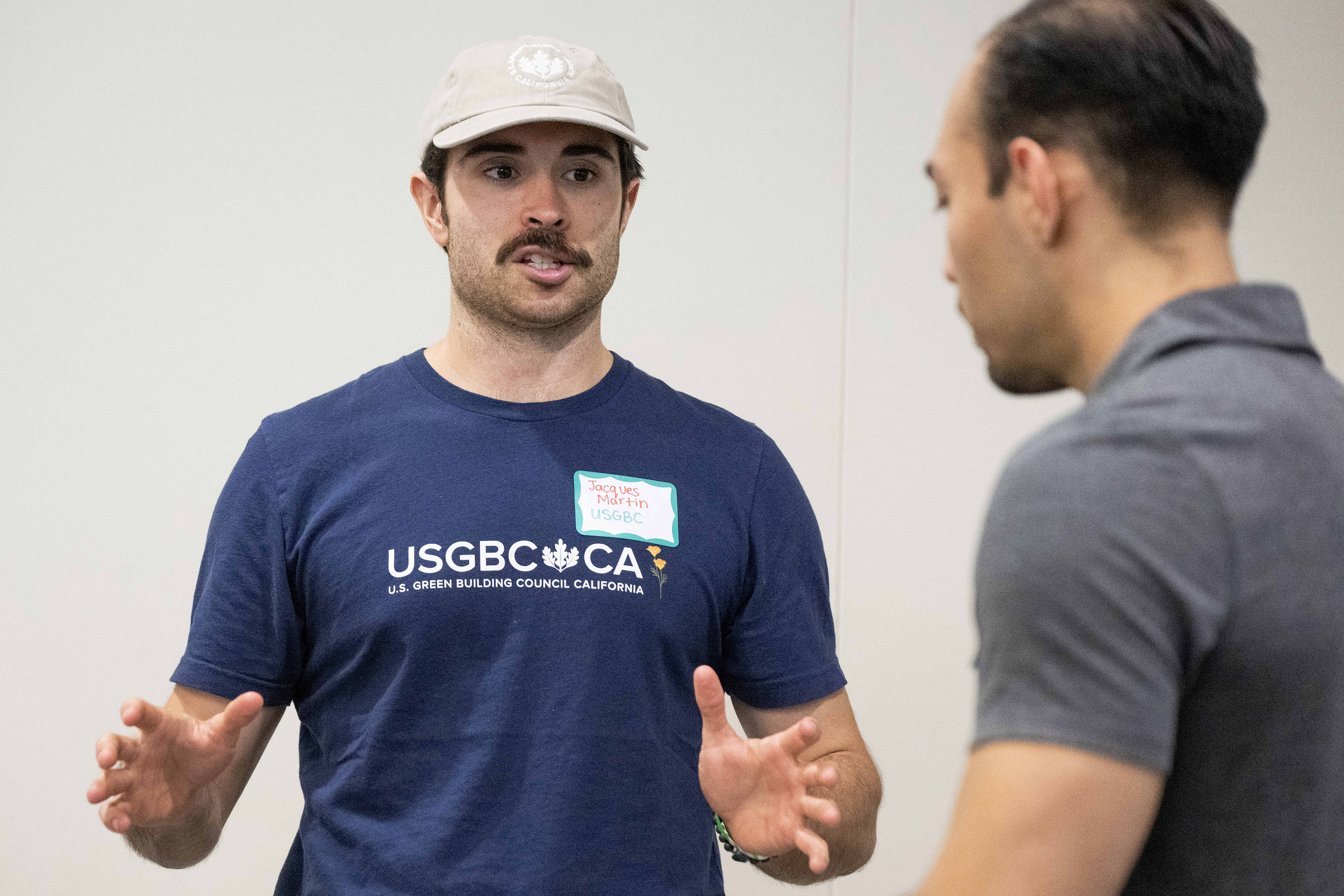
Jacques Martin, left, describes the U.S. Green Building Council during a Sustainability Summit at California State University, Dominguez Hills in Carson on Thursday, March 19, 2026. (Photo by Drew A. Kelley, Press-Telegram/SCNG)
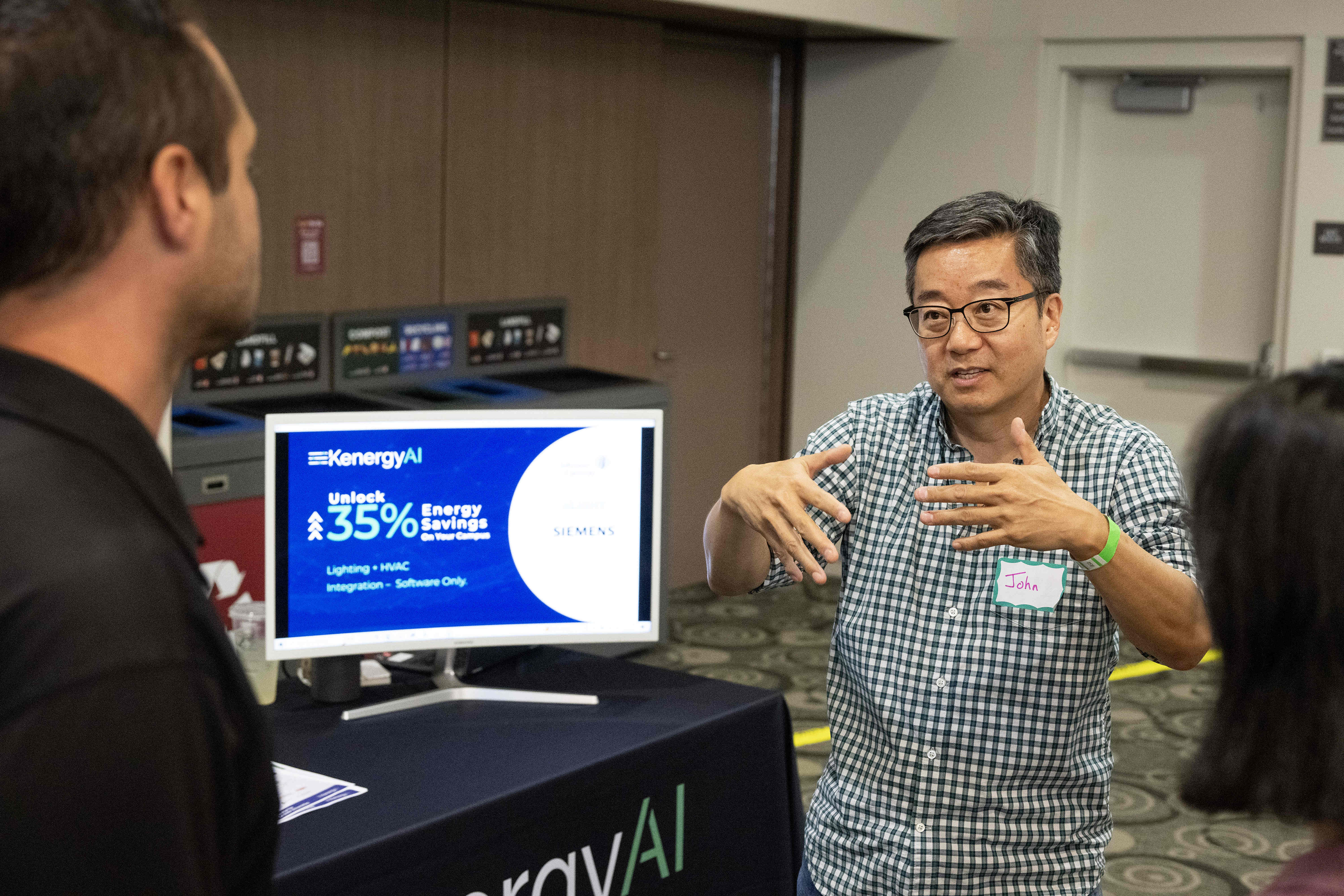
KenergyAI founder John Ko, center, describes his HVAC and lighting integration software during CSUDH’s Sustainability Summit in Carson on Thursday, March 19, 2026. (Photo by Drew A. Kelley, Press-Telegram/SCNG)

A vegetarian, low carbon emission lunch is served during a Sustainability Summit at California State University, Dominguez Hills in Carson on Thursday, March 19, 2026. (Photo by Drew A. Kelley, Press-Telegram/SCNG)
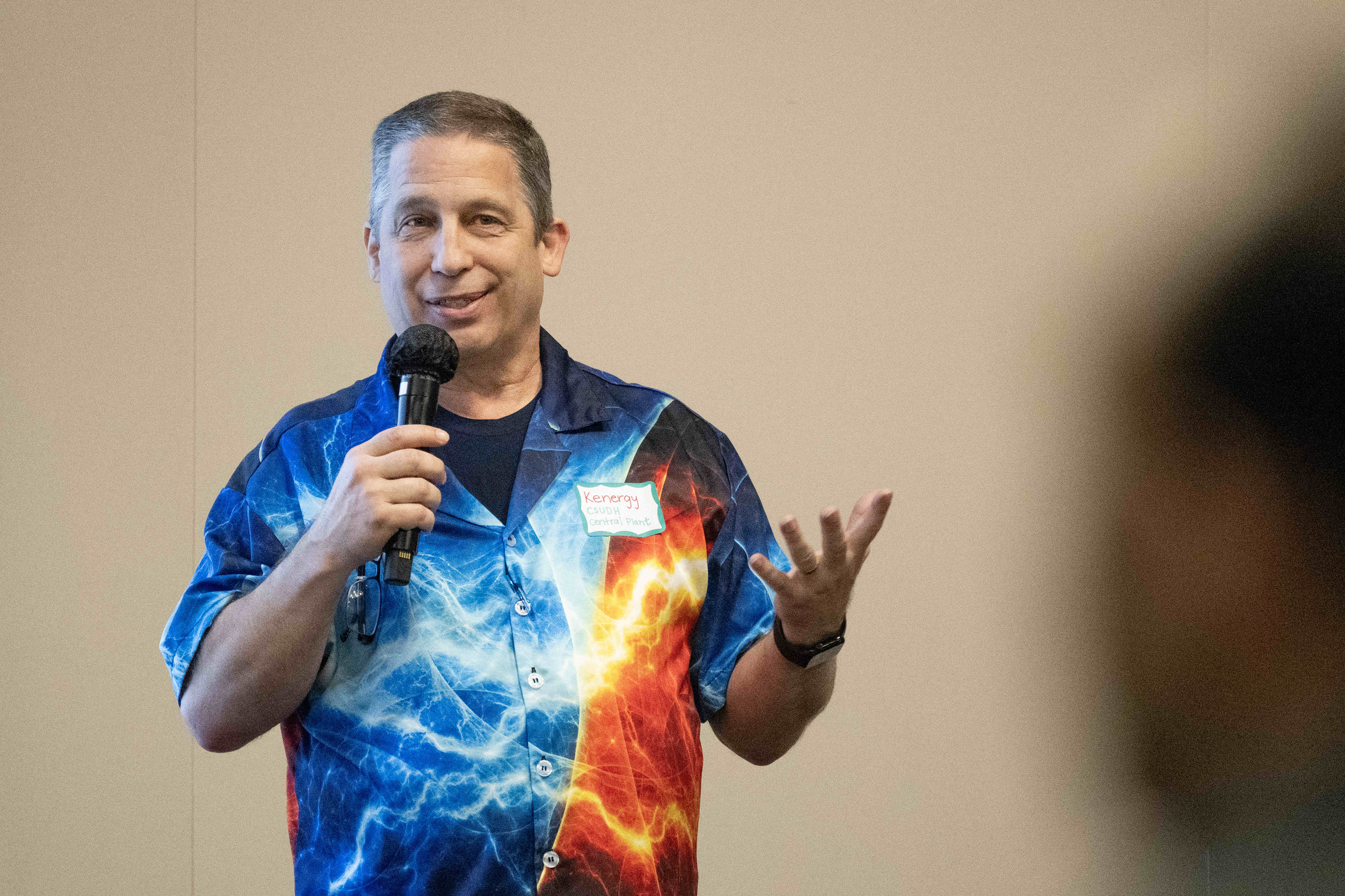
CSUDH’s Central Plant Manager Kenny Seeton speaks during a Sustainability Summit in Carson on Thursday, March 19, 2026. (Photo by Drew A. Kelley, Press-Telegram/SCNG)
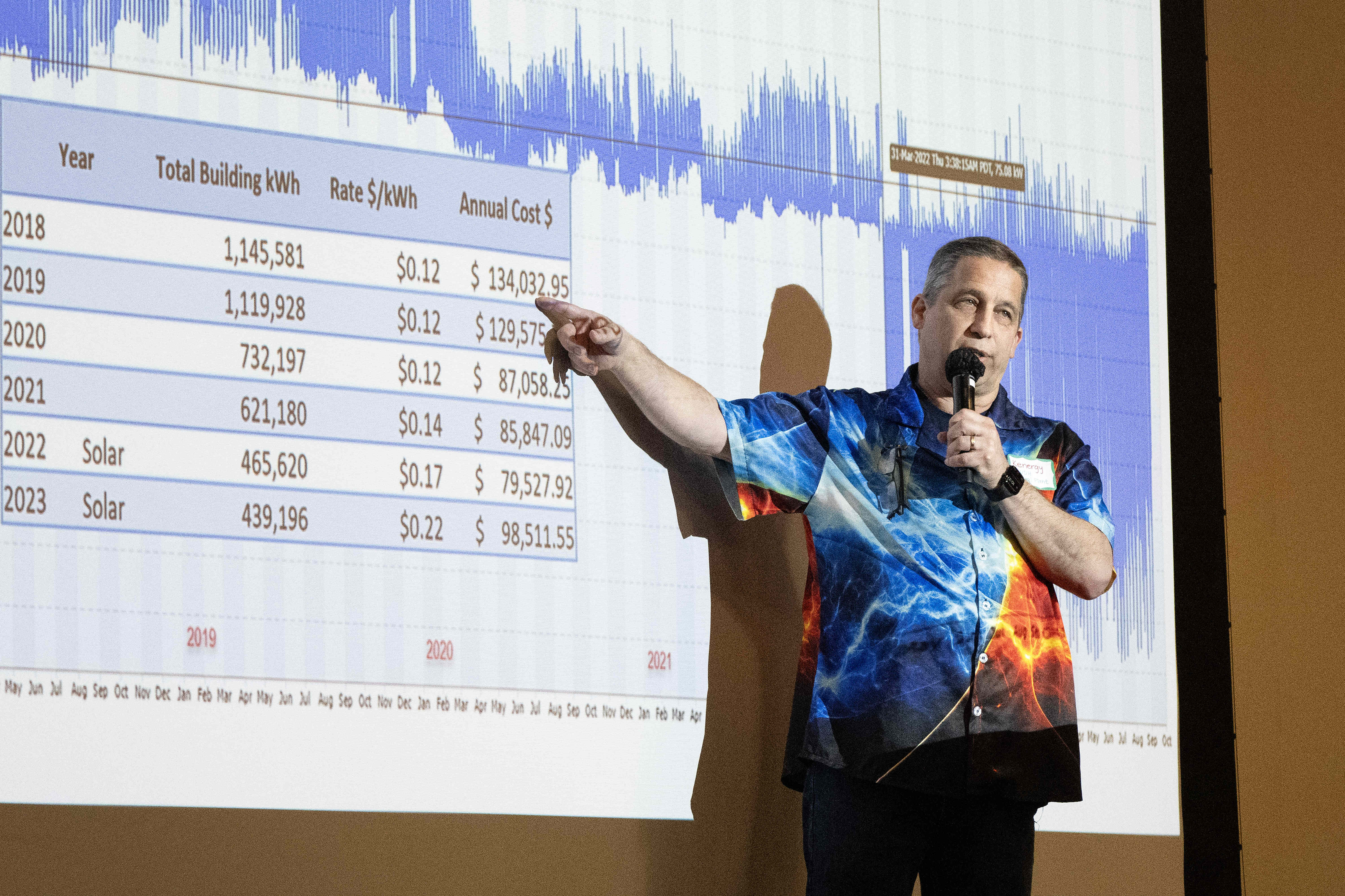
CSUDH’s Central Plant Manager Kenny Seeton speaks during a Sustainability Summit in Carson on Thursday, March 19, 2026. (Photo by Drew A. Kelley, Press-Telegram/SCNG)
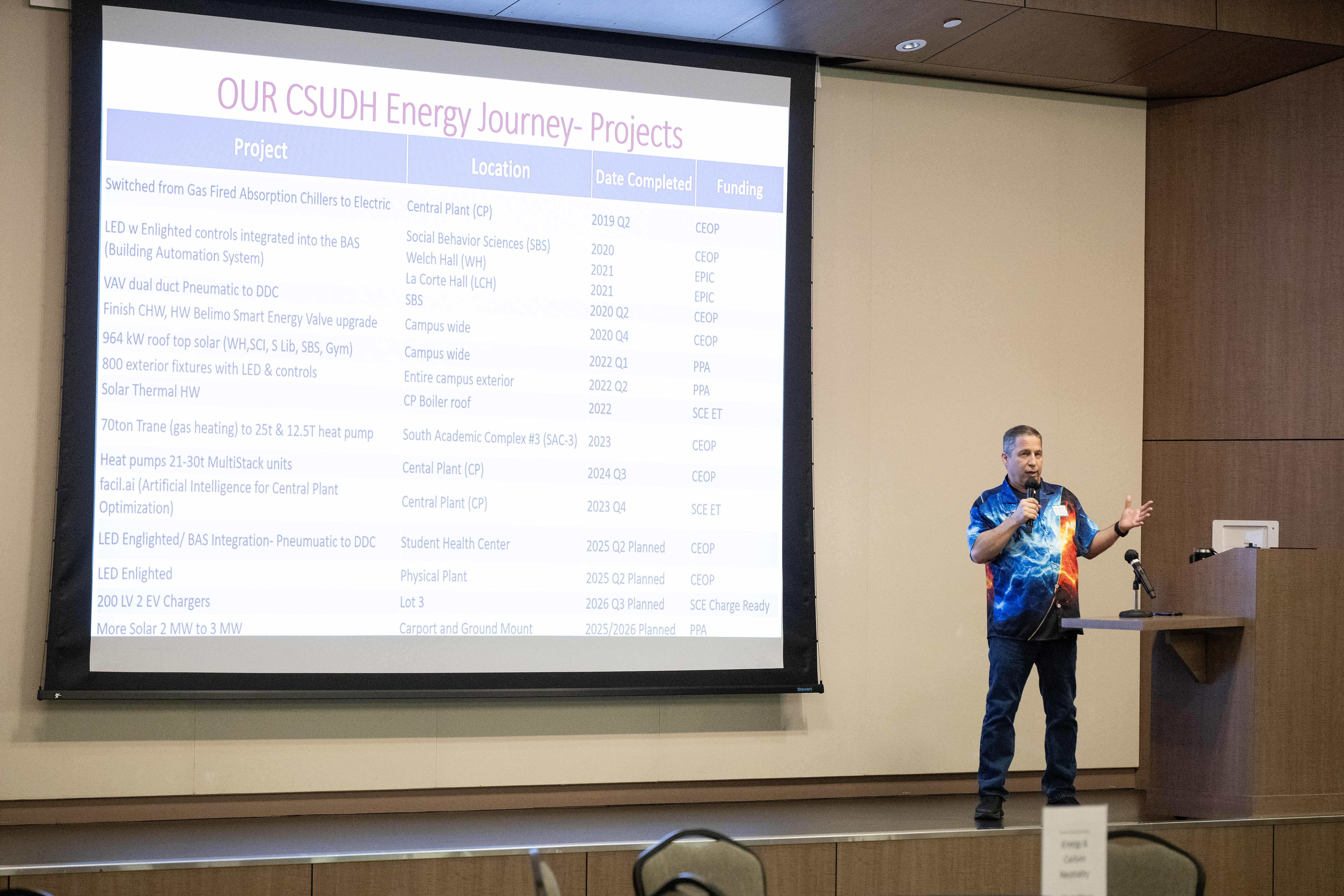
Central Plant Manager Kenny Seeton speaks during CSUDH’s Sustainability Summit in Carson on Thursday, March 19, 2026. (Photo by Drew A. Kelley, Press-Telegram/SCNG)
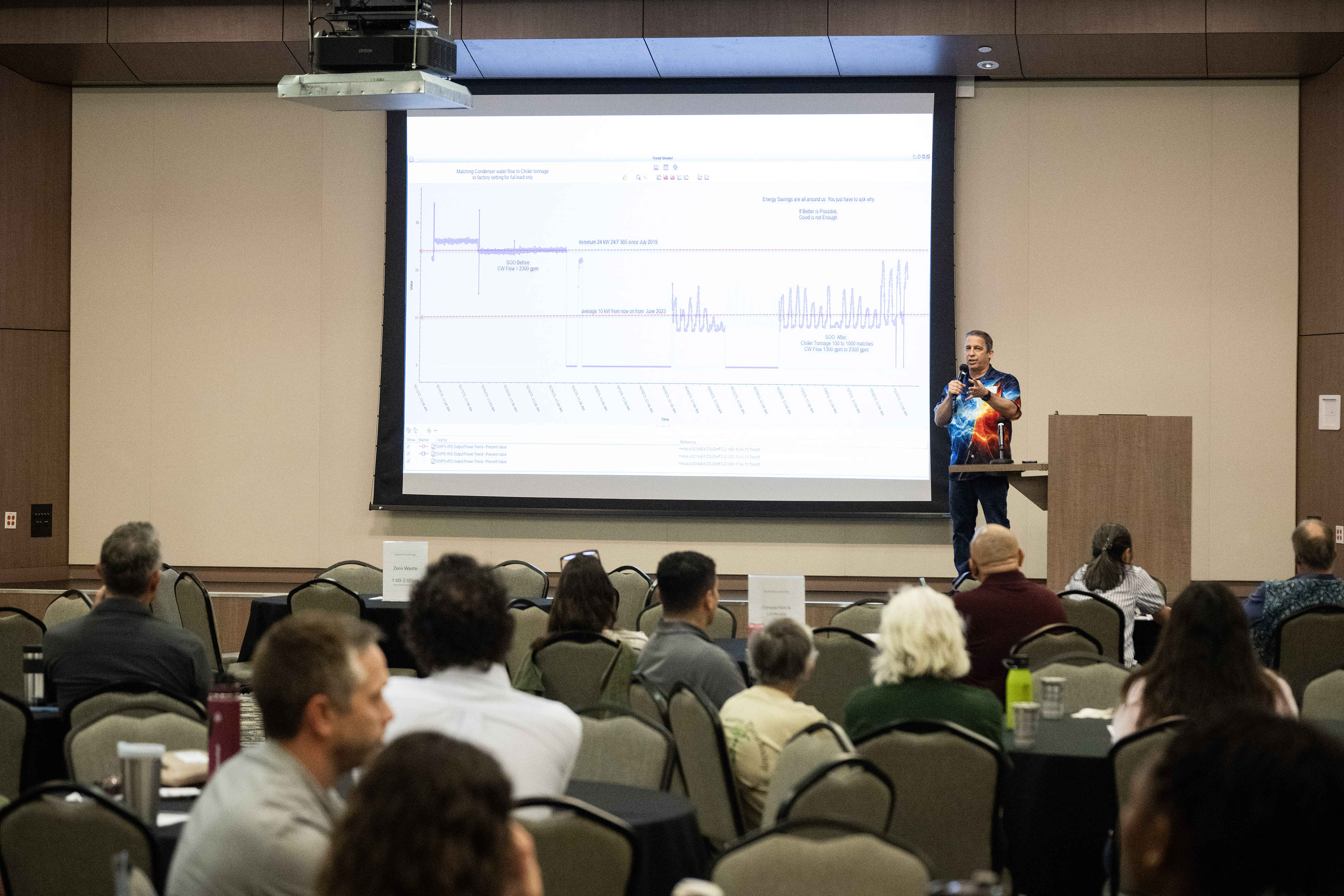
Central Plant Manager Kenny Seeton speaks during CSUDH’s Sustainability Summit in Carson on Thursday, March 19, 2026. (Photo by Drew A. Kelley, Press-Telegram/SCNG)
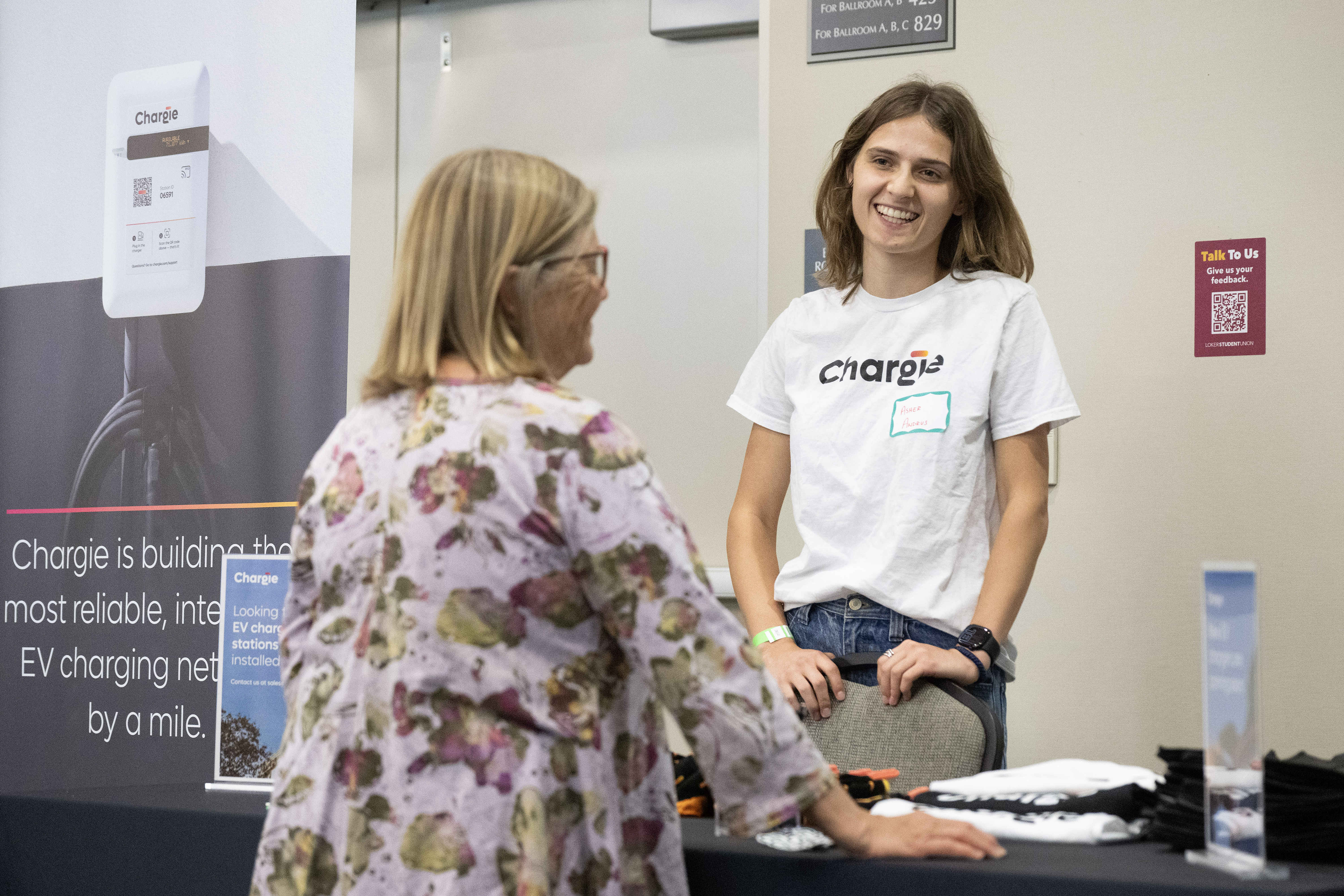
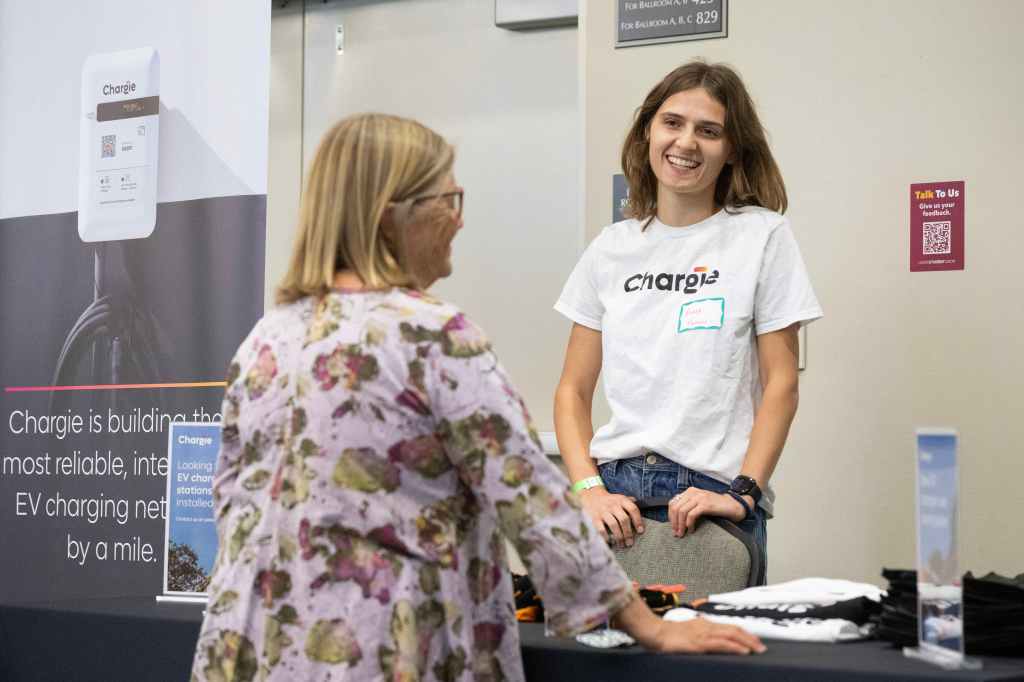
Asher Andrus, right, describes Chargie, a provider of electric vehicle charging solutions, during CSUDH’s Sustainability Summit in Carson on Thursday, March 19, 2026. (Photo by Drew A. Kelley, Press-Telegram/SCNG)
Show Caption
1 of 8
Jacques Martin, left, describes the U.S. Green Building Council during a Sustainability Summit at California State University, Dominguez Hills in Carson on Thursday, March 19, 2026. (Photo by Drew A. Kelley, Press-Telegram/SCNG)
Cal State Dominguez Hills held a Sustainability Summit on Thursday, inviting the community, local businesses, government officials, students and local sustainability leaders to showcase the work CSUDH is doing when it comes to energy and sustainability.
“CSUDH is doing nationally and statewide recognized work in energy, technology and sustainability,” Ellie Perry, director of CSUDH Sustainability, said in a presentation. “That’s something the broader community can really learn from. We’re proud to share our best practices and demonstrate what’s possible not just at CSUDH, but across higher education.”
Some of the accomplishments highlighted during Thursday’s summit included the university’s STARS Gold rating for sustainability, its current project to build more electric vehicle charging stations on campus and the work CSUDH has done to limit its energy consumption in the past year.
The Association of Advancement of Sustainability in Higher Education measures universities’ sustainability performance and designates them accordingly. In 2025, CSUDH received the gold level rating, lower only than the platinum rating.
Some of the efforts to obtain this rating, according to a CSUDH press release, included providing universal access to organic waste recycling, holding a weekly farmers market, and annual campaigns like October Sustainability Month and the Earth Day Festival.
“CSUDH is a real leader in this area (sustainability) because it goes head first into new approaches, whether that’s battery storage, solar or rethinking how systems work together,” CSU University Engineer Rachel Patterson said during the summit. “It’s a mindset across buildings, infrastructure and operations, and it’s going beyond the status quo in a way that’s moving the whole CSU forward.”
CSUDH has already begun constructing 203 electric vehicle charging stations has already begun at Parking Lot 3; they are scheduled to be up and running by mid-May. Once completed, CSUDH will have the most EV charging ports in the California State University system — more than double any other campus.
“This level of infrastructure readies our campus to support both current usage and future growth in electric vehicle adoption,” Perry said in a written statement. “This aligns us with statewide policies supporting electric vehicle growth, and as an added bonus, enhances our ability to serve as an event venue for the 2028 Olympics and other mega-events.”
Perry also said she hopes these new EV charging ports will encourage campus drivers to consider an electric vehicle.
The Sustainability Summit highlighted the work CSUDH has done to reduce energy consumption since 2018. There has been a 70% reduction in scope one and two emissions, said CSUDH spokesperson Lilly McKibbin; scope one emissions include, for example, when an entity uses oil or gas to heat its buildings, while examples of scope two emissions would be those that come from electricity bought from the electric grid.
There have also been 10.6 million fewer gallons of potable water consumed per year, a 34% increase in diversion rate of materials out of a landfill, and more than 200 trees have been planted on campus, McKibbin said.
CSUDH has also committed to carbon neutrality by 2045, McKibbin said.
In addition to being served a farm-to-table, vegetarian, low-emission lunch on Thursday, the community also had the opportunity to meet with and learn about numerous sustainable companies and sustainability leaders. These include Chargie, a provider of electric vehicle charging solutions; KenergyAI, an HVAC and lighting integration software company; and the U.S. Green Building Council.
“These partnerships are so important to CSUDH,” Perry said. “Many of the organizations here today have helped secure significant grant funding that supports transformative work on our campus, from infrastructure to landscape improvements. This summit is also about accountability and appreciation and showing our partners how that support is making a measurable impact.”
Kenny Seeton, CSUDH central plant manager, also gave a presentation about the work he does to reduce CSUDH’s energy use. One of Seeton’s projects was to use a chilled water loop as thermal energy storage — cutting out a large portion of boiler use.
“I look at how things are operating now and find the imperfections, where we can do it better,” Seeton said. “A lot of this has been done the same way for 50 or 100 years, and people get comfortable. My role is to look outside the box, understand the process and find the waste.
“The biggest thing I want people to understand is that good is not enough,” he added. “Just because something has always been done a certain way doesn’t make it right. You have to take the time to understand what you’re doing so you can improve it.”
This is the kind of thinking that has set CSUDH apart from other universities, Patterson said.
“CSUDH has an amazing story to tell,” she said. “It’s a mostly commuter campus in a lower-income community, and at the CSU our goal is to graduate students on time. You can only do that if you have excellent facilities and you’re a good steward of those dollars. What’s happening here really reflects that mission.”