
Economists at Chapman University say a short war with Iran would have a positive overall impact on the U.S. economy, creating trickle-down benefits with a boost in military spending for Southern California’s military contractors.
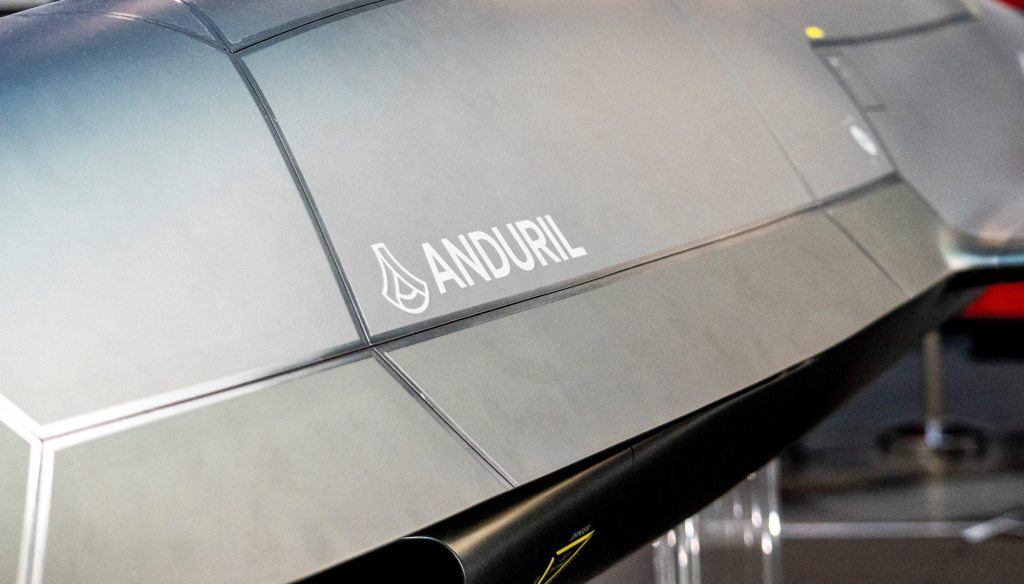
The economists — including James Doti, Raymond Sfeir and Fadel Lawandy — say defense contractors in Southern California, including Costa Mesa-based Anduril Industries, Hawthorne-based SpaceX and several others, would benefit from the conflict.
Their consensus is that a “short Iran war” of 60 days could boost U.S. economic growth in 2026 — increasing 2026 real gross domestic product to 2.2% from an earlier Chapman estimate of 2%.
The Iran war, which began Feb. 28, is into its third week.
In 2024, Doti, president emeritus at Chapman University, and its team of economists predicted the nation’s gross domestic product, used to measure economic health, would slow to 1.8% in 2025, down from a forecast of 2.7% the previous year. In December, they said their latest prediction indicated 2026’s growth would edge upward a modest 2%.
In the Biden administration’s last year, GDP expanded 2.8% in 2024 from the previous year, with the economy contracting ever since.
“While higher oil prices would slow economic growth, increased defense spending and a larger federal deficit would offset those effects,” said Doti.
He said that oil prices — which have risen significantly since the beginning of the Iran conflict — have a smaller impact on economic growth today than they did in past decades. This is because the U.S. has become a net exporter of refined petroleum products such as gasoline, diesel and propane. The forecast assumes the price of West Texas Intermediate crude oil — a benchmark price point for crude oil in the U.S. — would rise significantly during the conflict.
Not all analysts feel the same way as the Chapman economists, who did not offer hints at what rising inflation would do to consumer spending, a key part of the economy.
Sergio Cecutta, managing partner with SMG Consulting, an Irvine-based advisor for startups and aerospace companies, said the boost in economic growth depends on how high gasoline prices rise, and whether consumers start to pull back on spending due to inflation. “The moment consumers feel poor, they stop spending,” he said.
As of Friday, March 20, gas prices in California averaged $5.657 a gallon, up nearly $1.06 from a month ago before the war began, according to data provided by the American Automobile Association.
Prices also were up over a buck from a month ago for Los Angeles County, where gas prices currently stand at $5.756, in Orange County at $5.721, in Riverside County at $5.624 and San Bernardino County at $5.63. Nationally, prices are at $3.912 a gallon, up nearly a buck from a month ago.
Even with the big increases in fuel costs, Cecutta said Southern California defense contractors do stand to benefit from increased military spending.
“A lot of startups — especially here in Southern California — are already helping the government create significantly cheaper munitions,” he said. “How do you respond to an enemy that’s got cheap stuff that they’re throwing at you while you have all these sophisticated weapons that cost a lot. Do you replenish these weapons?”
Besides Anduril and SpaceX, Cecutta cites other defense contractors in the region that may realize the benefits of increased defense spending.
These include Northrop Grumman and Lockheed Martin, both of which have major operations in the region, Long Beach-base Rocket Lab, which just received a multiyear, $190 million hypersonic test flight contract, San Diego-based Shield AI, and AeroVironment, which has manufacturing operations in Simi Valley.
Southern California military contractors declined to comment on the Iran war’s economic benefits as they relate to increased spending by the Pentagon — which on Thursday, March 19 requested an additional $200 billion to fund the war effort.
“It is not useful to speculate,” said an Anduril spokeswoman about its possible involvement.
In January, Anduril announced plans to open a major new campus in Long Beach. Earlier this month, the company began raising $4 billion in capital as it pursues an ambitious array of projects, including a facility in Ohio to mass-produce defense drones and other products.
Last year, the company said that revenue was on track to double to about $2 billion, driven by US and allied defense contracts.