
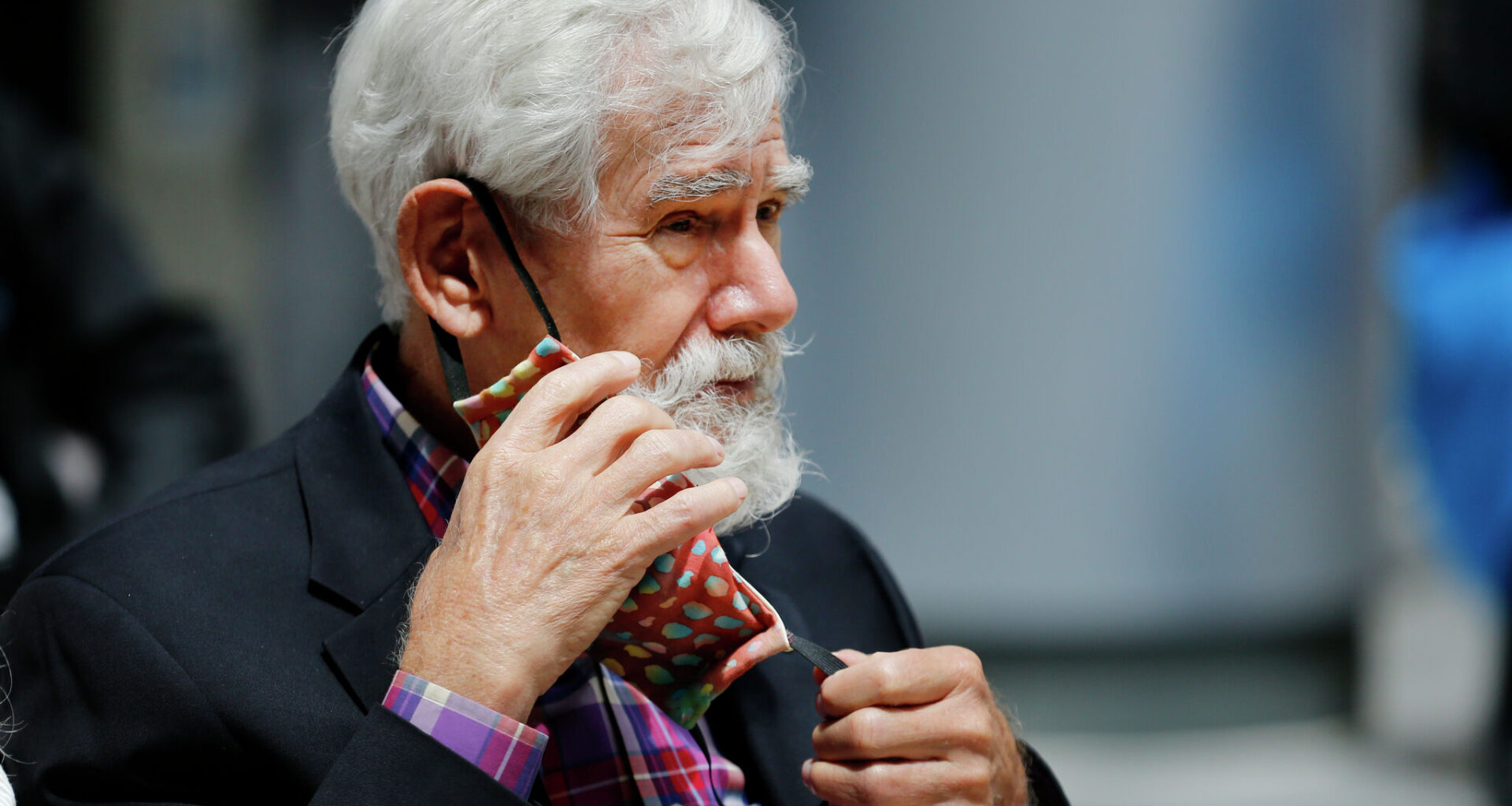
Rod Diridon Sr., a longtime Bay Area politician and one of the chief architects of the South Bay’s modern rail systems, has died from complications with cancer, according to local officials and family. He was 87.
Diridon’s public service career spanned decades, and he was widely credited with helping bring BART to Santa Clara County and laying the groundwork for Caltrain’s electrification efforts — moves that helped better connect the Bay Area.
“He was one of a kind,” Liz Kniss, a former Santa Clara County supervisor, said Friday. “He was more committed to transportation, probably than anyone I’ve ever known.”
The Mercury News reported that he died Friday after developing sepsis following a radiation treatment in January. He survived throat cancer several years earlier.
Diridon was part of a prominent South Bay family. According to a website on the family’s history, the Diridons arrived in Sunnyvale and Santa Clara in the late 19th century, when the area was better known for its endless orchards.
His family produced early civic leaders in the valley, including Edwina Benner, who became California’s first female mayor when voters elected her to lead Sunnyvale in the 1920s. Civic duty was a family tradition that Diridon would carry on.
Born in San Jose in 1939, Diridon was the eldest of three children of Claude Diridon, an Italian immigrant who anglicized his name amid workplace discrimination, and Rhoda Covert, a musician and activist.
Diridon’s fondness for the rails started at an early age, hearing stories from his grandfather Claude, who worked for the Southern Pacific Railroad as a train brakeman to pay his way through junior college. As a result, Diridon Sr. developed an early, practical understanding of transportation systems, according to his family history.
He attended multiple colleges before graduating from San Jose State University, where he also emerged as a student leader.
After serving two combat tours in Vietnam as a U.S. Navy officer, Diridon returned to the Santa Clara Valley and later founded the Mineta Transportation Institute, a San Jose State University research center dedicated to transportation policy.
Diridon entered public life in the early 1970s, when he defeated a longtime incumbent to win a seat on the Saratoga City Council. Voters later elected him to the Santa Clara County Board of Supervisors, where he served for two decades. Over that time, he became known as a leading environmentalist and the “father of modern transit” in the county, helping to build the region’s light rail system.
For two decades, he served the Bay Area in a range of other elected roles, including leading the region’s three major urban planning agencies — the Metropolitan Transportation Commission, the Bay Area Air Quality Management District and the Association of Bay Area Governments. He also was an original member of the California High Speed Rail board.
After retiring from office, his name was added to a major train hub in San Jose, where passengers can catch Amtrak, Caltrain or buses, not far from the SAP Center.
The Santa Clara Valley Transportation Authority mourned the loss of Diridon Sr. in a Facebook post, describing him as a visionary leader whose decades of advocacy helped build and expand the region’s transit systems.
“For more than 50 years, Rod advocated for expanded, equitable transit, helping shape the systems our communities depend on today,” VTA said in its statement.
Kniss, who frequently worked with Diridon on transportation issues, said he was a “singular figure” in Bay Area politics known for his expertise and larger-than-life personality.
She remembers him for the annual parties he’d host at his home, where the guest list always included some of the area’s biggest movers and shakers.
“At the same time that he was knowledgeable, he was also a lot of fun,” Kniss said.
California Senator Dave Cortese, D-San Jose, first met Diridon as a teenager and considered him a mentor.
He described him as a tireless leader who never stopped organizing: just last month, Diridon hosted a session for a group of civic leaders that included Cortese’s wife.
Cortese said Diridon worked until the very end. While battling cancer from his hospital bed, Diridon sent Cortese notes and urged him to act to make high speed rail a reality for Californians. It’s something he’d never see, but even on his deathbed Diridon never stopped fighting and thinking about the future, the senator said.
“Short of a terminal illness,” Cortese said,“he would not have slowed down for anything.”