
California schools face a rocky future, with districts across the state considering school closures or layoffs in an attempt to plug multimillion-dollar budget holes or address declining enrollment, while juggling stagnant test scores and mounting pressures from the Trump administration.
And more than half of California’s 5.8 million K-12 students are still reading below grade level.
Nonprofit educational advocacy group, EdVoice, is working to change that — one bill at a time. The lobbying organization is dedicated to improving California’s public education system, increasing opportunity for low-income children and boosting literacy rates for all students. The group has championed early literacy legislation, protected teacher preparation training and incentive programs, as well as lobbied for funding for future educators who commit to working in low-income schools.
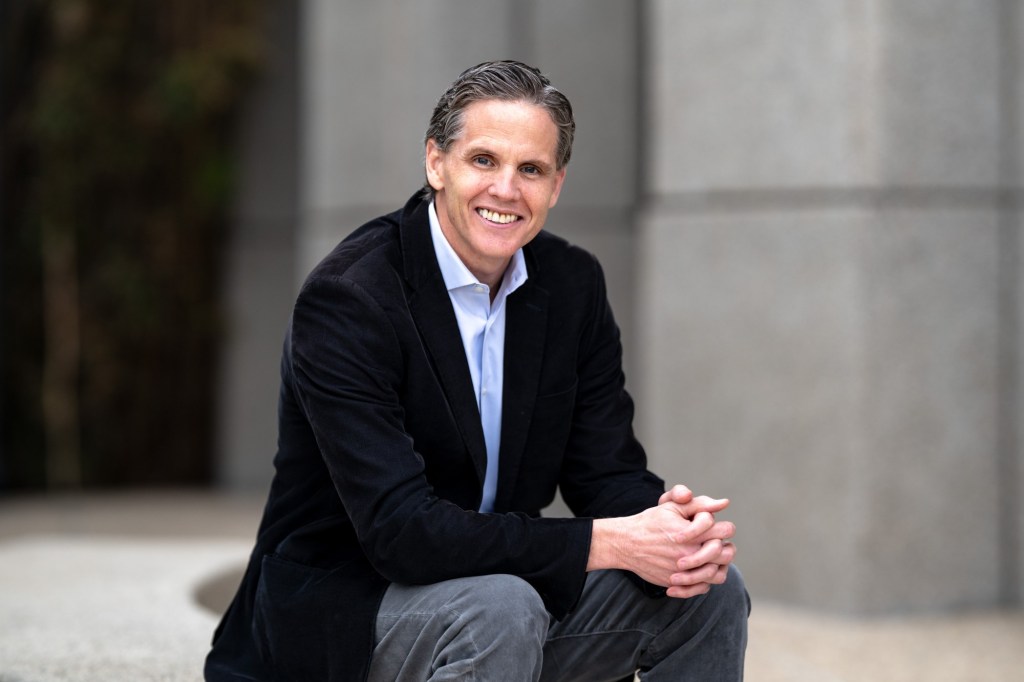
Marshall Tuck, chief executive officer of EdVoice, spoke with this news organization about some of the biggest issues in California’s education system, the upcoming State Superintendent of Public Instruction race and his mission to improve opportunities for California students.
Q: What does EdVoice do?
A: EdVoice is very focused on how we help California have a public education system that works really well for all kids, particularly for kids from low-income communities. We have a state that’s the fourth-largest economy in the world. We are the innovation capital of the world. There’s so much opportunity for many in the state, but there’s not opportunity for all. At the core, that is because if you’re a child from a low-income community, it’s about a 50% chance that you will not graduate high school with the skills you need to have success in a 21st-century job market. EdVoice focuses on advocacy, helping authors write bills, lobbying extensively and trying to support the governor and the legislature in passing policy changes that are going to really lift up success for our students and lift up better conditions for teachers and principals.
Q: What are some bills EdVoice has been involved with?
A: We were very focused on improving reading instruction and getting a bill passed that screened for reading difficulties in all kindergarten, first and second grade classrooms. That is being rolled out this year. And more recently, in 2025, we helped pass legislation, AB 1454, that ensures all instructional materials in classrooms must be aligned with evidence-based literacy instruction, also known as the science of reading. Those are bills that will help all students. When you focus on lifting up schools for kids from low-income communities, it will still impact kids throughout the state. But when you look at the data, it’s really children from low-income communities who are most impacted by the reading challenge because wealthier families, if a child’s not diagnosed for having a reading challenge, oftentimes they’ll go pay for a diagnosis outside of school. Or if a child’s behind in reading, they can pay for tutors. And our work doesn’t stop after the bill is passed. Often, politicians and even advocacy groups pat themselves on the back when the policy passes, but we remind people that’s the 50-yard line because you still need to make sure that the policy gets implemented effectively.
Q: What are some of the most important issues California schools and students face?
A: Our focus is on systemic change, which means that the state needs to change a number of big issues. At the core, if children are not at, or close to, grade level in reading in elementary school, they will not have success in other subjects because it is the gateway skillset to other subjects. Children who are not at, or close to, grade level in early numeracy have much lower rates of graduation and much lower rates of getting placed into higher-income jobs. And the most important factor that a school system can control in a child’s academic success is the teacher. We’ve been extremely focused on helping get more qualified teachers in our classrooms. We think there are a lot of changes that need to happen, but you have to have (those three) because that’s the bedrock of a public school. And if you can get those right, then you have a real chance of success for all kids.
Q: You previously ran for State Superintendent of Public Instruction, which is responsible for managing the California Department of Education. Gov. Gavin Newsom recently announced plans to transfer authority over the department to future governors and the State Board of Education. What are your thoughts on that?
A: Most voters know who a governor is. Most voters don’t know who a state superintendent is. Right now, our California Department of Education — which is really supposed to be helping inform policy and deliver the implementation — reports to both the state superintendent and to the governor. And that’s a very unique structure. It’s rare amongst other states. If you look at most states that are moving the needle on education, you see a very clear delineation of responsibility and accountability. It usually rolls up to one person. Our mission is how do you lift up achievement for kids from low-income communities. We think the proposal to have the California Department of Education move directly under the state board and the governor, rather than having this split dual role, will lead to more effective follow-through on policies that get passed and also might motivate the future governors to keep education as the top priority issue because they’ll be on the hook for the results. Overall, in keeping the state focused on this issue, which it needs to be if we’re going to make all the changes necessary, the governance change is a good thing for kids and an important thing for California.
Q: Would you consider running again?
A: Maybe. I ran for state superintendent the first time because I had run schools for 12 years and became convinced that if you don’t change state policy, we’re never going to educate all kids. I’m very focused on trying to deliver on that and leading EdVoice to be a great, sustainable, long-term organization that is consistently advocating, lobbying and delivering strong solutions for kids and low-income communities and lives beyond me and any individual governor.
Q: You formerly worked in technology and finance. What inspired you to get involved in education?
A: I was raised Catholic. My mom was a teacher. My grandma was a teacher. My aunt was a teacher. We weren’t a heavy social justice household, but it was life’s about love and lifting up others. Life’s about community and actions are a lot more important than words. I took a job in investment banking right out of college and I wasn’t happy. So I went and did a year of service work internationally. I worked with kids in Zimbabwe who were just wonderful and inspiring. And I knew they were never going to reach their potential because our world isn’t doing a good enough job of meeting people’s basic needs and because of the government structure in that country. So that’s when I said, I’ve got to shift gears. I’ve got to get focused on helping people have a better life sooner. And in this country, the issue that can unlock the most opportunities for people who have the most struggles is education.
Marshall Tuck Profile
Position: Chief Executive Officer of EdVoice
Education: Bachelor’s degree in political science at UC Los Angeles, master’s in business at Harvard University, Broad Residency in Urban Education at Yale University.
Residence: Los Angeles
5 things to know about Marshall Tuck
He’s a Bay Area native and grew up in Burlingame.
He did a full year of service work with children in Zimbabwe, Thailand and Romania
He loves basketball and plays every Sunday for two hours
When he’s not working, he’s focused on his community and being a good parent, friend and brother
He’s a frequent flyer, often in Sacramento once a week and visiting EdVoice partners throughout the state