
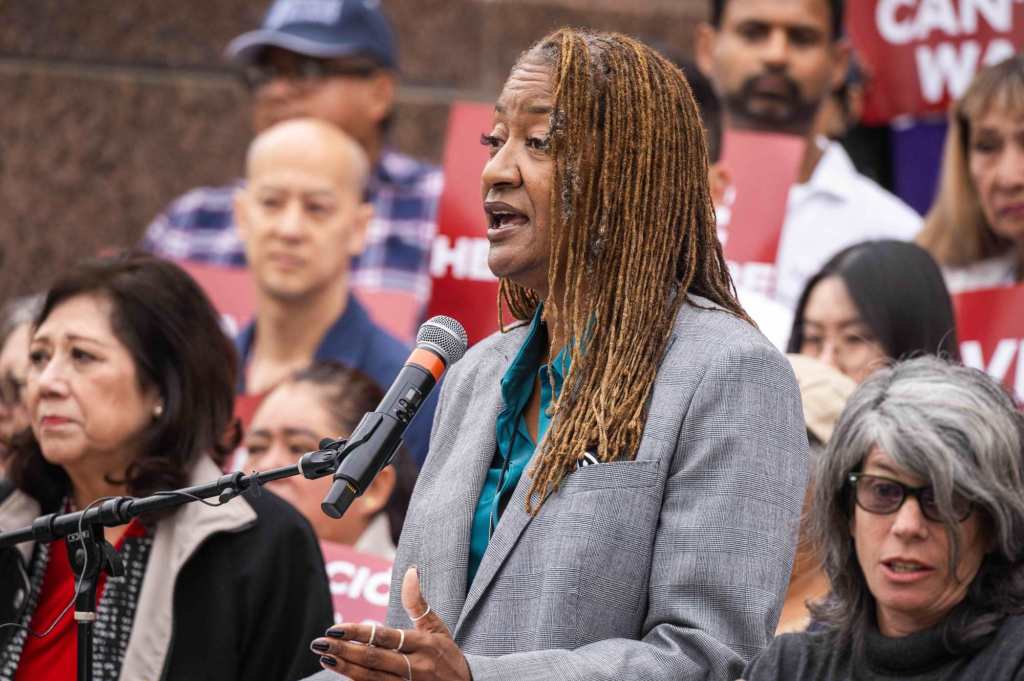
The proponents of Measure ER, a half-percent sales tax measure to plug gaps in healthcare funding in Los Angeles County caused by federal cutbacks have formally launched their campaign, tapping internet ads, mailers, Zoom calls, social media and selective door-knocking in an effort to convince voters to vote yes on June 2.
The “Yes on ER” campaign committee held a one-hour virtual plug for the tax measure featuring lead author and Second District LA County Supervisor Holly Mitchell and representatives from a community clinic, an ER hospital physician, and the head of a community foundation.
In a Zoom meeting on Wednesday, April 22, the common theme was support for the 1/2 percent (0.5%) general sales tax, which would raise about $1 billion a year by increasing LA County’s sales tax rate from 9.75% to 10.25%. Many cities with higher tax rates will see their sales taxes rise to 11% or more should the measure receive a majority of votes.
Supporters said the measure helps restore cuts from House Resolution 1 (“One Big Beautiful Bill”) approved in July that reduces LA County healthcare funding by $2.4 billion over the next three years, removes hundreds of thousands of low-income residents from federal health care coverage and reduces funding from county Department of Health Services and Department of Public Health for countywide medical services.
“We now have something to fight back against the Trump cuts, which will devastate the safety net system in Los Angeles County,” began Jim Mangia, CEO and president of St. John’s Community Health, a leader of the coalition of clinics, labor unions and physician groups supporting Measure ER, the Essential Services Restoration Act for Los Angeles County General Sales Tax Measure.
 A Yes on Measure ER mailer, sent to residences in LA County in April.
The general sales tax increase puts money into the county’s general fund for five years and sunsets in October 2031. The Board of Supervisors voted 4-1 to put the measure on the ballot, with an allocation plan that will move revenue primarily to nonprofit healthcare providers and county health departments and hospitals, but also to: Planned Parenthood and city healthcare departments in Pasadena and Long Beach. The supporters say it will also prevent the layoff of 64,000 county workers.
The most well-known opponent listed on the measure is Fifth District Supervisors Kathryn Barger, who voted against the measure when it was before the Board on Feb. 10.
“Backfilling federal funding cuts on the backs of county taxpayers is not acceptable,” Barger wrote in opposition to ER. “Los Angeles County residents are already stretched thin. Last year, Bloomberg News reported that Los Angeles now has the highest sales tax rates of any major metropolitan region in the nation. This proposed half-cent increase would push us even higher, making our county less affordable for families and less appealing for consumers to shop and businesses to operate.”
She agrees with other opponents, including the Howard Jarvis Taxpayers Association, the Los Angeles County Taxpayers Association and many city leaders. Other elected officials in opposition include: Rosemead Mayor Sandra Armenta, Temple City Councilmember Cynthia Sternquist and Arcadia Councilmember Paul Cheng.
“We sympathize that the Trump Administration is cutting healthcare,” said Aidan Chao, chairman of the Los Angeles County Taxpayers Association on Wednesday. “But it won’t help to turn around and put the burden on taxpayers who already pay the highest taxes in the country.”
During the Zoom, speakers who are part of the coalition of supporters, said without the money from the tax increase, the cuts spell catastrophic consequences. Both county clinics and private healthcare groups, such as St. John’s, which provides medical, dental and mental health services to 144,000 patients a year at 25 clinic sites in L.A. County, will not be able to function fully without federal Medi-Cal dollars.
Federal cuts affect 3.3 million low-income county residents who rely on federally funded Medi-Cal for healthcare services provided by the county. Already, 200,000 county residents have been disenrolled from full-scope Medi-Cal coverage, and one out of five people are children, the group reported. The county has closed seven of its public health clinics, as funding has begun to drop.
The County will not be able to stand and deliver the services it is expected to,” said Mitchell. She predicts one of the four county hospitals would close if no gap funding was found. “From my perspective, it is life or death.”
In addition, those who lose Medi-Cal benefits would flood both county and private hospital emergency departments, making wait times worse and increasing overcrowded ERs, said Dr. Christopher Libby, an Emergency Department physician at Cedars-Sinai Medical Center in Los Angeles.
A chain reaction would occur: Patients without coverage stay home, get sicker, and as a last resort end up in ERs. “Every emergency department is open to everyone who needs it. Closing clinics and closing hospitals will further strain the system. So this is an everybody problem,” he said.
“Last night at midnight, our waiting room was still filled with 60 patients deep,” he added.
Mailers began hitting mailboxes of county residences last week from the Yes on ER — Restore Healthcare for Angelenos group on Figueroa Street in Los Angeles. The Yes on ER — Health Justice Action Fund gave $100,000 to the campaign on March 28, according to campaign records dated April 9.
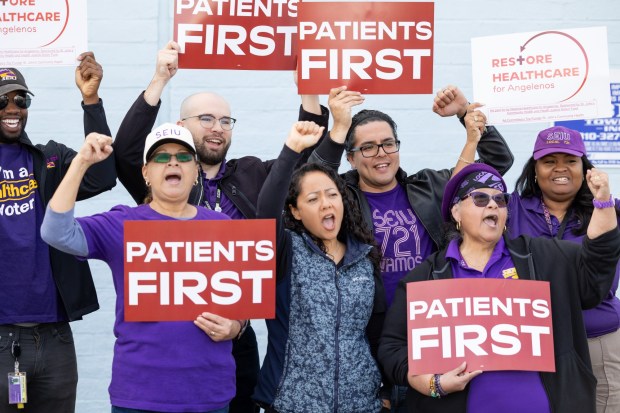 Members of the Restore Healthcare for Angelenos rallying at a press conference on Wednesday, Jan. 28 at Venice Family Clinic in Inglewood. (photo courtesy of Restore Healthcare for Angelenos)
In an emailed response, the campaign said they’ve conducted three polls since October and they all found a majority of voters support the one-half-cent sales tax. They declined to give any details on the poll results, percentages in favor or against, or the exact dates of the polling. “Polling research is for internal campaign use and is not intended to influence public opinions,” the campaign said.
The campaign reported it is working with two different pollsters: David Binder Research and Evitarus Research and said each have experience with LA County ballot measures.
A poll by Sextant Strategies & Research that asked only likely voters living in the city of Los Angeles about city issues, including Measure ER, found that 47% opposed the sales tax measure. It was taken in mid-March on behalf of Working Californians, a nonprofit group affiliated with the International Brotherhood of Electrical Workers (IBEW).
Chao, of LA County taxpayers, said the group is working on raising money and will eventually set up a website and use social media and elected officials to spread its “no on ER” message. He described it as a “grassroots campaign.”
Yes on ER will host a rally and march at 1741 E. 120th St. in Los Angeles, across from MLK Community Hospital. Supporters will march to Earvin “Magic” Johnson Park at 905 E. El Segundo Blvd. The Yes group is also knocking on doors at Esperanza Community Housing in South LA.
Early voting starts May 4. Voters can fill out ballots and drop them off at vote centers, said Mitchell.