
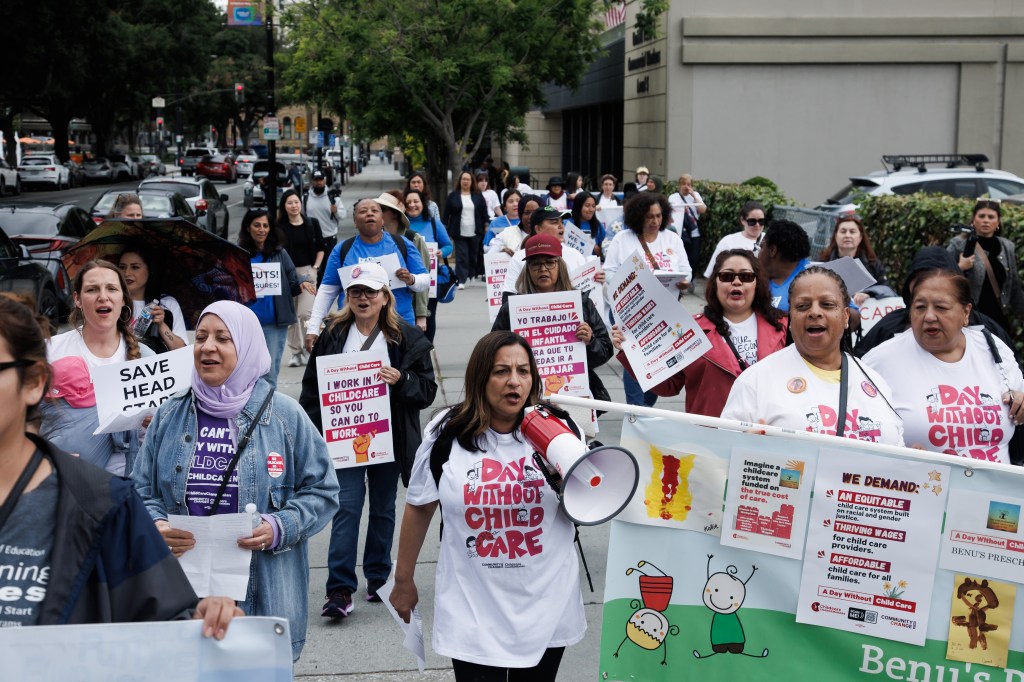
California, the world’s fourth largest economy, is falling short without a robust child care infrastructure. While California has made tremendous progress by expanding free, public transitional kindergarten for all four-year-olds, and new investments expanding free or low-cost preschool are serving many families, we have a long way to go to implement universal affordable child care and fully unlock California’s potential. We must stop delaying the necessary funding for 54,000 new child care slots to fulfill the Governor’s goal of 200,000 set in 2021.
To attract and retain a talented workforce in California, we must address the affordability concerns of those who live here. That critically includes child care. After housing, child care is a significant expense in a family’s budget and the source of stress for many parents. In Silicon Valley, the monthly cost of child care averages over $2,600. Statewide, child care for one accounts for nearly a fifth of a family’s median income.
Each child without care potentially means one adult out of the workforce. Absenteeism and turnover related to child care can cost anywhere from $414 million to nearly $3 billion each year, as identified by the U.S. Chamber of Commerce Foundation. If California provided care for every child, 100,000 parents could rejoin the workforce and generate an additional $23 billion a year in GDP. That is why a strong and safe child care system strengthens our state’s economy.
Child care is infrastructure, like roads and bridges. It enables businesses to open, empowers parents to further their education, and allows adults to show up to work. Early investments in children provide continued long-term benefits; research suggests high-quality child care increases the likelihood of graduating from high school, and maintaining stable, full-time employment in adulthood.
A comprehensive early childhood education system unlocks the full potential of our labor force and strengthens California’s economy. Current funding levels are inadequate and prevent the critical expansion needed to close that child care gap. Increased funding for child care slots and our early learning workforce gives families much needed financial relief, money that will recirculate back into the economy.
Now is the time to carry out this ambitious work, supported by additional investment at the state level and better planning on the local level. Assembly Bill 1914, authored by Assemblymember Pilar Schiavo and co-authored by State Sen. Josh Becker, would solidify that commitment. It reinforces that local cities and counties must support and plan for child care services, the same way we plan for housing and safety, requiring that long-range General Plans account for these critical unmet needs.
Furthermore, at the local level, we can reduce permitting costs and provide technical assistance to small and aspiring child care operators. We can also reduce land use and other regulatory barriers, including the need for environmental review, and provide fee and tax relief whenever feasible. This can be the difference between financial viability and closure. When working with moderate and affordable housing developers, we should encourage colocation with child care.
Beyond AB 1914, at the state level, we must fund the 54,000 new child care slots to fulfill the Governor’s 200,000 goal, as well as continue to invest in and expand our early education and child care workforce. We can work to streamline credentialing requirements for providers and reduce barriers to establishing child care centers. We can also dream big and ambitiously set a goal for and plan to implement universal, affordable child care for all Californians.
California often leads in policy. New Mexico and New York are actively working to provide universal child care for their residents. We cannot fall behind.
When we support early learning and education, we support our children, we support our families, we support our communities, and we fully unlock the potential of our economy.
Pamela Campos is a member of the San Jose City Council, representing District 2. Patrick Ahrens is an assemblyman in the California State Legislature, representing District 26, which includes Cupertino, Santa Clara, Sunnyvale and San Jose.