
At the end of “Raiders of the Lost Ark,” an anonymous U.S. government worker wheels a wooden crate into a huge warehouse. Inside is the fabled Ark of the Covenant, which our archaeologist hero Indiana Jones has spent the whole movie trying to keep out of Nazi hands.
Instead of being put on display in a museum, though, its fate is to be squeezed next to countless other crates potentially containing other treasures, hidden away from the public.
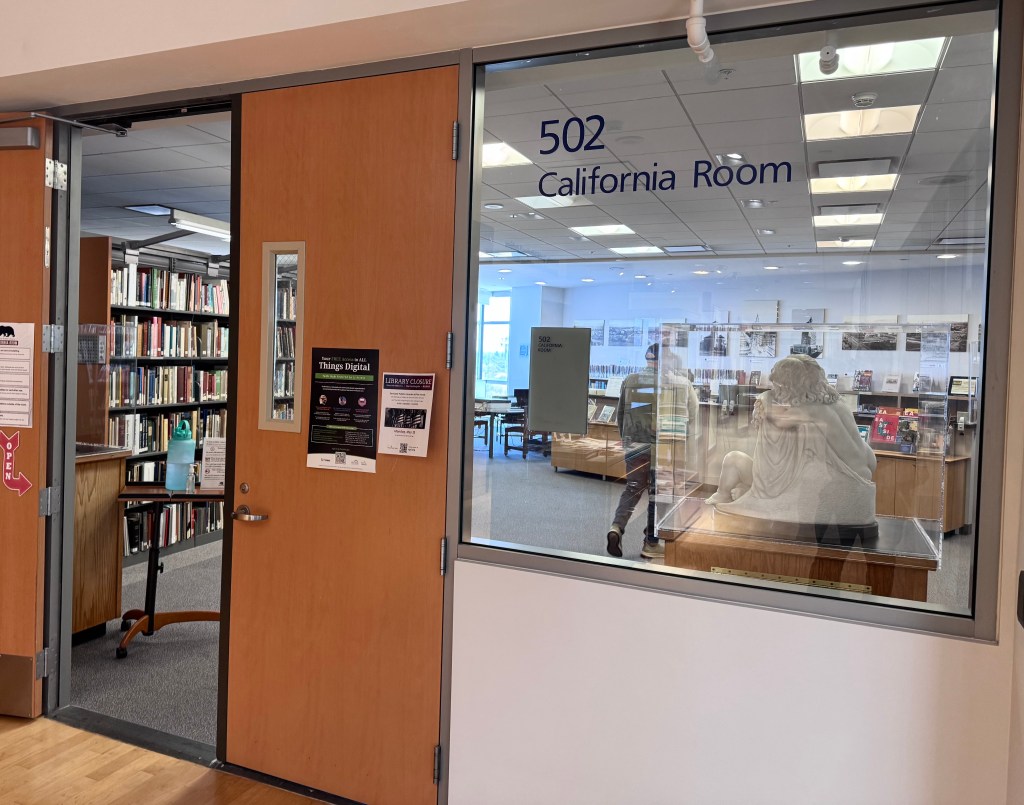
The city of San Jose’s current budget proposal — which aims to close a $56 million gap — had me thinking of that scene this week because one of the cuts being considered would end public access to the California Room, a repository of historic treasures at the Dr. Martin Luther King Jr. Main Library.
The cut would trim the gap by $388,000 with the elimination of library positions associated with the California Room. Public access to the materials would be limited and on an appointment basis so visitors would no longer be able to walk into the room and explore, ask questions of staff and get help to narrow searches or find resources the library doesn’t have.
There were 5,442 visits to the California Room tallied in 2025, but it’s unlikely that number includes people who pop in relatively unnoticed by a clerk to see the displays about poets Edwin Markham and Henry Meade Bland or to browse the collection of high school yearbooks, hoping to find a picture of mom or dad.
But that number does include historians, students, journalists, artists and others who come to the California Room for a variety of reasons. That includes people constructing their family trees and homeowners researching building permits and property records to find out if their garage addition was legit or will need to come down.
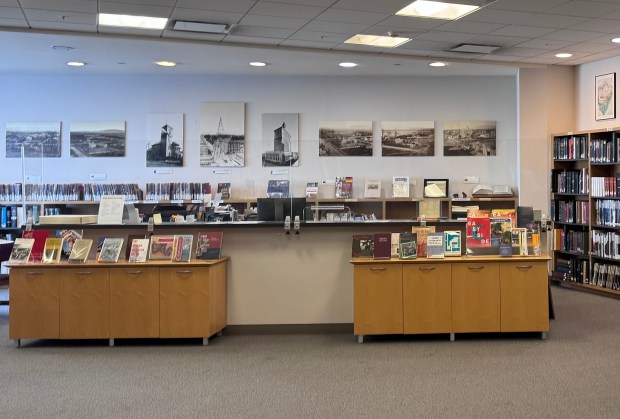 A San Jose budget proposal for the 2026-27 fiscal year would end public access to the California Room on the fifth floor of the Dr. Martin Luther King Jr. Library in downtown San Jose. (Sal Pizarro/Bay Area News Group)
It’s a treasure trove for history buffs, too. The collection includes San Jose City Council minutes going back to the 1850s, as well as translations of the Spanish and Mexican archives of the original pueblo going back to 1792. The Ernestina Garcia Collection traces Mexican American political activity in the 1960s and ’70s, and there are more than 700 boxes of materials from about 600 Silicon Valley companies active during the mid-1980s to early 1990s.
There is a great deal of California Room material available online, and it sounds like access to that won’t be affected, but it is more than that.
The California Room is home to the San Jose Public Library’s Retro Tech program, which lets library users convert old slides, vinyl records, home movies and photographs to digital formats. It’s a free program led by trained volunteers, but it’s entirely unclear if it’ll continue if the California Room is closed.
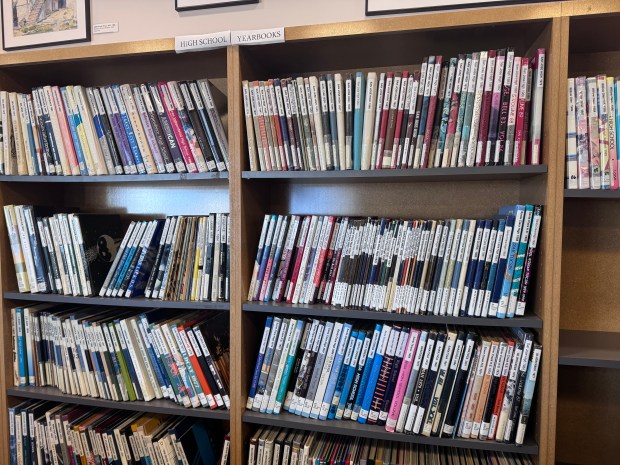 A collection of Santa Clara County high scho yearbooks are available to the public in the California Room on the fifth floor of the Dr. Martin Luther King Jr. Library in downtown San Jose. (Sal Pizarro/Bay Area News Group)
Krista Van Laan, who provides research for historical landmark applications, is a frequent visitor to the California Room and says it’s an irreplaceable resource.
“The California Room is not simply a storage facility for historical documents,” Van Laan wrote to the city council. “It is a research environment, staffed by professionals who possess specialized knowledge of San Jose and Santa Clara Valley history as well as of the materials within the room.”
In her letter, Van Laan makes another important point. People doing historical research are usually looking for more than one thing, and one discovery will often take you down a different path. An entry in a city directory might lead to a map, which could send you searching for an aerial photograph. Exploration sometimes leads to inspiration — and that rarely happens by appointment.
A pair of exhibits that came about in the past few years on San Jose’s lowrider culture and on East San Jose wouldn’t have happened without the California Room.
The original exhibit in 2019 was spurred when a library patron asked for materials on lowrider history at the California Room desk. There was none at the time, and that led to a yearlong effort to expand the collection. The three exhibitions, curated by researcher Estella Inda, made the largely Latino culture part of the story the library told.
Of course, saving the California Room means that $388,000 has to come from somewhere else. Do you take Viva CalleSJ — which is already proposed to drop from three events to two next year — down to one? Lots of people, including me, wouldn’t want to see that, either.
But the problem with closing a resource like the California Room is that it becomes that much harder to reopen it in the future. If it’s closed, people are less likely to use what services are still available. And if people aren’t using those, future budget crunchers may wonder if it’s necessary. Or, worse, they may forget about it entirely.
And then the California Room really does become like that warehouse in “Raiders of the Lost Ark.”