
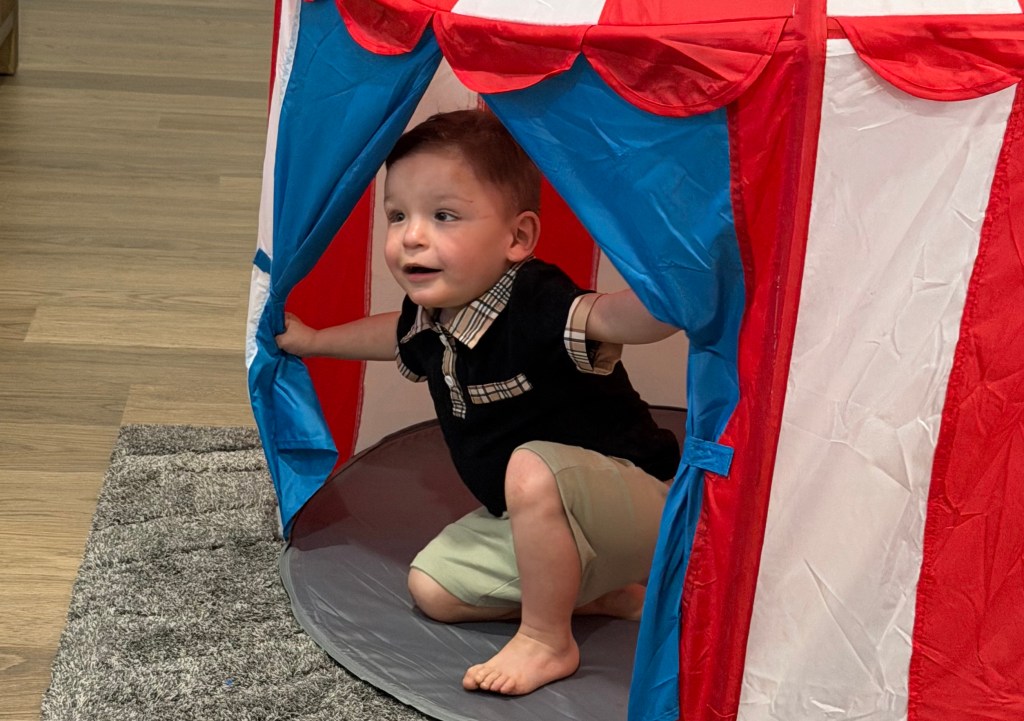
Jaxon Juarez was practically born into Santa Clara County’s child welfare system.
Nearly eight weeks premature and showing signs of fetal alcohol syndrome, he drew the attention of social workers almost immediately. The county’s Department of Family and Children’s Services already was under pressure to avoid another tragedy after the fentanyl overdose death of 3-month-old Phoenix Castro in its care months earlier.
“There’s one less child in our world because of us,” said Santa Clara County Supervisor Sylvia Arenas, who used to work in child welfare and has led calls for the agency’s reform.
Jaxon’s path through the system, from birth in November 2023 to his death last month in the foster home where social workers placed him, is a story of key decision points, missed red flags and unanswered questions about how the county failed to keep him safe. His teenage cousin, who lived in the San Jose foster home, is now charged with murder and multiple counts of sexual assault, as well as assault with a hair tie that left marks on Jaxon’s neck.
The case underscores one of government’s most difficult duties: deciding when a child is safer with parents or in foster care and what happens when safeguards break down.
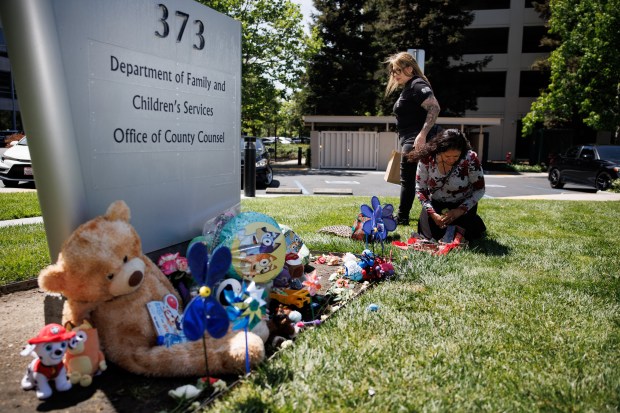 Stuffed animals and flowers are visible at a memorial for two-year-old Jaxon Rey Juarez in front of the Department of Family and Children’s Services building in San Jose, Calif., on April 24, 2026. Juarez died April 9 after being placed in the foster home of relatives. (Dai Sugano/Bay Area News Group)
A Mercury News reconstruction found that Jaxon passed through a series of warning points before his death: relatives in Arizona say they offered to take him but were dismissed because they lived too far away for visits; the county later approved a caregiver with a felony child endangerment conviction that officials now say should have disqualified her; and two days before Jaxon was found dying, concerns from a medical exam triggered a child abuse hotline call requiring an immediate response, but family members — several speaking publicly for the first time — say the follow-up exam never happened.
Since Jaxon’s death, the county has placed 10 social workers, including supervisors and managers, on leave and invited state investigators to not only review the case, but to be an “established presence” to monitor the agency’s work. At the same time, the state has begun reviewing another 50 of the county’s active case files of children living in foster care homes to make sure there are no other similar problems.
“In a very real sense,” County Executive James Williams said in his memo to supervisors, the child welfare agency “was serving as Jaxon’s legal ‘parent’ at the time of his abuse and death.”
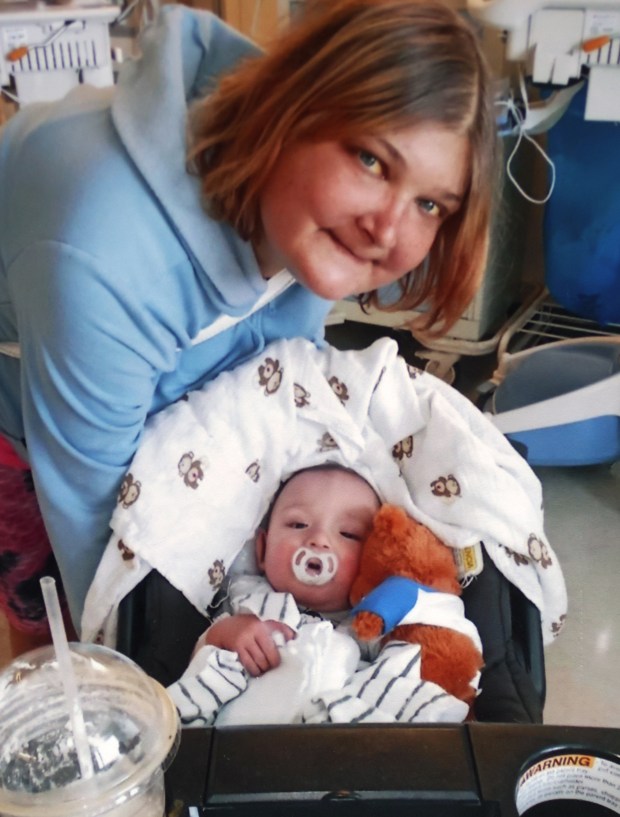 Brianna Burton with her son Jaxon Juarez in an undated family photo. Burton died of kidney and liver failure in July 2025. (Photo courtesy of Juarez Family)
Born into peril
Jaxon was still in the NICU, his grandfather Eric Burton recalled, when a hospital worker told him, “we’re going to have to call CPS” — child protective services.
Jaxon’s mother, Brianna Burton, had struggled with mental illness and alcohol use, Eric Burton said. She died before Jaxon turned 2. Jaxon’s father, Albert Juarez, acknowledged having serious health problems himself and a list of prescription painkillers.
After 76 days in intensive care, Jaxon went home with his parents. They lived with Albert’s mother, Elva Juarez, who had owned her house in the Santa Teresa neighborhood for 50 years.
At a certain point, social workers put a safety plan in place and Jaxon’s parents and grandmother agreed to a condition that would later become central to the county’s concerns.
“The rule was that Albert or Brianna could not be alone with Jaxon at all,” said Eric, who visited Jaxon frequently until he moved last year from Santa Clara to Roseville near Sacramento. “So grandma always had to be there.”
Elva later acknowledged she did not always keep that promise. During one unexpected visit, she said, a social worker arrived while she was at the bank.
By then, however, Brianna’s sister in Arizona, Riley Wallace, said she had contacted the agency about her fears that Jaxon was developing too slowly and that bed bugs had infested the grandmother’s house.
Jaxon’s mother was in and out of the hospital with liver and kidney problems that were so dire, her jaundiced eyes turned as yellow as a highlighter pen. His father suffered numerous health problems of his own, including a major surgery that sent him home with painkillers and a colostomy bag.
A family meeting breaks down
Family members said they did not expect Jaxon’s removal last July to happen so quickly or dramatically.
Jaxon’s mother was in the hospital dying when social workers set up a video teleconference to discuss Jaxon’s future. It quickly turned disastrous for Albert and his mother, Elva.
Brianna’s sister Riley had already offered to adopt Jaxon with her mother and aunt, who shared a five-bedroom house in Mesa with a room all set up with a bed and toys for him.
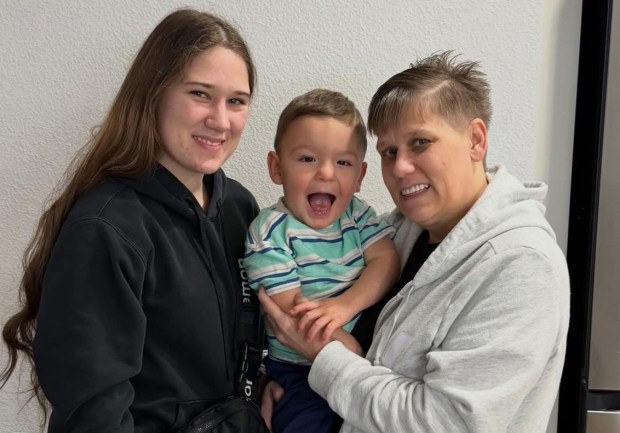 Jaxon Rey Juarez, 2, with his maternal aunt Riley Wallace, left, and maternal grandmother Tami Marshion in Roseville, Calif., back in November of 2025. (Photo courtesy of family)
Eric, the grandfather, also was on the call and offered to take his grandson as well — at least until the father regained custody or the Arizona relatives were approved to take him. He had worked in law enforcement and campus security and after raising Brianna, who had mental health issues, he thought he was equipped to handle Jaxon’s special needs.
Albert’s cousin in San Jose — Elva’s niece — was also on the call. She told the family she was like a nanny to Jaxon. Her teenage son is now charged with Jaxon’s murder. The Mercury News is not identifying the cousin to protect the identity of her son, who turned 18 two days after Jaxon’s death but is charged as a minor in juvenile court.
The discussion grew confrontational quickly, however, when Riley criticized Albert’s parenting. Jaxon was nearly 2, Riley said, and couldn’t speak or walk.
“This is a bunch of crap,” Albert recalled saying as he held Jaxon in his arms. “Why are you guys taking him? What did we do wrong?”
Eric and Riley said they heard muffled yelling and cursing off-camera from both Albert and Elva. The county wouldn’t comment on the exchange, but Elva and Albert acknowledged later that one of the social workers who was in the home with them said she felt “threatened.” She quickly ended the video meeting and left.
The next day, social workers returned with a court warrant authorizing Jaxon’s removal. Police accompanied the social worker. Albert and Elva said they both resisted, yelling at police not to take the boy.
“They pried him out of my arms,” Elva said.
“My emotions just took over,” Albert said.
The police report wasn’t available to confirm their story and the county declined to comment on it. But at some point, Albert said he lifted up his shirt to show the officers his colostomy bag.
“I said please be careful, I’m hurt,” he said. “I stepped off the porch and they just mobbed me.”
They left with Jaxon.
Jaxon goes to his grandfather’s
Riley said social workers told her that she and her mother and aunt in Arizona were not viable placement options because they lived too far away for Albert’s court-ordered weekly visits with Jaxon.
Eric said he and his wife were willing to take his grandson into their home, but worried they wouldn’t be able to handle his special needs and still keep their jobs. Eric wanted to be a grandfather to Jaxon, not necessarily a foster parent. He agreed, though, for six months.
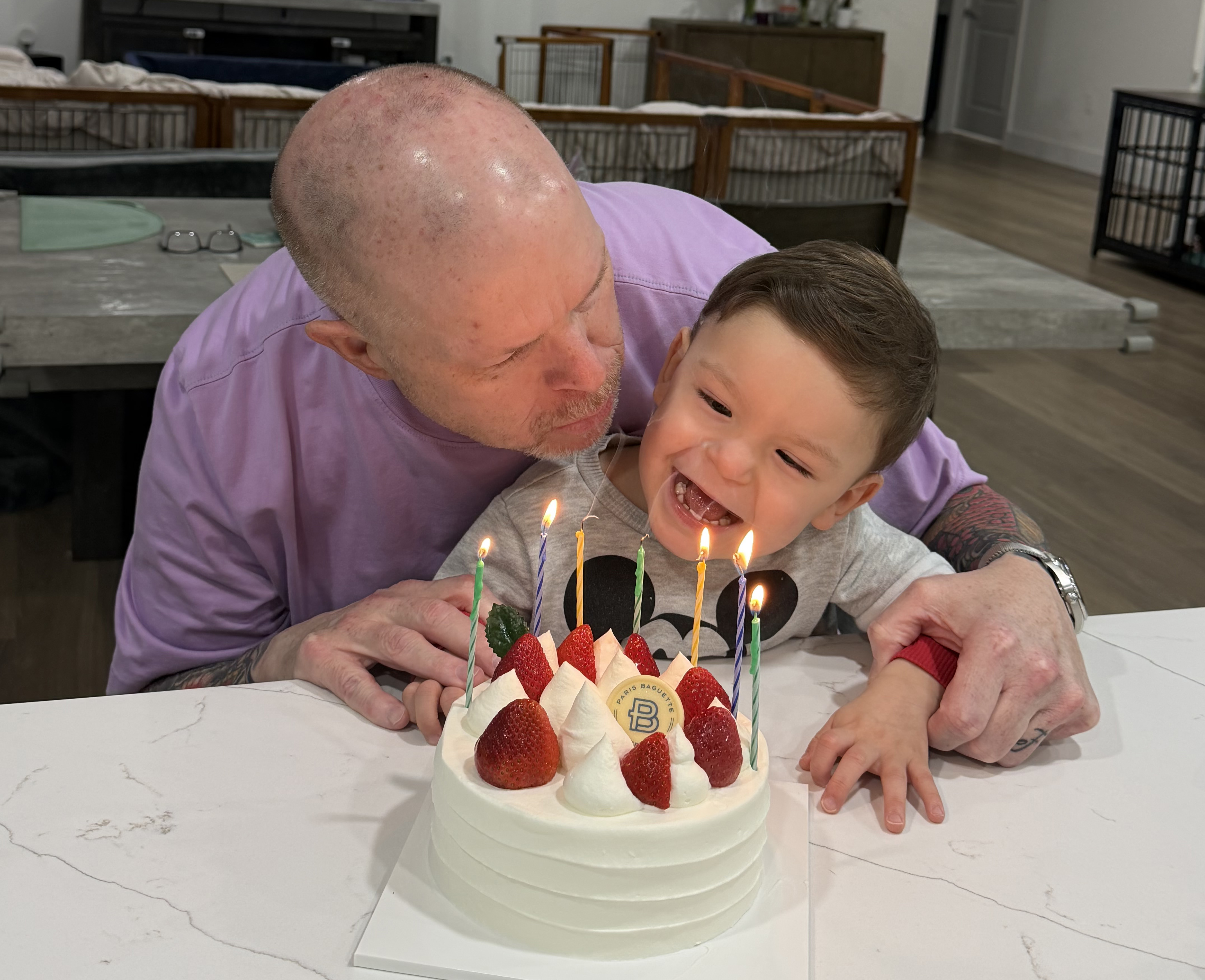
Eric Burton celebrates his February birthday with his grandson, Jaxon Juarez, 2, two months before the toddler died in foster care. (Photo courtesy of Eric Burton)

Eric Burton celebrates his February birthday with his grandson, Jaxon Juarez, 2, two months before the toddler died in foster care. (Photo courtesy of Eric Burton)
Show Caption
1 of 2
Eric Burton celebrates his February birthday with his grandson, Jaxon Juarez, 2, two months before the toddler died in foster care. (Photo courtesy of Eric Burton)
He realized that the “pool of potential candidates was limited” to take Jaxon, but he still doesn’t understand why he was the first choice. Albert and Elva had praised the San Jose cousin whose home later would become Jaxon’s last — she had taught Jaxon’s inexperienced parents to bathe the infant, they had said.
“I am living up here, three hours away,” Eric said. If the cousin “was this great person, why did they send him to me? Did they have doubts about her? If they did, why did they place him there?”
Foster parents have to undergo an in-depth vetting to make sure they would provide a safe home. While a licensed foster couple in Santa Clara County kept Jaxon for several weeks, Eric underwent criminal background checks, home visits and interviews until he was approved. Jaxon moved to Roseville last September.
During the next six months, Eric was required to drive the six-hour round trip to San Jose for Albert’s supervised visits with Jaxon. In the meantime, Albert was supposed to complete a list of classes as part of the reunification plan. Those included Alcoholics Anonymous classes three to five times a week, grief therapy for the loss of Brianna, random drug tests and a substance abuse program, Albert said, “even though it wasn’t proven that I was high or anything.”
A court hearing was initially scheduled for late February of this year, when a judge would decide whether Albert could regain custody of Jaxon or the Arizona relatives should be considered as a longer-term placement.
But social workers told the Arizona relatives that Albert would get an extension to finish his classes, so the court hearing was postponed until this August.
At home in Roseville, Eric did his best to help Jaxon adjust. He taught his grandson to walk up the stairs and to say “button.” He turned on the cartoon Bluey to calm him. He held him when he screamed.
But Eric was overwhelmed with Jaxon’s 24-hour care and weekly trips to San Jose that were threatening his sales job. He told social workers he would have to relinquish custody as originally planned: not in August, but at the end of February.
Six weeks later, Jaxon was dead.
“My wife says I shouldn’t feel guilty, but how do you not feel guilty?” Eric said. “I feel like I sent him to his doom.”
Placed with a cousin who had a felony conviction
When the social workers told the extended family that Jaxon would be placed with the San Jose cousin, family members said they were surprised since it appeared she had been passed over six months earlier.
Still, they were confident that social workers knew what they were doing when they placed him with the San Jose cousin — a 40-year-old mother with three children at home of her own.
So in late February, Eric packed up Jaxon’s clothes and toys and drove him to San Jose. He thought he was handing Jaxon into the arms of relatives where he would “get the same love and care that we gave him.”
“Take care of him,” Eric told the cousin. “Here’s my number. I’m here for you.”
In placing a foster child with a relative on an emergency basis, like in the cousin’s case, state and county policies require social workers to complete an “Emergency Relative Placement” packet that includes checks of criminal records and any prior history the prospective caregiver has with the child welfare system, as well as a safety walk-through of the home.
The cousin had a record county officials say should have automatically disqualified her: a 2014 felony child endangerment conviction after police found her drunk and out of gas on the side of a busy road, vomit in her lap and her baby daughter in the back seat.
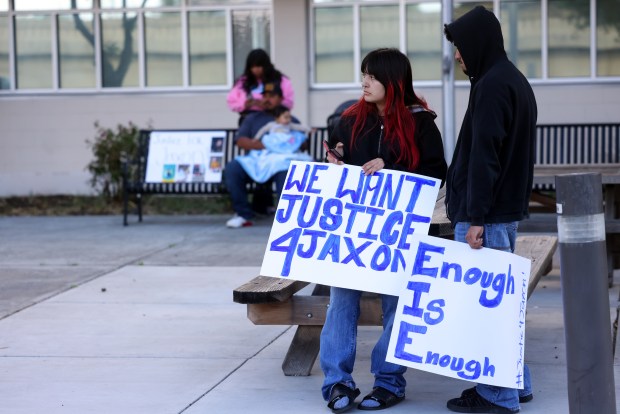 Community members hold signs outside the Santa Clara County Juvenile Justice Courthouse on Monday, April 20, 2026, in San Jose, Calif. The San Jose teenager accused of sexually assaulting his 2-year-old cousin before the toddler died has been charged with murder and county prosecutors will also seek to move the charges to adult court as the teen suspect just turned 18. (Aric Crabb/Bay Area News Group)
The county won’t explain what social workers knew about the cousin’s criminal record or what they did with that information.
But interviews with people close to the case, as well as a memo from County Executive Williams to county supervisors and another from Department of Family and Children’s Services Director Wendy Kinnear-Rausch to staff last week, suggest social workers were aware of her felony “willful cruelty to a child” conviction — part of the felony child endangerment statute — yet placed him with the cousin anyway.
In Kinnear-Rausch’s memo to staff, she said, “in the wake of Jaxon’s tragic passing, I write to remind you of our existing policies that help protect children under our care.”
Social workers “are prohibited from placing a child on an emergency basis with an individual who has a conviction for a non-exemptible crime,” she wrote, and that includes “any felony conviction for child abuse, crimes against a child, and willful injury to child.”
Marks on Jaxon raised concerns
Once a child is declared a dependent of the court and is placed in foster care, as Jaxon was, social workers are required to visit in person at least once a month. The grandmother, Elva, told The Mercury News that during a scheduled visit at a county office with Jaxon on March 27, a month after the boy went to live with the cousin, she noticed a red line on Jaxon’s neck and alerted a social worker, who, Elva said, took a photo. The county wouldn’t confirm that account.
Two days before Jaxon was found dying April 5, the warnings became more urgent: a daycare concern, a medical exam, a child abuse hotline call and a request for follow-up care that family members say never happened.
Jaxon was at daycare April 2 when one of the workers noticed a rash on his body — his arms, legs and bottom, plus a ring around his neck. The daycare called his foster mother, the cousin, who said it was a detergent allergy. Even so, the daycare told her to pick him up in case it was contagious and said Jaxon couldn’t return without a doctor’s note.
“We saw a rash around his neck. It was a little line in the crease of his neck,” said Marie Nunez, director of the daycare center off Capitol Expressway. “We weren’t worried.”
Besides, Jaxon seemed happy. “He didn’t talk, but he was very loving,” she said. “He never withdrew.”
The next day, at 1:10 p.m., Nunez said after checking her records, the foster mother returned with a doctor’s note and prescription from the Spark Clinic — a health center established to treat abused children in the child welfare system — for some kind of cream. The foster mother told her it was to treat eczema.
“Did we miss something?” Nunez asked. “We saw the rash. We had him go to the doctor. What else could we do?”
What Nunez did not know was that the medical professional who examined Jaxon at Spark Clinic had reported suspected abuse to the county’s Child Abuse Neglect Center hotline, according to a person familiar with the hotline report. The report initiated an ‘immediate response’ from social workers, the person said.
At 1:42 p.m. that Friday, Albert received a message from a social worker with a request to complete a “DocuSign” authorizing follow-up care.
“The doctor would like to do a more comprehensive exam,” according to the text message, a copy of which was reviewed by the Mercury News. Albert completed it right away, he said. But his cousin — the foster mother — never took him to the subsequent exam, he said.
Instead, Jaxon spent the afternoon napping with the rest of the children at daycare and by 4 p.m. joined an Easter egg hunt there. Families were invited. The foster mother returned and for the first time, brought her 17-year-old son.
In Kinnear-Rausch’s memo to staff, she reminds workers of agency policy that applies when workers investigate allegations of maltreatment: “they must consult with the Children’s Advocacy Center before determining whether a child is safe.”
The center is a specialized county program that conducts forensic interviews with children to determine whether they may have suffered abuse.
“Leave it up to them,” the memo said, “to determine if the child should be seen and when.”
Jaxon found unresponsive
Two days later, on Easter Sunday, San Jose police were called to the cousin’s house, the Santa Clara County District Attorney’s Office said, where they found “Jaxon’s small, bruised, and battered body.”
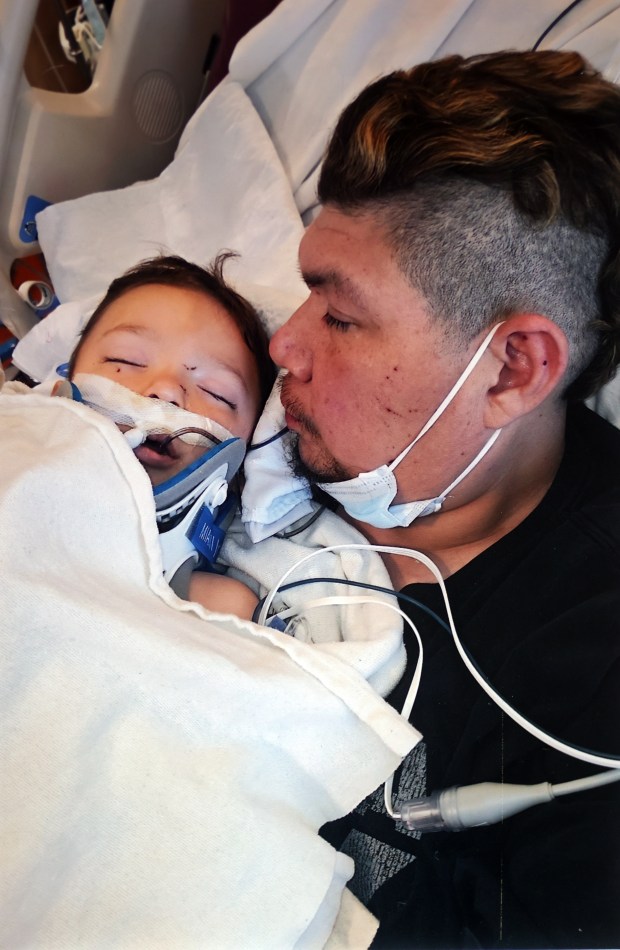 Albert Juarez with his son Jaxon in a hospital days before his death. (Photo courtesy of Juarez Family)
The boy remained on life support for four days before he died. Albert was allowed to see his son and hold him in his arms. Jaxon’s eyes were closed. A stiff brace covered his neck.
The county coroner has yet to release the cause of Jaxon’s death. Prosecutors said that Jaxon had been sexually assaulted “numerous times.” They have charged the cousin’s 17-year-old son with murdering the child.
A family torn with grief
The family in Arizona and Roseville is planning a memorial service this summer to remember Jaxon and his mother who died nine months apart.
Albert and his mother are planning their own.
“Our family is really just lost,” said Riley, “and we’re really heartbroken because we lost his mother, and now we’ve lost him.”
In Roseville last week, a package arrived in the mail — something that Eric ordered weeks ago as a gift to take to his grandson: sneakers with Bluey cartoon pictures on them.
“I’m not a vengeful person, but they failed him,” Eric said. “I’m a hulking guy full of tattoos and stuff and I’ve been crying like a little baby ever since.
“It’s too much.”
He keeps the door to Jaxon’s bedroom closed. He can’t bear to go in.