
SAN JOSE — Google has placed a billion-dollar real estate bet on what it believes to be a bright future for San Jose, crafting new campuses on the north side of town even as its plans for an ambitious downtown transit village remain paused.
This news organization determined that Google has spent at least $1.08 billion acquiring property in San Jose since 2016. The purchases were accomplished through 45 property acquisitions, as shown by grant deeds on file with the Santa Clara County Recorder’s Office. Google bought every parcel through all-cash deals.
RELATED: Google opens newest Bay Area campus, a tech hub where thousands could work
Since December 2016, Google has assembled a sprawling San Jose footprint across three major areas of the city.
Google has spent $459 million to buy an array of properties in downtown San Jose, $452 million to purchase buildings in the Alviso district, and another $164.2 million to grab several office buildings along Tasman Drive in North San Jose.
The Alviso sites, which Google calls Meadow Point, along with the company’s Tasman campus a few blocks away, are emerging as key pieces of Google’s growing North San Jose presence.
“We’re excited to deepen our roots in San Jose with the opening of our new Meadow Point campus,” said Matt Werner, Google vice president of global real estate. “Together with our nearby Tasman campus, we’re establishing a major innovation hub in North San Jose where teams are working on some of Google’s biggest priorities.”
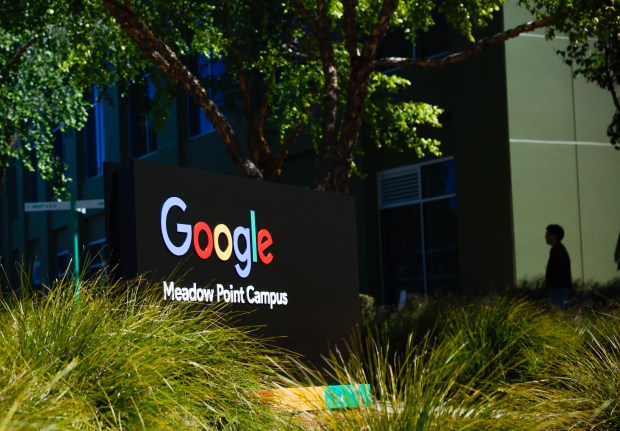 A Google employee walks on the Meadow Point Campus in San Jose, Calif., on Wednesday, April 29, 2026. (Shae Hammond/Bay Area News Group)
The company has placed its Google Core team at the new Meadow Point campus, according to Scott Foster, vice president and head of real estate and workplace services with Google.
The team is responsible for building the technical foundations behind Google’s flagship products, protecting users’ online safety, and maintaining the company’s global IT infrastructure, said Jen Fitzpatrick, senior vice president for Google Core. Key products include search, Gmail, and YouTube.
“We care deeply about this city and look forward to growing here for years to come,” Werner said.
Along with its purchases over the years, Google has leased a four-building office campus near the corner of North First Street and Brokaw Road, just a few miles from other North San Jose sites.
The three North San Jose work hubs — in Alviso, on Tasman, and at First and Brokaw — contain office buildings that together total just under 2.13 million square feet. That’s roughly the size of Westfield Valley Fair mall in West San Jose.
The buildings contain enough square footage to accommodate 8,500 to 10,000 workers, using typical square feet per employee ratios that modern municipal planners employ.
“It’s very encouraging to see Google doing this,” said Tim Bajarin, principal executive with Campbell-based Creative Strategies, which tracks the technology sector. “Google also understands it is sitting on a very serious growth spurt for all of tech. Artificial intelligence is rewriting the rules for business.”
Google is seeking a balance between expansion and the potential upheaval in jobs that artificial intelligence could unleash, analyst Rob Enderle said.
“As these tech companies evolve, they are laying off in some areas and they are staffing up in other areas,” Enderle said. “Google gets it. They discovered there are problems with depending too much on AI, and they have backed off on layoffs.”
Google’s string of property purchases is helping generate increased property taxes, this news organization found.
In a deal just a few days before Christmas 2016, Google used the alias Rhyolite Enterprises to pay $55 million for a nondescript downtown San Jose building that once was the site of a long-gone bakery.
At the time of the purchase, Pac Bell wasn’t obliged to pay property taxes on the building due to rules that governed Pac Bell at the time. Public documents show the site’s assessed value was zero prior to Google’s ownership, which means it produced no tax revenue.
The latest assessed value for the site — even though the building has been bulldozed — is $51.9 million.
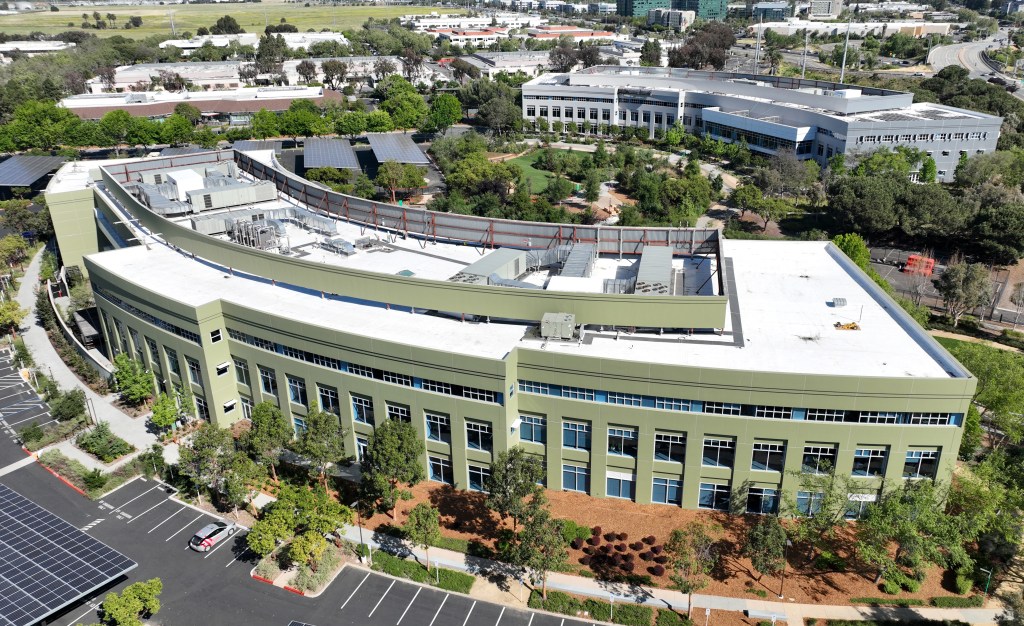
In 2018, Google began expanding its Alviso campus when it paid $154.5 million for two curving office buildings, one at 4300 North First St. and the other at 4400 North First St.
The assessed value of the two buildings just before the deal was $154.5 million. The latest assessed value as of January 2025 was $205.5 million, an increase of 33%.
Rising property taxes can shove more money into the coffers of cities, counties, school districts and other public entities.
“Nearly a decade ago, Google began making a bet on San Jose, parcel by parcel, building by building, from downtown to Alviso and North San Jose,” San Jose Mayor Matt Mahan said. “That billion-dollar investment is a vote of confidence that we’re a city on the rise, with unmatched talent, room to grow, and the ambition and vision to lead the Valley’s next era of innovation.”

(Aric Crabb/Bay Area News Group)
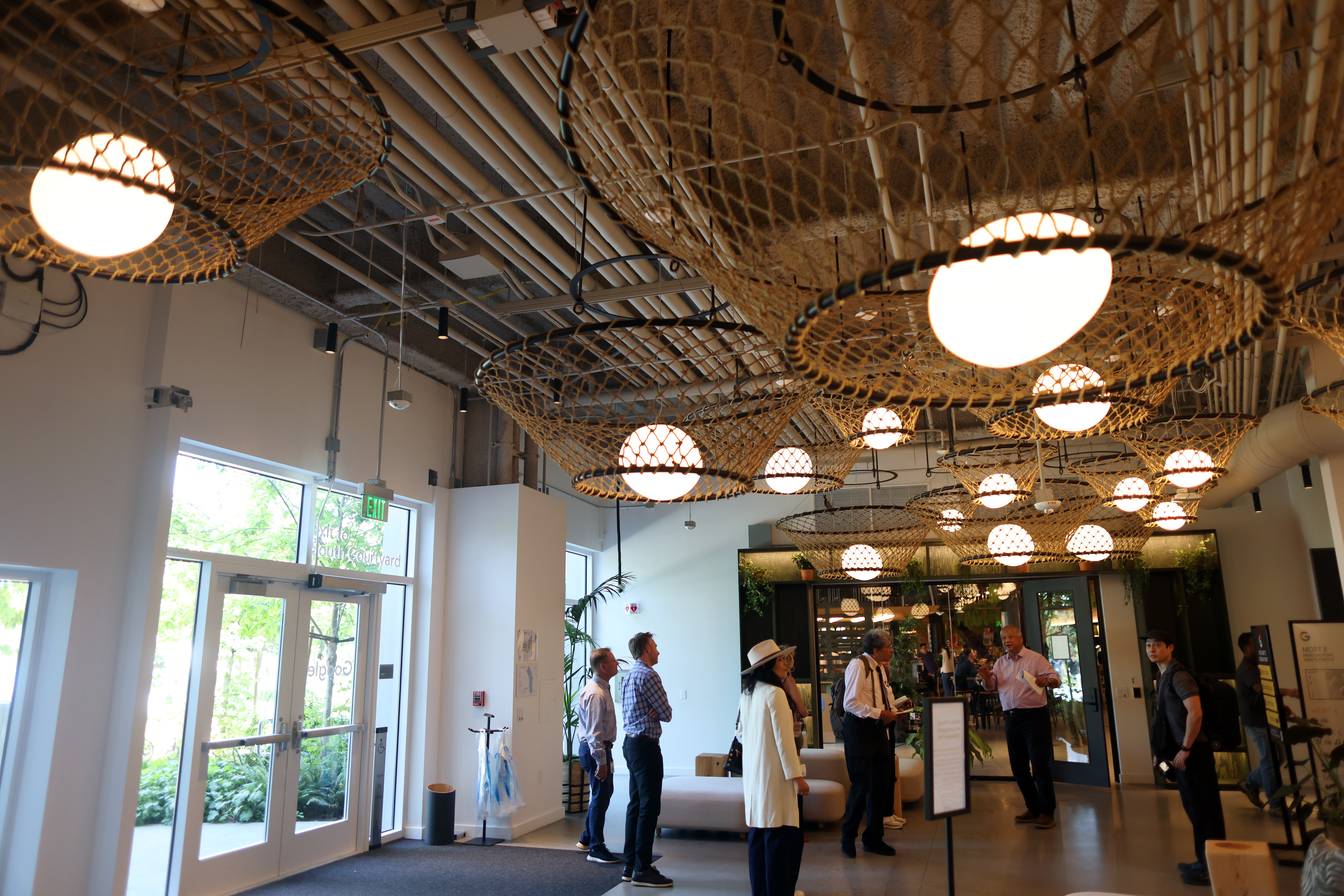
Lobby area of Building 7 at the Google Meadow Point Campus on Monday, May 11, 2026, in San Jose, Calif. (Aric Crabb/Bay Area News Group)

(Aric Crabb/Bay Area News Group)
Workers at the Google Meadow Point Campus on Monday, May 11, 2026, in San Jose, Calif. (Aric Crabb/Bay Area News Group)
(Aric Crabb/Bay Area News Group)
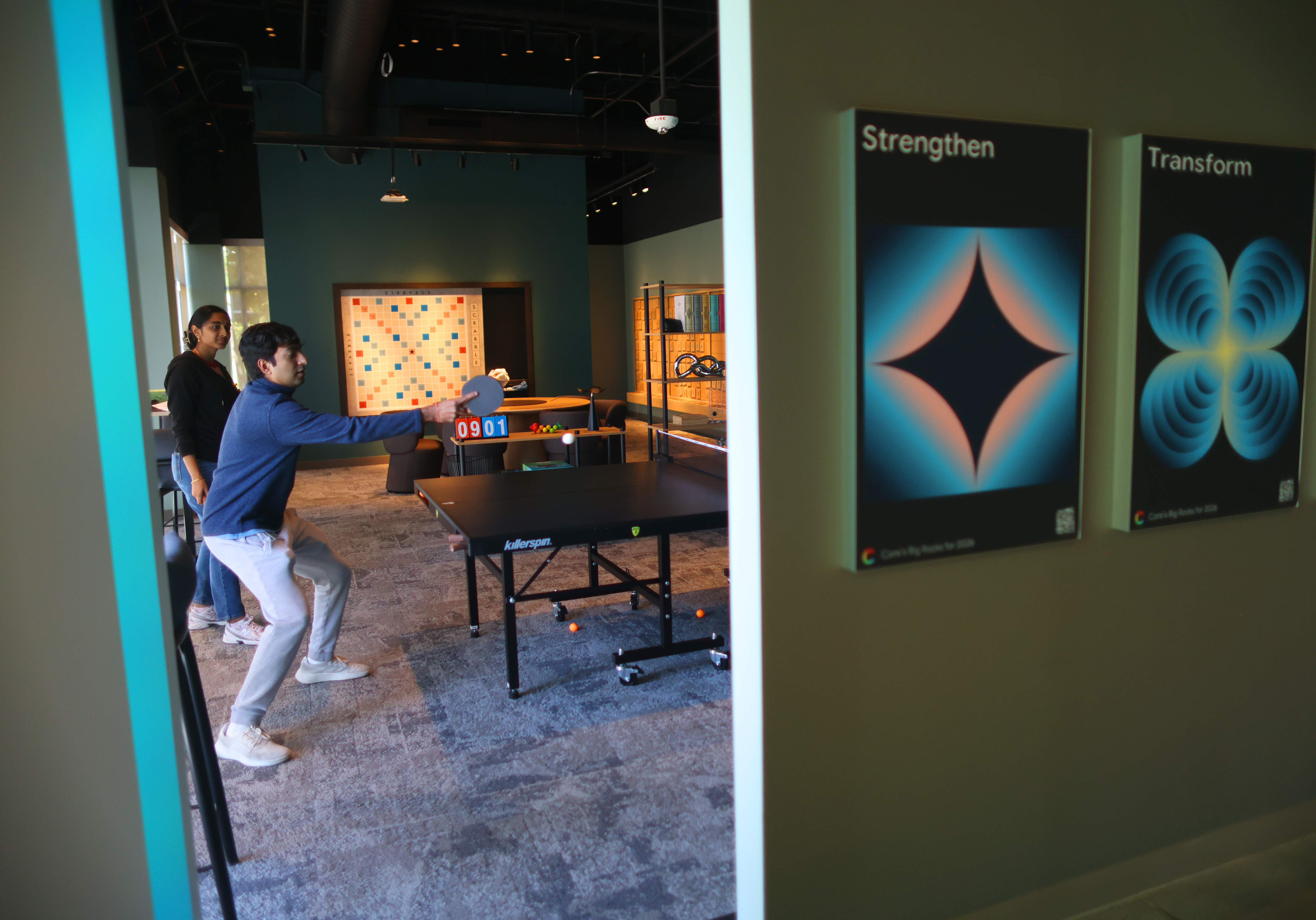
Workers take a break to play ping pong in a game room at the Google Meadow Point Campus on Monday, May 11, 2026, in San Jose, Calif. (Aric Crabb/Bay Area News Group)

(Aric Crabb/Bay Area News Group)
Wall of cans at the Google Meadow Point Campus on Monday, May 11, 2026, in San Jose, Calif. (Aric Crabb/Bay Area News Group)
(Aric Crabb/Bay Area News Group)
Members of the media tour the Google Meadow Point Campus on Monday, May 11, 2026, in San Jose, Calif. (Aric Crabb/Bay Area News Group)

(Aric Crabb/Bay Area News Group)
People use laptop computers in a common area of the newly opened Google Meadow Point Campus on Monday, May 11, 2026, in San Jose, Calif. (Aric Crabb/Bay Area News Group)

(Aric Crabb/Bay Area News Group)
Building 8 and courtyard area of the Google Meadow Point Campus on Monday, May 11, 2026, in San Jose, Calif. (Aric Crabb/Bay Area News Group)

(Aric Crabb/Bay Area News Group)
A game room in Building 8 of the Google Meadow Point Campus on Monday, May 11, 2026, in San Jose, Calif. (Aric Crabb/Bay Area News Group)
Show Caption
(Aric Crabb/Bay Area News Group)
1 of 8
Lobby area of Building 7 at the Google Meadow Point Campus on Monday, May 11, 2026, in San Jose, Calif. (Aric Crabb/Bay Area News Group)
From late 2016 through March 2020, Google assembled properties in a one-mile footprint in downtown San Jose.
However, in 2023, Google paused work on its transit village, Downtown West, a project that could reshape the western edges of the city’s urban core.
While Downtown West is in a holding pattern, that’s not the case elsewhere in San Jose.
In March, Google paid $25.2 million for an office building at 4500 N. First St. in the Alviso district. It is now part of the Meadow Point campus.
“Google’s strength is its size and its ability to move in all different directions,” said Dave Sandlin, an executive vice president with commercial real estate firm Colliers. “Google is one of the driving engines for Silicon Valley. We couldn’t have a better engine for Silicon Valley than Google.”
In recent weeks, construction cranes and crews were visible on Disk Drive, conducting work at sites Google owns. Some Google workers were seen walking in and out of Disk Drive sites operating inside one or more of the buildings.
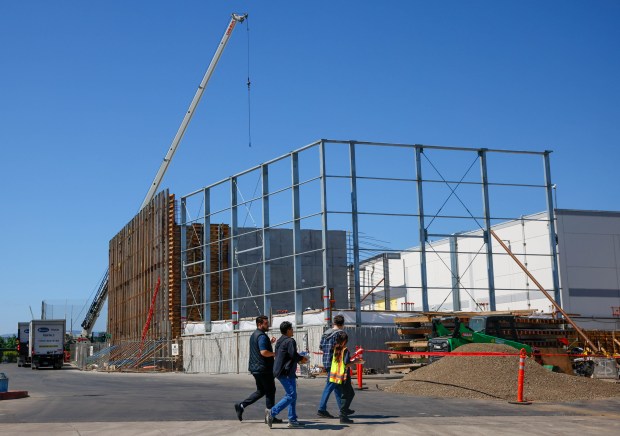 Construction has begun on a Google building on Disk Drive in San Jose, Calif., on Wednesday, April 29, 2026. (Shae Hammond/Bay Area News Group)
On May 11, Google formally opened its Meadow Point campus. The tech company’s work included the transformation of a barren parking lot into a foliage-filled meadow between two curving office buildings at 4300 and 4400 North First St. that is a centerpiece of the campus.
“Over $1 billion in real estate investment is significant by any measure, but what stands out is the consistency,” said Bob Staedler, principal executive with land-use consultancy Silicon Valley Synergy.
In the post-COVID era, office vacancy rates soared, although they have begun to recover in recent months as tech companies complete big leases in the South Bay.
“Google has continued to invest in San Jose through multiple market cycles, even as others have stepped back,” Staedler said. “That kind of sustained commitment sends a clear signal about the city’s long-term potential.”
The company has also floated a proposal to develop a new tech and research hub to go along with what it already owns on Disk Drive, documents on file at San Jose City Hall show.
Google plans to develop a new building at the site, which will total as much as 482,800 square feet, planning documents show.
“Google’s affirmation of San Jose as a place to locate is a huge positive for the city and Silicon Valley,” said Steve Levy, director of the Palo Alto-based Center for Continuing Study of the California Economy.
Russell Hancock, president of Joint Venture Silicon Valley, said Google’s activity suggests several things at once.
“One, they see growth in their future, contrary to some rumors,” Hancock said. “Two, they see it in San Jose, over a host of other suitors. Three, there’s still something to the notion that innovation and tech leadership still involve square footage and in-person interaction.”
Levy, though, cautioned that Google’s growth in San Jose won’t necessarily proceed in a line that goes steadily up and to the right. The Downtown West pause is a reminder of that.
“Google will only proceed as projects become feasible,” Levy said. “In today’s environment, we need to be patient to see the jobs, housing and tax revenues.”
In 2018, when Sam Liccardo was San Jose’s mayor, he cautioned that Google shouldn’t be seen as a panacea for the city.
“Google is neither our savior nor our servant,” Liccardo said at that time.
That same reality is in play now as Google advances its hubs on the north side of the city.
“Everybody wants Google to be their answer. Google can fix this. Google can make everyone’s dreams come true,” Hancock said. “Everybody had stars in their eyes. Now there is a different set of realities.”
Today’s reality is that Google’s presence in San Jose, even with Downtown West paused, is a benefit, even in the downtown area.
“I’m disappointed about Downtown West, but even with nothing happening there, Google has improved things in San Jose just by paying taxes,” Hancock said. “Some people say Google has been a dud and had zero impact. That’s not true. Google is improving San Jose’s state.”
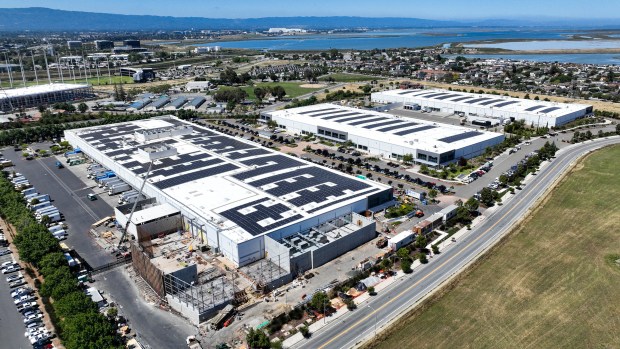 Construction has begun on a Google building on Disk Drive in San Jose, Calif., on Wednesday, April 29, 2026. (Shae Hammond/Bay Area News Group)