
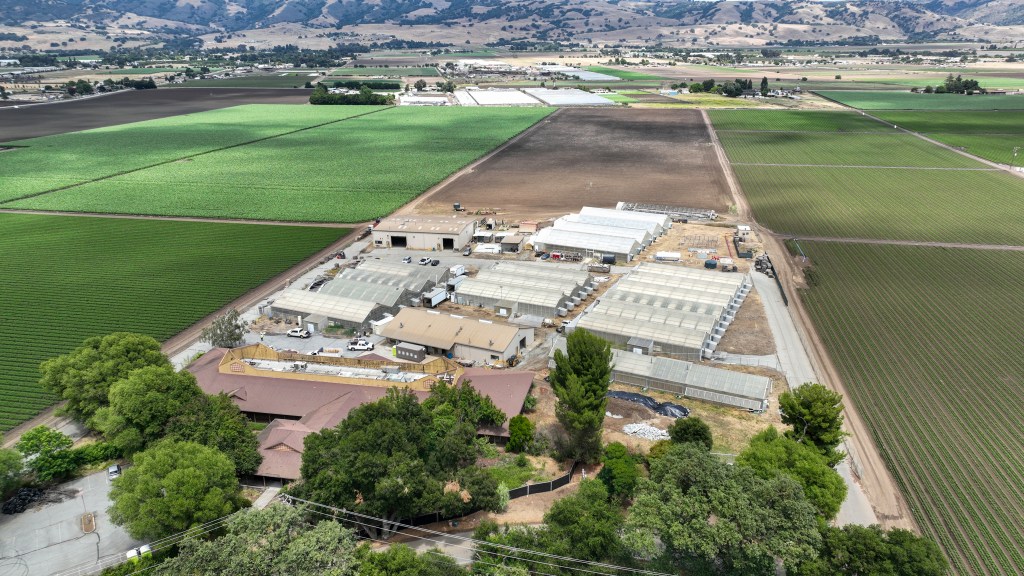
Santa Clara County and the State of California on Wednesday sued the Trump administration over its plan for a U.S. Immigration and Customs Enforcement detention facility on Gilroy’s outskirts.
“President Trump’s mass detention and deportation campaign has led to cruel, inhumane, and unacceptable conditions at immigration holding and detention facilities across California,” California Attorney General Rob Bonta said in a statement. “But instead of working to improve conditions at these facilities — instead of enforcing ICE’s own detention standards — the Trump Administration is trying to jam through a new facility in a community that doesn’t want it.”
RELATED: Bay Area activists march 50 miles over fears FCI Dublin could become ICE detention center
Tony LoPresti, the county’s top lawyer, called it a “reckless attempt to build an ICE facility on sensitive and protected land without regard to its impacts on the environment, the community, and, most critically, the humans who would be detained there.”
The U.S. Department of Homeland Security, which includes ICE, had no immediate response. DHS last month said in a statement it had “no new detention centers to announce at this time,” that it was “conducting law enforcement activities across the country to keep Americans safe” and that “it should not come as news that ICE will be making arrests in states across the U.S. and is actively working to expand detention space.”
The facility just east of Highway 101 and the Gilroy city limits, and just north of Highway 152, threatens agricultural land protected since the ’60s, and “could also have severe impacts on vital infrastructure, straining waste and drinking water infrastructure and leading to the deterioration of critical roadways,” county and state officials said in a news release.
Filed in Northern California U.S. District Court, the lawsuit alleged the facility would violate federal environmental laws because the federal government failed to produce an environmental assessment or impact statement before entering the lease and starting construction. It further claimed the facility would break the U.S. Immigration and Nationality Act because of its location in an area zoned exclusively for agricultural use, where several endangered and threatened species live.
The legal action also takes aim at the apparent secrecy of the project, which was revealed through news reports based on federal property-procurement documents. The lawsuit argues the administration of President Donald Trump broke the Intergovernmental Cooperation Act by failing to sufficiently attempt to consult with the county or state for their input.
Legal experts have said the outcome of any lawsuits against the federal government over the planned facility would hinge on whether the facility was run by a federal contractor — like the eight ICE detention facilities now operating in California — or the federal government. If the federal government operates the facility, the supremacy clause of the Constitution gives it broad powers to override state and local opposition, experts said. But if it’s privately run, the county and state could apply existing laws, or pass new laws, to fight the project, experts said.
In May, California Attorney General Rob Bonta’s office released a report on ICE detention facilities in California, pointing to “an unprecedented surge” in the number of people held, from 2,303 in 2023 to 6,028 last year. Many detainees identified in the state’s inspections last year had no criminal history, “a significant divergence” from 2023, the report said. Detainees last year were subjected to inadequate medical care and delayed treatment, overcrowding, inadequate food, and excessive use of force by guards, the report claimed.
Check back on this developing story.