
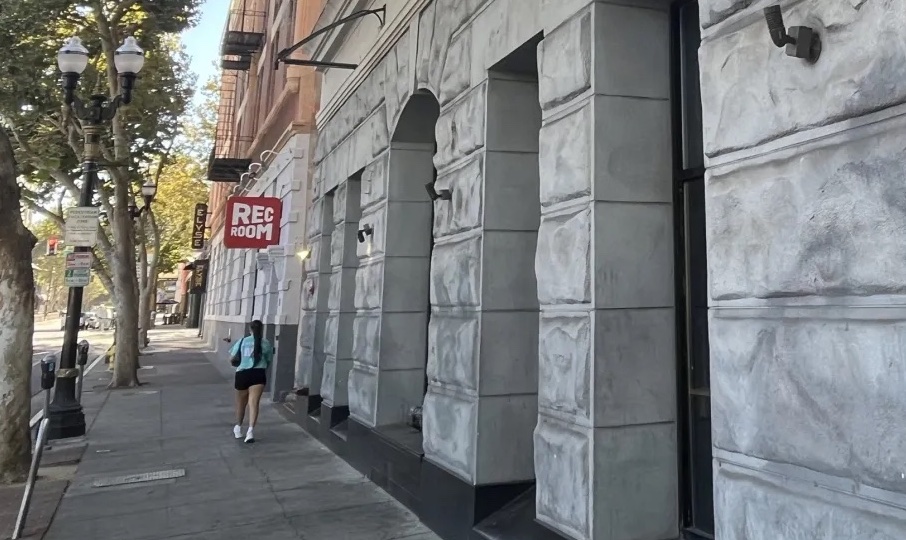
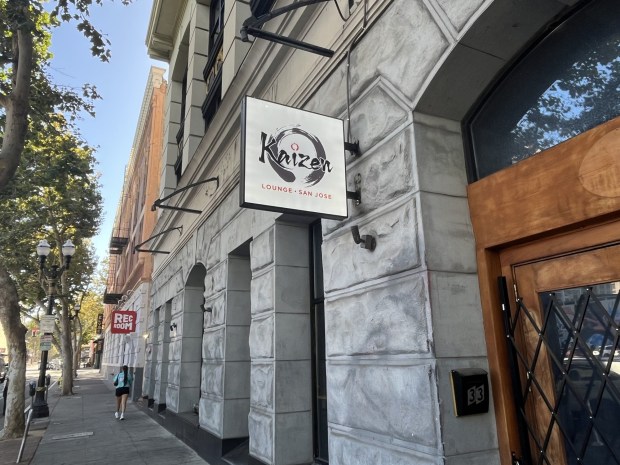
 A nearly vacant sidewalk mere blocks from City Hall in downtown San Jose in early July. George Avalos — Bay Area News Group
World Cup activities in San Jose have generated significant attention, fostering not only a renewed sense of American pride but also showcasing how downtown San Jose has become an exciting and vibrant destination, surpassing pre-pandemic levels of evening activity.
When the World Cup ends, however, city leaders will still face a sobering reality: daytime pedestrian traffic and business activity remain abysmal. The problem is not simply a lack of affordable housing.
Even more significant is the absence of workers in the downtown core.
The widespread adoption of teleworking by both private employers and public agencies has dramatically reduced the daily workforce that once sustained downtown restaurants, retailers and small businesses. Unless political and business leaders confront this issue and encourage a greater return to the workplace, downtown San Jose will continue to thrive at night while struggling to during the day.
The continued preference for teleworking by many businesses and government agencies is a serious problem. Political leadership has been largely absent in addressing this issue and pursuing meaningful solutions.
In July 2021, Gov. Gavin Newsom declared there was no longer a public health reason for employees to continue widespread teleworking. As Santa Clara County assessor, I sent a message to all 250 employees that same day advising them to prepare to return to the office full time — eight hours a day, five days a week — within two weeks. Five years later the City of San Jose still does not require all city employees to work full time in the office.
Today, roughly one quarter of Bay Area office space remains vacant, and downtown San Jose has one of the highest office vacancy rates in the region. Office occupancy in San Jose also continues to lag behind many major metropolitan areas. Independent data from both Kastle Systems and Placer.ai show that New York and Miami are national leaders in return-to-office activity while Silicon Valley ranks near the bottom.
If employees can work from home indefinitely, there is less reason to commute downtown — or even to live downtown. That reality has contributed to the struggles facing downtown office buildings, retailers, restaurants, hotels and residential developments.
In my speeches, I regularly ask audiences, “Which days of the week do employees choose to work from home?” The answer is almost always the same: Mondays and Fridays. National office occupancy data confirms that Fridays remain the least attended day of the workweek.
This raises an obvious question: Does anyone really believe employees working from home on Mondays and Fridays are consistently as productive as they would be in the office? My conclusion is that if a company or government agency can maintain maximum productivity with employees routinely working only three or four days a week in the office, it should evaluate whether it is overstaffed.
Teleworking was a necessary response to COVID-19. It is no longer a public health necessity. A vibrant local economy depends not only on residents and visitors, but also on thousands of employees who patronize restaurants, shops and other businesses.
If San Jose leaders are serious about revitalizing downtown, bringing workers back to the office must be part of the solution.
Larry Stone was assessor of Santa Clara County between 1995 and 2025.