
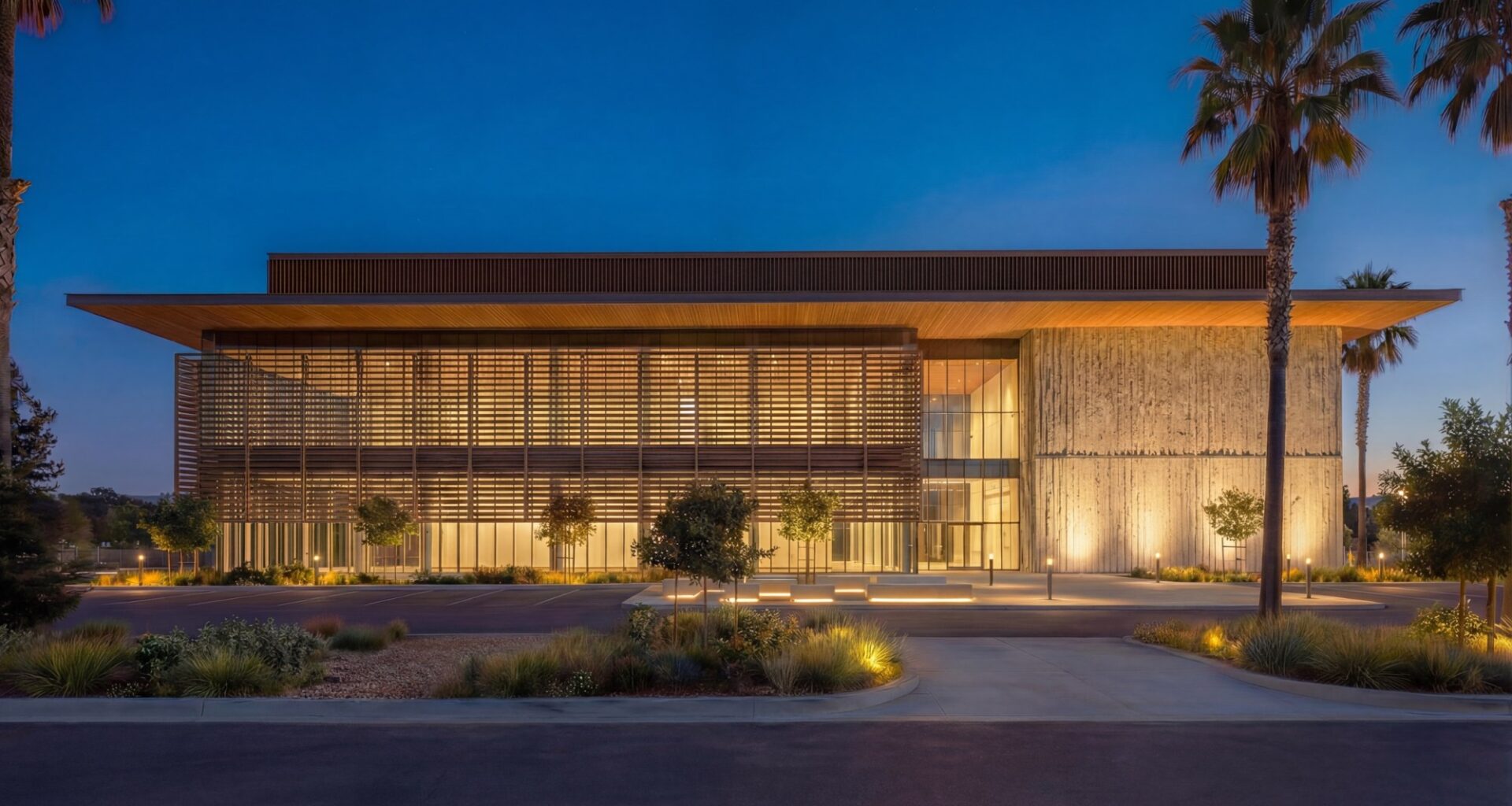
 Street-level view of a data center complex on Charlotte Drive between Lexington Avenue and Raleigh Road in South San Jose, concept. (Gensler)
SAN JOSE — A 444,400-square-foot data center has been proposed for part of a longtime South San Jose tech campus near residences, shops and restaurants, development plans show.
The project floated by real estate firm Menlo Equities would include an on-site substation at the Western Digital campus. The computing hub would require 99.7 megawatts of total power and include 72 megawatts of critical backup power.
The complex would be built along Charlotte Drive between Lexington Avenue and Raleigh Road on a section of the tech campus. Menlo Equities has also proposed the development of some open space at the corner of Charlotte and Lexington that would be accessible to the public, plans show.
Despite its proximity to homes, a data center would be consistent with the longtime zoning for the tech campus, said Erik Schoennauer, a San Jose-based land-use expert who is consulting with the developer on the project.
“This site has been designated for industrial use for many decades,” Schoennauer said. “The proposed project is consistent with the city’s industrial zoning districts.”
Skepticism and action against data center development has popped up in some Bay Area communities such as Oakley, Pittsburg, Brentwood, Gilroy, Hayward and elsewhere around the country.
Opponents of the controversial facilities have raised concerns that they might produce undesirable impacts on the environment, consume too much water and pose health hazards.
A growing number of property owners and real estate developers have proposals for data centers in North San Jose, the Alviso district, and in South San Jose as city leaders appear to be more open to their presence.
A March report prepared for San Jose Mayor Matt Mahan and other members of the City Council offered reasons why they would be a benefit, including the amount of revenue they could produce for the city.
“A 50- to 99-megawatt data center, once fully ramped up, could generate between $3 million and $6 million in unrestricted annual revenue for city services,” Deputy City Manager Manuel Pineda wrote in the report.
Pineda said data centers require limited public services once operational. The report added that data centers do not contribute to increased vehicle traffic and do not generate school and public safety demands when compared to residential projects.
“The city benefits from capturing economic activity that would otherwise be located in other states or regions,” the staff report stated. “Retaining these projects locally allows San Jose to share in the financial upside of the digital economy.”