
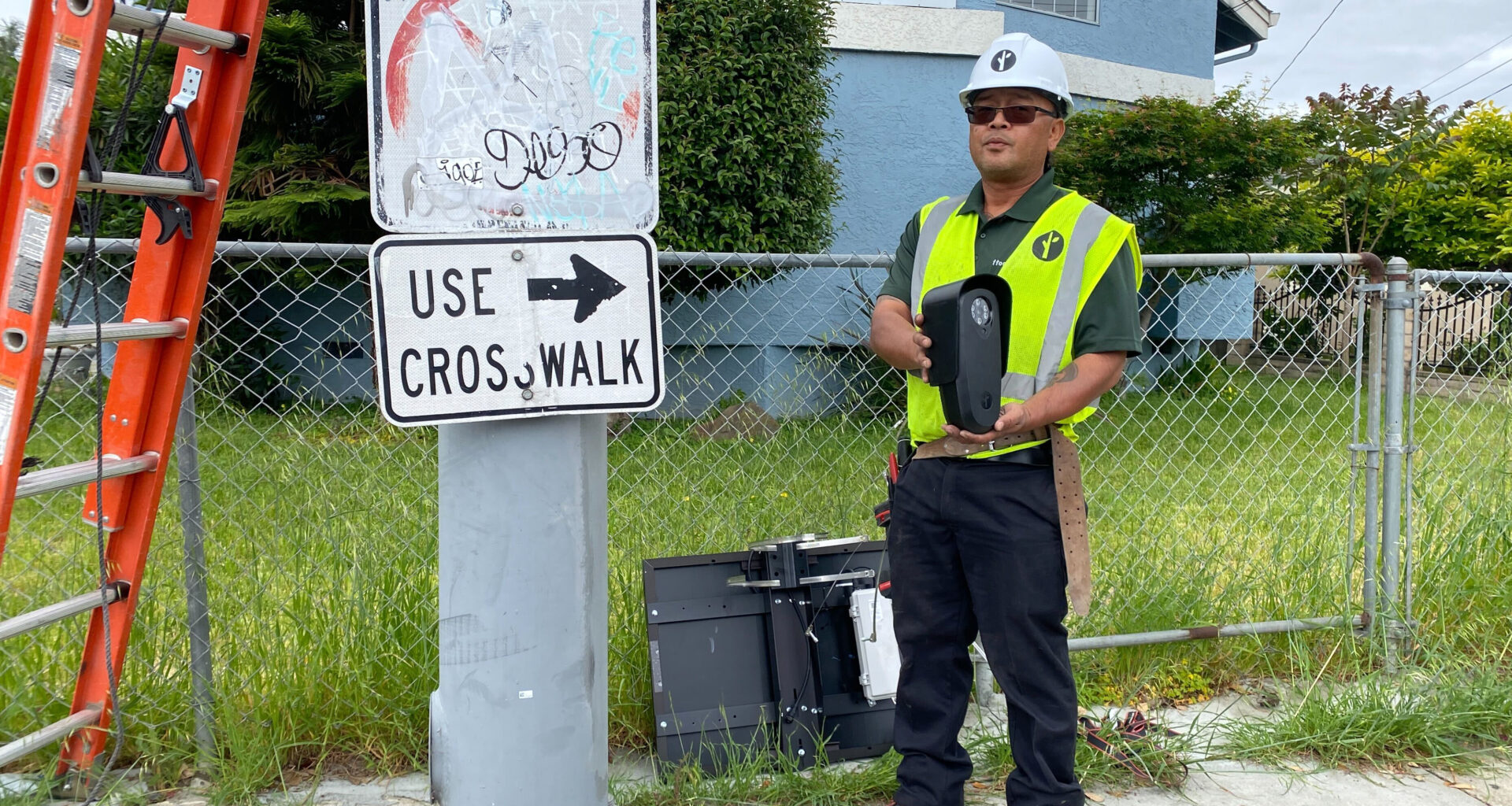
Stanford University has ditched its Flock camera system and hired a new license plate reader firm following controversy over who can access the images captured.
The South Bay university signed a contract with Genetec Cloudrunner to provide cameras that can read license plates, collecting images its public safety department can use to investigate crimes, Stanford University said in a press release.
“Unlike the Flock system, the new system is designed for use within a single institution,” said Patrick Dunkley, Stanford’s vice provost for institutional equity, access, and community.
Slightly under two years ago, Stanford University installed the Flock camera system at university entrances.
Stanford, at the time, said it wouldn’t share any information harvested from the Flock cameras with other police agencies.
Over the past several years, concerns have emerged nationwide over Flock camera systems. Its systems, critics say, allow law enforcement to access images from other agencies via the networked license plate readers.
In the new system at Stanford, the cameras will collect still images of vehicles and their license plates from campus entrances. That information will be stored in a cloud server for less than an hour, according to the university. A third party won’t be able to access the data during that time, officials said.
Once the hour has elapsed, the data will be automatically uploaded to a server that only Stanford controls. The raw data will be permanently deleted from the cloud after the transfer.
During the two years the Flock system was operating, Stanford used its camera network to solve various crimes, including the arrest of two serial thieves.
One thief stole property from offices over several weeks. The other thief stole packages from campus.
“These license plate reader cameras are an important investigative tool,” Stanford Department of Public Safety Chief Laura Wilson said. “They are just one of the ways that DPS is leveraging technology to help keep our community safe.”
The university provides an annual report on how its automatic license plate reader is working.
“Stanford University Department of Public Safety did not receive any formal complaints regarding the use of the … system,” the university reported last year regarding a 12-month period that ended in June 2025.
Other communities have also ditched Flock over the concerns about access to the images the systems collect.
In May, El Cerrito decided to terminate its Flock contract. In June, Richmond kept its Flock contract after temporarily shutting down the cameras.
In March, San Jose decided to tighten the reins on its Flock cameras but kept the system operating, a decision that triggered a lawsuit against the city in federal court.
In February, Mountain View scrapped its Flock cameras and decided not to replace that system with any new ones.
At Stanford University, despite the termination of the Flock contract, public safety officials believe automatic license plate readers are a valuable law-enforcement tool.
“Stanford University Department of Public Safety has heard from crime victims, including those who had their car or car parts stolen, or other items taken or damaged, while parked in Stanford University parking lots,” the university stated in the annual report regarding the surveillance cameras. “These victims have advocated strongly for additional cameras as a deterrent and to support investigations.”