
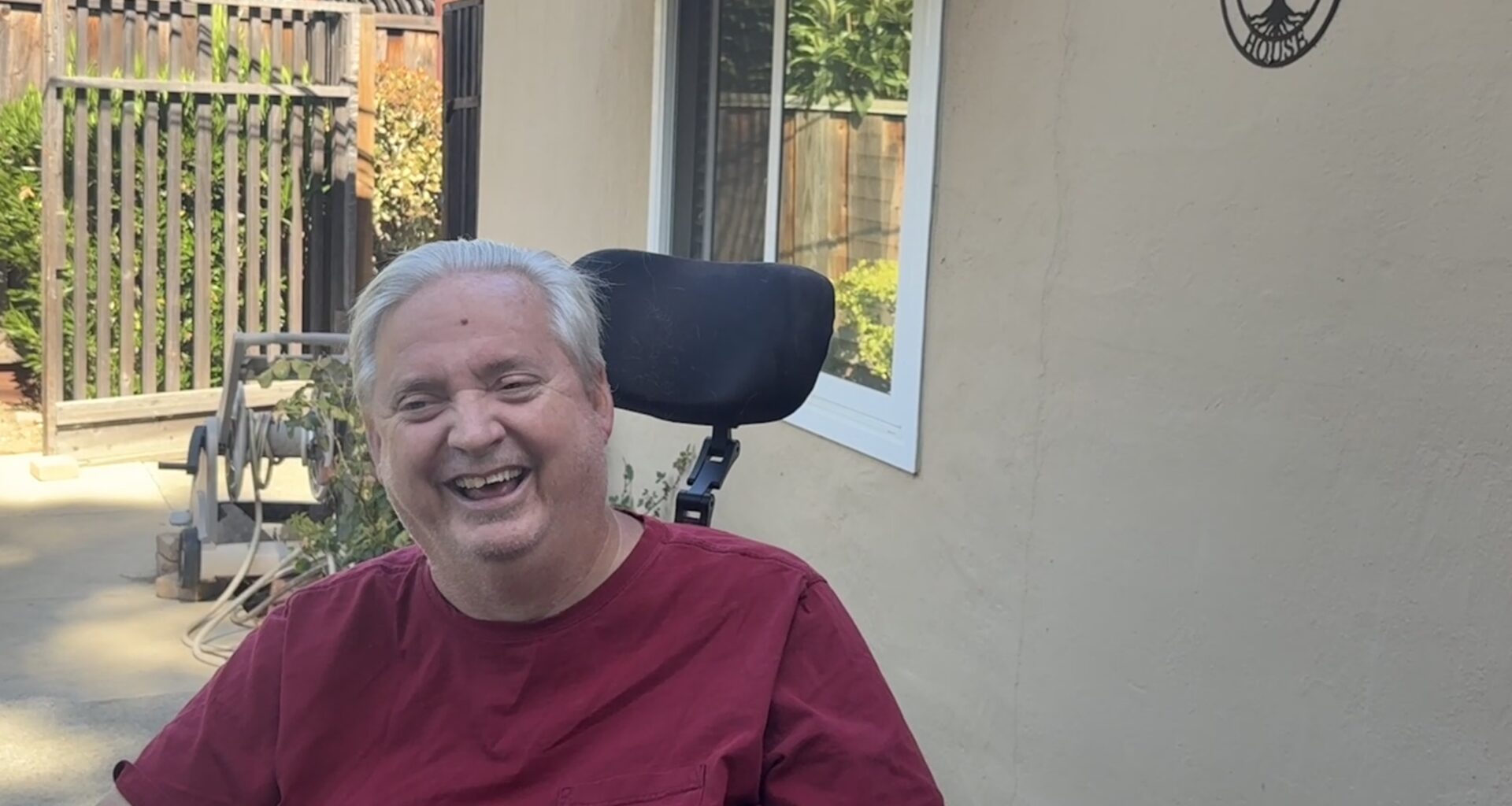
Despite being in a wheelchair with incomplete quadriplegia, Lee Fair almost never stays at home.
“I’ve always been an independent person, even before I was in the wheelchair,” he said. “That hasn’t changed at all. I’m still me, just in a different way.”
Fair, 72, lives in the Sam Chriest Home in Cupertino, operated by Adults Toward Independent Living, abbreviated as ATIL. The nonprofit owns two houses to provide affordable housing for physically disabled adults in the Santa Clara Valley. Their specially designed, accessible houses in San Jose and Cupertino provide adults with spinal cord and brain injuries around-the-clock caregiving while balancing their ability to live independently by taking charge of their own care and engaging in cost-sharing measures to keep living expenses down.
ATIL’s model provides an alternative to other residential care facilities, as well as nursing homes or in-home supportive care. According to the California Department of Rehabilitation, encouraging independent living among people with disabilities is a philosophy that emphasizes their agency and empowers them to take charge of their care. Cupertino house manager Mathew Lubinsky said he has been seeing demand for this model.
ATIL’s president and CEO Steve Chriest said the house is being renovated to add rooms for potential residents and caregivers and to address needed repairs. The renovations are estimated to cost $400,000. Chriest said they are raising funds in several different ways, such as grant funding from foundations for adult housing, specifically for adults with disabilities; along with donations and the nonprofit’s own reserve funds.
“When you feel like you have control, you get a little more strength in you mentally,” Lubinsky said. “Life is just that much better because you don’t feel like a completely caged animal.”
ATIL residents are responsible for paying rent to cover home insurance, garbage collection, property taxes and repairs. They typically need a caregiver for assistance with bowel and bladder care and help transferring in and out of bed or out of their wheelchairs, Lubinsky said. But notably, caregivers are more responsive to the tenants’ schedules than in other kinds of residential care facilities.
“If you let the caregivers know, they’re able to adjust their schedule for you,” Lubinsky said.
He added that he encourages the residents to live active lives, such as signing up for an adaptive physical education class and informing caregivers of their preferred meals. In a typical day, the house manager said, caregivers are typically busiest in the mornings to help get the tenants up, but in the afternoon tenants usually handle their own daily goings-on.
“These homes strive for you to be trying to be independent,” Lubinsky said. “We understand you can’t be, but you should be trying your best.”
Fair recalled that when he was living in Myrtle Beach, South Carolina, he lived in a facility that “basically just locked you up.” There were a lot of rules; Fair said he wasn’t allowed to leave the facility, the staff wouldn’t listen to him and, despite its grand size, some areas were restricted. Fair said he likes living with ATIL because “you can go wherever you want to go, do whatever you want to do, as long as you’re back at the designated time,” when caregivers help the residents get ready for bed.
“We’re almost at a point where we can live on our own. Almost, not quite,” Fair said. “That’s why these places are perfect.”
There are house rules for ATIL residents. Lubinsky said potential tenants are interviewed to make sure that they are a good fit for the home in terms of personality and ability. The homes are labeled as “shared living facilities” because they are not licensed care homes. And in terms of oversight, each tenant has a social worker who comes by at least once a year, Lubinsky said. Nurses and firefighters also come check on the tenants and the homes. The nonprofit’s funds are overseen by its board of directors.
Fair advocated for ATIL’s model being replicated. Another organization founded on similar principals is the Silicon Valley Independent Living Center.
Lubinsky echoed the sentiment. He said that he felt “hurt” seeing his mother “working hard taking care of me,” and that he had wished there was a place like ATIL for him to live.
“I’m sure there’s other people that are living at home and feeling the same way I did,” Lubinsky said. “They see how hard it is on the rest of their family because their family, instead of living their lives, they’re taking care of you.”