
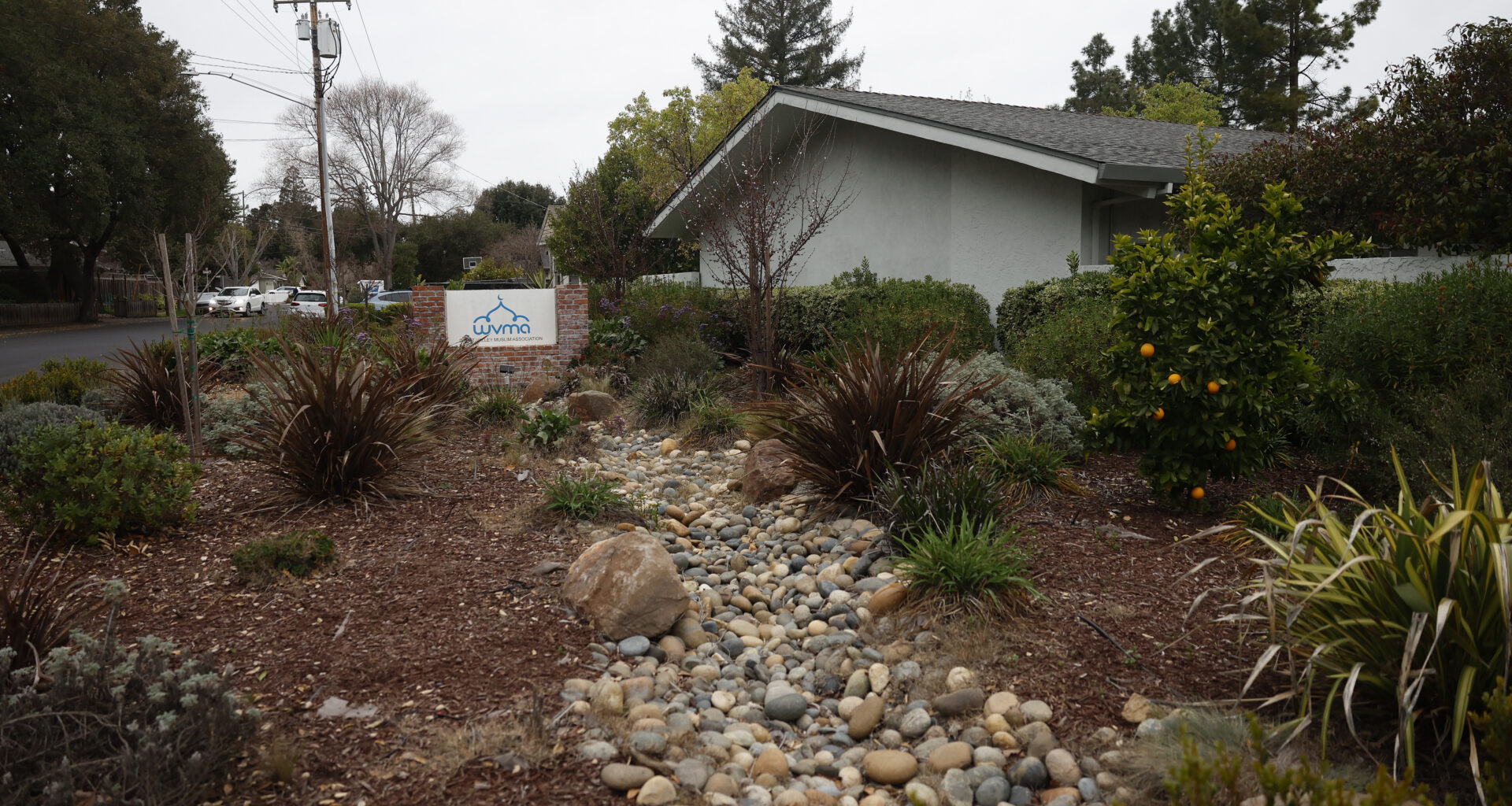
The Farley Road Neighborhood Coalition (FRNC) has appealed the Los Gatos Planning Commission’s approval of the West Valley Muslim Association’s (WVMA) conditional use permit modification.
When WVMA was granted a CUP in 2020, the town already made accommodations for Ramadan. The current modification goes substantially further. It permits operations beyond the town’s established quiet hours; no other religious or secular organization facility in an R-1 residential zone is permitted to operate past 10 pm. While the decision contains 34 conditions, more conditions do not necessarily mean effective conditions. Quantity is not quality.
WVMA operates the town’s busiest religious facility, yet its property sits deep inside a residential neighborhood, landlocked by 15 homes and without arterial road access. The facility has grown substantially, and neighbors have been forced to endure the intensification’s resulting escalation of safety hazards, traffic congestion, noise levels and parking shortages.
After five Planning Commission meetings, some lasting up to five hours, the proposed conditions expanded significantly beyond WVMA’s original request for five daily prayers and a Ramadan curfew extension. The final approval provides a year-round 6.5-hour expansion of operating time until as late as 12:30 a.m.
It also expands beyond worship and religious activities to permit WVMA autonomous usage including community center and secular activities such as 60-day summer camps with after-hours child care, as well as movie nights, sports leagues, social events, charitable events and parking lot festivals. The approval also allows unlimited facility rentals.
The issue is not whether WVMA should be able to worship. It is whether the town has sufficient evidence to determine what conditions are necessary to make this use compatible with its residential surroundings.
The numbers warrant careful examination. According to Planning Commissioner Rob Stump, vehicle trips associated with WVMA have increased from approximately 400 to 4,000 per week. The facility has 180 parking spaces, yet during Ramadan, as many as 300 vehicles park on surrounding streets while volunteer traffic directors attempt to manage chaotic and congested traffic for 30 consecutive nights. The town’s own infrastructure assessment scored the site 2 out of 10 for residential compatibility.
As WVMA’s counsel has stated, “A mosque should not be treated differently from other houses of worship.” FRNC agrees. Religious institutions should be treated fairly and neutrally. That makes evidence-based, consistently applied standards even more important.
A holistic plan
Both the applicant and FRNC should agree on one fundamental principle: Government decisions should be supported by evidence.
Before finalizing conditions that could affect this neighborhood for years, the town should commission comprehensive studies of traffic, parking demand, noise, acoustics, light pollution, emergency access and public safety. FRNC urges the town to conduct those studies during Ramadan 2027, when the facility experiences its greatest intensity, so that decisions are based on actual conditions.
The goal is not to restrict religious exercise. It is to establish neutral, measurable and enforceable conditions that protect both religious freedom and the legitimate safety and quality-of-life interests of nearby residents.
A head start
FRNC is a grassroots coalition of more than 70 families, including young families, senior citizens and retirees. Members have had to raise their own funds to hire a traffic expert with 45 years of professional experience. To ensure his work was impartial, FRNC agreed that he meet with WVMA leadership and conduct a site visit. He will present his findings to the Town Council on Aug. 18.
Why should neighbors have to fund the research necessary to understand impacts created by a municipal land-use decision?
Have any of the town planning staff conducted comprehensive site visits during the highest-intensity periods? We know the town engineer has not. Why have residents had to make repeated trips to the Santa Clara County Fire Department to try to obtain critical information concerning occupancy, capacity, emergency access and fire lane requirements only to be sent back to the town and vice versa?
The town has an opportunity to step back and gather the facts.
Meaningful coexistence requires more than 34 conditions on paper. It requires conditions be grounded in evidence, applied fairly and enforceable in practice. Before this landmark decision becomes a model for other neighborhoods, Los Gatos should do the studies—and get it right.