
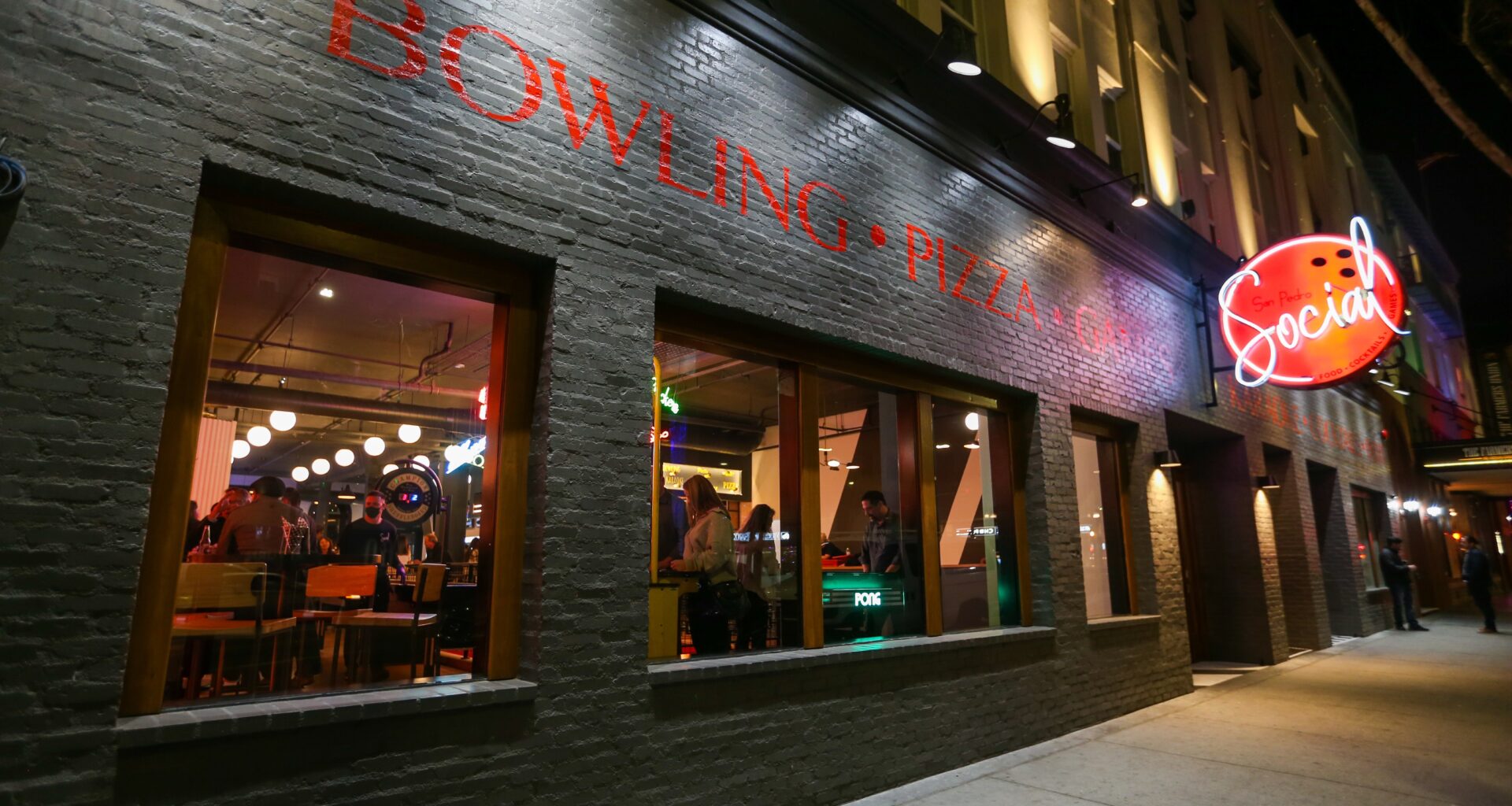
The question of downtown vibrancy versus public safety was front and center Tuesday as the San Jose City Council voted unanimously to deny a conditional use permit to San Pedro Social that would allow it to operate as a nightclub and remain open until 2 a.m.
The council cited multiple code violations and instances of fights outside the venue that create a public safety concern, while representatives for San Pedro Social called the permit denial unfair.
Located near San Pedro Square on Santa Clara Street in the heart of downtown, the bar has been closed for several months while awaiting the decision on its permit after repeated police incidents and notices from the city, staff said.
The council’s decision comes amid a push to revitalize the city’s downtown after decreased foot traffic during the COVID-19 pandemic. Several events planned in coordination with sporting events such as the FIFA World Cup games hosted at Levi’s Stadium proved to bring millions people downtown, but earlier this year San Jose residents ranked the city’s downtown vibrancy as low.
In a report shared with the council, the city’s staff cited persistent code and public safety issues at San Pedro Social between 2023 and 2026, adding that despite multiple warning letters being sent to the business instructing it to stop hosting unpermitted late night activities, it has continued to run as a nightclub. They cited multiple calls to law enforcement for “violent incidents and serious injuries” and unpermitted additions to the building, which is registered as a historical landmark.
Staff further added that the business does not meet the city’s standards for late-night and nightclub operations, including noise mitigation and patron queuing standards.
At the meeting, San Jose Police Department Chief Paul Joseph pointed to several incidents law enforcement has responded to outside the venue, including a fight that involved 20 to 30 patrons on the sidewalk and resulted in the assault of officers. The site was also the subject of three investigations that allegedly found that the venue violated its license by not serving food after 10 p.m. and having a DJ play music.
“These are the situations where we end up with fights and trouble,” Joseph said. “(It) often results in people being victims of assaults.”
Sandra Escobar, a consultant employed by the owners of San Pedro Social who responded to the council on the business’s behalf at the meeting, said that “the staff report is not accurate,” adding that some incidents cited by police occurred on Second Street or outside the venue and had “nothing to do with” San Pedro Social.
“Those videos (of incidents) are videos that could have been just down the alleyway at Five Points, at (The) Brit,” Escobar said.
She added that the business has made a “lot of changes,” and that “there are no code or police issues at this point.”
Several speakers during public comment were associated with San Pedro Social, including three of the venue’s owners. Kathy Doyle, a co-owner, said that the business being unable to get a conditional use permit has cost the venue $2.5 million in revenue, though she did not specify how that number was calculated.
“Obviously, that’s not sustainable if we don’t have late-night,” she said.
Some members of the public expressed that they would feel safer if the venue did not operate as a nightclub.
“When the San Pedro Social was running the nightclub, it just seemed a little bit more dangerous walking down that street,” said a speaker who identified himself as Ronan P. and said he has worked nearby for five years. “It just seems a little quieter, it’s a little nicer to walk down. I feel a little better going about my business, not having to watch over my shoulder so much.”
One anonymous caller criticized the city council for making downtown less vibrant.
“We need more bars, not less. Make San Jose fun again,” he said. “People have been drinking tequila in downtown San Jose since 1777!”
Councilmember Anthony Tordillos, who represents downtown, said that while he wants the area to be the center of the city’s nightlife scene, its venues must abide by the rules that are in place. He added that the city should maintain a path for venues that have violations to come into compliance.
“Just beyond the number of violations themselves, one thing that caught my eyes was reading through the history here – a history of not being the most responsive to city staff’s alerting of some of these violations,” he said.
After the meeting, Escobar said that her clients “should have won” and that “they have changed.”
The council also voted unanimously at Tuesday’s meeting to reject recommendations from a Santa Clara County Civil Grand Jury report urging increased transparency in the city’s pothole claim process. The report, which no city council members provided comments on, found that jurisdictions across the county rejected 92% of pothole claims it received between 2020 and 2025 – a contention that the city attorney’s office disagreed with on the basis that it “lacks sufficient information” about San Jose’s rejection rate, according to the city attorney’s memorandum to the city council.
The grand jury further urged the city to provide claimants with specific reasons for rejected claims, but the city contends that it meets California legal requirements and that specifying a reason would not be “appropriate or feasible.” The report also said that the city’s claims website lacks sufficient information about how to determine the jurisdiction of roads, with the city attorney recommending the council not implement a recommendation to add a map or list of its roads on the claims website because such information would only “be relevant to only a select number of potential claimants.”
The city attorney also disagreed with a recommendation to fix website deficiencies that increase the difficulty of filing claims on the grounds that the grand jury did not identify specific deficiencies, and that the city do additional analysis on the grand jury’s recommendation to translate the claim form into other languages.