
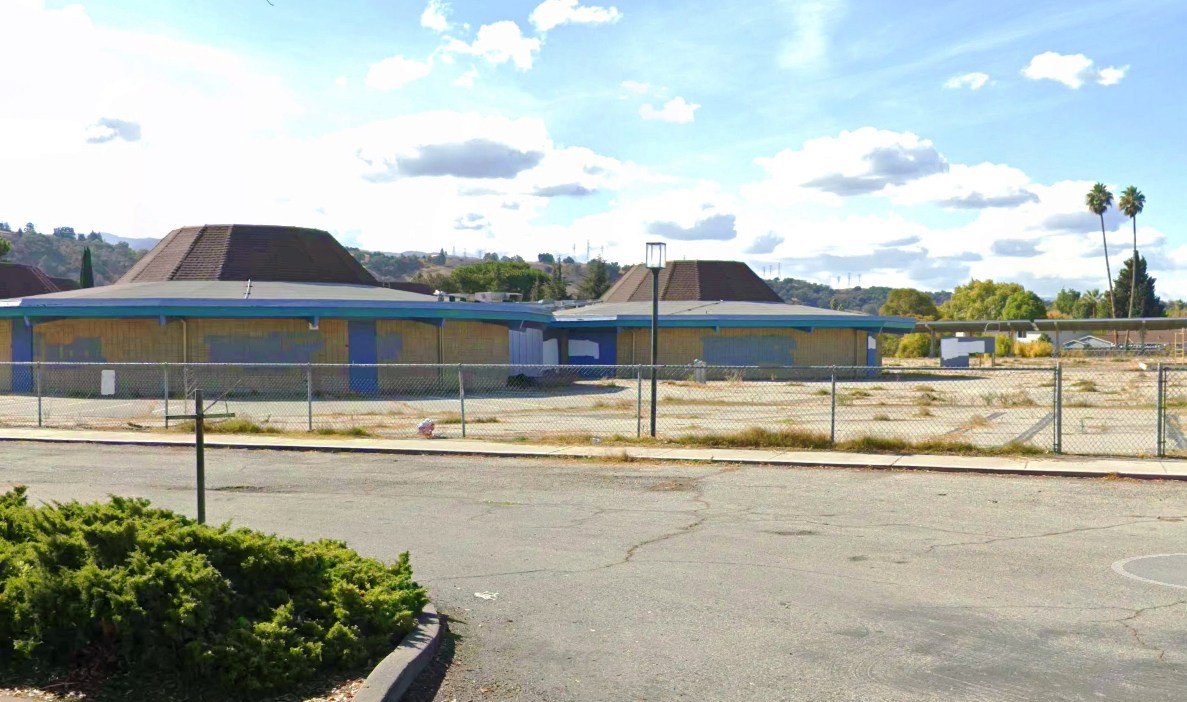
Eighty new homes are one step closer to becoming a reality at a South San Jose school property vacant now for about eight years — a deal that could provide a much-needed $26.6 million cash infusion for the struggling Oak Grove School District.
The city’s planning commission unanimously endorsed the project on Aug. 26, advancing it to the city council. The endorsement comes as the district faces significant enrollment declines and projected deficits of around $11 million annually over the next three years.
If approved by the council, the development would replace the former Glider Elementary School at 511 Cozy Drive, one of three schools closed by the district in 2018. Plans call for 64 detached and 16 attached single-family homes, with 13% of the units classified as affordable housing.
The proposal has yet to be placed on the council’s agenda.
Spearheaded by San Ramon-based True Life Companies, the homes would range from 1,233 square-feet for the attached units — all two stories, with one-car garages and private backyards — to between 1,896 and 2,234 square-feet for the detached homes. All have either three or four bedrooms, and 2.5 or three bathrooms. The developer requested a waiver from standard 5,000-square-foot lot minimums, allowing lot footprints to range from 1,980 to 7,603 square feet. Home prices have not been announced.
Educators at the meeting noted the proceeds could fund counseling programs, libraries, music and arts electives, and classroom technology updates. District officials added that bringing 80 new homes to the area could bolster declining student enrollment — a critical factor in securing state funding. Nearby schools, they noted, are able to accommodate potential new students from families moving into the proposed neighborhood.
“The resource can help us modernize our schools, retain our excellent educators and staff, strengthen student support services, and preserve opportunities for children across our entire district,” Oak Grove Superintendent Ivan Chaidez told the commission. “It is a thoughtful land-use decision to benefit all of our community.”
Chaidez noted the site once accommodated heavy traffic during peak pick-ups and drop-offs when 450 to 600 students attended the school. Under the residential plan, traffic would be distributed throughout the day, and the developer plans to plant 159 new trees on the property.
Edgar Dueñas, the maintenance director for the school district, highlighted the risk of growing blight and security issues the longer the campus sits empty.
“I have had to meet with SJPD because there’s a break-in,” Dueñas said. “It is such a huge financial impact to the district that we’re spending $13,000 a month in security fees for this site.”
While many community members voiced support, other residents raised a range of objections, with some asking commissioners to cap the project at 62 units or convert the site into a public community center. Others pointed to potential strain on electric and sewage infrastructure, as well as increased neighborhood traffic.
“Replacing a community school with 80 homes boxed in by single-family streets is the housing version of a middle seat on a full flight,” resident Andrew Bryan said. “Technically, it fits, but everyone’s miserable.”
Bryan warned that daily neighborhood traffic would triple, arguing city staff relied on “flawed data collected while the school was closed.” He added that the local power grid and sewer lines are already overburdened, citing frequent PG&E outages in the area.
Endorsement of the housing project comes amid a broader debate over neighborhood density in San Jose.
San Jose faces strict state mandates to produce more than 62,000 new homes by 2031. While the developer filed the proposal as a “builder’s remedy” project — meaning it can bypass certain bureaucratic requirements and cannot be turned down over zoning conflicts — it must still navigate the city’s public hearing process.
The debate seemed to continue a contentious discussion from earlier this month, when residents filled the San Jose City Council chambers for a spirited debate, which dragged late into the evening hours, over a major overhaul of the city’s zoning laws. Under current proposals, to be finalized late next year, allowable density could quadruple — from eight to 32 units per acre — giving the city the legal zoning required to build more housing.
While housing advocates urge the city to reduce bureaucratic barriers in order to build more housing, opponents argue dropping density regulations could overcrowd streets and strain local traffic and parking — contending San Jose can meet its housing needs without sweeping zoning changes.
San Jose remains one of the most expensive housing markets in the country. According to data from Zillow, the median home sale price in San Jose reached $1.42 million as of June, while the average rent for a two-bedroom property stood at $3,325.
Speaking to why he supports the proposal, commissioner Luis Arguello highlighted the urgency of building.
“The American dream, the white picket fence, it’s slowly dwindling,” he said. “I don’t know that I’ll be able to look at my kids and say, when you grow up, you’re going to be able to buy a house — at least not in San Jose.”
He said while he was lucky to buy a house years ago “when it was still somewhat affordable,” he wouldn’t be able to purchase it again if it were for sale today, emphasizing the urgency of moving housing projects forward quickly.
“Who are we to deny our brothers and sisters the opportunity to be able to purchase a home?” he asked.