
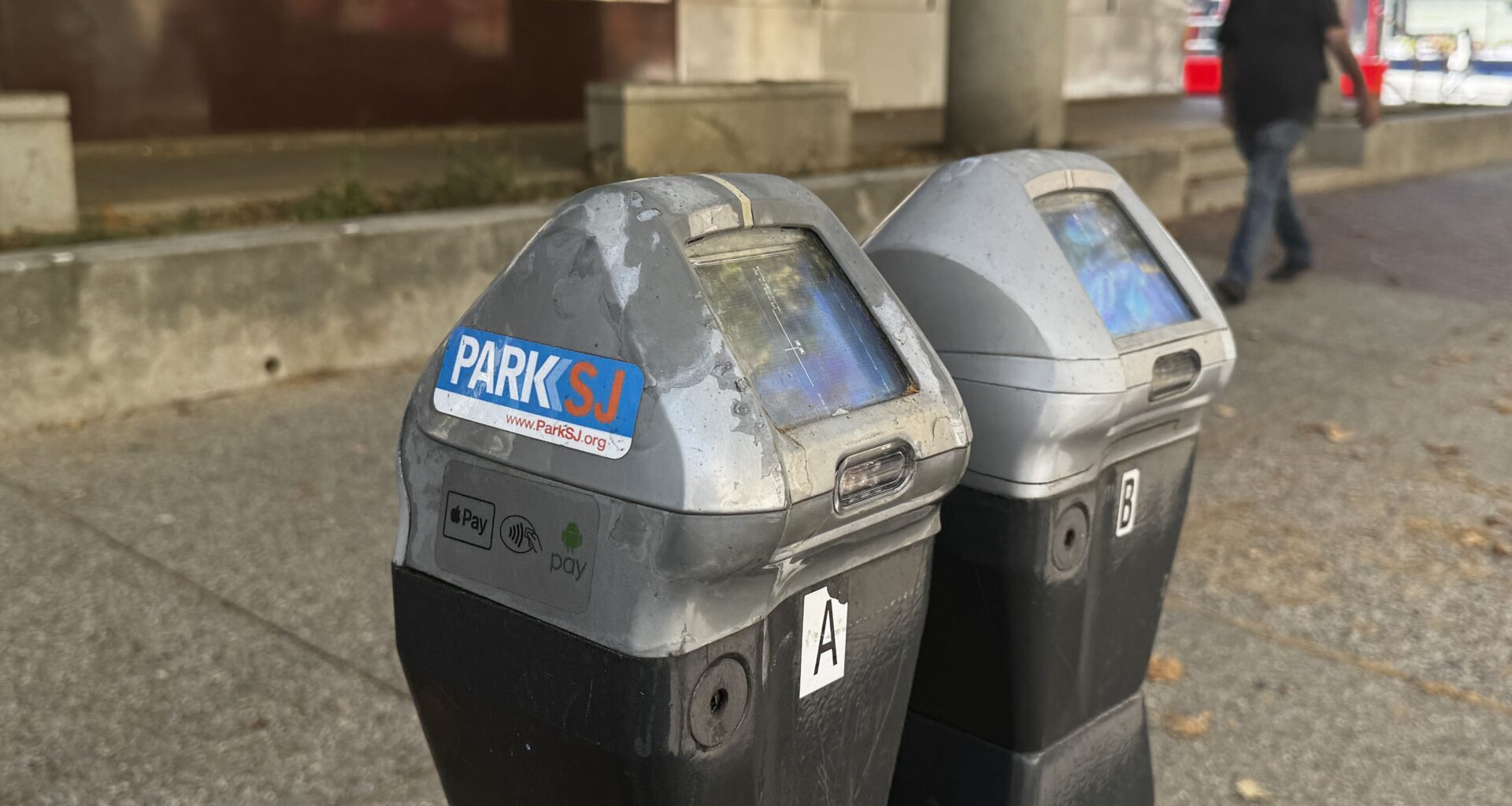
After months of backlash from downtown businesses and workers, San Jose has abandoned plans to extend parking meter enforcement into the evening and raise street parking rates, opting instead for higher garage fees.
Instead, hourly rates in city garages will increase from $4 to $5 — or $1.25 every 15 minutes — after an initial free 90 minutes. Garage rates for special events will range from $15 to $35 and eligibility for discounted parking programs will be expanded to include more downtown employees. The compromise, which takes effect in October, spares street meters but leaves the city short of the revenue it had already counted on, pushing a $1.2 million parking-fund problem into next year’s budget.
San Jose City Council’s 7-3 vote follows months of pushback over an initial proposal to double rates and extend meter hours to 9 p.m. That backlash prompted the council to send the plan back to staff for community outreach, which officials acknowledged was not conducted before incorporating the expected revenue into the budget.
It took three rounds of voting for the City Council to reach a compromise Tuesday.
Staff’s initial proposal was set aside entirely, while an alternative by Councilmember Anthony Tordillos — which focused increases on garages and eliminated 9 p.m. meter enforcement — initially tied 5-5.
To break the tie, Tordillos removed a proposed $1-per-hour street meter rate increase from his proposal, securing a 7-3 vote. A separate motion by Councilmember Pamela Campos to hold a joint meeting with the Downtown Parking Board also failed 5-5.
Mayor Matt Mahan was absent due to a mayors’ conference at Harvard University.
“As the representative for downtown San Jose, I am particularly mindful of the impact parking rate changes may have on the small businesses and the workers who make a prosperous downtown possible,” Tordillos said.
Attendees appeared relieved when the council approved Tordillos’ memo, which removed most of the proposed rate hikes.
Residents who spoke at the meeting largely opposed the proposed rate hikes and extended meter hours. Small business owners, service workers, and patrons warned that higher fees past 6 p.m. would harm downtown’s recovery and deter visitors. Late-night employees raised safety concerns about parking in garages after dark, while business owners criticized the city of attempting to fix a general fund deficit on the backs of local merchants and service workers.
“The best advice I ever got as a parent is don’t punish the behavior that you want to see,” said Rachel Warner, an employee at downtown bars Caravan and 7 Bamboo. “If you want people to come downtown, if you want people to work downtown and live downtown, don’t make it harder and more inaccessible for them.”
Aside from safety issues, speakers also raised mobility concerns over city efforts to direct patrons and workers into parking garages. They noted that while downtown’s Groundwerx safety ambassador program provides escorts, the service ends at 8:30 p.m. Sunday through Thursday and 10 p.m. Friday and Saturday — hours before late-night bar employees finish their shifts at 2 a.m.
The parking debate comes as San Jose is showing signs of renewed momentum, including an upswing in hotel bookings following events like the Super Bowl and World Cup, according to real estate firm CoStar. The growth is attributed to AI conventions, business meetings, and regional sporting events bringing visitors back to a downtown recovering from post-pandemic lulls.
“I hesitate to want to do this because of the success and the things that we have been seeing in downtown,” Councilmember Domingo Candelas said. “But I also recognize the urgency of some of the budget actions we took because of this fiscal situation that we’re in.”
San Jose was facing a dilemma because the projected rate increases were already written into the adopted budget. A $1.2 million transfer from the parking fund to the general fund had been approved to help address a $50 million citywide deficit this year, despite funding needs for maintenance and upgrades at city-owned parking structures.
City staff warned the council that deferring rate increases would leave the parking fund with a deficit that carries into next year’s budget. That shortfall will compound during the next budget cycle, adding pressure to a projected budget gap of $26 million.
“We can’t on one side of our mouth say we want a thriving downtown and on the other side of our mouth, because we’re in a budget crisis, force them to pay for it,” said Councilmember George Casey, who pulled the item off the consent agenda in June when it was set to pass without discussion.
Casey voted against Tordillos’ proposal and supported Campos’s motion to meet with the parking board on a long-term solution.
Business owner Cache Bouren, who runs several businesses downtown including Cash Only near City Hall, called Tordillos’ memo a thoughtful proposal and the “best of the bunch,” but added, “it’s just pulling one lever.”
Noting the decision to defer the revenue shortfall to next year, Bouren asked, “What can the city do besides raising the cost of living? It didn’t answer the core problem.”
He said the three-month delay in addressing the parking fee issue reflects a broader disconnect between City Hall and local businesses.
“This is my final straw,” Bouren said, adding that he is considering moving his business out of state within the year. “Opening a bar in San Jose was both the best thing and the worst thing that’s ever happened to me.”