
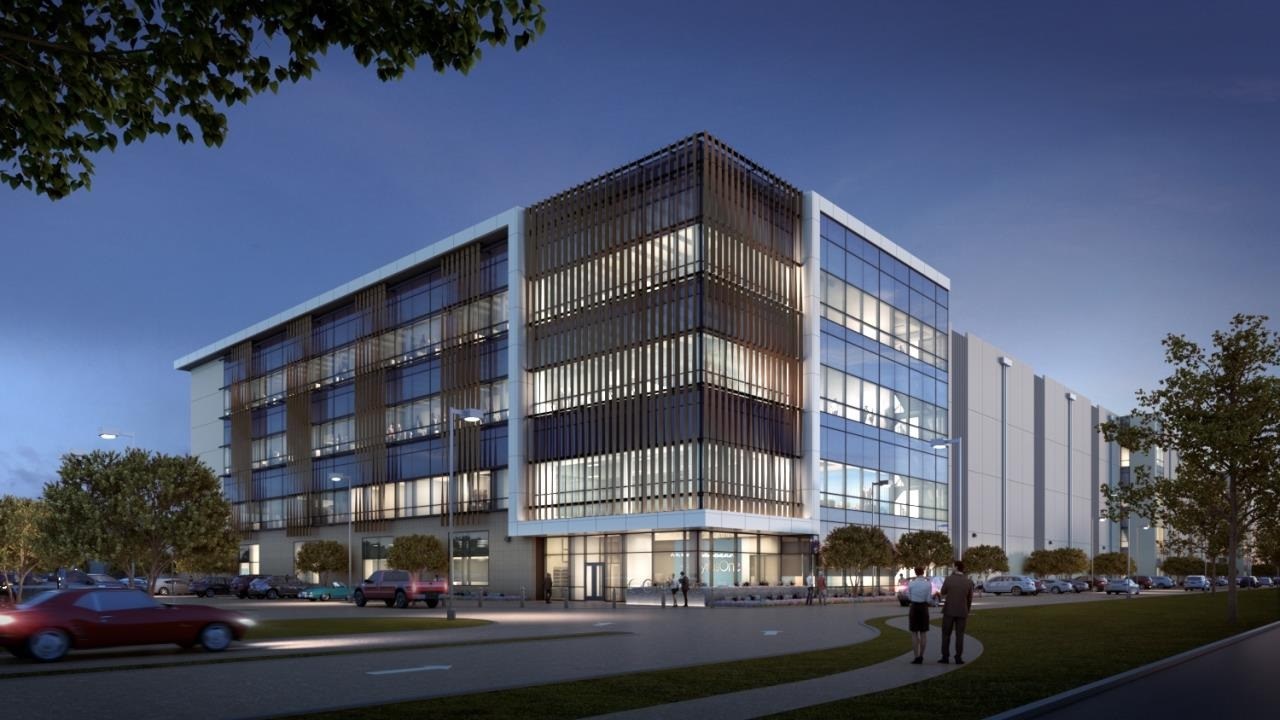
As cities across the Bay Area grapple with how to handle the rapid growth of data centers, the Santa Clara City Council early Wednesday approved plans for city staff to analyze potential new regulations on data center development – examining their impact on water use, air quality and health issues for the community.
The city council’s vote, which passed unanimously in response to a request by Councilmember Suds Jain, comes amid widespread public backlash against the development of data centers in the region. Some cities – such as Oakley – have issued temporary moratoriums on data centers, while others – such as Pittsburg – have promised public hearings for any future data center applications.
Santa Clara has become a popular spot for the development of data centers. It is currently the home of 56 built or under-construction data centers, with two additional centers previously granted approval but not yet built; its first modern data center was constructed in 1996, said city manager Jōvan Grogan. None of those data centers have electric loads greater than 100 megawatts, according to the city staff report.
Silicon Valley Power, Santa Clara’s city-owned and operated electricity utility, has not accepted applications for the development of new data centers since 2023 due to the utility receiving more power requests than it could support, Grogan said. That pause on applications remains in effect, but developers can continue to submit land use requests in the meantime.
Some Santa Clara residents expressed appreciation to the council for being proactive in their push to update and modernize its data center regulations, with the majority of speakers expressing concerns about any further data center construction — especially AI data centers.
Elaine Lee, a Santa Clara resident and co-chair of a local chapter of the Climate Reality Project, asked the council to consider stricter standards for backup generators and a ban on non-disclosure agreements between the city and data center companies.
“Most of all, data centers should provide more community benefits,” Lee said. “Yes, data centers already pay taxes and fees to the city, but we residents deserve even more in benefits because data centers benefit so much from our electricity.”
Byron Fleck pushed for the city to consider a moratorium on data center development while standards are under consideration.
“There’s nothing that you can pass tonight or anything else that’s going to affect what the standards are unfortunately, but that underlies why the action must be now,” Fleck said. “What it’s doing is insulating the city from liability, from somebody coming back and saying, ‘Wait a minute, I’m under the old rules.’ What the moratorium does is say, no, not anymore.”
City staff maintained that the city faces different data center issues than those sparking debates across the country and region due to 30 years of experience and robust existing regulations on data centers, including requirements that all centers approved after December 2022 use carbon-neutral energy. The city limits data center projects at 100 megawatts and has an “extensive recycled water network,” Grogan said.
Grogan said that data centers will contribute an estimated $35.2 million to the FY 2025/2026 general fund through a direct transfer, property taxes, sales taxes and business license taxes.
City staff presented a plan to consider improvements to the city’s existing water standards, siting requirements, community benefits, a coordinated city review, support of the demand side grid and potential sustainability innovations. Reena Brilliot, director of economic development and sustainability, said that officials will analyze potential implementation of a specific standard for recycled water use, setting buffer zones around residential areas and implementing heat capture programs.
Jain expressed concerns that regulations around water need to be settled as soon as possible so that data centers that make applications will not be grandfathered into current regulations. He also expressed concerns about the impacts of data center sound levels and how data centers impact the grid if they drop off to use backup generators.
“We’re doing these studies meanwhile we could be getting more applications, and then as we get more applications they have by right they have locked in the new rules for water use,” he said. “We really need to hold data centers accountable to water use and electricity use.”
Councilmember Karen Hardy expressed discomfort with the city’s “loosey goosey way of handling this.
“We need to put the brakes on all of this until we have done the work and have something we can present to our residents to make certain they understand that we are protecting their water and their air quality,” Hardy said.
Councilmember Raj Chahal pushed back on Hardy’s concerns, stating that the city has been “very proactive” and has received annual reports on data centers and has implemented new rules in recent years.
The final motion included the addition of air quality standards and health and safety considerations, as well as a request that water and air analyses be separated out and presented to the council on a faster timeline than the other issues. The entire evalution is expected to be completed in late 2027, accounting for time for community and council input.
Additional planned votes on placing two items onto future agendas – a potential moratorium on data centers, and a ban on non-disclosure agreements with data centers – were postponed due to timing as the council meeting stretched into the early morning hours.