
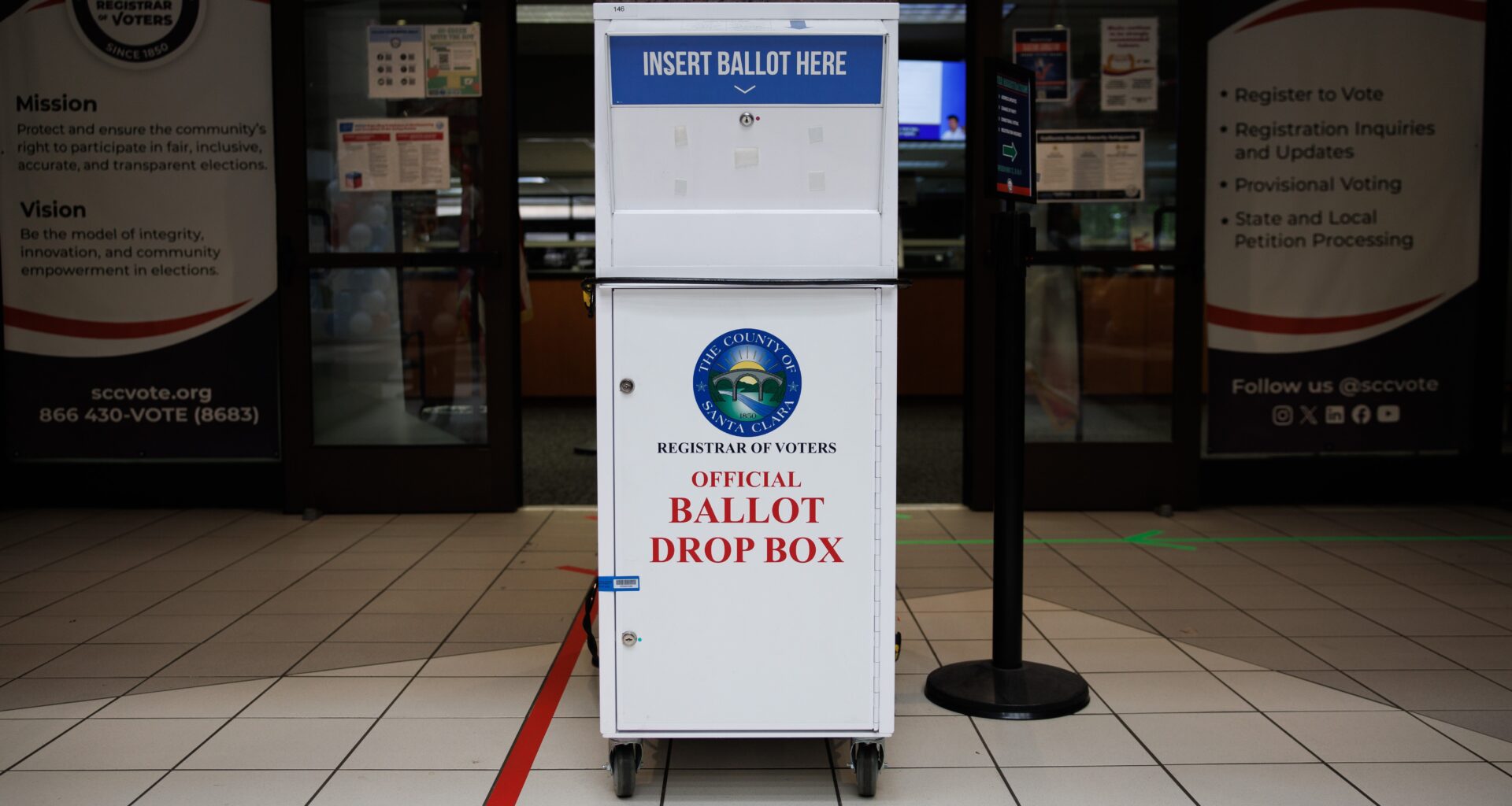
Californians will decide 14 statewide propositions on the November ballot that will determine matters of taxation, voting, election funding, environmental protection and bonds to raise money for research and housing.
RELATED: Your Bay Area guide to the 2026 General Election
Here’s a roundup of the propositions:
Proposition 1 Authorizes Bonds for Housing Affordability Programs
One of two multibillion-dollar statewide housing bond measures on the ballot, Proposition 1 would let the state borrow $11.25 billion for a variety of housing efforts, such as financing low-income apartments and providing low-interest home loans to veterans and first-time homebuyers.
Housing California, a pro-housing group backing the measure, said that with state housing programs running low on money, tens of thousands of proposed affordable housing units need an additional funding source to break ground. The Howard Jarvis Taxpayers Association opposes the measure, arguing that the state shouldn’t take on new debt when it projects multibillion-dollar budget deficits in the years ahead.
Proposition 2 Increases State’s Rainy Day Fund
The proposed “Save for California’s Future Act” would raise the cap on the state’s Budget Stabilization Account, known as the rainy day fund and filled from capital gains and income tax revenues, from 10% to 20%. It is at about $15.1 billion this fiscal year, up from $11.2 billion at the start of the last fiscal year.
The state’s Democratic Party leaders say the proposition would let California set aside more money when times are good so the state has more of a cushion when economic downturns hit. Republican Party leaders say it would allow what they see as chronic overspending by legislative Democrats and wouldn’t address the state’s outstanding federal loan balance.
Proposition 3 Extending Existing Tax on High Incomes
The proposed “California Children’s Education and Health Care Protection Act” would keep California’s highest income tax rates, set to expire in 2031, in place indefinitely. The top marginal income tax rates are up to 12% for single filers who earn over $360,000 per year, joint filers earning at least $721,000 and heads of households who earn more than $490,000. Those thresholds would be adjusted for inflation if approved. Extending the tax rates would maintain $5 billion to $15 billion in annual income tax revenues collected. Voters initially approved the rates temporarily in 2012 and extended them in 2016.
The California Teachers Association and the California Federation of Teachers say passage would avoid billions of dollars in school funding cuts. Critics, including the California Taxpayers Association, say state taxpayers already pay the highest state income taxes in the country and that state leaders are wasting billions of dollars on failed programs.
Proposition 4 Repeals Prohibition Against Public Funding of Election Campaigns
The proposed “California Fair Elections Act of 2026” would lift a prohibition on counties, districts, most cities and the state from providing public funds to help candidates finance their campaigns. Only charter cities, such as San Jose, Oakland and Los Angeles, can offer such programs now. The ballot measure would not mandate public campaign financing programs but would give more local governments the option to decide whether to have such programs. It also would increase penalties related to the influence of a foreign government or foreign principal on elections.
Sponsors, including California Clean Money Action Fund, California Common Cause and the League of Women Voters of California, say it would help level the playing field between candidates who aren’t as well-resourced and those backed by wealthy donors. Critics, including the California Taxpayers Association, say it would force taxpayers to finance political speech they don’t agree with and that candidates could fraudulently seek public financing, leading to abuse.
Proposition 5 Changes Recall Election Process for Statewide Officers
California’s more than 100-year-old recall process for state executive, legislative and judicial office-holders asks voters two questions: Whether the official should be removed from office, and who should replace the official if removed. The proposed measure would eliminate the second question. For most offices, it would be treated under the rules for vacancies, in which the governor fills the position by appointment, or for legislative vacancies, it is filled by special election. The measure would call for a recalled governor to be replaced by the lieutenant governor for the remainder of the term or until voters elect a new governor at a future statewide election.
Supporters, including California Common Cause and League of Women Voters of California, say it would remove the incentive and ability to weaponize recalls as a shortcut for partisan advantage. Critics, including legislative Republican leaders, say the existing rules allow voters rather than politicians choose who replaces the recalled official. The proposed measure would close the path that put former Gov. Arnold Schwarzenegger in office after the 2003 recall of former Gov. Gray Davis amid the state’s electricity deregulation debacle. The movie star won a 48.6% plurality out of 135 replacement candidates.
Proposition 37 Creates Loan Program for Middle-Income Buyers of Qualified New Homes
The proposed measure would create a new state program to lend middle-income homebuyers up to 17% of the price of a newly constructed house, condo, townhouse or manufactured house. The homebuyers would pay the remaining 3% to cover the full down payment. A household would need to earn no more than double the area median income in the county where the home is located, adjusted for family size, to qualify.
Former Los Angeles Democratic state Assembly Speaker Bob Hertzberg, a key proponent, said it would make the purchase of single-family houses more affordable and provide more Californians “the opportunity to move from being renters to being homeowners.” There is no organized opposition.
Proposition 38 Authorizes Bonds for Immunology Medical Research
The proposed measure would authorize $8.4 billion in state general obligation bonds for immunology and immunotherapy research, treatments that use the body’s immune system to treat disease. The funding would be allocated equally to a University of California-affiliated nonprofit medical research institute — to be chosen by the California Department of Public Health — and a grant program for public or nonprofit universities and institutions.
Backers, including Alzheimer’s Los Angeles and the ALS Association, say it would ensure California is a world leader in immunotherapy research. Critics, including retired East Bay Assembly members Loni Hancock and Tom Bates, say it is the wrong way to fund science.
Proposition 39 Prohibits Citizens from Voting Unless They Present Government-Issued Identification
The proposed measure would require California voters to present a government ID when voting in person, or to provide the last four digits of a “unique identifying number” when voting by mail. The measure does not specify what qualifies as a unique identifying number and whether its verification would replace the signature verification process.
Backers, including Reform California, a statewide organization led by Republican state Assemblymember Carl DeMaio, say it will ensure election integrity in the vote-by-mail era. Critics, including ACLU of Northern California and Common Cause, say it would impose needless burdens that could disenfranchise voters.
Proposition 40 Imposes One-Time Tax on Certain Taxpayers
If approved, the measure would require billionaires who were residents of California on Jan. 1, 2026 to pay a one-time state tax equal to 5 percent of their net worth. The tax would be due in 2027, but taxpayers would have the option to spread the payments over five years, paying more to do so. Real estate, pensions and retirement accounts generally would be excluded from the tax.
Proposed by Service Employees International Union-United Healthcare Workers West, it would require 90% of the revenue to be spent on public health care services, with the rest to be spent on education, food assistance and tax administration. Existing rules that limit spending and require the state to spend a certain amount on schools and community colleges wouldn’t apply to the money.
SEIU-UHW says the proposed tax would offset reductions in federal funding and make billionaires “pay their fair share.” Critics, including the California Teachers Association, State Building and Construction Trades Council of California and Gov. Gavin Newsom, say the tax would hurt the state’s budget — highly reliant on income taxes from the rich — and economy by encouraging wealthy entrepreneurs to leave for lower-tax states.
Proposition 41 Prohibits New State Taxes That Exclude Revenues from State Spending Limit
The proposed measure would require the state auditor to review any proposed special tax before it goes in front of voters by auditing each program that would receive funding to determine if it’s achieving its intended goals, and also would prohibit any new tax that excludes its revenues from a state spending limit.
Advocates, including the California Taxpayers Association, say it would provide much needed accountability and transparency on state spending. Critics, including SEIU-UHW, say its main objective is to be a counter-measure to the union’s proposed Proposition 40 tax on billionaires, as passage could nullify Proposition 40.
Proposition 42 Prohibits New State Personal Property Taxes and Certain Retroactive State Taxes
The proposed measure would prohibit new taxes on personal property, including those on retirement accounts and assets, as well as retroactive taxes.
Backers, including the California Taxpayers Association, California Chamber of Commerce and State Building and Construction Trades Council of California, say it would provide certainty to retirees in what already is a high tax state by preventing what they call double taxation of assets acquired by already taxed income.
Critics, including SEIU-UHW, say the measure is mainly intended as a counter-measure to the union’s proposed Proposition 40 tax on billionaires, as passage could nullify Proposition 40.
Proposition 43 Limits Voters’ Ability to Raise Revenues for Local Government Services
The proposed measure would require two-thirds approval for new local taxes whose revenues must be spent on specific needs or programs. The state’s voter-approved Proposition 13 in 1978 required a two-thirds vote to approve a special tax, while allowing a general tax whose revenues could be spent as elected officials see fit to pass with majority approval. But since a 2017 state Supreme Court ruling, courts have held that the two-thirds restriction could be avoided if the special tax qualifies through a citizen initiative.
The measure’s backers, including the California Taxpayers Association and Howard Jarvis Taxpayers Association, say that’s created a “loophole” evading Proposition 13’s special-tax threshold requirement, as governments have used their employee unions to qualify such taxes, and that public officials still can get the majority approval threshold by proposing a general tax.
Opponents, including the California School Employees Association and other public employee labor groups, say it would mean that taxes to fund critical needs wouldn’t pass even if almost two-thirds of voters approve.
Proposition 44 Requires Community Health Clinics Spend 90% Of Revenue on Program Services
The proposed measure would impose penalties on nonprofit Federally Qualified Health Centers (community clinics providing primary care to medically underserved areas and populations) that spend less than 90% of revenue on “program services” that advance their charitable purpose, including but not limited to patient services. Patients at these federally qualified health centers have insurance through Medi-Cal, the state’s Medicaid program that provides coverage for low-income residents.
Backers including SEIU-UHW say some clinics spend less than half of their funding on patient care and services, while revenues instead go to “bloated CEO salaries and other wasteful spending.” Opponents, including the California Medical Association and American Academy of Pediatrics, California, say it is written and funded “entirely by one special interest” and threatens access to care for millions.
Proposition 45 Modifies Environmental Review for Certain Projects
The proposed measure would amend the California Environmental Quality Act (CEQA) to shorten environmental review times for certain projects including most housing, transportation, water, and health projects by setting deadlines for review and resolving lawsuits challenging project approvals.
Backers, including the California Chamber of Commerce, say it would ease “unnecessary delays” they blame for driving up the cost of housing, infrastructure and energy, making California among the least affordable states. Critics, including Sierra Club California, say it would make it harder for residents to challenge developments that can bring pollution into neighborhoods.