
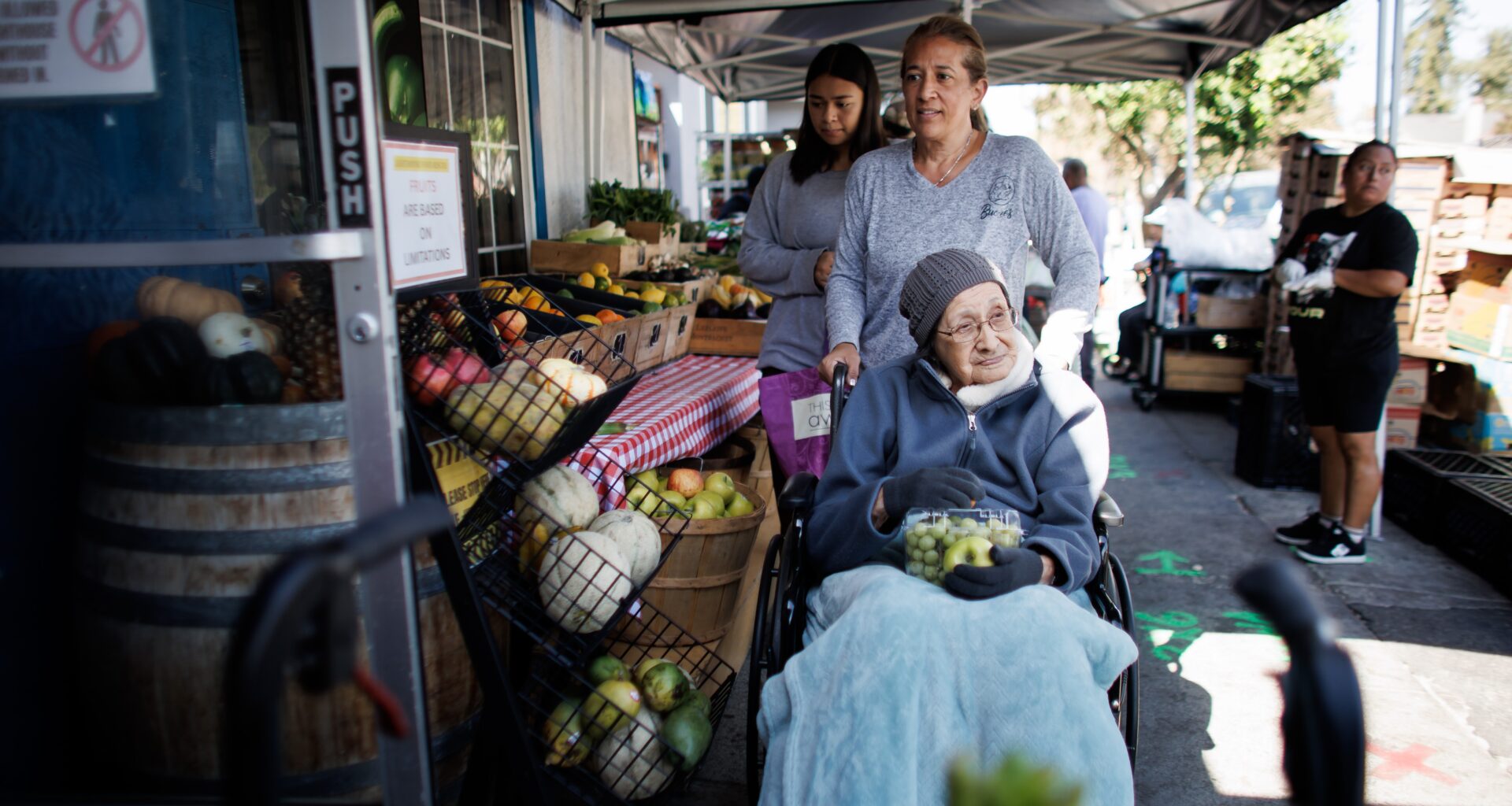
SAN JOSE – Just before noon Monday, a crowd of people lined up near the corner of Julian and 17th Street carrying bags, suitcases and wagons, waiting to fill them with food from Lighthouse Food Rescue and Distribution’s farmers market. Volunteers rushed around with boxes of fresh fruit and vegetables, loaves of bread and jugs of milk in their final preparations.
But it was not business as usual for the food pantry. On the corner stood a group of protestors, carrying signs reading “Don’t punish the hungry” and “Change the zoning not the location.”
Lighthouse’s food bank, which was founded in 2020 by Pastor Ralph Olmos, is facing an uncertain future after a change in zoning and complaints from neighbors could force the nonprofit to move to a new location – a change that advocates and recipients of service say would negatively impact the northside population it serves, while the city says that a solution must be found that appeases both the nonprofit and its neighbors.
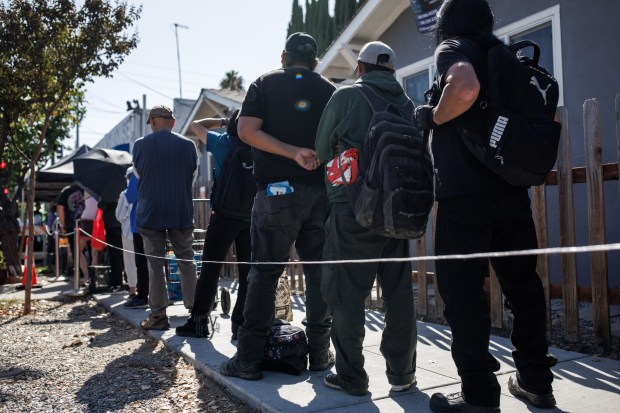 People wait in line to receive free food at Lighthouse Food Rescue & Distribution in San Jose, Calif., on Oct. 12, 2026. (Dai Sugano/Bay Area News Group)
“If I have to leave the north side, it’ll create a community injury,” Olmos said. “To unplug the farmers market will unplug the system.”
Lighthouse utilizes a farmers market model to serve an estimated 1,000 people per day, five days per week, bolstered by food donations from an “intricate little web” of partnerships with stores and businesses in the area, Olmos said. It also offers “advocate boxes” that community members can pick up to deliver to those who cannot go to Lighthouse’s farmers market themselves.
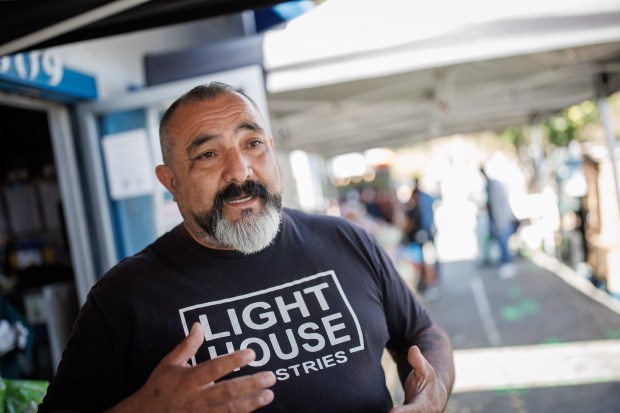 Lighthouse Food Rescue & Distribution President and CEO and Pastor Ralph Olmos talks during an interview in San Jose, Calif., on Oct. 12, 2026. (Dai Sugano/Bay Area News Group)
On Sept. 25, Olmos received an email telling him he had 10 days to move any items that were “obstructing” the sidewalk and 60 days to cease operations entirely, he said. If he did not comply, he would be fined $20,000 per day, according to the warning.
“It kind of caught us by surprise,” Olmos said. “We haven’t had any contact or anybody telling us that, hey, listen, your permits are expiring or something’s happening or the zoning is changing. It’s not like we’re against the zoning, it’s just the way it was done.”
The change is due to a periodic rezoning that occurred between 2022 and 2024 that placed the area into a section that does not allow social services agencies to operate, said San Jose City Councilmember Anthony Tordillos, who represents the area that includes Lighthouse.
The city is searching for potential sites to relocate Lighthouse and hopes to find one that is accessible and cost-effective, said Mayor Matt Mahan.
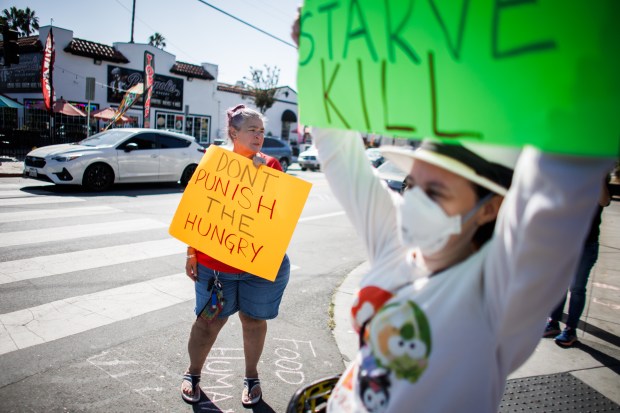 Unhoused Response Group founder Shaunn Cartwright, center, and other supporters of Lighthouse Food Rescue & Distribution hold signs outside the food distribution site in San Jose, Calif., on Oct. 12, 2026. (Dai Sugano/Bay Area News Group)
“We’ve got to find a path forward that allows Pastor Olmos to (continue) the important work he’s doing serving some of our most vulnerable neighbors and doing it in a way that works for his neighbors,” Mahan said. “We want him to continue that work. We just want it to be done in a way that accords with local rules and also enables neighbors to move down the street and have their neighborhood work for them as well.”
Mahan also suggested a grace period be implemented for the code compliance fines.
“We want to enable Lighthouse to continue their work and ideally do so by helping them find a more appropriate location, larger facility, one that is better suited to the operational needs of running this sort of service,” Tordillos said.
In 2022, Lighthouse faced a similar issue when the city issued a warning that it did not have the $15,000 special use permit required to set up its canopies and tables on the sidewalk outside the building. That was mitigated after city leaders waived the fee. Tthe nonprofit never applied for its special use permit, according to city records.
Other code permit issues stem from complaints from neighbors. Robert Wright, a neighbor and member of the Julian-St. James Neighborhood Association, said that those include double parked cars, a bike lane blocked by pallets of food and food and trash in nearby yards. He also struggles to push his wife in her wheelchair on the crowded sidewalk near the food bank.
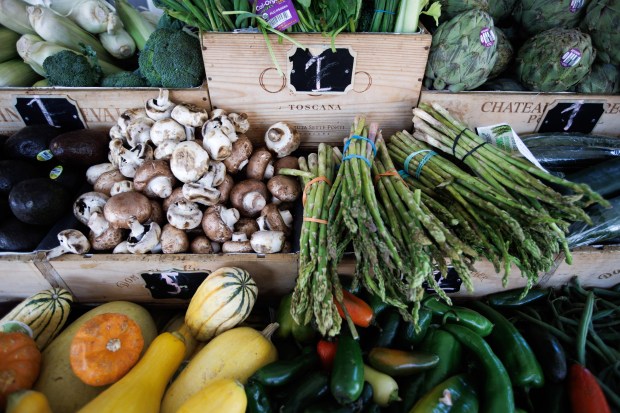 Various vegetables are displayed for people to choose from at the sidewalk food distribution site of Lighthouse Food Rescue & Distribution in San Jose, Calif., on Oct. 12, 2026. (Dai Sugano/Bay Area News Group)
“Right now, they’re doing really good work for people who need it, but they’ve been absolutely terrible neighbors,” Wright said.
If there is no other choice but to relocate, Olmos said that Lighthouse will need to create a satellite location on the northside to continue serving the community there.
Advocates and recipients who attended Lighthouse on Monday extolled the organization’s benefits — and the potential detriments of a move.
“Lighthouse is from the community, in the community, for the community,” said Shaunn Cartwright, who organized the protest. “If this was moved to some area that is commercial, if it was moved to an area that people can’t just walk to, it would definitely change the whole dynamic.”
Henry Morillo, a 72-year-old Navy veteran who has been frequenting Lighthouse for four years, wears a back brace and walks with a cane. If Lighthouse moved, he said, it would be much more difficult for him to get his food – as it would be for the many elderly people in the community.
“Groceries are so high right now,” Morillo said. “You’ve got to make your money stretch. It’s difficult, but with a place like this, it makes it a lot more attainable.”
Lorenza Garcia, a 99-year old resident of the surrounding neighborhood, held a frosted cake in her lap as she was pushed in a wheelchair by her granddaughter, Billie True. Garcia’s family explained that visiting the farmers market brings her joy because the boxes are at her level and she can pick out items for herself – one of the few things she is still able to do independently. That would likely not be an option if Lighthouse moved, they said.
Tordillos added that the city is “cognizant” of the importance of serving the community Lighthouse is currently in and is looking for locations nearby. Olmos said that he wants to work together with the city to find a solution but that any accommodations are “very personal” for them.
“It does connect community. It does bring dignity. And it’s something that’s really thriving here on the north side of San Jose,” Olmos said. “It belongs to the people now.”