
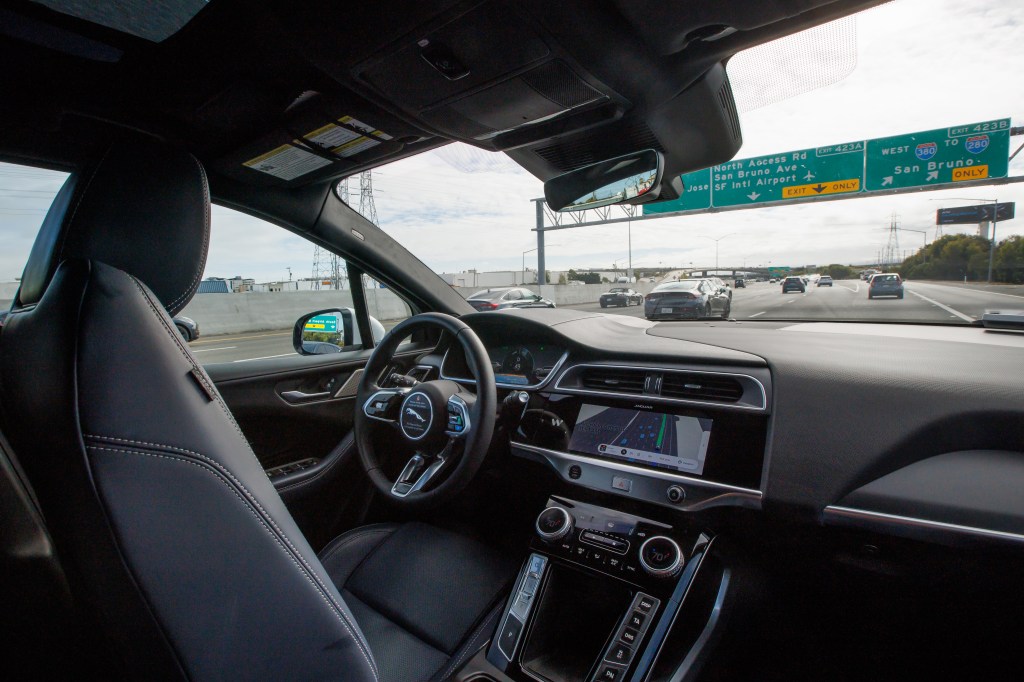
In a first for the U.S., Waymo on Wedneday began offering driverless robot-taxi rides on freeways in the Bay Area, along with Los Angeles and Phoenix.
The pioneering Google spinoff will also expand service down the Peninsula all the way into San Jose, and serve riders to and from Mineta San Jose International Airport, creating broad new trip-taking opportunities for residents and visitors.
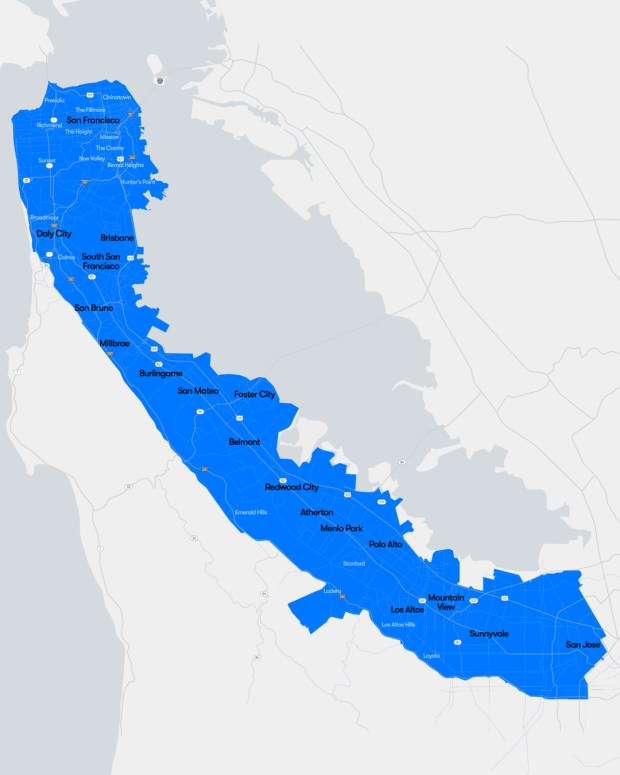 A map showing robotaxi company Waymo’s expanded service zone in the Bay Area. The company said the entire area shown would become available to some riders starting Nov. 12, 2025, and roll out to more over the following couple of weeks. (courtesy of Waymo)
Waymo co-CEO Dmitri Dolgov said the Mountain View company had been targeting freeways since Google launched its autonomous vehicle project in 2009.
“Freeway driving is one of those things that is very easy to learn but very hard to master,” Dolgov said last week during a press event preceding Wednesday’s public announcement of the freeway service.
Dolgov promised Waymo, owned by Google parent Alphabet and spun off from Google in 2017, would bring a “strong focus on system safety and reliability” to freeway travel.
Waymo officials said they have worked with the California Highway Patrol to ensure safe freeway deployment. On freeways, a Waymo will stay at or below 65 miles per hour, “following the flow of traffic,” said company spokeswoman Sandy Karp, “but sometimes it might go to say, 68.”
Freeway travel will be available to early-adopting Waymo users who have opted in to new features, with more users eligible later. Full access to the expanded Peninsula ridership area will be offered within a couple of weeks, Waymo said.
However, some local officials expressed concerns about the vehicles’ safety, including state Sen. Dave Cortese, who represents much of Santa Clara County and has chafed at local officials’ inability to regulate robotaxis. Automated taxis fall under the purview of the state Department of Motor Vehicles and Public Utilities Commission, including for freeway travel.
“That’s a tremendous risk that Waymo’s taking right now, in their ambition to scale as quickly as they can with as little local control as possible — they’re risking the ultimate tragedy,” Cortese said last week, before learning about the freeway expansion.
Waymo has hit a number of bumps along the way to becoming the nation’s leading robotaxi company, serving the Bay Area, Los Angeles, Phoenix, Atlanta and Austin. In San Francisco, where it first rolled out paid fares, emergency officials and local politicians grew frustrated and angry as the robotaxis repeatedly blocked first responders’ vehicles and snarled traffic.
In May 2024, federal traffic-safety authorities launched an investigation into Waymo after 22 reports that its robotaxis potentially violated traffic safety laws, or engaged in other “unexpected behavior,” including 17 collisions. The probe ended after Waymo made software updates.
In June, a woman severely hurt in a San Francisco bicycle crash with a Waymo robotaxi sued the company, claiming one of its vehicles pulled over in a no-stopping zone next to a bike lane, and a passenger opened a door into her path — despite the car’s “Safe Exit” system.
Also in June, Waymo expanded down the Peninsula, offering rides as far south as Mountain View, in a staged expansion from San Francisco that started in August 2024. Service covering the length of the Peninsula into part of San Jose — a city where Mayor Matt Mahan urged regulators to allow the service — will roll out over the next couple weeks, Waymo said.
Rides to the San Jose airport will be available starting Nov. 12 to those signed up for Waymo’s Silicon Valley service, with others eligible in the future. Waymo will have 24/7 access to the San Jose airport’s Terminal A, by the bus stop on Airport Boulevard, and to Terminal B, at the south curb of the rental-car center, Waymo said. The airport service will draw an added $4 fee.
The company in September received a pilot permit to start operating at San Francisco International Airport. Waymo also intends to serve the East Bay, spokeswoman Karp said, but has “no date to share quite yet.”
Earlier this month, Waymo co-CEO Tekedra Mawakana, at the TechCrunch Disrupt conference in San Francisco, described driverless taxi technology as “not perfection,” but said they are safer than human drivers and that she believed society would accept a roadway death by robotaxi as long as companies are transparent about safety.
A September incident in which a Waymo drove around a stopped school bus with lights flashing and stop signs extended, sparking a federal probe, was an “edge case” for a robotaxi, Mawakana said. On freeways, Mawakana said, “the edge cases are different.”
Waymo software engineering director Pierre Kreitmann noted that higher speeds on freeways than on surface streets mean “collisions are higher severity.” Construction issues, and law enforcement activities, can also be different on freeways, Kreitmann added. Other hazards include motorcyclists driving between lanes, hydroplaning, animals, and crashed vehicles.
A Waymo autonomous vehicle — outfitted with a range of sensors — is parked before driving on Highway 101 for a demonstration on Nov. 7, 2025, in San Bruno, Calif. (Dai Sugano/Bay Area News Group)
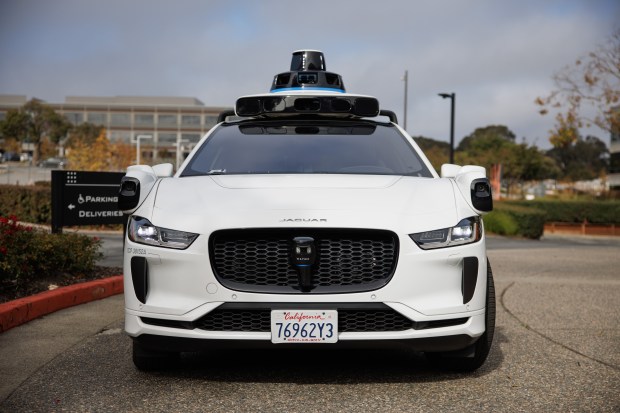
A Waymo autonomous vehicle — outfitted with a range of sensors — is parked before driving on Highway 101 for a demonstration on Nov. 7, 2025, in San Bruno, Calif. (Dai Sugano/Bay Area News Group)
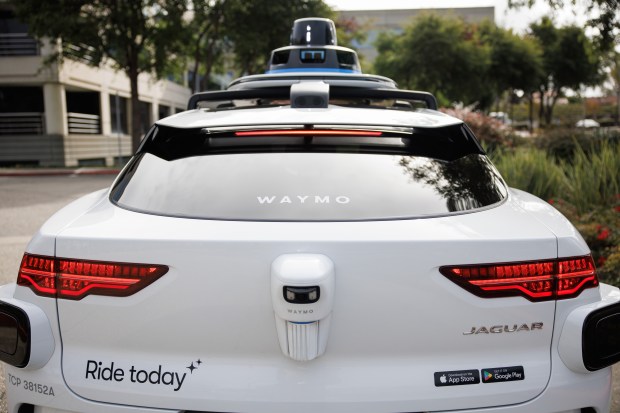
A Waymo autonomous vehicle — outfitted with a range of sensors — is parked before driving on Highway 101 for a demonstration on Nov. 7, 2025, in San Bruno, Calif. (Dai Sugano/Bay Area News Group)
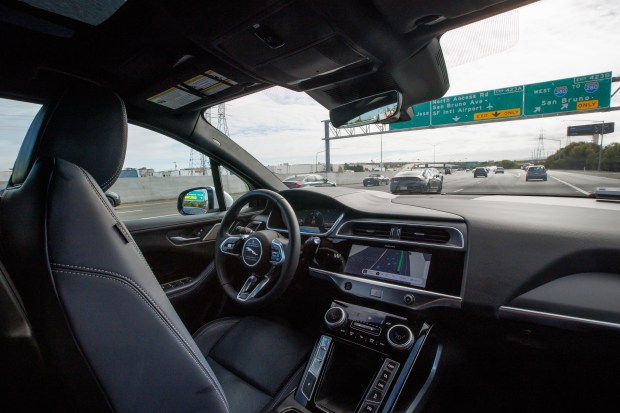
A Waymo autonomous vehicle drives on Highway 101 during a demonstration on Nov. 7, 2025, in South San Francisco, Calif. (Dai Sugano/Bay Area News Group)
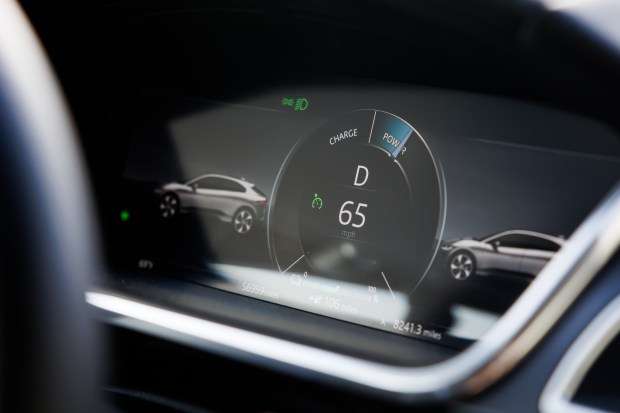
The speedometer displays the driving speed of the Waymo autonomous vehicle on Highway 101 during a demonstration on Nov. 7, 2025, in South San Francisco, Calif. (Dai Sugano/Bay Area News Group)
Show Caption
1 of 5
A Waymo autonomous vehicle — outfitted with a range of sensors — is parked before driving on Highway 101 for a demonstration on Nov. 7, 2025, in San Bruno, Calif. (Dai Sugano/Bay Area News Group)
“We’ve had to look at all these different cases,” Kreitmann said. “We’ve studied them deeply and made sure the Waymo (automatic) driver can handle them all.”
In heavy rain, a Waymo might take surface streets instead of freeways, Kreitmann added.
Cortese believes Waymo is gambling on becoming ubiquitous before a tragedy provokes public outrage and heavy pushback against robotaxis. He pointed to the uproar that followed last month’s killing of a beloved convenience-store cat by a Waymo in San Francisco, prompting a city supervisor to demand voters at the county level get the right to decide how robotaxis operate.
Waymo says its driverless vehicles have covered about 100 million miles, and that its cars are five times safer than the human-driven vehicles that kill some 40,000 people in the U.S. annually.
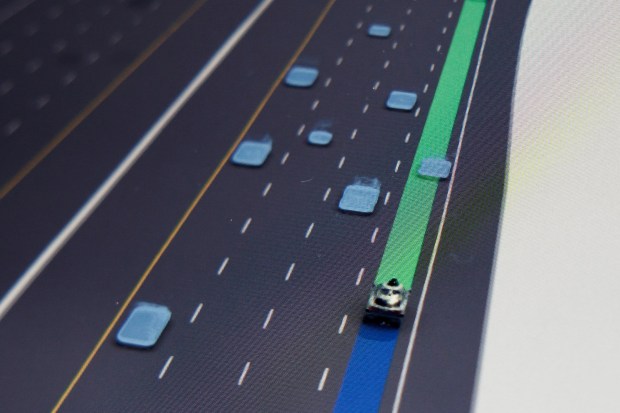 A display inside a Waymo autonomous vehicle shows the self-driving car’s driving path and surrounding cars while it drives on Highway 101 during a demonstration on Nov. 7, 2025, in South San Francisco, Calif. (Dai Sugano/Bay Area News Group)
Philip Koopman, a professor emeritus at Carnegie Mellon University who studies the technology, said Waymo could credibly claim to be on track toward being safer than human drivers, but hasn’t racked up enough miles traveled to say it’s less likely to cause fatalities. And because Waymo frequently changes its operating software, its safety statistics aren’t necessarily predictive of future outcomes, Koopman said.
And, Koopman added, “All of the miles at low speeds don’t necessarily predict what happens at high speeds.”
San Mateo County supervisor David Canepa, a former Waymo foe but now a supporter, said the robotaxis haven’t caused problems in his county. Still, he expressed wariness at the prospect of Waymos on freeways.
“I’m torn,” Canepa said. “I’m a big fan of autonomous vehicles, but I’m also a big fan of safety. They’re going to have to continue to make sure that their safety record is clean.”
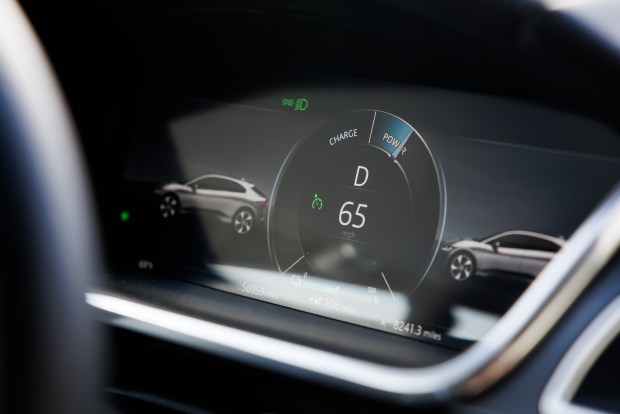 The speedometer displays the driving speed of the Waymo autonomous vehicle on Highway 101 during a demonstration on Nov. 7, 2025, in South San Francisco, Calif. (Dai Sugano/Bay Area News Group)