
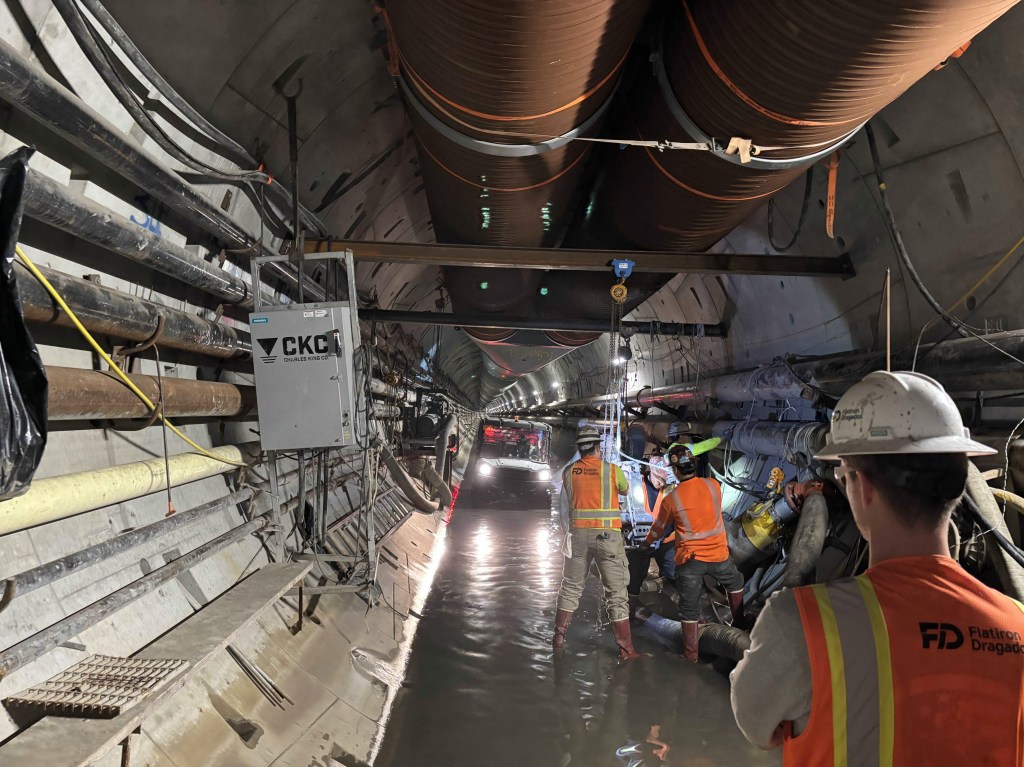

Inspection teams on Dec. 8, 2025, were allowed inside the Clearwater tunnel for the first time and will begin with the first 3 miles of the underground structure that experienced a breach at about the 5-mile point under Western Avenue in San Pedro. Dec. 8, 2025. (Photo Courtesy of the Los Angeles County Sanitations Department)
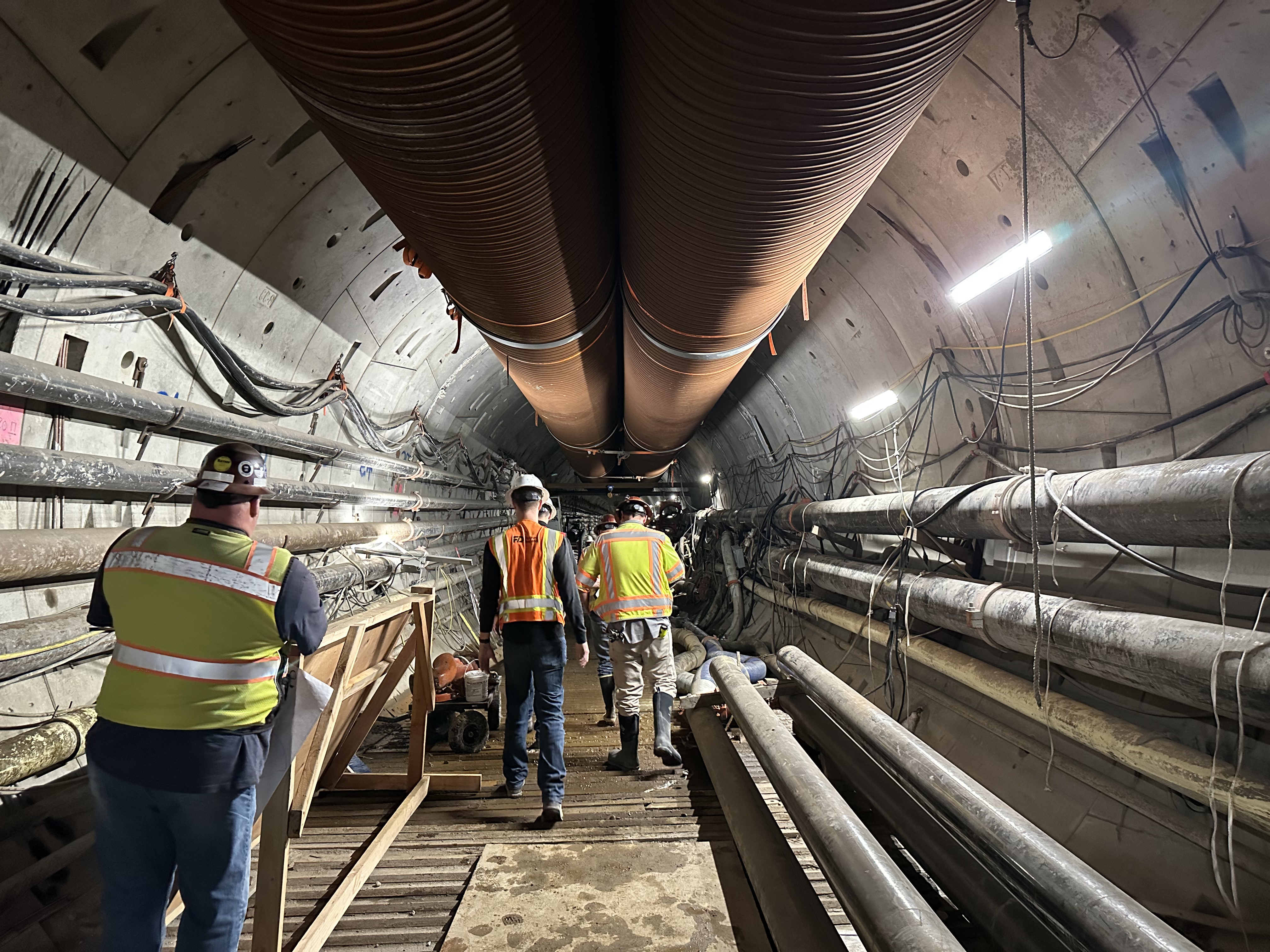
Inspectors allowed into Clearwater tunnel for the first time on Dec. 8, 2025. (Photo Courtesy of Los Angeles County Sanitations Department)
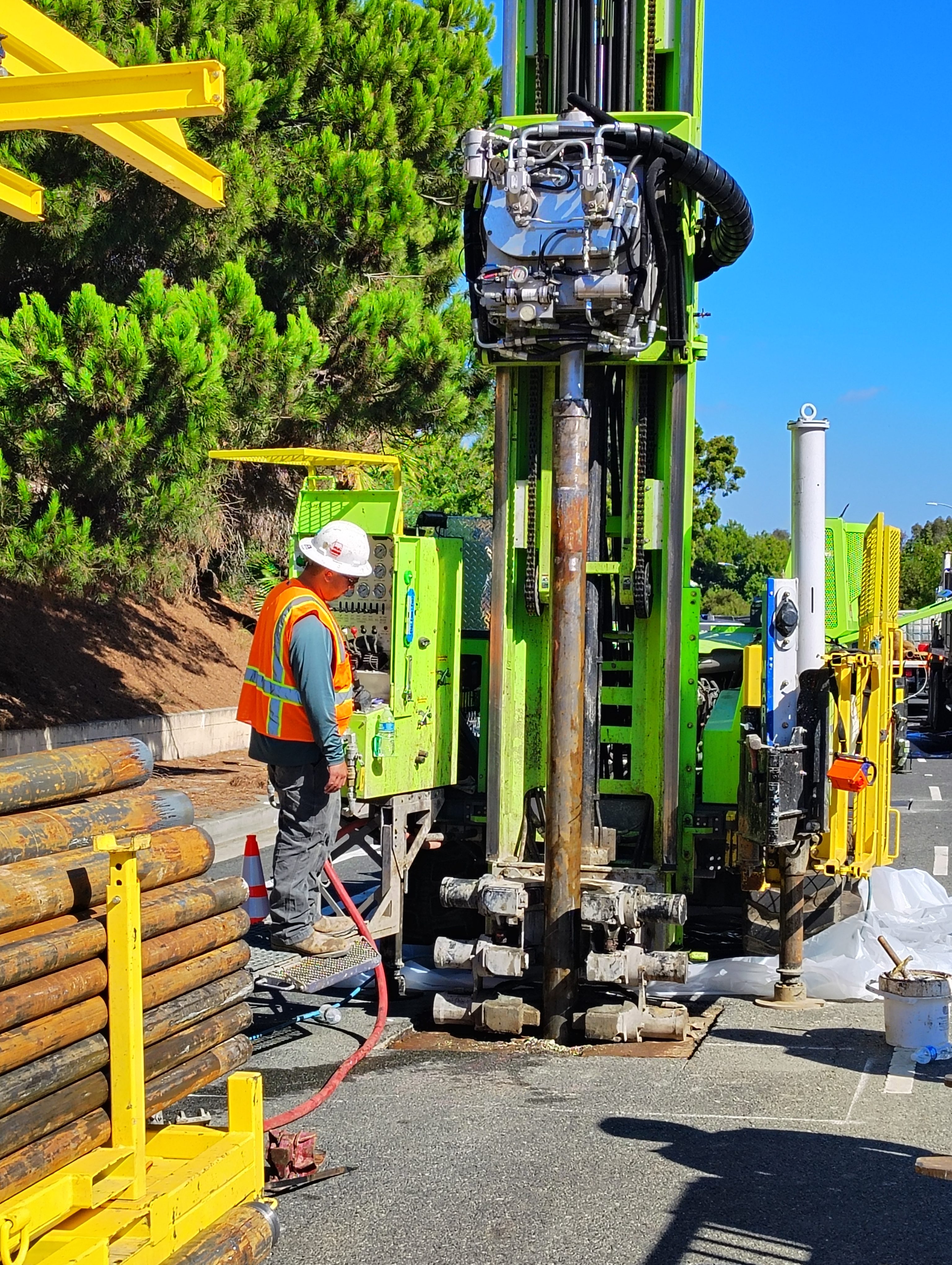
Sonic drill rig on Western Avenue in San Pedro. The equipment is being used to explore a tunneling breach some 360 feet below ground that is being created to house new, larger wastewater pipes. (Photo Courtesy of Los Angeles County Sanitation Districts)

Sonic drilling rig used to explore underground tunnel breach on Western Avenue in San Pedro. The project will house new, larger underground wastewater pipes to serve the region. (Photo Courtesy of Los Angeles County Sanitation Districts)

Six- and four-inch steel casings to encase underground cameras are shown on Western Avenue where Los Angeles County Sanitation Districts is conducting an investigation into what may have caused a 360-foot deep underground tunnel being created to house larger wastewater pipes to serve the region. (Photo Courtesy of Los Angeles County Sanitation Districts)
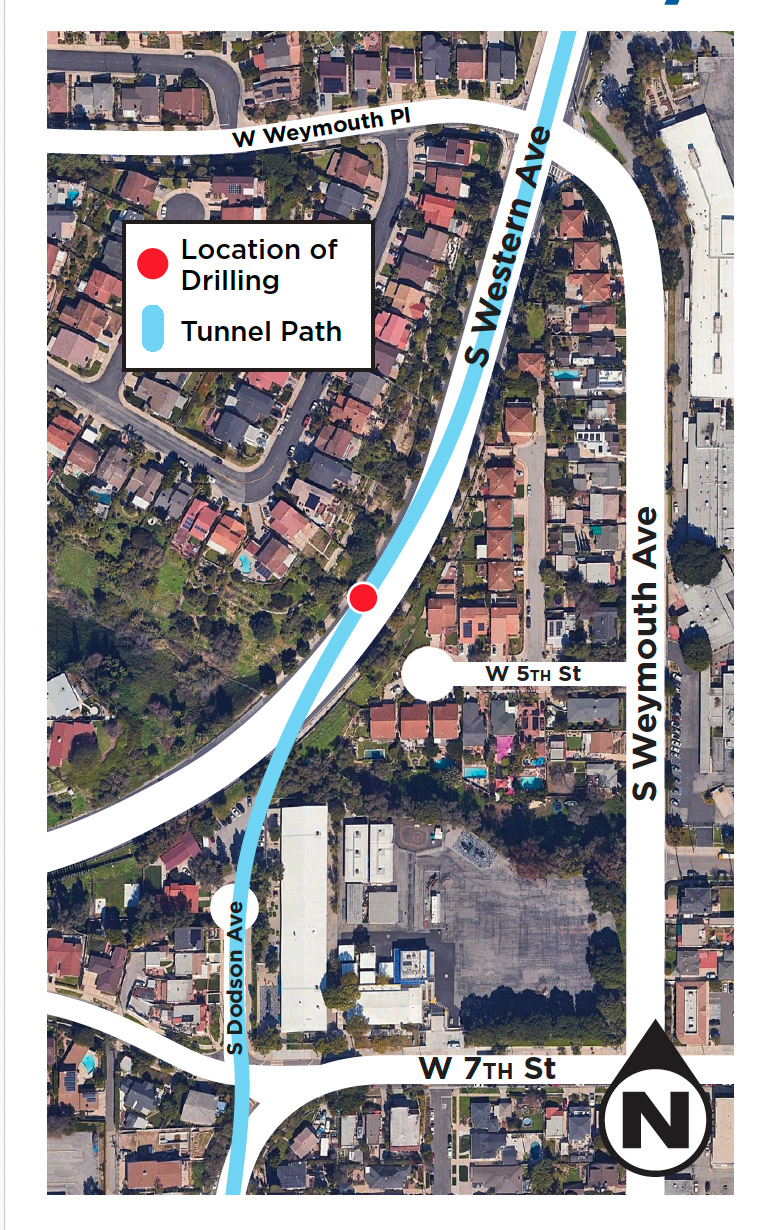
Map shows where 6-inch bore holes will be drilled on Western Avenue in San Pedro. Workers will send a camera below ground to a depth of 370 feet to determine more about what caused the tunnel breach in a project to build new wastewater pipes from Carson to San Pedro. Work is set to begin on Monday, Sept. 29 and continue for four to six weeks on Western Avenue just north of Weymouth — above where the underground breach occurred — and work could impact traffic in at least one Western Avenue lane for four to six weeks. The location is on Western Avenue across from the Fifth Street cul-de-sac and will require one southbound traffic lane closure. (Local Rights)
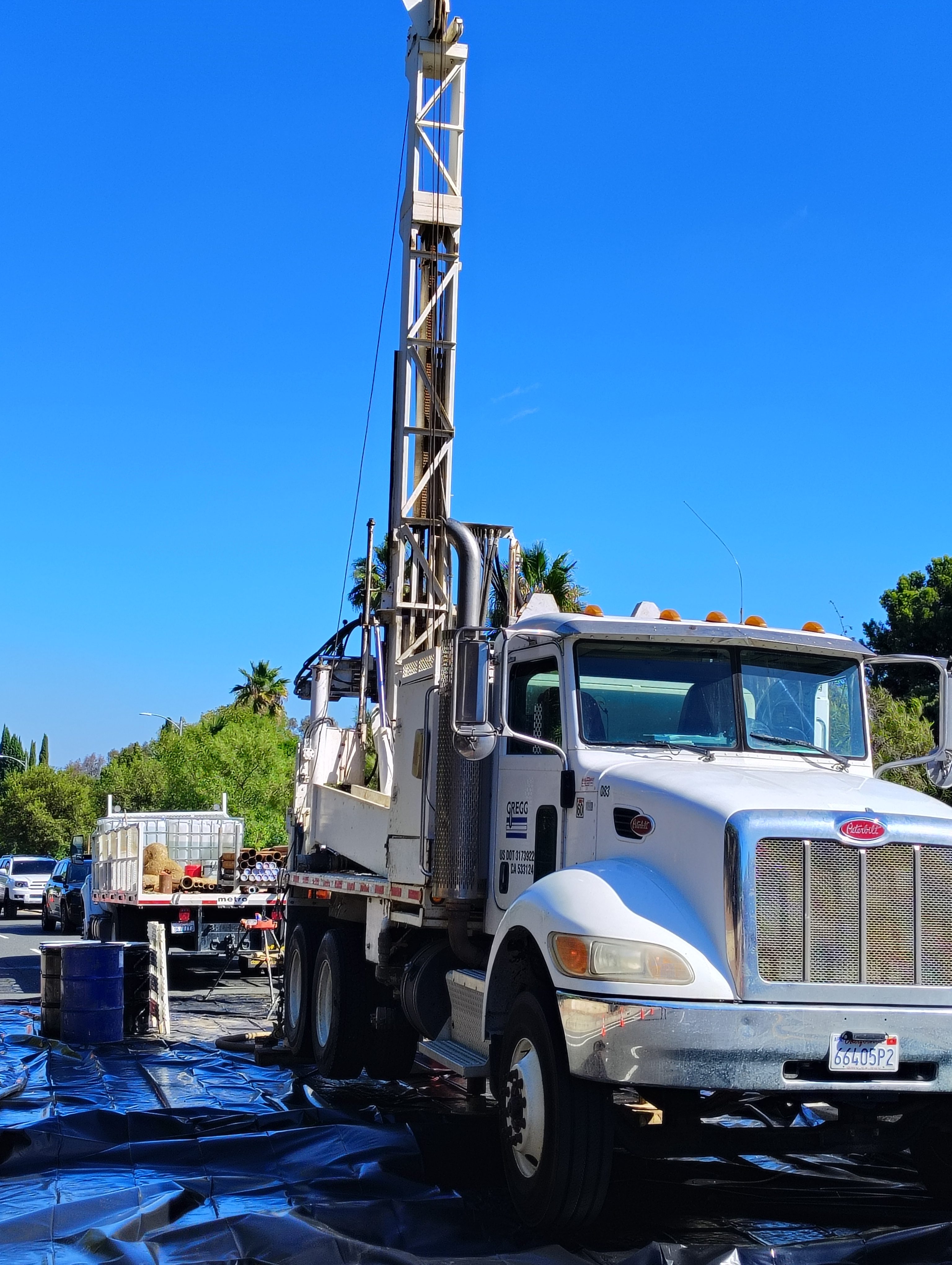
Rotary drill on Western Avenue in San Pedro is part of the equipment being used to explore a breach in an underground tunnel being created to house new, larger wastewater pipes to serve the region. (Photo Courtesy of Los Angeles County Sanitation Districts)

Rotary drilling rig on Western Avenue in San Pedro being used to explore underground breach in tunnel that will house new wastewater pipes. (Photo Courtesy of Los Angeles County Sanitation Districts)

Clearwater tunnel project July, 2025 in San Pedro. (Courtesy Clearwater Project)
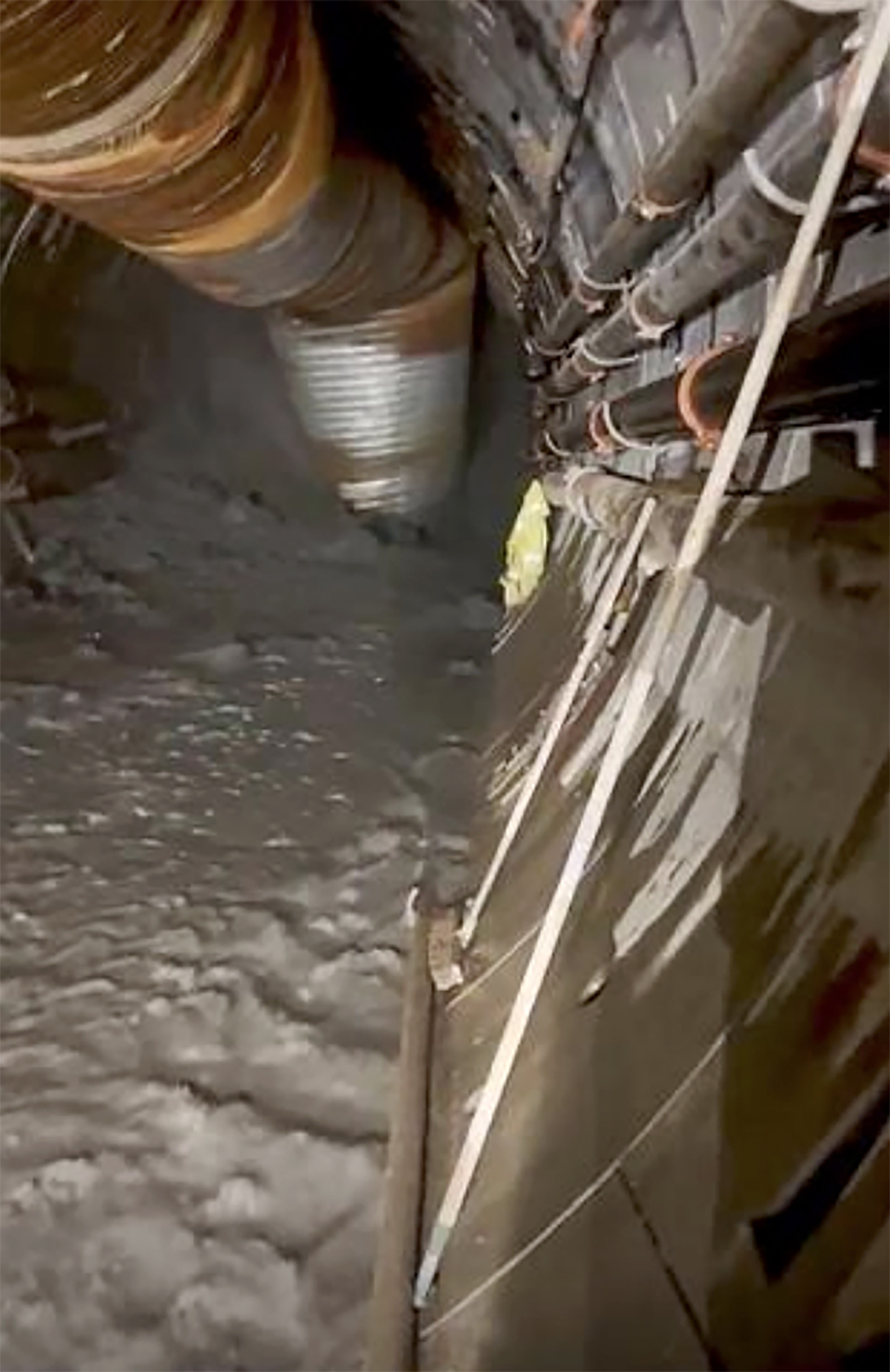
Clearwater breach collapse on July 9, 2025 in San Pedro. (Courtesy Clearwater Project)
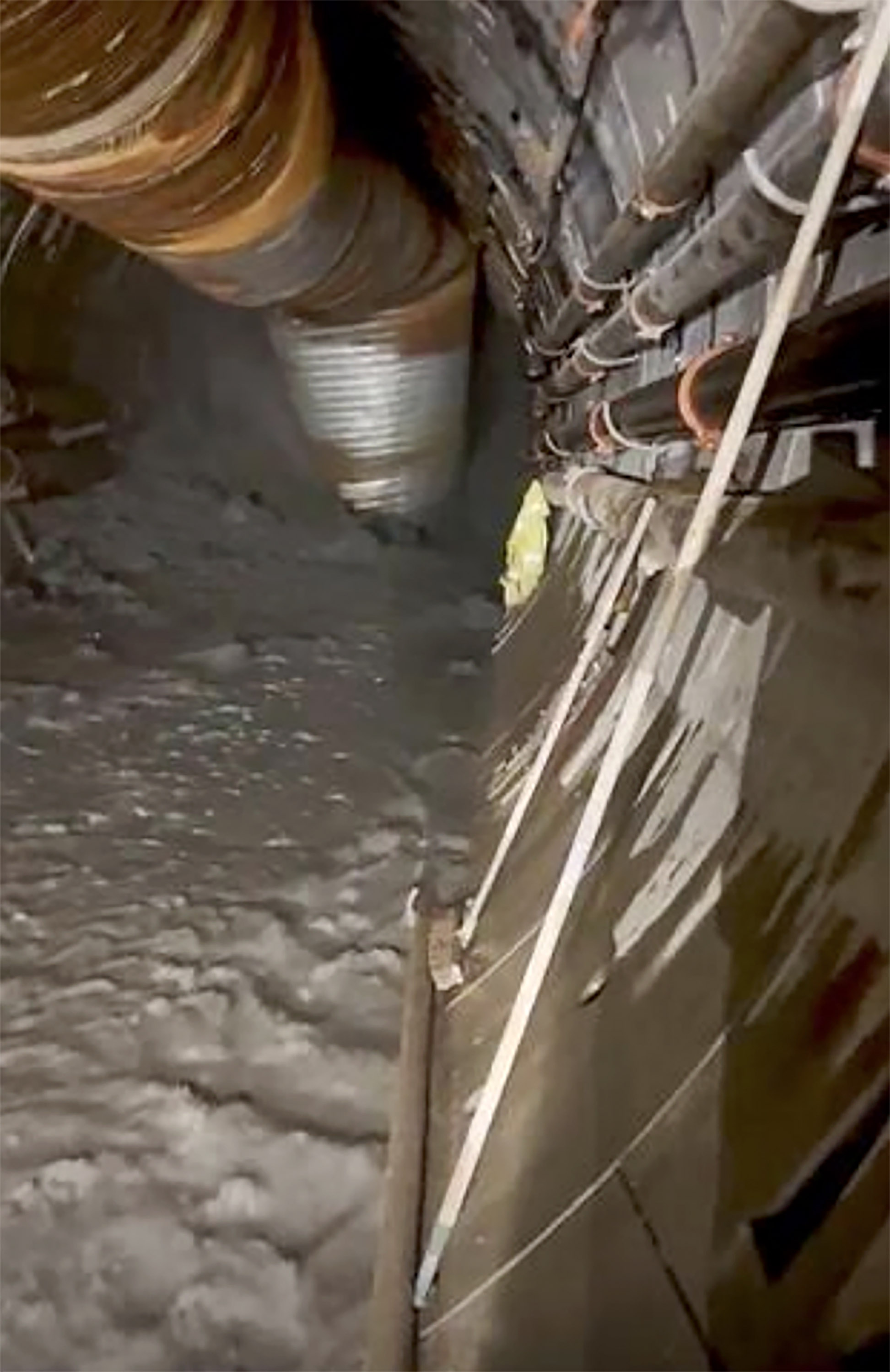
Clearwater breach collapse on July 9, 2025 in San Pedro. (Courtesy Clearwater Project)

A worker looks down the shaft to the tunnel of the Clearwater project site site in Wilmington on Thursday, July 10, 2025. Thirty-one workers, aided by rescuers, made it out safely after a stretch of tunnel under construction collapsed in Wilmington on Wednesday night, July 9, 2025. (Photo by Dean Musgrove, Los Angeles Daily News/SCNG)

Clearwater tunnel project July, 2025 in San Pedro. (Courtesy Clearwater Project)

LA City Councilmember Tim McOsker speaks at a press conference after a tunnel collapsed on dozens of workers in the underground Clearwater Tunneling Project in Wilmington on Wednesday, July 9, 2025. (Photo by Raphael Richardson, Contributing Photographer)

Mile 5 of the Clearwater project runs south to the left of Western Ave. in San Pedro seen here on Thursday, July 10, 2025. Thirty-one workers, aided by rescuers, made it out safely after a stretch of tunnel under construction collapsed in Wilmington on Wednesday night, July 9, 2025. (Photo by Dean Musgrove, Los Angeles Daily News/SCNG)

The Clearwater project site site in Wilmington on Thursday, July 10, 2025. Thirty-one workers, aided by rescuers, made it out safely after a stretch of tunnel under construction collapsed in Wilmington on Wednesday night, July 9, 2025. (Photo by Dean Musgrove, Los Angeles Daily News/SCNG)
Show Caption
1 of 16
Inspection teams on Dec. 8, 2025, were allowed inside the Clearwater tunnel for the first time and will begin with the first 3 miles of the underground structure that experienced a breach at about the 5-mile point under Western Avenue in San Pedro. Dec. 8, 2025. (Photo Courtesy of the Los Angeles County Sanitations Department)
In a major step forward, workers this week received the go-ahead to begin re-entering the shuttered Clearwater tunnel for the first time since a July 9 underground breach temporarily trapped several workers, halting the ambitious project to install new regional wastewater pipes.
Small teams — fewer than a dozen at a time — are now going in from the tunnel’s above-ground entry point to the north, near the Wilmington/Carson border, said Michael Chee, spokesperson for the Los Angeles County Sanitation Districts. As for now, he added in a Thursday, Dec. 11, phone interview, the project itself will remain on hold until much more information can be gleaned.
Cal/OSHA, the agency with the authority to allow the Sanitation Districts and its contractors permission to re-enter the tunnel since the breach, gave inspectors the green light to do so on Monday, Dec. 8.
Personnel began what was characterized as a cautious, phased re-entry process into the tunnel entrance — adjacent to the A.K. Warren Water Resource Facility on South Figueroa Street north of Lomita Boulevard — to restore ventilation, establish power and inspect the tunnel’s structural integrity, according to a news release.
The ambitious, $630 million, multiyear Clearwater Tunneling Project launched in 2019 and was more than a decade in the works when the breach occurred. The project required extensive planning, with advance and ongoing community outreach. Tunneling was not done under homes or other buildings but instead followed only under streets. The project had progressed without problems and was on the last leg of its journey when the breach occurred, about five to six miles from the only above-ground access point on Figueroa Street to the north.
The project has been suspended since the breach occurred near the end of the line, only about a mile from its finish point at Royal Palms/White Point Beach in San Pedro. The older, smaller underground wastewater pipes, meanwhile, remain in place and are still working, officials said previously.
The immediate challenge is to determine the structural integrity, the safety conditions and status, and to restore electrical power and other needed safety features, which shut down when the breach occurred.
The work, Chee said, has been “very, very methodical” and it is still not clear when the project could reboot.
And for now, until at least into the new year, he said, work will continue on Western Avenue near Fifth Street in San Pedro to create more bore holes for a clearer picture of the breached site far below the street.
The work to determine the cause, Chee said, has been technologically challenging.
Bore holes have been drilled to try to get a better view far below the ground of what may have caused the collapse of dirt and debris that workers had to climb over in July; a boring machine remains trapped underground just ahead of that area.
“This is not easy,” Chee said. “It is very complicated geology, going very deep in the ground, and it is difficult work at that depth. There’s only so much you can do looking through a bore hole.”
More holes will be drilled going forward and that work on Western Avenue is expected to last into early 2026.
The human teams, however, will now be able to provide a closer first-hand view of what may have happened. But it will be a slow, methodical procedure that could take a while.
Inspectors will be “taking laser measurements of the tunnel, checking the electrical system and what repairs need to be made to restore power and life support, which were disrupted when the breach occurred,” Chee said.
The initial phase only allows inspection teams to proceed for the first approximately 3 miles heading south into the tunnel and will not get them near the location where the breach occurred. There is no time frame for when Cal/OSHA will grant permission to proceed to the next phase.
So far, Chee said, “nothing unusual” has been spotted by the in-person inspectors.
“We don’t expect to see anything unusual in the first stretch of the tunnel as there were no issues there,” Chee said. “We just want to confirm there are still no issues. Everyone is anxious to get to 5-mile point (where the breach occurred).”
Some information is being gathered via the remote work above ground on Western Avenue, but that, too, has proven slow and often frustrating, Chee said.
Up until now, project officials have been relying on underground cameras being lowered through small bore holes — only 4 inches and unstable at those depths — below Western Avenue near about the Fifth Street spot in San Pedro.
Tethered drones from the tunnel’s opening 5 miles to the north have also been used underground but without much success, Chee said — because of the depths. One of them, though, was able to capture a 10-second clip of the damaged area that revealed a large open cavern area above the fallen debris.
The nature of that cavern, including whether it is a natural occurring one, so far has not been determined, Chee said.
He described the cavern as “a large open space, 50 to 60 feet above the debris that fell from above causing the breach.”
It appears to be “about the size of a large living room, 23 feet by 20 feet tall or so, but we don’t know if it’s naturally occurring open space or the result of the debris shifting,” Chee said. “We just don’t know what’s there.”
The cavern area, he added, “could have been a natural void that’s been there for millennia.”
So more drilling and more holes from above on Western are needed to assess the void, he said.
Underground natural water also continues flowing into the underground spot, Chee said, but is being pumped out daily. Efforts are also ongoing to plug or stop that ongoing water flow.
There continues to be no evidence of land movement above the area, Chee said. Monitors have been placed throughout the vicinity to monitor any movement.
The drilling activity on Western Avenue is ongoing and continuous as workers try to assess conditions at the depth where the breach occurred, Chee said. Above ground, the heavy machinery can be seen at the spot along a slight curve in Western Avenue just south of where that street connects to Weymouth Avenue. While a temporary break in the work schedule will be taken through the winter holidays, Chee said, regular hours will then resume, from 9 a.m. to 3:30 p.m. weekdays — though some Saturdays may be included — leaving room for traffic to pass in single lanes.
Among the challenges, Chee said, have been equipment breakdowns, drill casings getting stuck and complications with the slurry needed to pour into the holes.
“We’ve been drilling there for several months and only managed to get one successful hole all the way down to depth,” he said. “We’ve had tremendous technical and engineering difficulties, which is why we’ve been out there for so long.”