Amid record restaurant closures, several openings and reopenings show it’s hard to keep L.A. down. I’m Laurie Ochoa, general manager of L.A. Times Food, with this week’s Tasting Notes.
Finding joy — and hope — in a Japanese breakfast 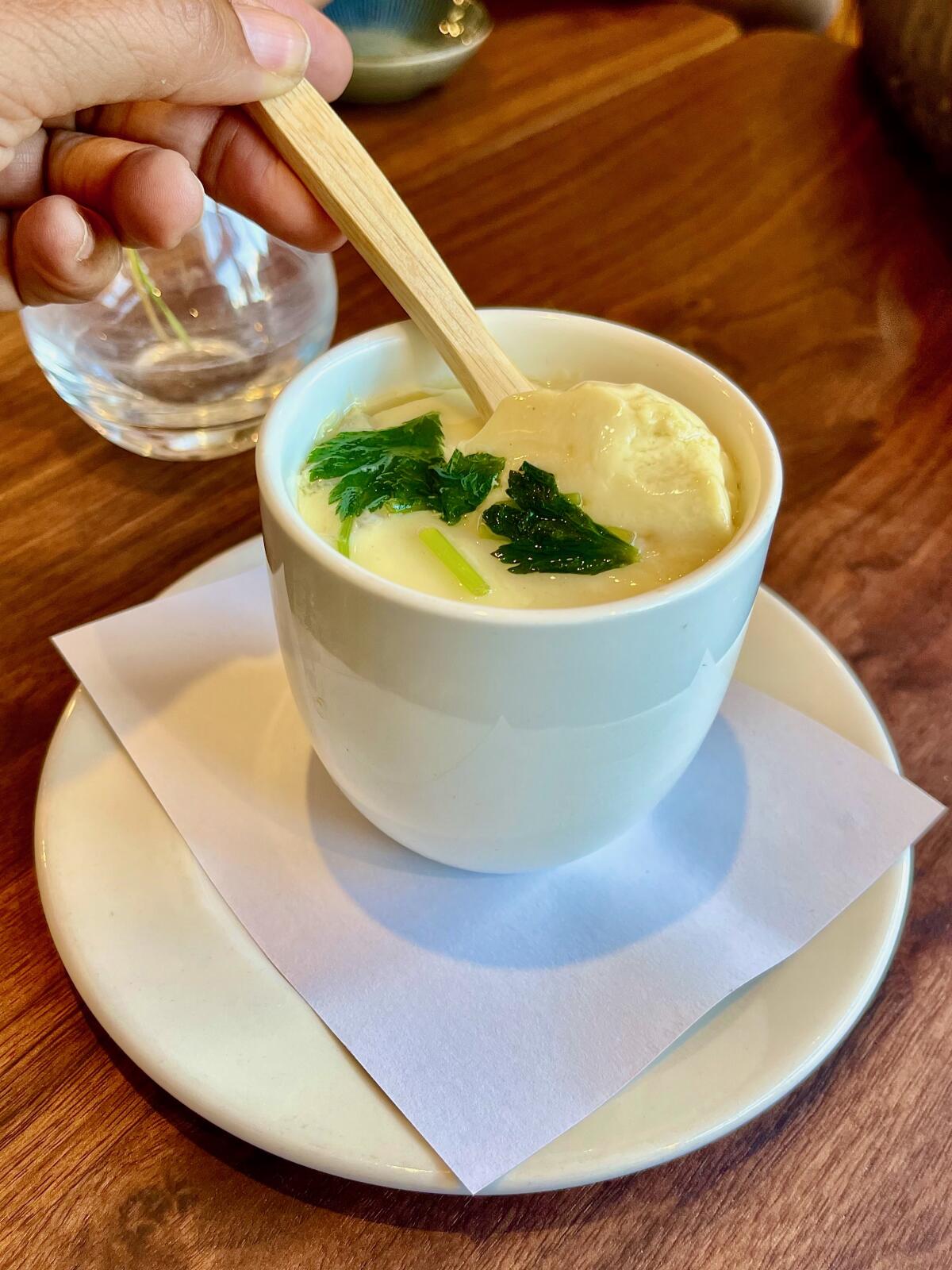
Chawanmushi, the Japanese egg custard served hot at Azay in Little Tokyo.
(Laurie Ochoa / Los Angeles Times)
On a recent Saturday morning, I ate one of my favorite meals in Los Angeles — one that I was starting to worry I’d never have again.
Azay in Little Tokyo, opened in 2019 by the late chef Akira Hirose — a pioneer in L.A.’s Franco-Japanese aesthetic going back to the 1980s — closed last year after a fire in its building caused water damage in the restaurant. Renovations were promised but as the months went on, I worried that Azay would suffer the fate of many other restaurants whose temporary closures became permanent.
Then came the good news that in mid-December Azay would reopen for breakfast and lunch (for now, at least, the dinners that the talented chef Chris Ono had begun are not happening).
I made a reservation almost immediately — much easier to do on the revamped website — since there is almost always a wait for weekend walk-ins.
We were greeted with hot barley tea and quickly settled into a comforting welcome-back cup of chawanmushi, the silky egg custard served hot with hidden bits of shrimp, enoki mushrooms and salmon roe.
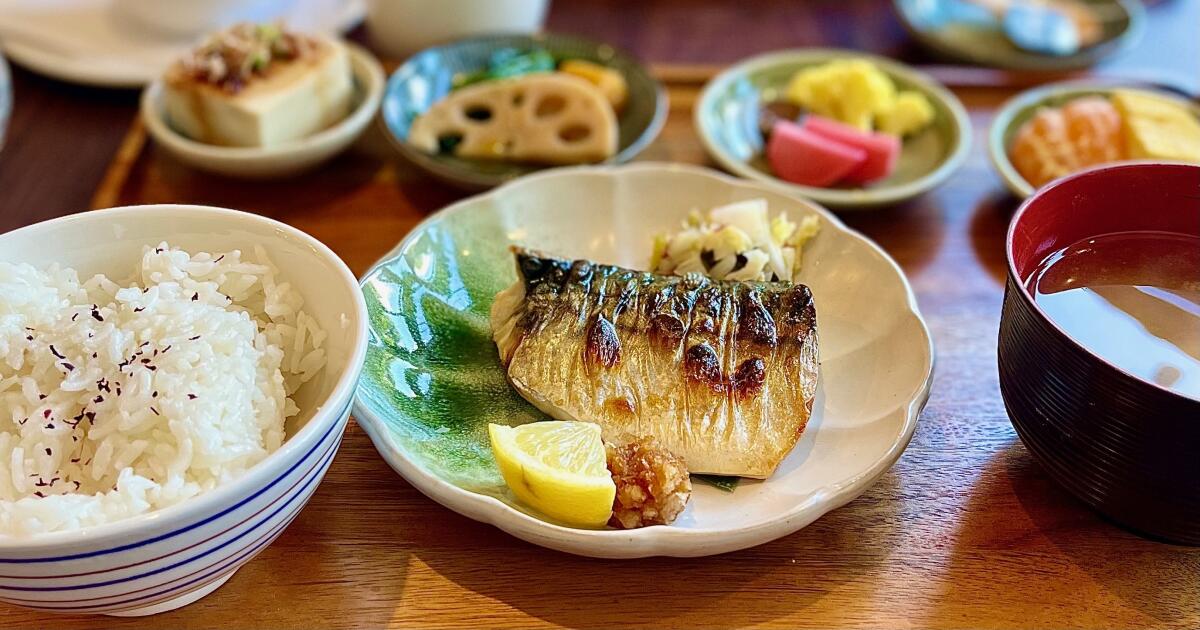
I ordered the Japanese breakfast with saba, one of the best plates of food to be found in Los Angeles. The saba, or mackerel, is broiled until its skin is crisply bubbled and then served with a bowl of fragrant, beautifully made rice, brightly colored Japanese pickles, a block of tender tofu drizzled with soy sauce and scallions, warm miso soup, seasonal fruit (half a Satsuma mandarin on this day) and the bite I always save for last — an expertly rolled omelet or dashimaki tamago.
After chatting with Philip Hirose, Akira’s son, and stopping next door at the new incarnation of his family’s Anzen Hardware, the historic Little Tokyo shop that closed in 2023 after longtime owner Nori Takatani retired (the store, relocated inside California Floral Company, is a good place to buy a Japanese vegetable slicer, much more affordable than a French mandoline), I left happy and optimistic about the new year ahead. As reporter Thomas Curwen wrote a while back in a deep dive on the neighborhood, many historic Japanese businesses in Little Tokyo are disappearing or at risk of closing, making the revival of Azay and Anzen Hardware especially important.
Even so, the reopenings come in the midst of a spate of distressing restaurant news.
Closures include L.A.’s oldest restaurant
Three weeks after restaurant critic Bill Addison and columnist Jenn Harris came out with their picks celebrating the 101 best restaurants in Los Angeles, reporter Stephanie Breijo put together a very different list. This one marked the sobering tally of 101 restaurants that closed in 2025.
It was a follow-up to Breijo’s earlier report on the tough economic climate restaurateurs are facing for a number of reasons, including the effects of the Palisades and Altadena fires and rising labor and food costs.
“Of the L.A. restaurateurs surveyed” by the California Restaurant Assn., wrote Breijo, “84.8% said traffic is down compared with last year.”
With the new year, we got word of two more significant closures. Horses, which inhabited a historic Hollywood space and survived the notoriety of an acrimonious divorce between its two founding chefs, closed abruptly in late December. Breijo reported that the restaurant was facing significant tax liens and and building maintenance issues.
And last week, the Original Saugus Cafe, known as the longest-operating restaurant in Los Angeles County, served what many thought would be the historic spot’s final meal on Jan. 4. An announcement had gone out that the 139-year-old cafe, run since 1998 by Alfredo Mercado and his family, was shutting down for good. Then on Monday, as reported in a story by Jenn Harris and Juliana Yamada, a new announcement appeared on a window of the adjacent Saugus Superette saying that the cafe would reopen under new management. The closure, said the sign, was only a “brief transition period.”
Now comes word that the transition might include a legal battle with the building’s landlords. As first reported by Perry Smith of the Santa Clarita Valley Signal, a law firm representing the Mercado family sent a cease-and-desist letter to North Valley Construction Co., run by the family of Hank Arklin Sr., who was said to be on good terms with the Mercados until his Aug. 1 death. The Mercados say they own the Original Saugus Cafe name and want to continue operating the restaurant or be compensated for use of the business’s name. A representative for Arklin family say the Mercados have nothing to sell. With the restaurant’s future uncertain, for now the Original Saugus Cafe has joined the tally of notable restaurant closures.
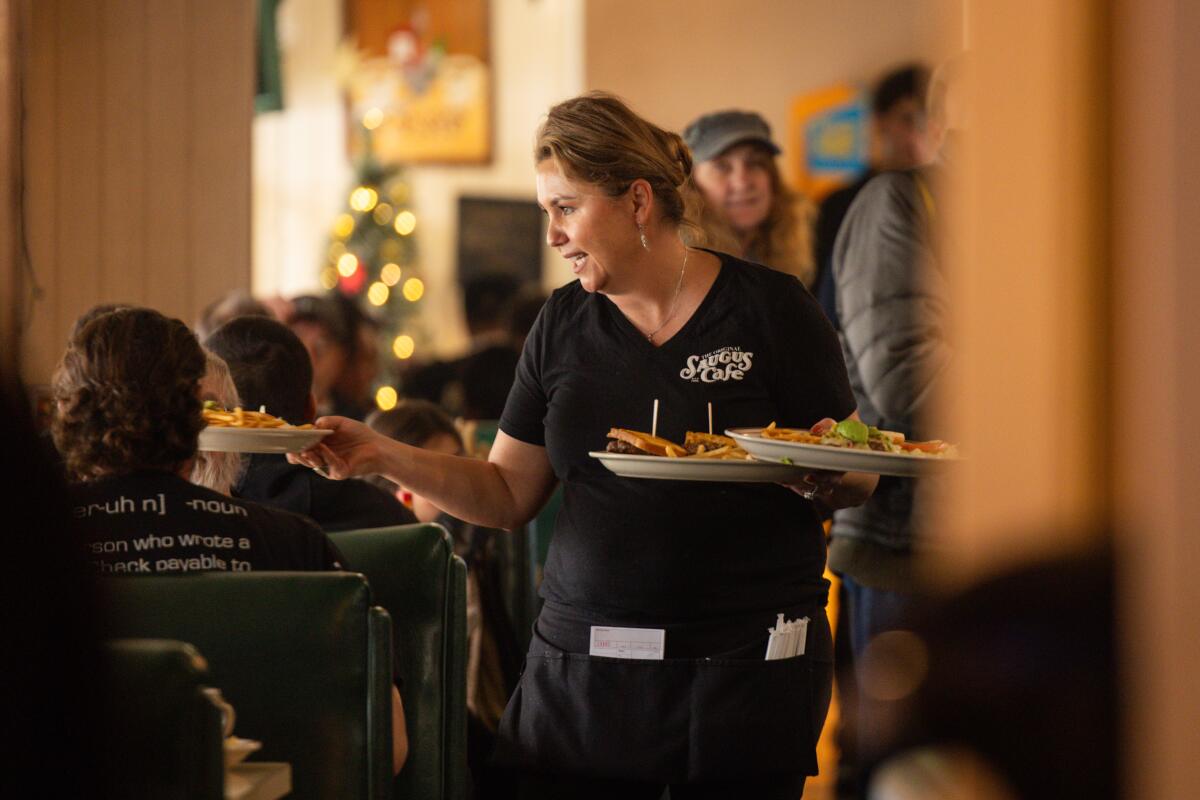
Michaela Vuong serves food at the Original Saugus Cafe during what many thought would be the restaurant’s last day of business on Jan. 4. Vuong has worked at the cafe for about 25 years.
(Juliana Yamada / Los Angeles Times)
New vitality in tough times
Yet even with the losses documented by Breijo of so many places I loved — among them, two L.A. Times Gold Award winners, Cassia (honored in 2019) and Post & Beam (honored in 2020), plus Here’s Looking at You, Yangban, Wexler’s Deli, Akasha, Papa Cristo’s, A.O.C. Brentwood, Gucci Osteria, where Mattia Agazzi made a spectacular version of Massimo Bottura‘s tortellini, and Sang Yoon’s too-short-lived Helms Bakery — I continue to believe in the resilience and inventiveness of Los Angeles’ chefs and restaurateurs.
Just last week Addison reviewed two restaurants, Betsy and Miya, which, as he wrote, are “both owned by Altadena residents whose houses were consumed in flames, and whose businesses were spared enough damage that they could reopen last year.”
David Tewasart and Clarissa Chin‘s Miya is one of the touchstone places I was watching for signs of recovery in Altadena — I’ve again become a regular there for both takeout and an easy dinner out. And Tyler Wells’ Betsy is a welcome romantic date-night spot so needed in a neighborhood still in recovery mode.
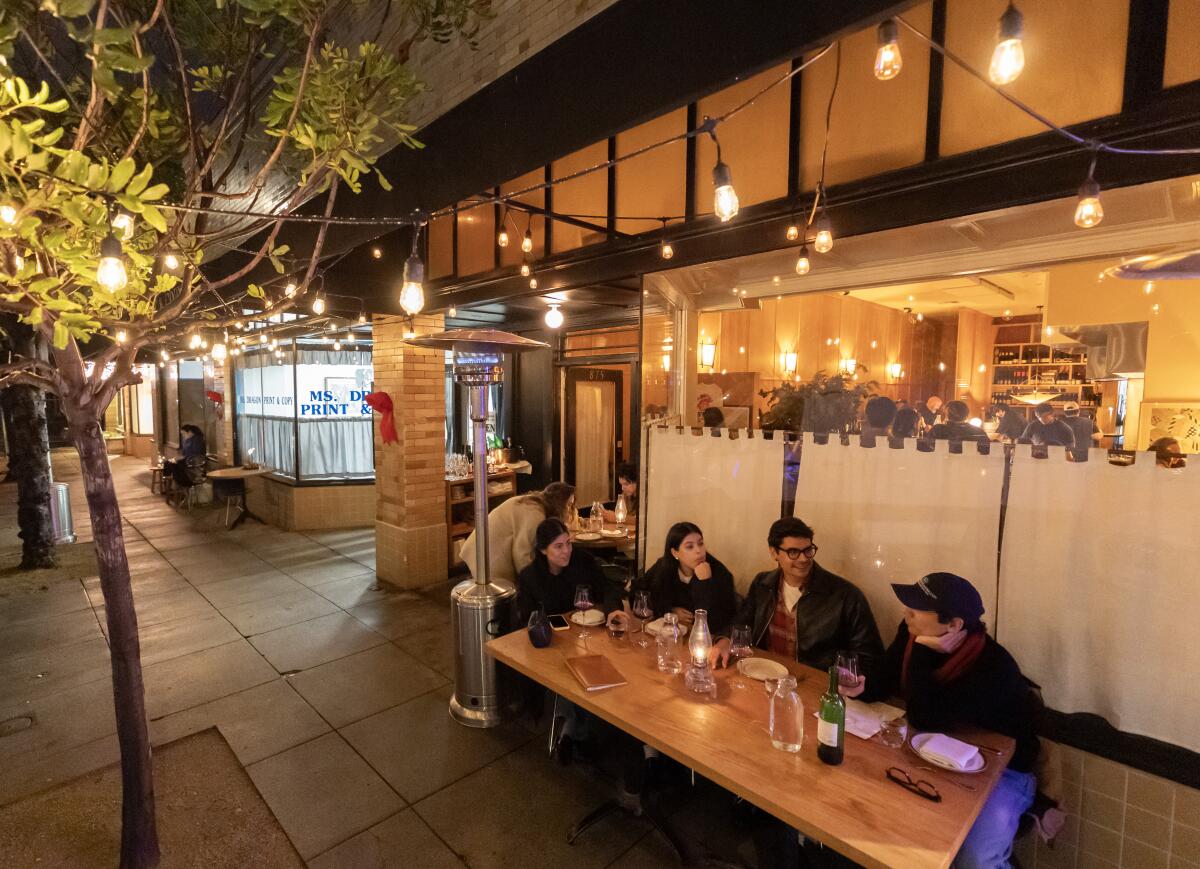
Tyler Wells’ reopened and renamed Altadena restaurant Betsy is bringing new life to a block surrounded by burned-out businesses a year after the Eaton fire.
(Myung J. Chun / Los Angeles Times)
“They are entirely different places,” Addison wrote. “Betsy falls into the category of ambitious American bistro, powered by a central open hearth. Just across the street, Miya is a quirky, two-room Thai charmer with a relatively concise menu of curries, noodles, soups, salads and vegetables. Geography and tragedy unite them, as does the purr of comfort inherent in their cooking.”
The week before, Addison reviewed an even more ambitious spot, the 10-seat Restaurant Ki, where chef Ki Kim presents a modern Korean tasting menu. Addison called it the best L.A. restaurant to open in 2025.
And of a noodle dish amped with concentrated Dungeness crab stock at Ki, Addison said it was “the finest example of how, beyond thrilling skill and narrative clarity, Kim carries off the rarest of feats in fine dining: He conveys heart.”
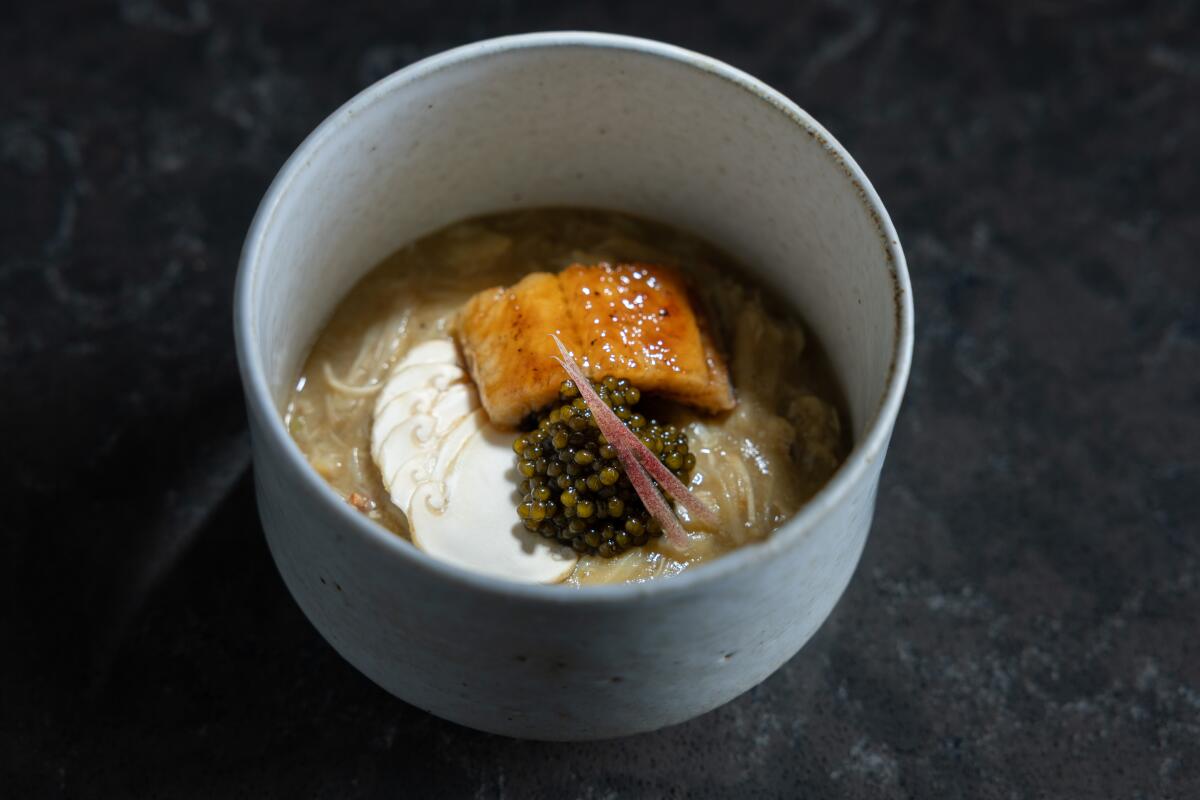
At Restaurant Ki in downtown Los Angeles, Keizo’s noodles with pine mushroom and Dungeness crab and caviar.
(Myung J. Chun / Los Angeles Times)
Then, in her most recent column, Harris wrote of the rebirth of chef Josef Centeno‘s pandemic-closed restaurant Bäco Mercat in his downtown Bar Amá space under the new name Le Dräq by Bar Amá and Bäco Mercat.
“It means shapeshifter,” Centeno told Harris, “or like Dracula.”
Shapeshifting is certainly a good way to describe Los Angeles’ dining scene. The openings and rebirths of Azay, Miya, Betsy, Restaurant Ki and Le Dräq, five very different but essential places, show the strength of L.A. restaurants even in tough times.
The big heart behind Little Flower 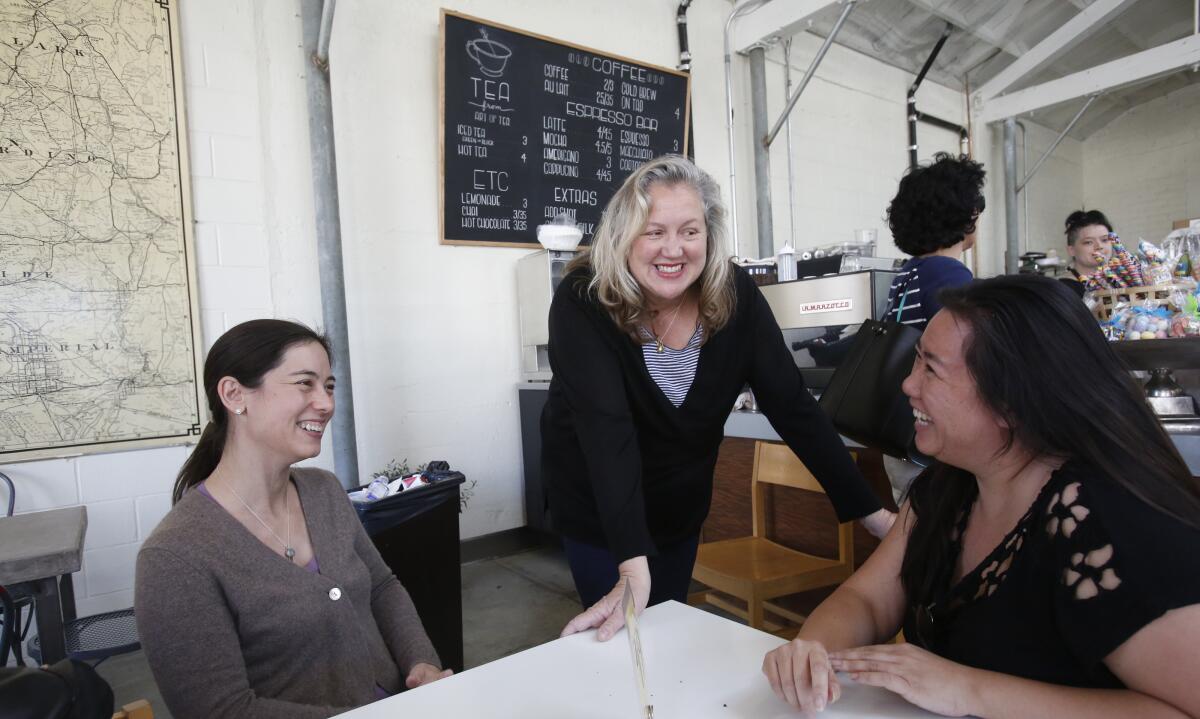
Christine Moore visits with customers at her Pasadena restaurant Lincoln in 2015. Moore, who died Jan. 4, ran Lincoln until 2020 and was still running Little Flower cafe in Pasadena.
(Anne Cusack / Los Angeles Times)
The last time I saw Christine Moore at her Little Flower Cafe, the chef, candy maker and entrepreneur behind two essential Pasadena gathering spots gave me a big hug, brought me a scone and wanted to know about everything that was happening in my life. As novelist Michelle Huneven wrote in her lovely obituary for Moore, who died suddenly on Jan. 4, this was not an unusual occurrence.
“Her hugs were famous,” Huneven wrote. Moore’s friend and the publisher of two Little Flower cookbooks, Colleen Dunn Bates, told Huneven, “She gives you a hug and in short order, you are talking on a really deep topic. … She cared so much. Everybody was friends with her.”
Her deep passion, openness and generous spirit are just some of the reasons Little Flower Cafe and the north Pasadena restaurant Lincoln, which she ran for six years until the pandemic, became essential gathering places. And, boy did she make a mean scone.
For a fuller picture about why she’ll be missed, read Huneven’s obit and listen to the tribute KCRW’s “Good Food” host Evan Kleiman put together with some of L.A.’s best chefs talking about Moore’s impact.
You’re reading Tasting Notes
Our L.A. Times restaurant experts share insights and off-the-cuff takes on where they’re eating right now.
By continuing, you agree to our Terms of Service and our Privacy Policy.
Also …