
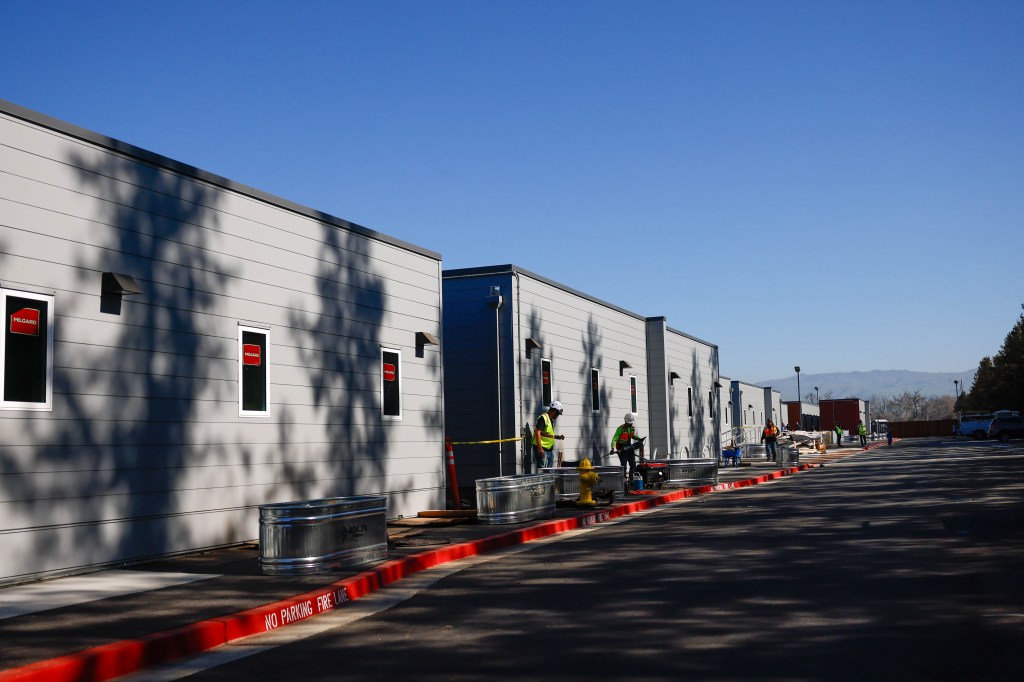
Marking a critical milestone for the city, San Jose will open its latest emergency interim housing site at the Santa Clara Valley Transportation Authority’s Cerone Yard later this month, as it attempts to end the “era of encampments.”
The Cerone interim housing site, which construction crews broke ground on in May, will provide 162 units and serve up to 200 residents at one time. It is also the last project in the city’s interim housing pipeline, which has added more than 1,200 new beds to San Jose’s shelter system since February last year, bringing its overall total to more than 2,000.
But with costs prohibiting the city from expanding its system even further, city officials say the only way they are going to keep making progress is by focusing on making it more efficient.
 San Jose Mayor Matt Mahan speaks during a press conference at last emergency interim housing site at the VTA’s Cerone Yard in San Jose, Calif., on Thursday, Feb. 5, 2026. (Shae Hammond/Bay Area News Group)
San Jose Mayor Matt Mahan expects overall costs to drop by about 20% by rebidding contracts and more unhoused residents to find permanent solutions as the city works to connect them with services.
“We will continue to advocate to other levels of government for what we need: an expansion of mental health beds, a restoration of (Homeless Housing, Assistance, and Prevention) dollars, a pathway to treatment for the many people struggling with addiction (and) a fair share approach that holds every city and every county accountable for doing their part to end this crisis of homelessness,” Mahan said.
Over the past few years, San Jose has deviated from the Housing First model by investing more money into interim housing options as an alternative to living on the streets. Along with tiny home communities, the city also opened two safe parking sites, a safe sleeping area, and converted several hotels and motels into temporary housing.
Although the overall homeless population has increased to around 6,500 residents, recent investments in shelter expansion helped reduce the number of unsheltered residents, Mahan said.
The Cerone project, located at 3950 Zanker Road, was made possible, in part, by nearly $13 million in state funding.
HomeFirst will operate the Cerone site.
“Our goal is to ensure that participants’ time here is purposeful and as brief as possible,” HomeFirst CEO Rene Ramirez said. “HomeFirst staff will not only keep people safe, but they will also provide on-site services like case management, housing navigation, employment search and connections to health services. Everyone here will be supported with housing plans because, as critical as shelter is, this is not the final destination.”
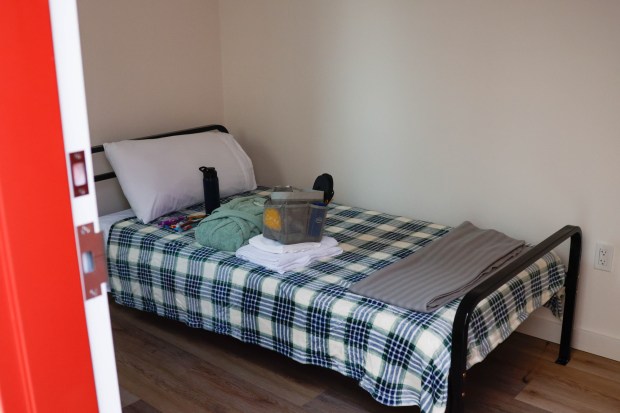 San Jose’s last emergency interim housing site at the VTA’s Cerone Yard in San Jose, Calif., on Thursday, Feb. 5, 2026. (Shae Hammond/Bay Area News Group)
City Manager Jennifer Maguire said it is also the second emergency interim housing site on VTA land, following the 40-unit site on Mabury Road.
While the VTA is better known as a transit operator, the agency envisions leasing some of its land to developers for housing near its stations.
“Although this is a temporary place for these residents, it corresponds with the program VTA has been driving for several years now to create opportunities for affordable and rapid rehousing throughout the county,” VTA General Manager Carolyn Gonot said.
Two weeks ago, the agency celebrated the opening of the Tamien Station apartments, which were built on underutilized land. Of the 135 apartments, half were set aside for rapid rehousing. Gonot said the VTA has 10 other projects in the pipeline as it looks to add affordable housing near transit. Combined, those projects will provide more than 2,000 housing units once completed.
With the city not able to add any more beds, Mahan said city leaders have to focus on making the shelter system more efficient.
Along with targeting a 95% utilization rate, he added that the city is reviewing its contracts for food, case and property management and security to slash costs without reducing the quality of services.
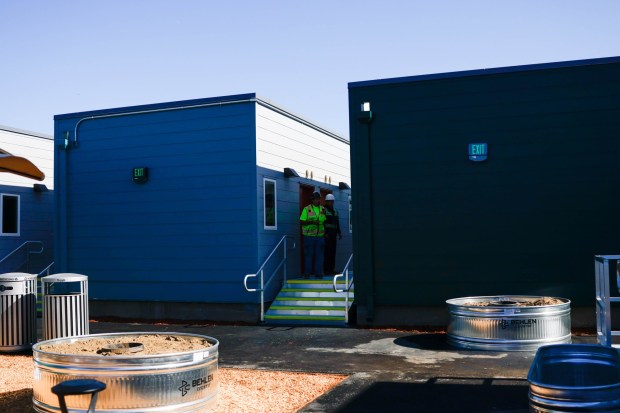 Construction workers look inside the rooms at San Jose’s last emergency interim housing site at the VTA’s Cerone Yard in San Jose, Calif., on Thursday, Feb. 5, 2026. (Shae Hammond/Bay Area News Group)
The largest and most complicated task will be moving interim housing residents into more permanent solutions and making them more self-sufficient by connecting them with job training, drug treatment and reestablishing a social safety net.
“I’m so glad that we are resetting our relationship with Santa Clara County — the provider of so many of these services — to better integrate our service delivery model so that in the years ahead, the city and county can work together to wrap each individual in this system around with the best, highest quality, personalized services they need to graduate out,” Mahan said.
Although he said there was a lot more work to do to end homelessness, Ramirez lauded the city and its partners for stepping up their efforts.
“This is what progress looks like: partners aligned, solutions delivered and the city choosing to take action,” Ramirez said.