
During Super Bowl week, downtown San Jose scored a touchdown.
With all the pageantry, glitz and glamour nearby as Santa Clara’s Levi Stadium hosted the big game, downtown San Jose welcomed nearly half a million visitors as folks packed bars and restaurants – a marked improvement from 10 years ago when Silicon Valley also hosted the Super Bowl.
The success, which the city hopes to replicate this year with the NCAA Men’s Basketball Tournament coming to the SAP Center and Levi’s Stadium hosting several FIFA World Cup matches, provided a brief respite from the challenges its downtown faces as office vacancies remain high and development has slowed.
It also offered a glimpse of the city’s potential as San Jose’s downtown and many others around the country reckon with the need for transformation and the establishment of a new normal as a live, work and play neighborhood.
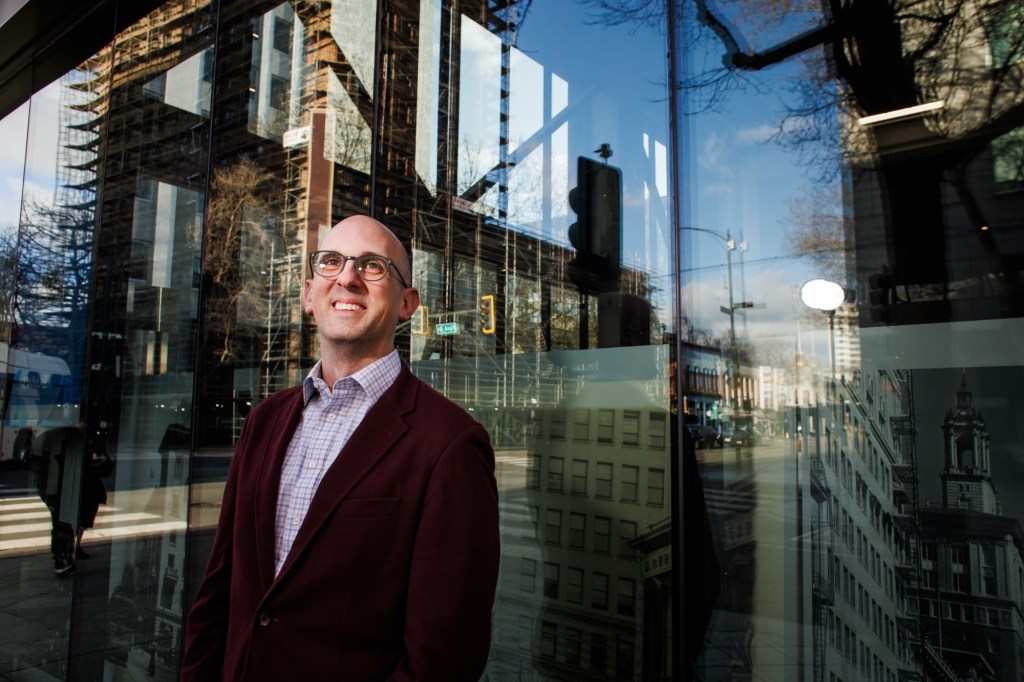
Late last year, the San Jose Downtown Association — one of the key stakeholders — named Brian Kurtz as its new CEO to help influence the area’s development.
He sat down for an interview with the Bay Area News Group to discuss his role and what he sees ahead.
Q: You have a long history of work in economic development and specifically working in downtowns in large cities such as Buffalo, Pittsburgh and Tulsa. Where did your interest in downtowns come from?
A: My passion for downtowns really came from my grandmother and my father. My grandma would take me into downtown Pittsburgh – sometimes on the bus, sometimes in her car – whether it was to see the holiday window displays in Kaufmann’s department store or eat at one of the many restaurants that were in there. That Kaufmann’s department store was where my grandparents met and got married, and she was very fond of it, and she just loved exploring downtown Pittsburgh with me. As I got older, I would even take the bus downtown to meet my dad for lunch when he was working there, and walk through the public spaces. Probably a decade or more later, I found myself working for the organization that took care of that public space and was a steward for economic development initiatives in the heart of downtown. I think these public spaces and places in downtown urban environments are literally the intersections at which people cross each other and they interact. It’s a natural collision point in all the best of ways. There’s something incredibly special about it.
Q: What is it that attracted you to this position?
A: When I came here for my interview, it was actually the first time that I’ve been out to San Jose or Northern California. There was something, as I walked around and engaged with people throughout the interview process, that reminded me of Tulsa and Pittsburgh. It came down to the people. There’s something just very palpable about the energy here, the excitement, the passion that folks have for this community. I see the basics of what we have in downtown – light rail, beautiful tree canopies, and a really dynamic ground-floor experience that’s heavily populated with small businesses – and we have a built-in residential population and an office population with Fortune 500 companies. While all of these things are great foundational points, there’s also so much opportunity for what is to come and what could be created if we all unify and work together.
Q: It’s been around three months since the announcement of your appointment. How well has San Jose met your expectations?
A: San Jose has exceeded my expectations and that comes down to the people and how welcoming this community has been towards my family and me. We’re really thrilled to be joining such an incredible place. My first six weeks have been all about listening, learning and observing. I’ve been taking walks throughout downtown with stakeholders, small businesses, residents, property owners across the gamut, so that I can see downtown through their eyes and get to learn about the history of of what used to be in a building or the plans for what is to come, taking all of these lessons learned and insights that have been heard and absorbed. Those will help formulate our path and plan forward for the San Jose Downtown Association.
Q: What do you see as both the greatest challenges and opportunities given the current state of downtown?
A: It’s no secret that downtown lost its daytime population and office workers. We have more vacant square footage of office space than we did before the pandemic. It’s also no secret that we need to increase population density in downtown. Trying to get towards that 20,000 population number for our community is what we need to not only grow, but, frankly, sustain the small businesses and increase the number of businesses that are fronting our streets and our sidewalk presence. It’s no easy task, especially when you’re looking at the most expensive housing market in the country just to get housing built … It’s been important and rewarding to get to work with the city so early on as they’re seeking to move the needle on incentive programs and policy priorities that help see more development take place in downtown across the spectrum of affordability.
Q: From a legislative and policy perspective, what are some other ways you think that local officials can help facilitate a healthier and stronger downtown?
A: If we want more development to happen, whether it’s parks and public spaces, mid-rise or high-rise residential towers or additional office space, we need to find ways to lower the cost of development. It’s going to be critical for us to grow our daytime and evening populations in downtown. I think it’s also important that we create environments that are conducive to so many of the small business owners in downtown. We want to make sure that they are sustaining and growing. I can only imagine that as I continue working with our stakeholders over the coming weeks and months, additional priorities are going to come up. The other one that comes to mind right now is that we’re entering a time when the city’s moving forward with its budget process and priorities, and looking at a pretty sizable budget gap for the upcoming fiscal year. We’re going to continue advocating that it’s not just important but necessary for the city to double down on its investments in downtown. This should be a center of economic activity and growth and a generator of tax revenue that will go back into the city’s bottom line. Intentional investments in economic development downtown can create very large yields for the entire city overall.
Q: Outside of the major emphasis put on the 2026 sporting events, what are your goals for this year?
A: My goals for this year are really part of what I’ve been doing over the first few weeks – continuing to listen and learn more about our downtown and the broader community – and then helping our community align around a North Star: where do we want downtown to be in five years and 10 years and beyond? Then, what do we need to do not only in the coming months but also over the next few years to get to that point? I’m very excited to work with the community to help define what that future is for downtown in our organization.
Profile
Name: Brian Kurtz
Age: 40
Education: BA in Political Science from Gannon University; Master’s of Urban Planning from the University at Buffalo
5 things to know
1. Born and raised in Pittsburgh, PA (I’m a proud yinzer)
2. Married since 2011 and have three awesome daughters
3. Big hockey fan and have already developed a love for the Sharks – my record is 1-1 for Sharks games attended since moving here
4. Nothing gives me energy like attending a concert and live music – I’m scoping a festival or two for later this year
5. Cooking is a relaxation tool for me. I see food and shared meals as a natural connector and like to plan major events, milestones, and frankly everyday life around good food