
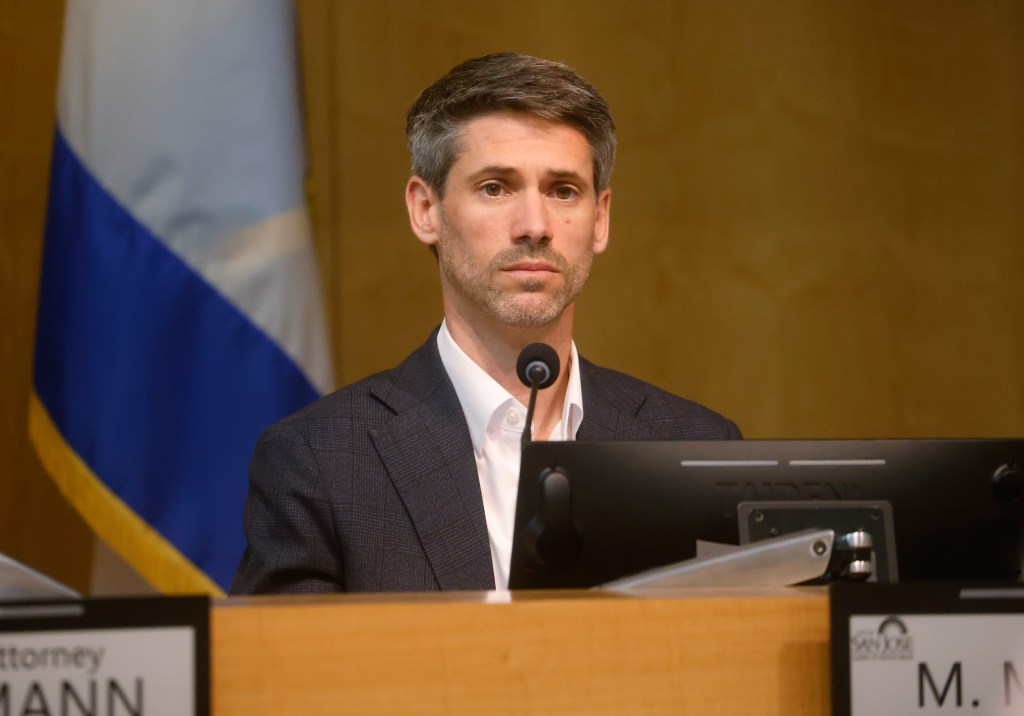
With San Jose facing its most significant financial shortfall in years, San Jose Mayor Matt Mahan is directing city leaders to protect its core services as they balance next year’s budget.
As part of his budget message released Tuesday, Mahan acknowledged the city has limited options for closing the projected $56 million deficit as a significant chunk of the budget is tied to costs, such as pension liabilities, that cannot be cut.
Mahan stressed the need to focus on a few key areas — housing, homelessness, economic growth, public safety and clean neighborhoods — while calling on city departments to evaluate their spending and find ways to make their dollars count more.
“Tightening our belts does not mean abandoning our progress,” Mahan said in a statement. “Even as revenue slows, we can continue making progress on the issues residents care about most by staying relentlessly focused on the basics and protecting the services people rely on every day.”
The March budget message — if approved by the City Council next week — sets the priority framework before the city releases its operating and capital budgets later in the spring.
San Jose has known for months that it faces one of its most difficult budget challenges in years, driven by continued revenue stagnation and rising costs.
In December, San Jose implemented a limited hiring freeze and reduced some services for the remainder of this fiscal year, as a mid-year report showed that the city projected general fund revenues to be $15 million to $20 million less than expected.
The latest budget forecast for next year projected city revenue sources would decrease by $1.8 million as costs rise by more than $54 million. While the current forecasting models project a cumulative shortfall of $69.2 million over the next five years, the estimated deficits could decrease sharply over the next two years before the city sees a budget surplus in 2029-2030.
While San Jose has finished expanding its homeless shelter portfolio for now with the completion of the 200-bed interim housing site at the Santa Clara County Valley Transportation Authority’s Cerone Yard, Mahan said the city must continue to preserve its progress in reducing unsheltered homelessness.
He highlighted the need to integrate the vast majority of the city’s emergency interim housing with Santa Clara County’s Coordinated Entry System, which connects unhoused residents to housing, shelter and services. He also touted the city’s commitment to investing in homelessness prevention and carrying over funding for Homeward Bound, which attempts to connect unhoused residents with family members. Since its inception in February 2025, the program has facilitated travel for 45 people to other locations — from other cities in California to New York — at a cost of about $33,750.
The city will also continue its crackdown on oversized and lived-in vehicles, which has resulted in a 45% reduction over the past year even though there are still complaints about vehicles parked for extended periods. The city is searching for additional solutions, including piloting a tow-zone program linked to street sweeping.
Acknowledging that a portion of RV dwellers do not want to stay in their vehicles, San Jose is considering additional extended parking options, including potentially finding rentable space at mobile home parks.
San Jose’s budget next year could also include more efforts to spur homeownership and housing production, as the Bay Area still ranks among the most difficult places to build due to onerous regulations and high costs.
Mahan’s housing plans include greater fee transparency and the reduction or deferral of development fees, which have been instrumental in making projects infeasible.
With the local economy’s struggles contributing to San Jose’s budget woes, the city has also emphasized expanding its tax base by making it more attractive to investors.
Mahan has identified advanced manufacturing as a key sector for growth and retention and has called for streamlining approval for such businesses in industrial zones.
The city is already seeing significant investments in data centers, due to its abundant power supply and its agreement with PG&E that promises better speed and reliability. Once such projects are operational, they could generate millions of dollars in annual general fund revenue.
The successes of Super Bowl week in driving hospitality and small-business gains also have city officials eyeing ways to grow San Jose’s reputation as a sports and entertainment destination.
Finally, Mahan noted the gains the city has made in cleaning up blight in its neighborhoods, while acknowledging it remains a top concern among residents.
Last year, the city removed 24.4 million pounds of trash, including 14.3 million pounds associated with illegal dumping. However, officials acknowledged that the response to complaints is too slow – taking an average of 65 days to warn scofflaws – and wants to reduce the timeline to 10 days. It also plans to take a more proactive enforcement approach so that repeat violators face accountability.
“In our neighborhood, we’ve seen progress — fewer encampments and better response when issues come up — but we also know the work isn’t finished,” said Lone Bluff Neighborhood Association President Orlana Mejia. “It’s important the city keeps that momentum going even in a challenging budget year. Staying focused on core services is what matters most to residents.”