
In the “about” section of Bolita Masa’s website, there is a hand-drawn image of a little boy and corn. Emmanuel Galvan, the chef and founder of Bolita Masa, says this little boy is an image of his younger self, grappling with the idea of corn.
“I grew up in Napa. My parents are both Mexican. I wanted nothing but to be white,” Galvan said. “I was actively trying to assimilate and really did not see value in my culture. So part of that image is a bit of forgiveness to that boy who was trying really hard to put aside his ancestry in a way.”
2701 Eighth St. #118, Berkeley; www.cafebolita.com
Ace Seafood,, near 51st.
Soft Opening Hours: Wednesday to Saturday, 9 a.m. to 1:30 p.m.
Grand Opening: Wednesday, March 25
Now, Galvan has embraced his ancestry through food, in particular, through masa.
Masa is a dough made from nixtamalized ground corn, commonly thought of as the base ingredient for tortillas, but it has many uses beyond that. Galvan launched Bolita Masa in 2020 with the intention of spreading understanding of what masa is and can be. Galvan describes masa as a beautiful ingredient that is common in Mexico, but not well-known in the U.S.
“A lot of the masa that you get is made from commodity corn. It’s fairly cheap,” Galvan said. “So the quality of the product isn’t very high, and that’s because of the economics of this ingredient that’s been historically devalued. So I wanted to hopefully share my enthusiasm around masa with as many people as possible.”
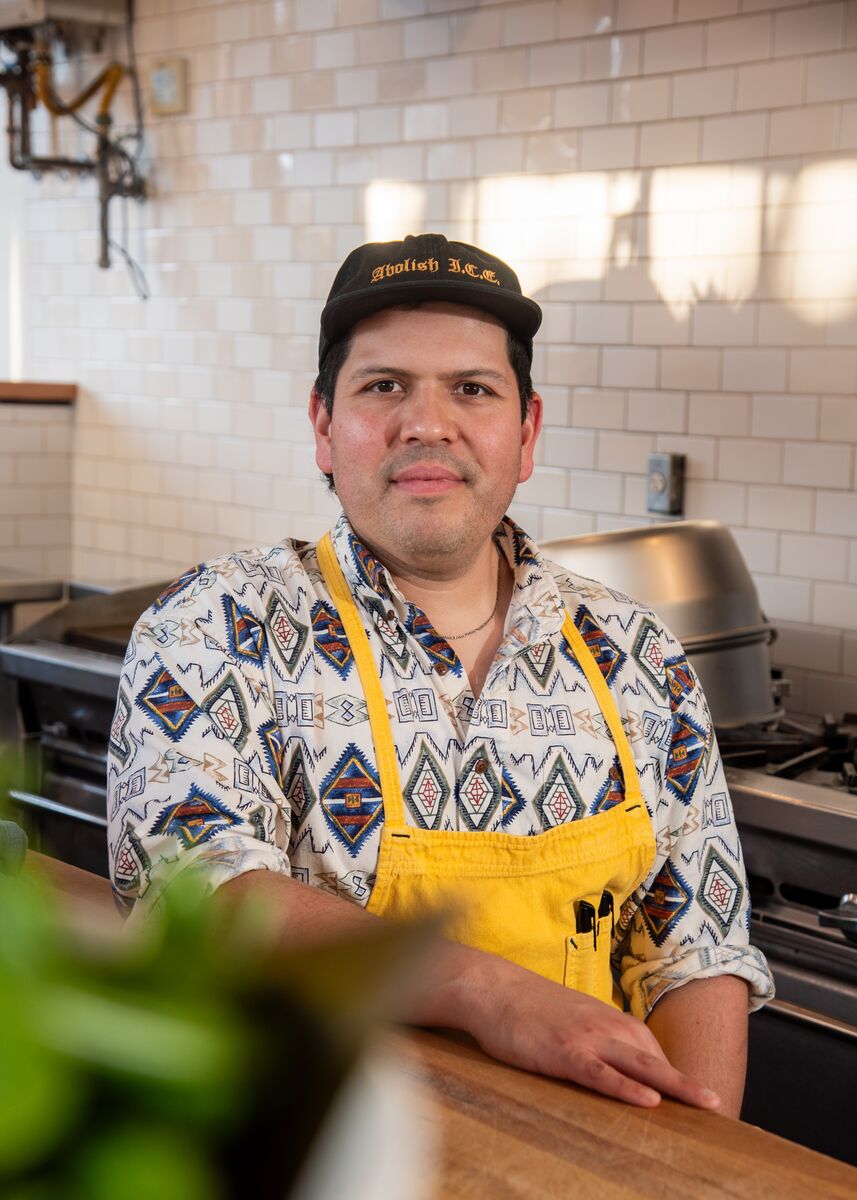 Emmanuel Galvan first launched Bolita Masa in 2020. Credit: Ximena Natera for East Bay Nosh
Galvan moved his business into the Berkeley Kitchens in 2023. He was in need of a larger space that would allow him to increase the size of the grinder. The move to the Berkeley Kitchens made Galvan neighbors with Standard Fare, and as a result, Galvan met Kelsie Kerr, the chef and owner of Standard Fare, who quickly became a huge proponent of Bolita Masa. This working relationship and friendship led to Kerr agreeing to Bolita Masa taking over the Standard Fare space when she retired.
This agreement was finalized in November 2025, and Bolita softly opened in the final days of February with just to-go items that can be eaten in the parklet space outside. The grand opening is planned for March 25, and Galvan is kicking things off with vegetable-forward tamales such as squash and bean tamales, baked goods, and quesadillas.
From play to professional
This move into the Standard Fare space is the next step in Galvan’s journey since he first started “playing around with masa” in 2017. It started as just a small-scale hobby, making masa for his friends and neighbors while he worked his day job at a large restaurant group as human resources training and operations manager.
When the pandemic started, Galvan realized that he was putting his labor into other people’s projects and not feeling very satisfied, so he quit. He decided to use his newfound free time to commit to the masa business, launching Bolita Masa in October 2020. He started by making masa with his small grinder at home and then selling it over Instagram with a pay-what-you-can model and hand-delivering it around the Bay. It did not take long for him to recognize the system was costing more money than he was making, so he started exploring ways to formalize. He found kitchen space in Oakland and started selling at farmers’ markets, pop-ups, and catering.
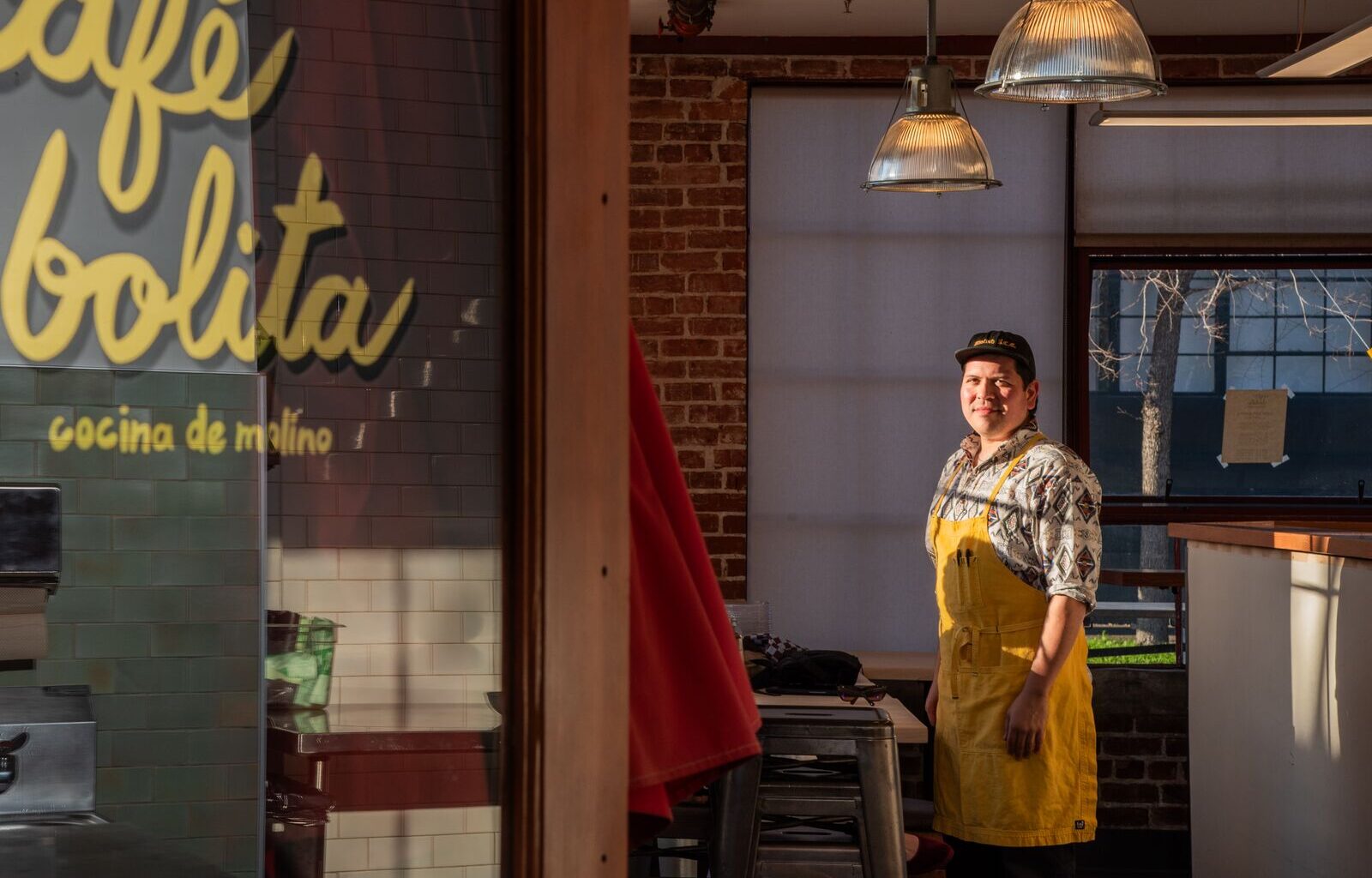
The opening of Café Bolita in the former Standard Fare space will be Galvan’s first brick-and-mortar location.
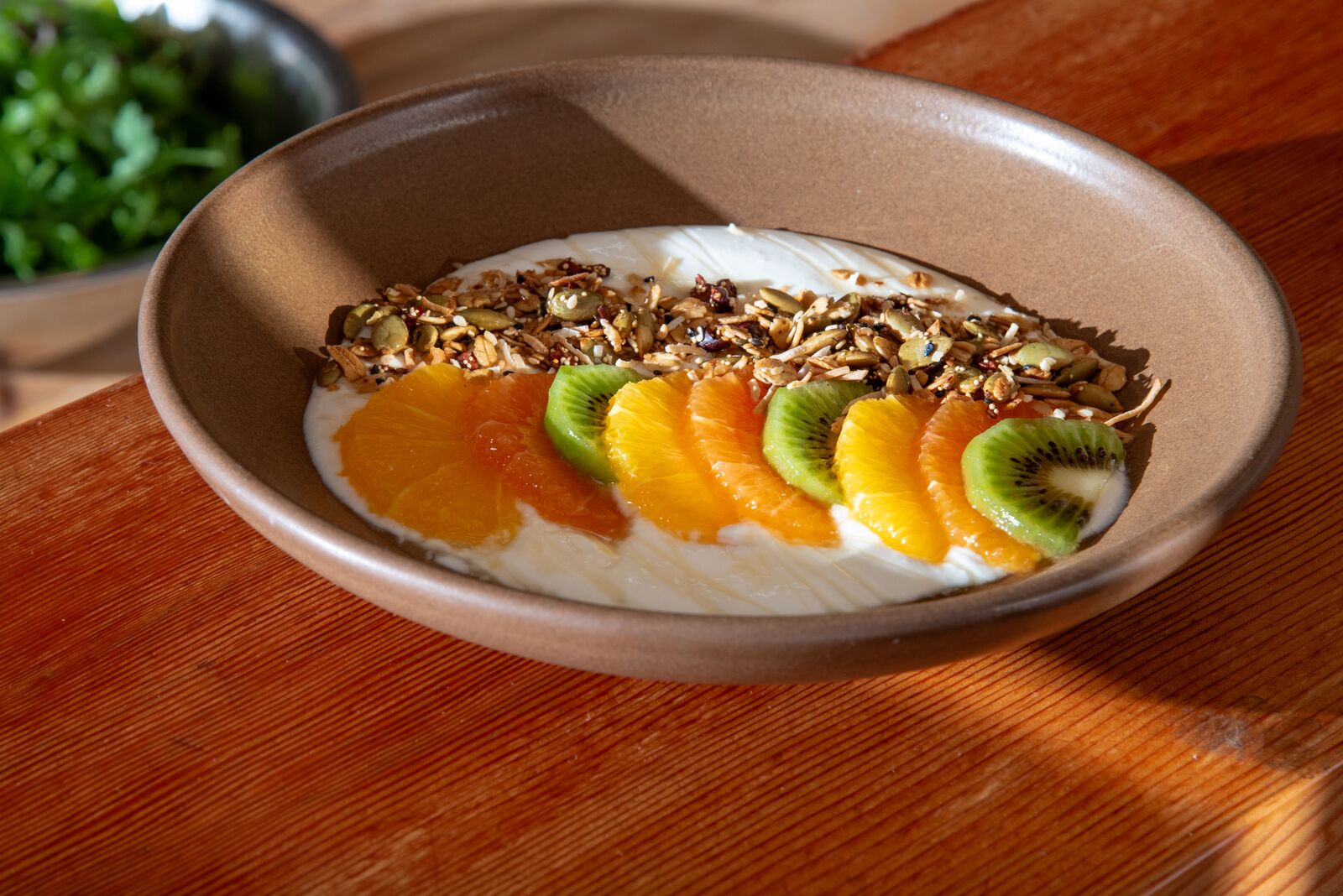
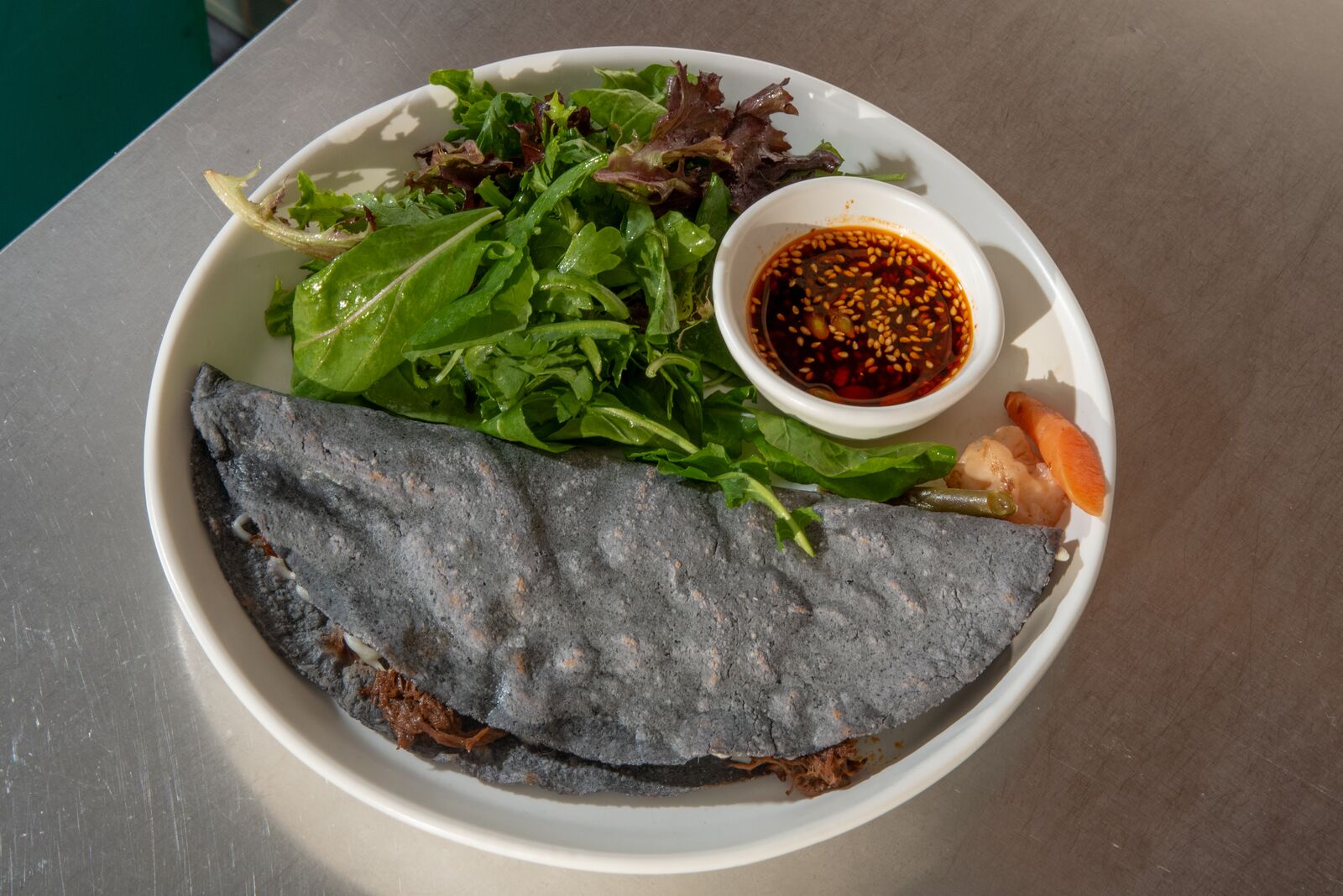 (Top) House yogurt with fruit and oat-cocoa granola and a quesadilla de barbacoa are two of the Café Bolita menu items. Credit: Ximena Natera for East Bay Nosh
As part of taking over the space, Galvan wants to remain true to the ethos of what Standard Fare was while still making it his own. Galvan hopes to hire some of the former staff from Standard Fare, but acknowledged that he won’t be able to hire everyone since the cafe is not starting at the same scale. Bolita will also source from some of the same places as Standard Fare, such as Grand Coffee and certain area farms. One of the co-owners of Grand Coffee, Adrian Lopez, was one of Galvan’s first customers when he was doing the masa delivery service. The dining format will remain similar too, with counter service during the day with breakfast and lunch, and a more formal dinner at night. They might have some similar menu items, such as the frittata. They’ll have Mexican-inspired baked goods. Galvan said they’re going to keep the bones of the Standard Fare space but still make it their own.
“That’s kind of the hard thing sometimes with these transitions, you can end up looking so much like your predecessor that everyone’s comparing it to that,” Galvan said. “And we’re trying to walk that delicate line of like, yes, we are in the space of Standard Fare that was here for 12 years, but we’re Café Bolita, and we’re very distinct in ourselves.”
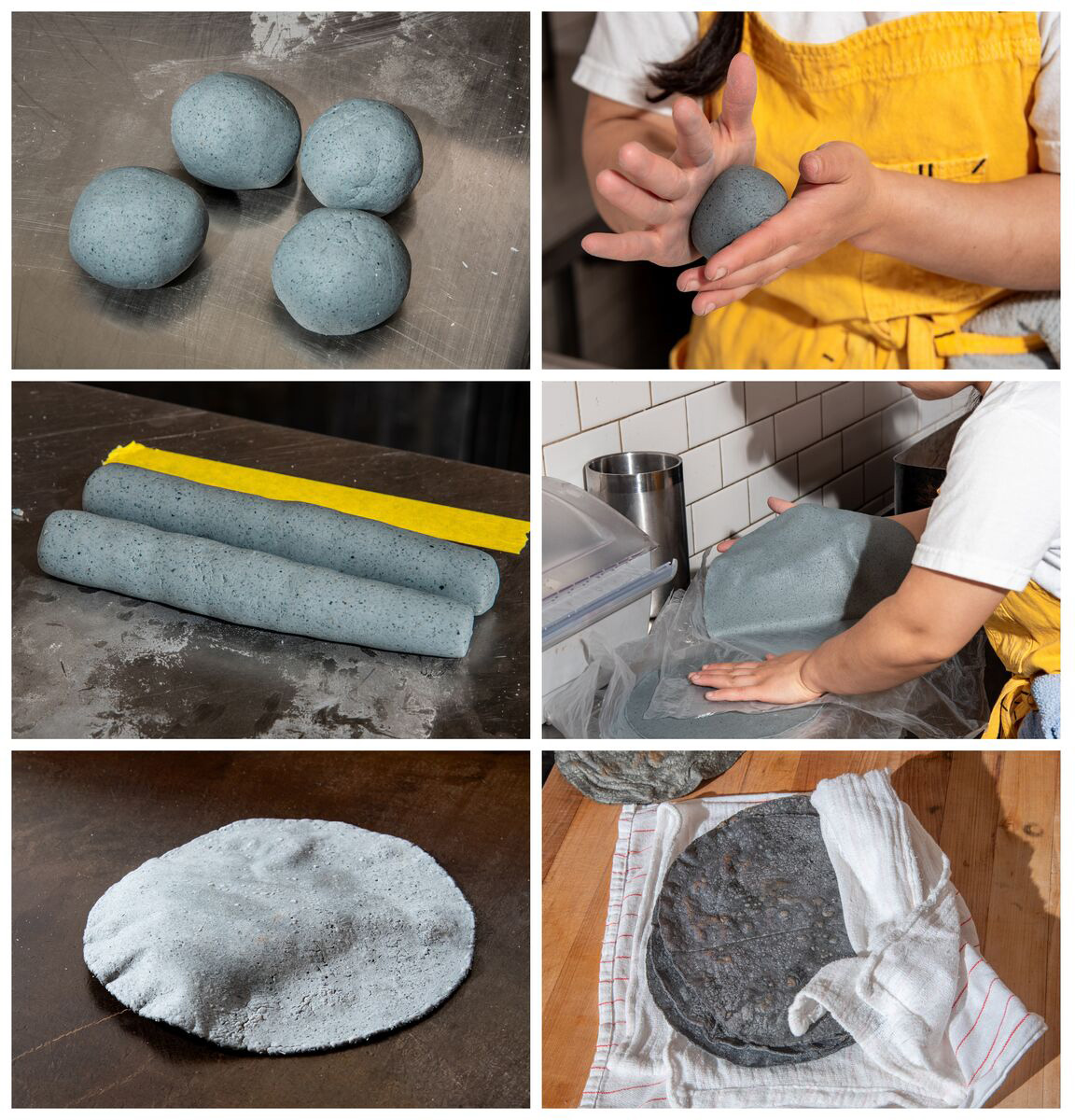 At the heart of Café Bolita are the tortillas and other items made from heirloom masa. The tortillas process includes shaping the masa into a ball (“bolita” in Spanish), rolling it out to the desired width and flattening it in the tortilla press, separating it from the plastic film, cooking it on the griddle, and allowing it to inflate. Credit: Ximena Natera for East Bay Nosh
From years of working in restaurants himself, Galvan said he really wants to make sure that people feel comfortable and welcome in his space.
“Sure, you’re going to have lunch in like, 35 to 40 minutes, but I want you to feel in those moments that you were here that you were taken care of and you feel really nourished,” Galvan said. “And I think that starts from how I treat my staff.”
A lot of the food will be vegetarian and vegan-friendly, “because a lot of Mexican food is actually inherently vegetarian or vegan,” Galvan said. There’s also no gluten in most of the masa items.
Part of what drives Galvan’s pricing and menu structure is the question, “Can my employees eat here?” He said so many people who work in food rarely go out to eat because they can’t afford it.
Café Bolita will also have a small retail section, a little fridge near the register, where people can buy a bag of masa, one or two masa shapes such as gorditas or tamales, salsas, and other ingredients or pre-made items.
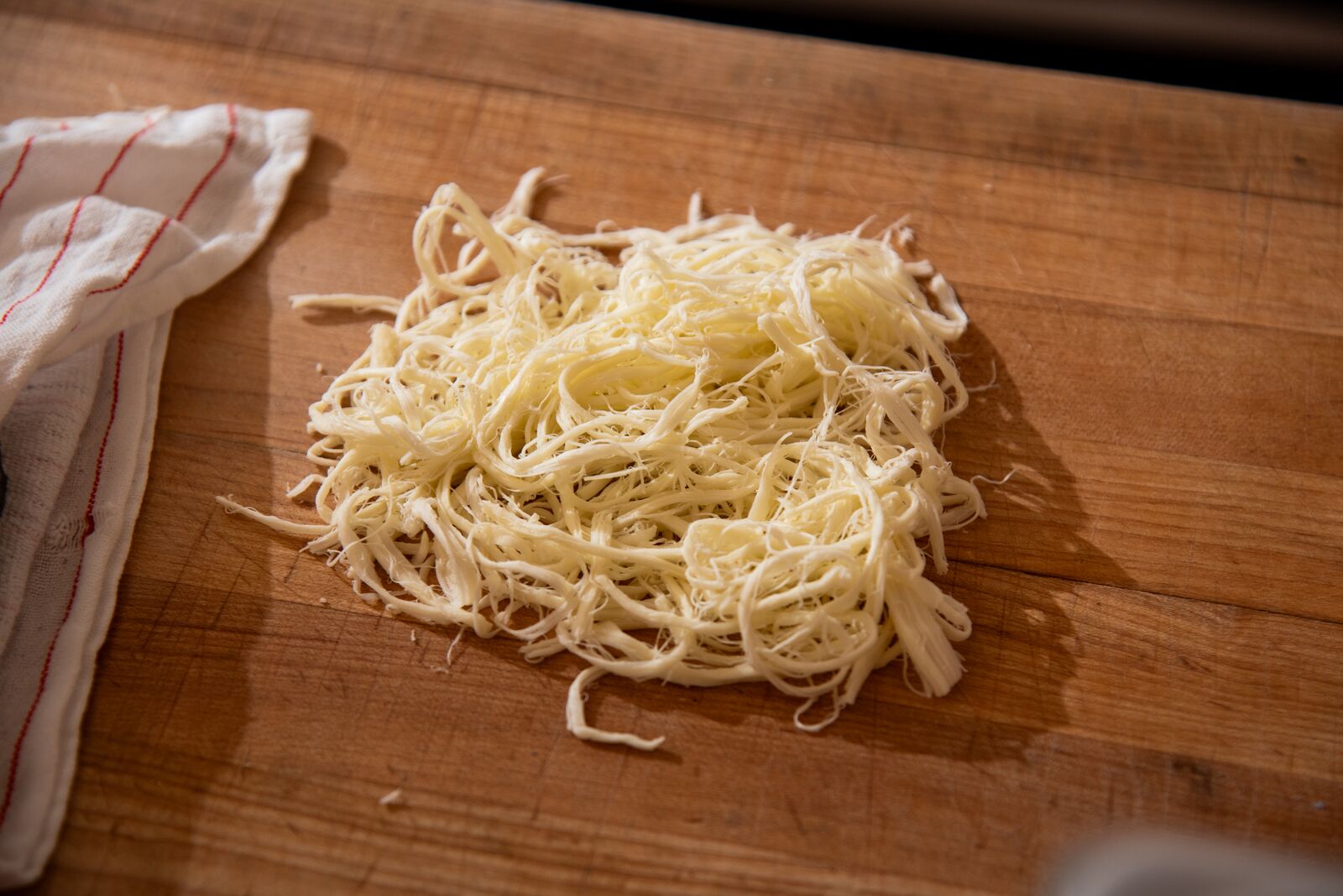
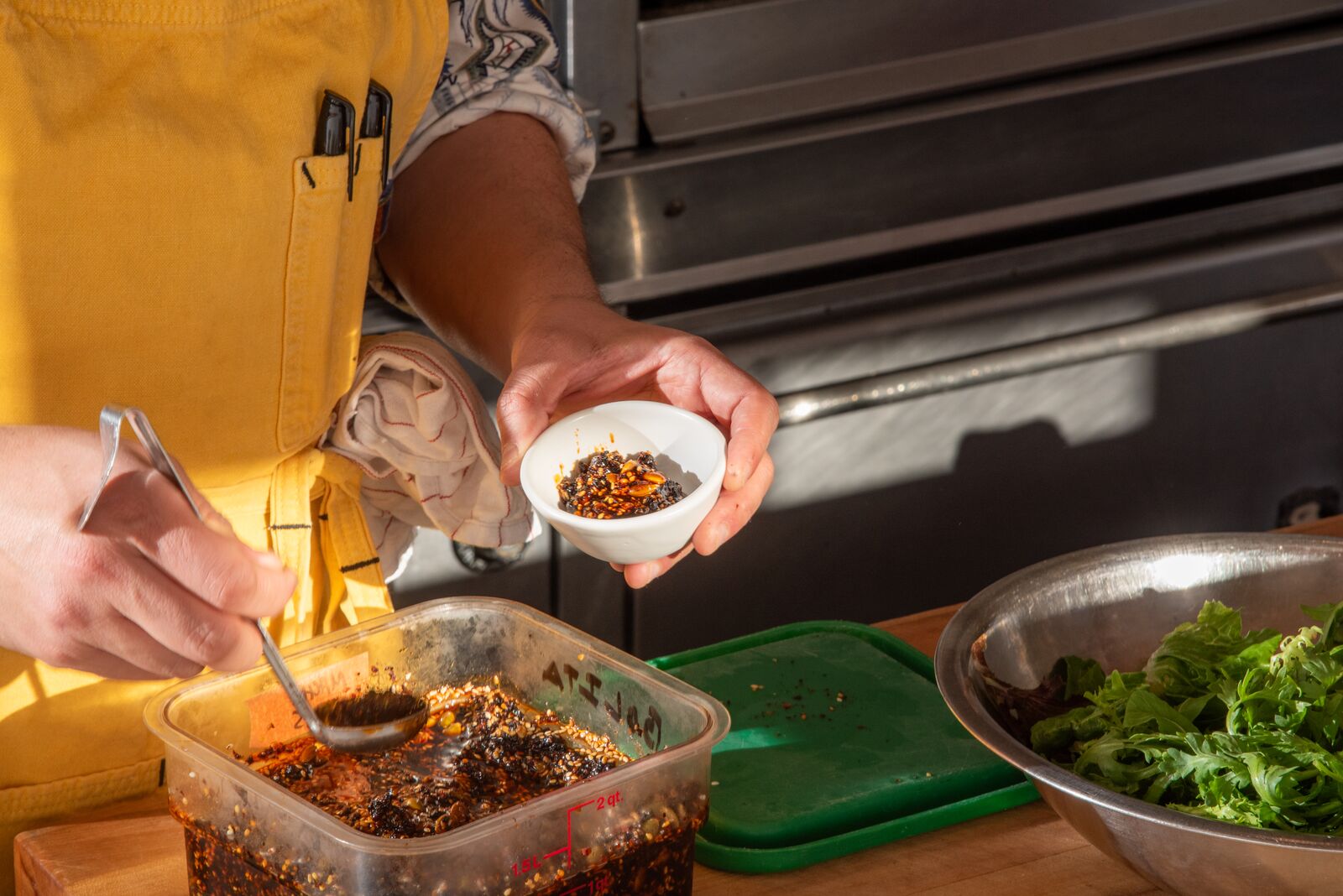
Galvan sourced quesillo (left), a traditional, semi-soft, white cheese known for its mild, salty flavor and most often used for quesadillas, from Oaxaca. The salsa matcha (right) is Galvan’s recipe, and cafe customers can purchase salsa and other masa items to prepare at home. Credit: Ximena Natera for East Bay Nosh
“So even if you don’t want to buy a pre-made thing, you can come and buy a bag of masa for $5 and go make tortillas at home,” Galvan said. “I understand that a lot of people are intrigued by the ingredients that we offer, and we want to make that available to them as well.”
These are both parts of Galvan’s goal regarding accessibility, but this also touches on non-food aspects as well. Around five months ago, Galvan and his wife had a baby, so he quickly noticed the bathroom lacked a changing table and requested one be installed.
Café Bolita softly opened as just to-go, offering coffee, aguas frescas, pastries, tamales, and a flour tortilla burrito. Customers will be able to use the outdoor seating that Bolita took over from Standard Fare. He wanted to open this first so that people see the space is active again and will generate momentum as they complete the interior.
Galvan is excited by the consistency the new space promises. Previously, with pop-ups and farmers’ markets, he recognizes access to his masa and other food items has been irregular, and the new endeavor will further his intention of spreading understanding and access to fresh, well-made heirloom masa.
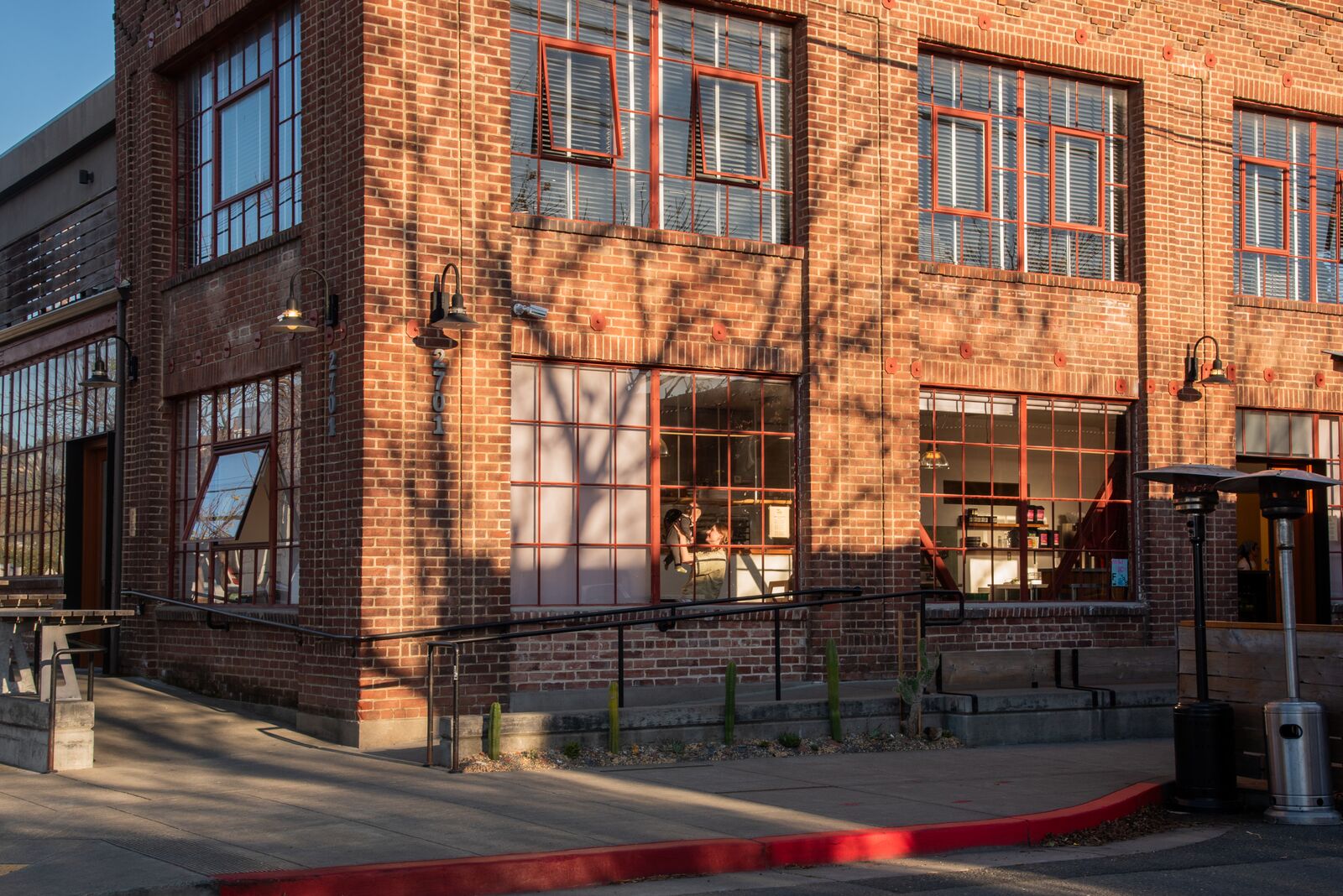 Café Bolita has taken over the space formerly occupied by Standard Fare, which closed at the end of 2025. Credit: Ximena Natera for East Bay Nosh
“With the physical space, we can really establish ourselves and our presence here,” Galvan said. “People who aren’t even online now know about a physical space in their neighborhood. I think the visibility is going to be really big for us.”
Part of redesigning the space to make it their own will include adding some art, including the use of the hand-drawn figures of the boy and corn. These figures, as well as the Bolita logo, were drawn by Galvan’s partner, Erica Dixon.
After having a little boy himself a couple of months ago, Galvan said the drawing of the boy is also starting to morph into his son.
“Thinking of the value that you instill as a parent to your child, I think it’s really generational how you draw value to things,” Galvan said. “What you value, your children, your neighbors, your customers, will see as valuable.”
Through these images, Galvan also wants to convey the idea of both his food and the designs being handmade.
“It’s also a work in progress, too; with a hand-drawn thing, it can be seen as a thing that isn’t super permanent,” Galvan said. “There’s room for this to change and be a conversation, and with Café Bolita, we’re going to figure it out with our customers and with our staff, and it’s all in lowercase. It will graduate to uppercase when we feel it’s super established. That’s a small design thing that we really want to convey; this is all handmade. It’s from our labor. It’s really personal.”
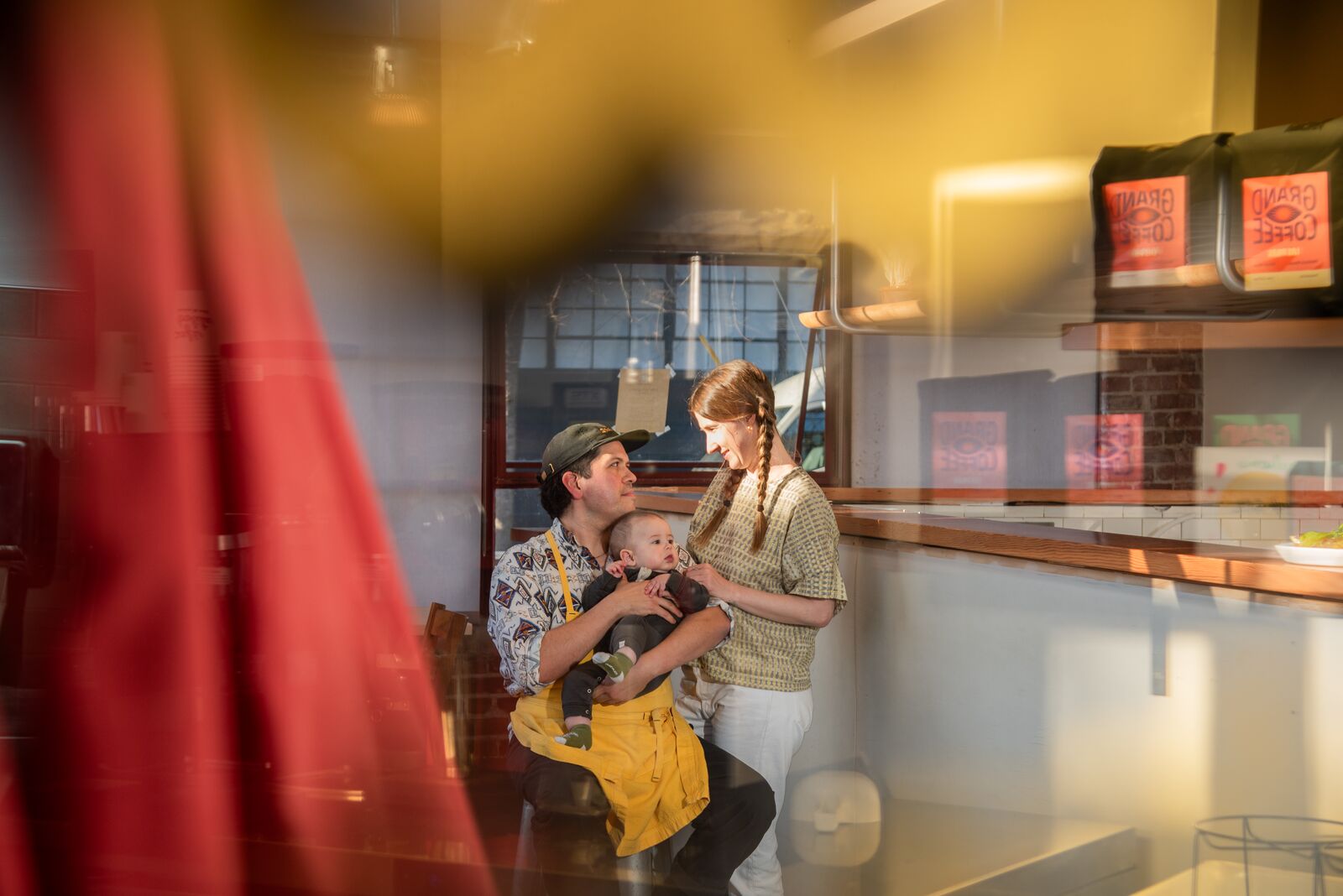 Erica Dixon, Galvan’s partner, designed the logo for Bolita Masa and Café Bolita, and the couple recently welcomed their first child. Credit: Ximena Natera for East Bay Nosh
Related stories
For its first location outside San Francisco, Flour + Water knew it had to be Oakland
January 22, 2026Jan. 23, 2026, 8:53 a.m.
Oakland’s famous tostada is back. Cenaduria Elvira is opening near Jack London Square
February 10, 2026Feb. 10, 2026, 1:16 p.m.
March 2, 2026March 2, 2026, 12:58 p.m.
“*” indicates required fields