
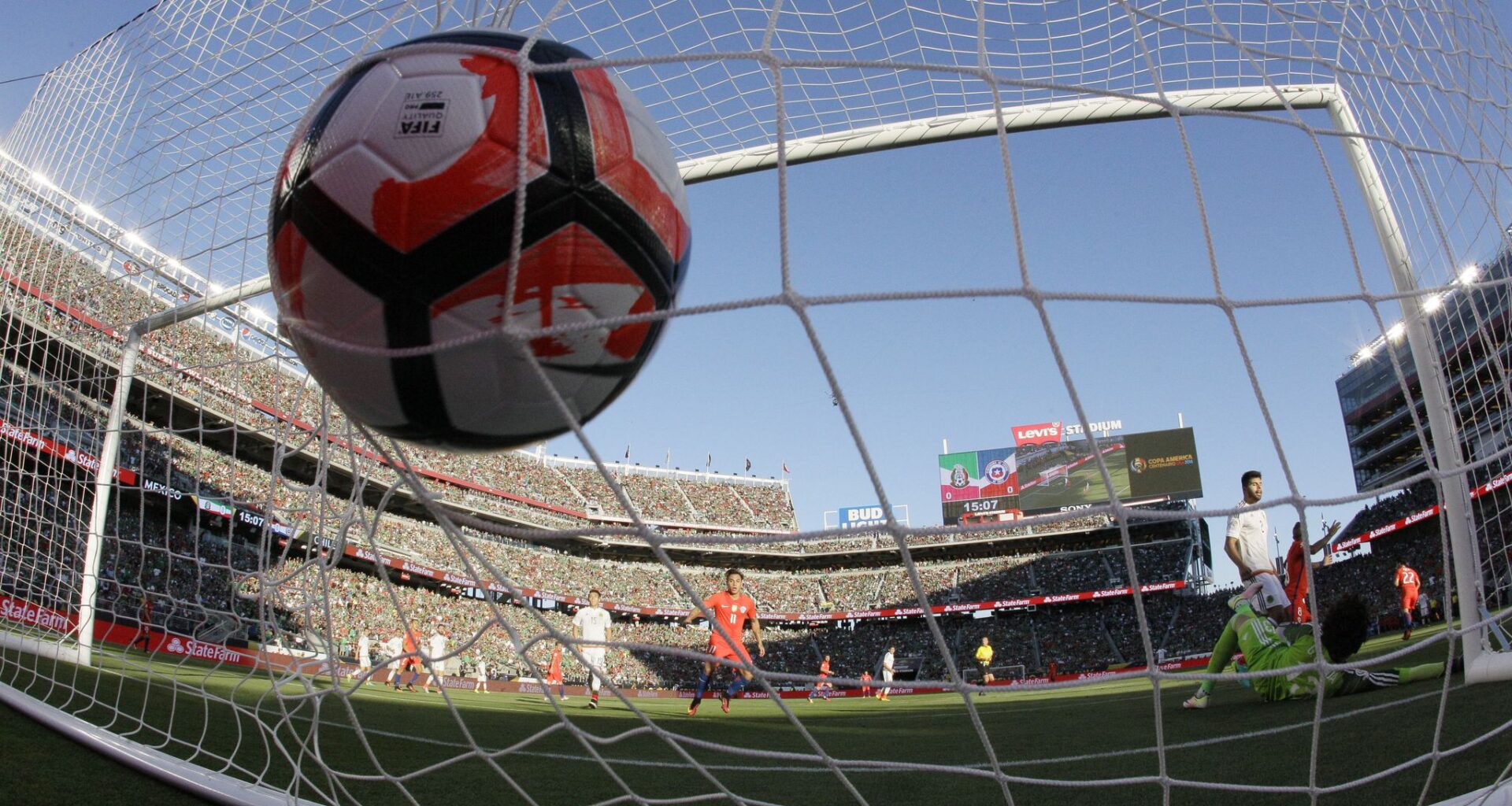
Levi’s Stadium will host six World Cup matches, five in the group stage and one in the round of 32.
Marcio Jose Sanchez/Associated Press
World Cup tickets prices are exorbitant. According to a study commissioned by LiveFootballTickets, which collected information during March-April from secondary ticket marketplaces for all 104 matches, the average ticket price to attend a match at Levi’s Stadium costs $2,364.76.
That number may seem high, but based on the average ticket price across all 16 World Cup venues, Levi’s Stadium ranks as the second-cheapest host site, behind Monterrey, Mexico. Five of its six matches are in the group stage, with only one in the knockout round. The cheapest ticket for the July 1 round-of-32 match at Levi’s Stadium, which could feature the United States if it wins Group D, is $572.93; the most expensive ticket for premium seating is $10,161.48.
Article continues below this ad
Attendees still need to account for transportation to the venue, plus flights and hotel stays for out-of-state or international visitors. The teams scheduled to play in the five group stage matches will be Switzerland, Qatar, Austria, Jordan, Paraguay, Turkey, Algeria and Australia.
“I don’t want to use the word ‘vultures,’ but people are taking this beautiful moment and saying, ‘How high can we charge until people don’t come?’” said group travel expert Jen Fry, who has a Ph.D. in sports geography from Michigan State.
San Francisco Chronicle Logo
Make us a Preferred Source to get more of our news when you search.
Add Preferred Source
The cheapest, most expensive and average ticket prices for all six Bay Area matches are as follows.
Article continues below this ad
Switzerland vs. Qatar on June 13:
$263.50 (cheapest), $9,661.51 (most expensive), $2,215.28 (average)
Austria vs. Jordan on June 16:
$243.23, $9,454.43, $2,083.67
Paraguay vs. Turkey on June 19:
Article continues below this ad
$259.44, $9,560.16, $2,100.90
Algeria vs. Jordan on June 22:
$229.71, $9,151.41, $1,628.73
Paraguay vs. Australia on June 25:
$270.25, $9,452.40, $2,813.76
Article continues below this ad
Round of 32 match on July 1:
$572.93, $10,161.48, $3,346.19
The study also calculated which nations would be the most expensive to follow en route to the World Cup final. The U.S. slots in at second on the list, behind Mexico and ahead of Brazil. If a fan were to purchase the cheapest possible ticket at every match, the bill would total $21,547.24.
“In reality, a basic World Cup experience could cost someone $50,000,” Fry said. “Your hotel rooms are $6,000 a night. Your tickets are $5,000 each. Boston, the train is now $80.”
Rail service in Boston regularly charges $20 on Patriots game days. It’s worse in New Jersey, where NJ Transit is planning a $150 fare, almost a 12-fold increase from the normal rate of $12.90. New Jersey Gov. Mikie Sherrill attempted to justify this price hike by calling out FIFA for contributing nothing to help ease public transportation costs.
Article continues below this ad
No such commitment was made by FIFA when host city agreements were signed in 2018, long before Sherrill was sworn in as governor this year.
The Bay Area Host Committee has not released a plan for public transportation or parking. BART does not have a stop near Levi’s Stadium. Depending on where fans are coming from, a mix of BART, rail and other bus services may be required. Part of the problem with Boston and New York is each host city’s distance to its respective stadium venue, a challenge San Francisco also faces, being 40-plus miles from Levi’s Stadium in Santa Clara.
A lofty $30.5 billion economic impact projection for the U.S., as announced by FIFA a year ago, has been followed up by a reportedly underwhelming demand for hotels across host cities, which according to Forbes includes San Francisco.
The largest tournament in World Cup history, having expanded from 32 to 48 teams, also promises to be one of the most costly.
“All of these expenses … you can’t afford it,” Fry said. “So why not stay at home and have your BLT, your tater tots.”
Editor’s note: Conversions from sterling pounds to U.S. dollars in this story are approximations and do not reflect real-time market fluctuations. The data collected by LiveFootballTickets does not include FIFA’s last-minute sales drop, at FIFA.com/tickets, which went live Wednesday morning.