
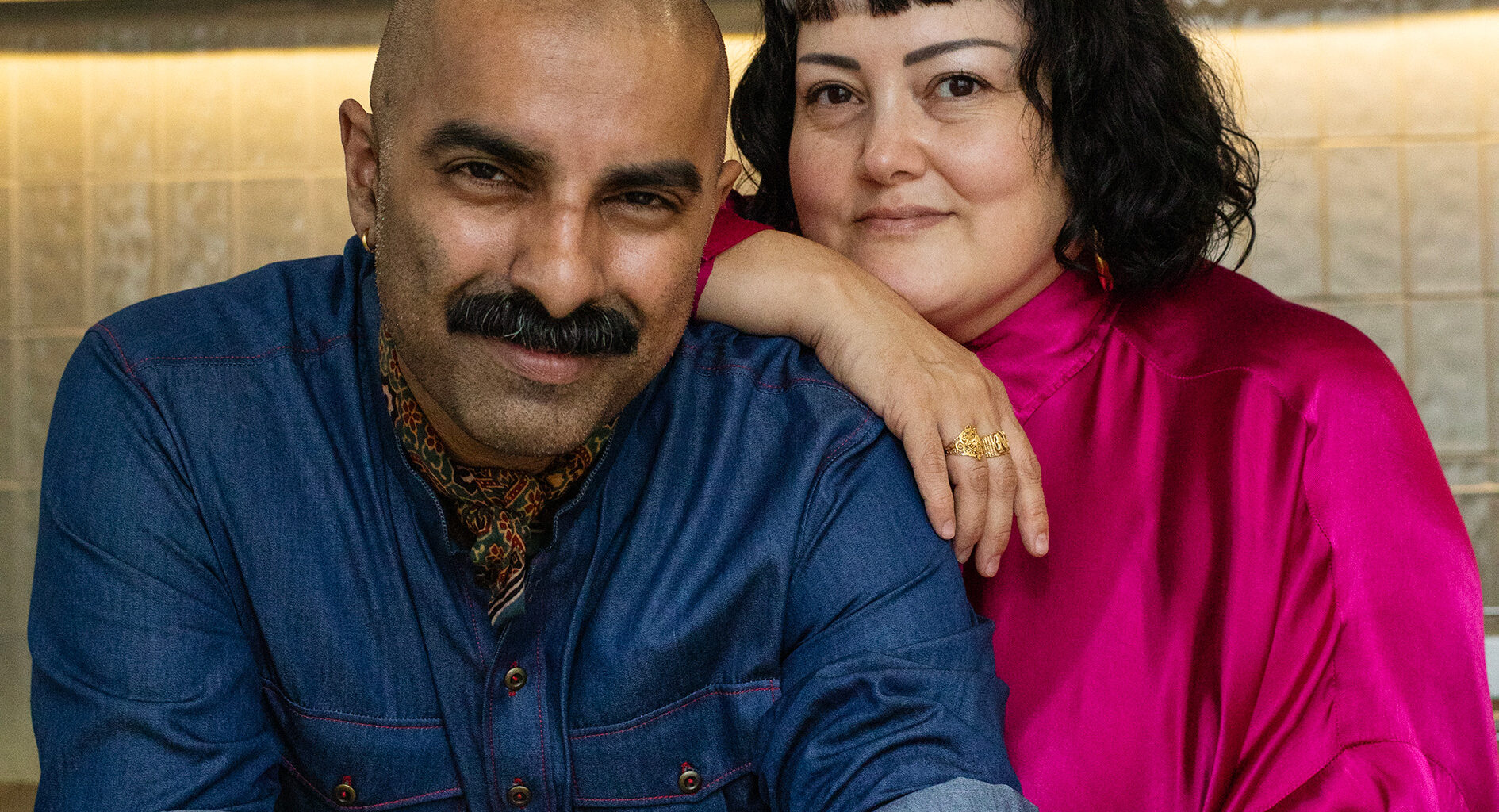
It all started with a match made in Oakland, and a natural disaster in Mexico City.
Saqib Keval and Norma Listman met and started dating in the Bay Area, before moving to Mexico City to open their own restaurant. But on Sept. 19, 2017, the day before the scheduled grand opening, a 7.1 magnitude earthquake rocked central Mexico. Keval, who is a co-founder of People’s Kitchen Collective in Oakland, and Listman, who was born in Texcoco, Mexico, and moved to Bay in the 1990s, where she worked at Oakland restaurants including Tamarindo and Camino, delivered hot meals to first responders and others in need around the metropolis.
A month later, their restaurant, Masala y Maiz, a Michelin-starred fusion of Listman’s Mexican heritage and Keval’s Indian and East African roots, opened, and it wasn’t long before they hosted the first of many “paga lo que puedas” (pay what you can) days. The full menu is offered without prices, and customers pay whatever they feel is appropriate and they can afford for the meal.
The COVID-19 pandemic, when the restaurant temporarily closed, and then reopened as a cooperative selling eggs, vegetables, bread, wine, beer, frozen pizzas, sauces, and other goods while distributing the profits equitably, only solidified the mission.
When Listman and Keval first introduced the pay-what-you-can day, many restaurants in Mexico City balked at the idea.
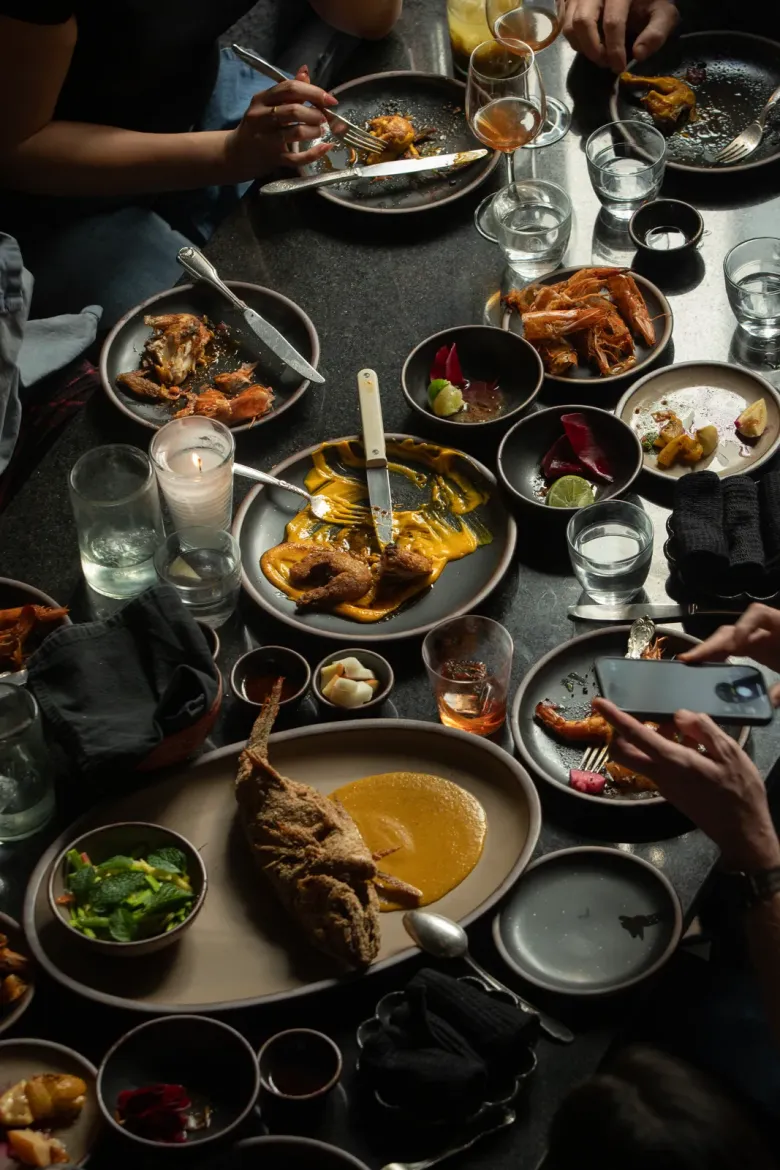 Masala y Maiz, where the menu is a fusion of Mexican, Indian and East African cuisine, hosted a pay-what-you-can day on its own before expanding the program to invite other Mexico City restaurants. Credit: Ana Lorenzana
“In the Bay Area, people are a little more used to the idea of pay what you can. People’s Kitchen Collective was always pay what you can,” Keval said in a phone interview from Mexico City. “But when we started incorporating it into our restaurant here, it was not common in the industry in Mexico. There was a lot of educating the public involved. Restaurateurs and people in the food media would get mad at us. They would send us angry messages because they didn’t understand the idea and thought it would ruin their businesses. We had to convince customers that it wasn’t some scam. It’s exactly as it sounds.”
Over the years, people started to understand what they were doing and became more interested. Last year, Keval and Listman invited other restaurants in Mexico City to join them for a pay-what-you-can day and the response was “overwhelming,” Keval said. Now, they are going global. Masla y Maiz is organizing an international pay-what-you-can day on August 26.
“Last year we trained up different teams, and we had cantinas, bakeries, pandaderias, fondas, casual restaurants and restaurants with Michelin stars come on board,” Keval said. “All of them were really excited and the teams were excited. Nothing like this has been done in the city before.”
With the goal of reaching residents who wouldn’t normally dine out as much, they shunned traditional media and methods of advertising and distributed flyers on public transit, including the informal buses that bring workers from the outskirts of Mexico City into the center.
“We wanted to make sure we got the word out to people not hit by regular food media, and we had lines around the block,” Keval said. “The majority of people had never been to those restaurants, and many of them don’t get out to eat period with the cost of dining out being so expensive. And, the workers don’t lose out on tips; they earn the same and the restaurants break even. It turns out, some people will pay more while others pay less.”
For the first worldwide iteration, so far more than 75 restaurants across more than two dozen cities, from Havana, Cuba to Mumbai, India, have signed up to participate. In the East Bay, Oakland restaurants Understory, Reem’s, Sfizio and Bombera are on board. Merkado in San Francisco and Valley Swim Club in Sonoma are also participating.
For Bombera chef and owner Dominica Rice-Cisneros, who has participated previously in fundraising for People’s Kitchen, the pay-what-you-can day is an “opportunity to connect with the greater workforce” of the Dimond and Fruitvale neighborhoods.
“We have so many amazing shops here; this is such a great neighborhood,” Rice-Cisneros told Nosh. “We have the post office. We have bank workers, we have the grocery store crew. The pizza guys at the corner. We’re reaching out and booking reservations from people who work in the neighborhood every day and create a kind of hospitality day.”
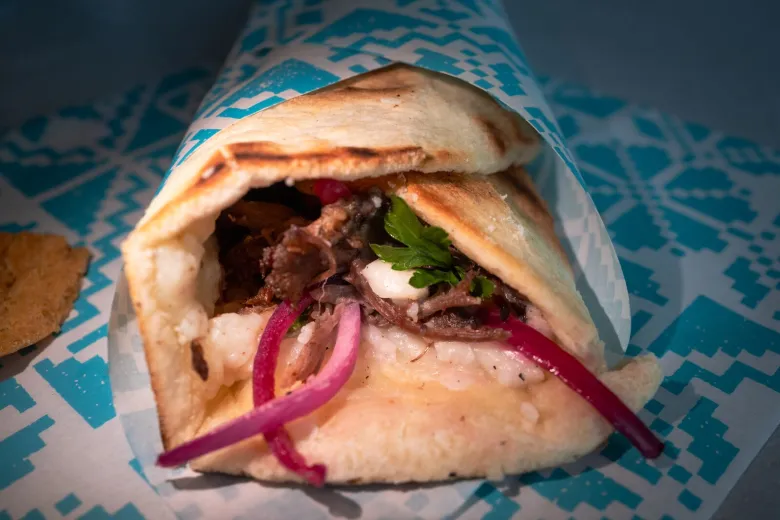 A “La Gringa wrap” from Reem’s, which recently opened in Jack London Square and has signed up to participate in the global pay-what-you-can day on Aug. 26, 2026. Credit: Richard H. Grant for East Bay Nosh
It is a sentiment that Keval echoed, as an influx of foreign tech workers and other factors led to a series of protests against gentrification in Mexico City last year.
“Anytime a restaurant opens, there are signals — the design, branding, aesthetic — that people read as who this restaurant is for. In Oakland in Mexico City, all around the world, it’s a dynamic that is everywhere that restaurants open, but it feels like this is not for people in this neighborhood,” he said. “I think it is such a small gesture, to open our doors to neighbors and the community. It almost feels inconsequential, but it’s a great reminder of why we do this and we can use this privilege to make it more accessible.”
Keval and Listman picked a Wednesday in August for the global event because Wednesdays are generally slow days for restaurants, and August is an especially slow month for the industry.
The “pay-what-you-can” concept has a long precedent in the Bay Area food scene. Understory always has a comfort food pay-what-you-can dish on its menu, and Homemade Cafe in Berkeley introduced an “everybody eats” program to provide free meals to those in the community experiencing food insecurity.
Keval and Listman are on the hunt for more restaurants, and Keval specifically called out the Bay Area, saying he was hoping for more participants from the place that had such a big influence on his own activism. So far, the only East Bay restaurants to sign up are all located in Oakland, but Bombera’s Rice-Cisneros, for one, is hopeful the idea will have staying power.
“I want this ‘pay-what-you-can’ event in August to become an annual event for Bombera,” she said.
Just like the concept eventually took hold in Mexico City, where 20 restaurants have already signed up for the 2026 event, Keval and Listman hope the idea spreads globally and continues to grow into an “annual international day of hospitality.”
“This is always my favorite day at Masala y Maiz, because we cook for love of the game, not for check averages and sales,” Keval said. “We’re in it to cook with love and care for people. Norma and I love it. I think for the staff too, it’s their favorite day, because we get to cook for and serve the community in a genuine way. It’s not something we get the opportunity to do a lot because the margins are so tight and costs are so brutal, the schedule is so demanding. It’s a nice pause from the regularly scheduled work.”
“*” indicates required fields