
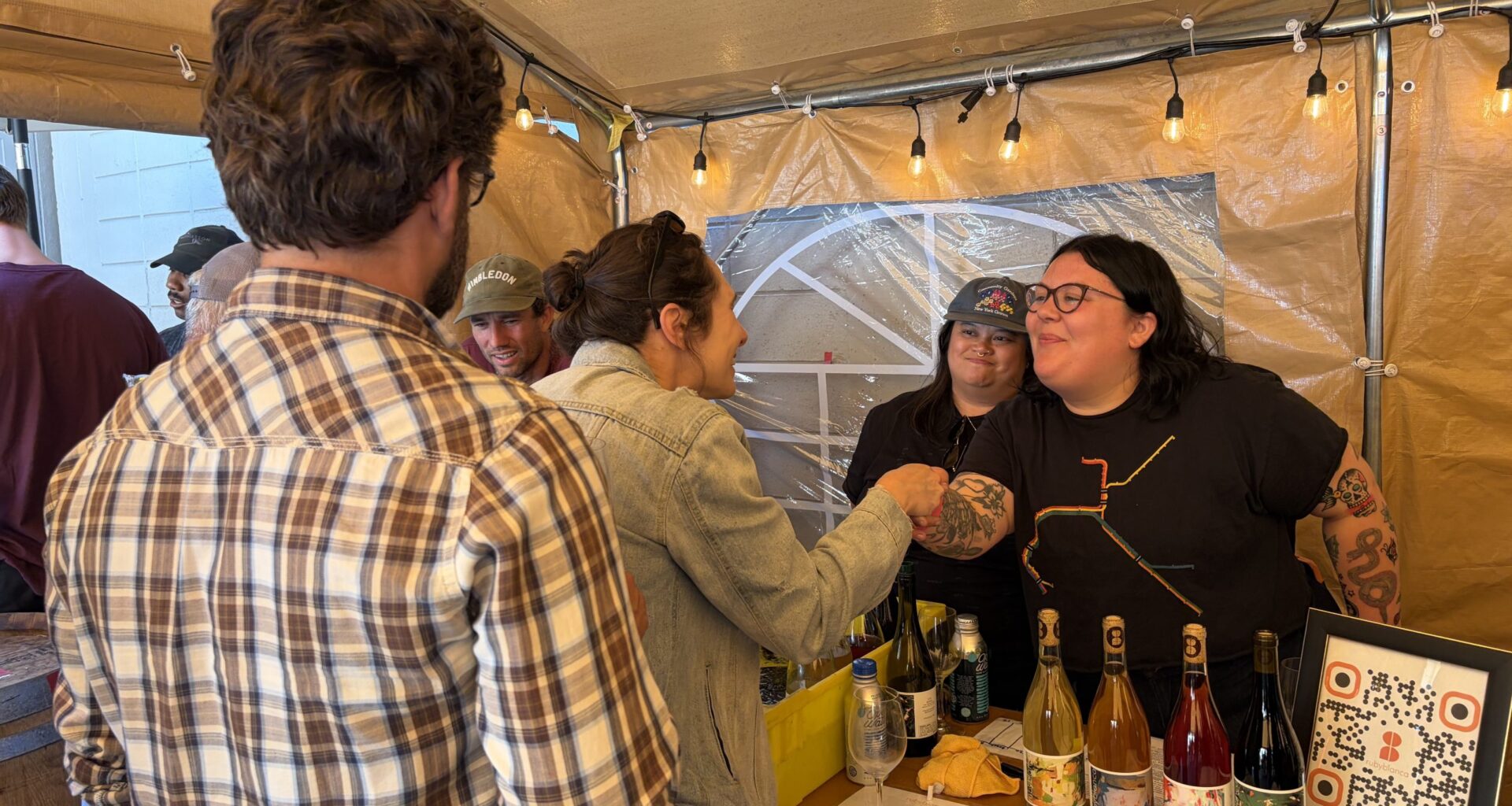
Hundreds of winemakers, scientists, and grape aficionados descended upon the Gilman Wine district July 25-26 for the second annual Unfiltered wine festival.
Unfiltered: a Celebration of Wine on the Edge, is a festival focusing on eco-conscious winemaking and highlighting local wine producers to encourage Bay Area residents to invest in the local wine scene. The two-day event brought together 60 low-intervention and natural wineries from across the Bay Area for a weekend of music, educational panels, wine tastings, and food at Donkey & Goat Winery, located at 1340 Fifth St.
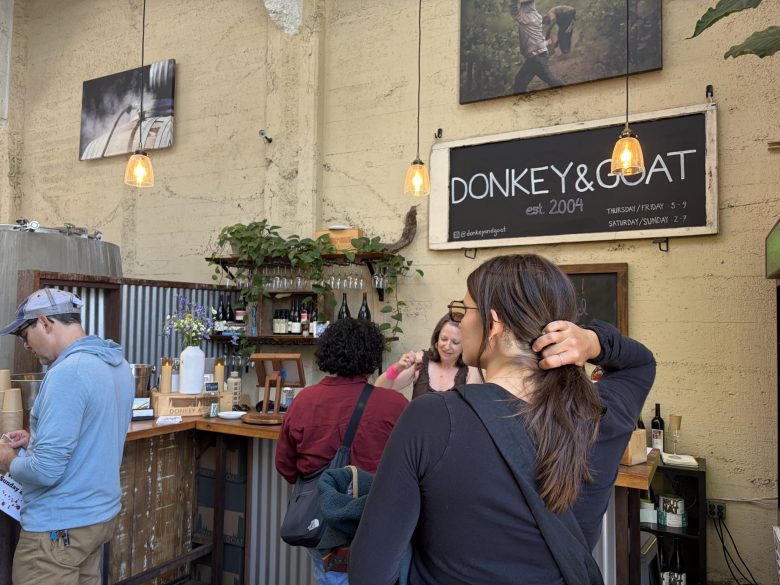 Unfiltered: a Celebration of Wine on the Edge, was held from July 25-26 at Donkey & Goat Winery. Credit: Skylla Mumana/East Bay Nosh
Unfiltered was born from event founder Andrew Sullivan’s frustration with the lack of local wines shelved in Bay Area stores, restaurants and bottle shops. A fourth-generation Berkeley resident, Sullivan grew up as a foodie, having watched the slow food movement, which emphasises local food, farming and sustainability, evolve across the region. He was confused that an area known for championing locality was missing local wine from its shelves.
“We’re at the center of the slow food movement in America. The queen of the hill is Chez Panisse, but you’re hard pressed to find even 20% of its wine list being local, let alone artisan,” Sullivan said. “One [part] of Unfiltered is really trying to educate people that wine is food, and $1 spent on a local winemaker stays in this economy and fuels the creative energies that are here.”
Another aspect of the festival is its emphasis on highlighting low-intervention and natural wines. Low intervention wines are wines crafted with minimal additives, pesticides, synthetic fertilizers and other manipulation, while natural wines represent the strictest form of low intervention winemaking — a complete hands-off approach that avoids manipulation and additives altogether.
Local low-intervention winemaker and Vintage Berkeley retail associate Drew Ochengco is the founder of Glass Closet Wine, a personal-wine-project-turned-brand aimed at increasing the accessibility of wine education and encouraging people of all backgrounds to enter into the winemaking space. Ochengco helped Sullivan organize the event, seeing it as an opportunity to make wine more approachable while spotlighting producers committed to low-intervention winemaking.
“You know, I think one of the big reasons Andrew kind of came back to this idea of Unfiltered is whether we think about Berkeley specifically or we think about the entire food industry, there’s been such a movement to eat healthier and focus on less processed foods,” Ochengco said. “So I think this festival puts a lens on doing the same for our wines, and really allowing the fruit to shine through with minimal processing.”
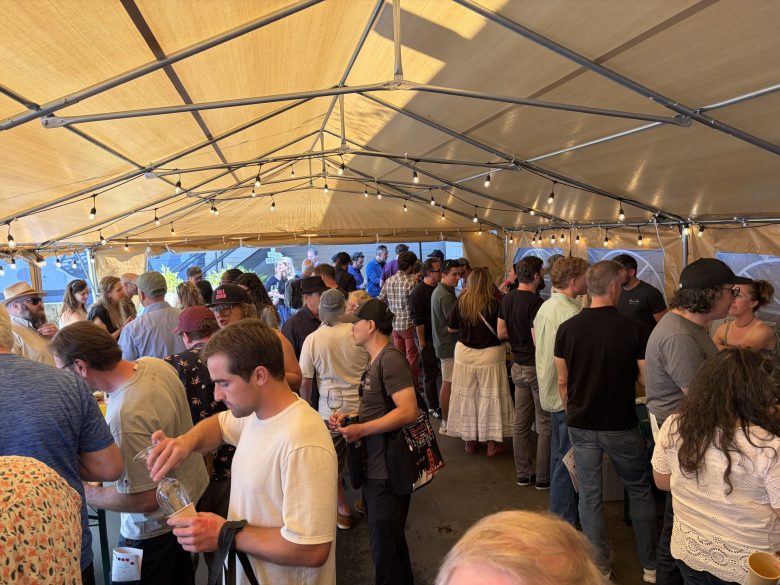 Unfiltered: a Celebration of Wine on the Edge is in its second year, bringing in 60 vendors and over 180 different low-intervention wines for people to purchase. Credit: Skylla Mumana/East Bay Nosh Credit: Skylla Mumana/East Bay Nosh
The event offered over 180 different low-intervention wines for festival goers to choose from, and featured a range of wineries, from longstanding natural wine pioneers like Donkey & Goat, to smaller newcomers like Helia Wine Co, founded by Casey Barton. Barton is a full-time farmer who grows the grapes she’s fermenting, and she just released her first two wines a week before participating in the festival. The goal of her brand is to shape consumer perceptions, encouraging people to see wine as an agricultural product while embracing the creativity and experimentation happening within the industry.
“There’s a lot of passionate people doing really new and innovative things in the wine industry,” Barton said. “You shouldn’t get horned into thinking that all wine is like your grandma’s cabernet. It’s new and exciting and fun, and people are really excited to share the fun projects that they’re doing.”
Other producers at the festival, like Christopher Renfro, were present to not only pour samples of his 2025 L’Amalgame Rose, but to bring awareness to diversity in winemaking. Renfro’s organization, The Two Eighty Project, is a viticulture enology apprenticeship program aimed at providing resources, experience and opportunities to groups historically underrepresented within the wine industry, including LGBTQ, BIPOC peoples, individuals with disabilities, veterans and more. Renfro believes that creating a more inclusive industry starts with expanding access to education and opportunities.
“The representation of how many of us are out here making natural wines or doing these types of things are few and far in between, but that’s because of access,” Renfro said.
Wine influencer Malika Bridges-Long, dove head first into creating wine content for similar reasons. The Milpitas-born investment banker has prior experience working at wine bars, and often went to wine tastings with her family, but quickly noticed the lack of diversity in these spaces. This led her to start documenting her experience at wine events on her social media account bridges2wine.
“I want to highlight the diversity of the Bay Area and bring it to the wine industry. We have so many places to go for wine–Napa, Santa Cruz mountains, Gilroy, Livermore, Carmel Valley,” Bridges-Long said. “ You don’t have to be rich to enjoy wine, you don’t have to be retired to enjoy wine. It’s important that we bring this to everyone. It’s something that everyone should enjoy and everyone should try.”
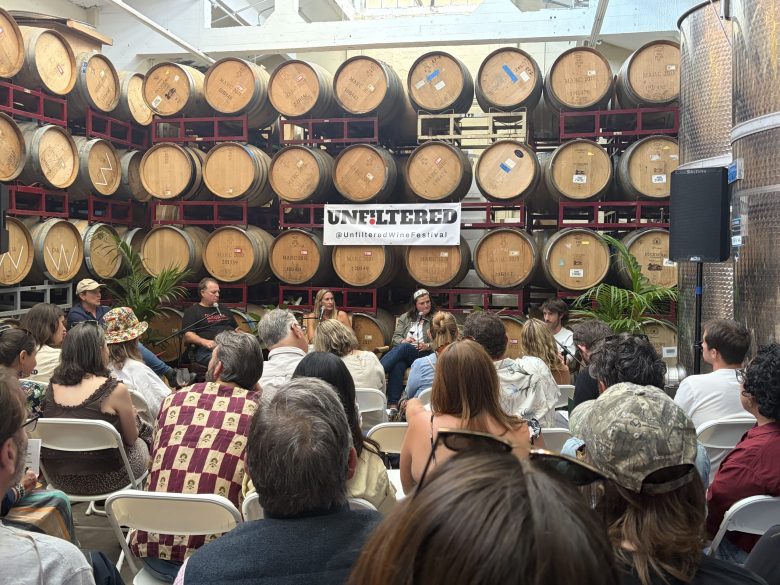 Educational panels were held throughout the day, fostering conversation between winemakers, grape growers and wine enthusiasts. Credit: Skylla Mumana/East Bay Nosh
Panel discussions bridged topics regarding the future of the wine industry and its shifting culture. From discussions regarding natural vs conventional wine to how music can be a vessel for wine fermentation, to how Lodi became a hotspot for wine creativity and more. Bites, such as Niçoise salad, were provided by Chez Panisse cook and writer Sarah Schecter and other food offerings from local pop-ups like guava cloud cold brews from Camonn Coffee roasters, and smoked pulled pork sandwiches from Rosie’s Sandwiches were also available.
Sullivan hopes that in the future, the festival will grow into a destination event, inspire more Bay Area residents to tap into the local wine scene, and possibly lead to a retail shop that only showcases Bay Area wine.
“I would like to see this festival emerge as a destination event that is a week-long celebration of our local craft wines, and have people fly in from all over the world to come here,” Sullivan said. “ So that’s another piece of trying to make this a catalytic event, to bring a retail shop or a retail presence into Berkeley that has like 300 local wines on the shelf.”
Related stories
June 30, 2026June 30, 2026, 12:30 p.m.
Fermenters unite! Sourdough donuts find new home at West Berkeley winery
March 19, 2026March 23, 2026, 10:12 a.m.
Richmond Costco sold plants infested with insect that could devastate food crops, wine industry
May 28, 2026May 28, 2026, 1:47 p.m.
“*” indicates required fields