
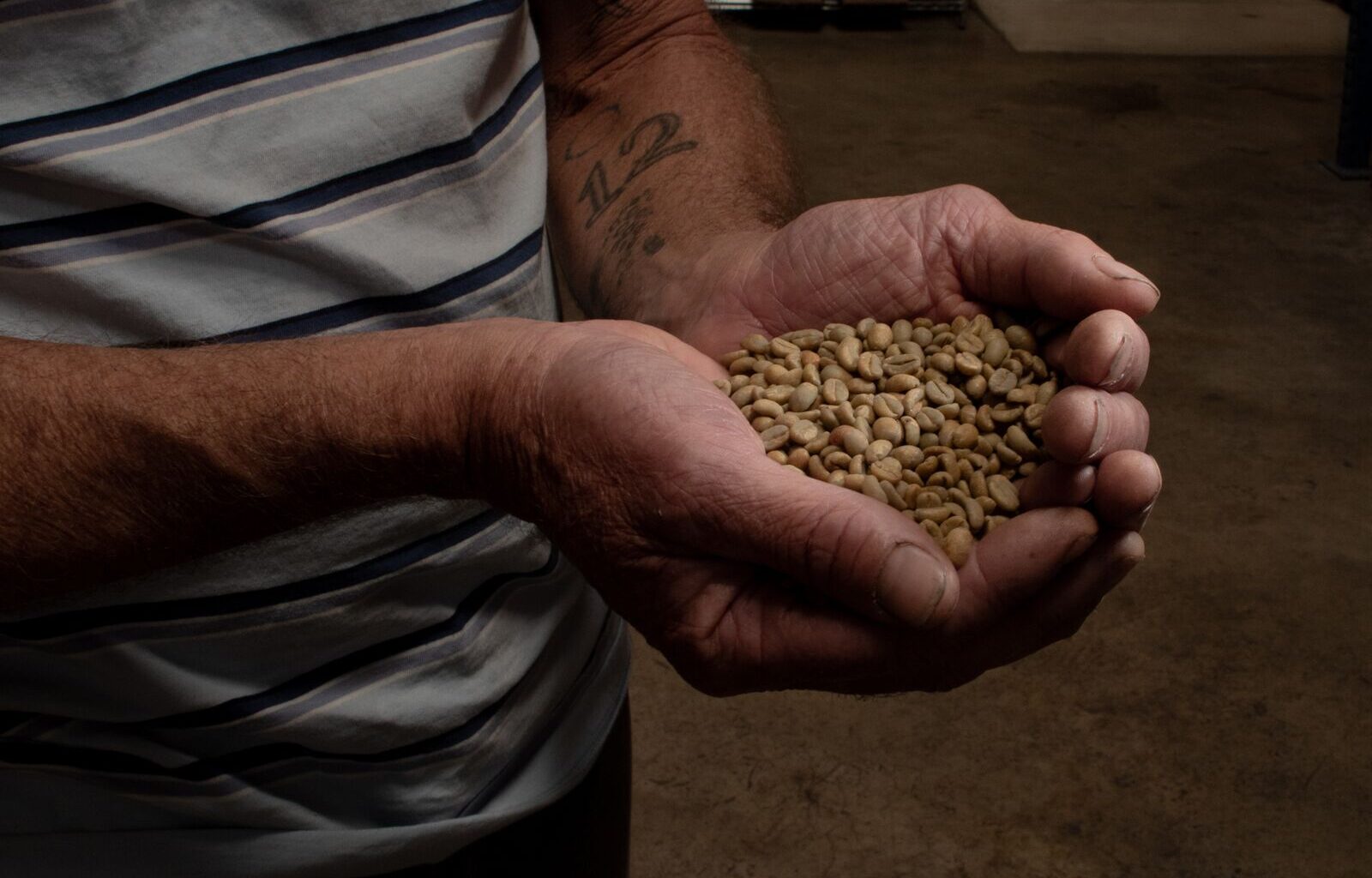
“A cup of coffee – real coffee – home-browned, home ground, home made, that comes to you dark as a hazel-eye, but changes to a golden bronze as you temper it with cream that never cheated, but was real cream from its birth, thick, tenderly yellow, perfectly sweet, neither lumpy nor frothing on the Java: such a cup of coffee is a match for twenty blue devils and will exorcise them all.”
Thompson “Tom” Owen collects all things coffee, including coffee quotes, like this one from Henry Ward Beecher evangelizing the nearly supernatural benefits of the morning ritual. Owen, the co-founder of Sweet Maria’s (2823 Adeline St., Oakland), is an artist by training, but let his passion for a good brew turn into a business more than 25 years ago, and he has the memorabilia to show for it.
The West Oakland store and warehouse, focused on retail sales of green, unroasted coffee beans, is lined with photos of coffee plants, coffee beans in various states of processing, coffee growers, and coffee taste-testers. Any available space on the floors, shelves and walls is crammed with coffee-related items, from decades-old, rusted roasters to Barbie “barista” dolls still in their original packaging.
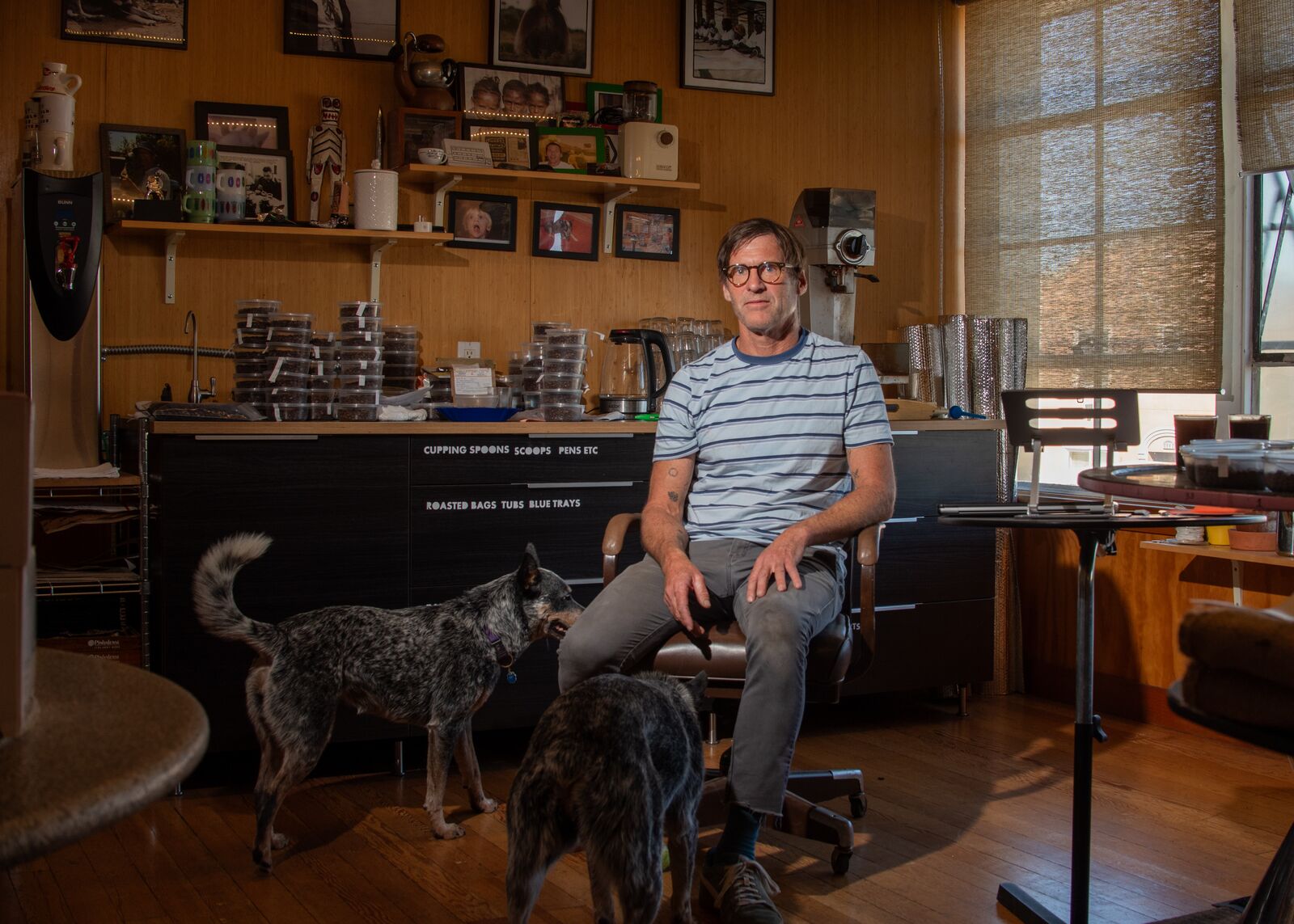 Thompson Owen, owner of Sweet Maria’s poses for a portrait with his dogs in his office. Sweet Maria’s in Oakland sells unroasted green coffee beans to small business and DIY coffee aficionados. Credit: Ximena Natera for East Bay Nosh
Owen learned to roast in his early adulthood while living in New Orleans. Then, in the late 90s, while underemployed and living in Columbus, Ohio, Owen was downtrodden over the lack of quality coffee or even a truly decent drip. He launched Sweet Maria’s, named for his wife and co-founder Maria Troy, as a mail order business based out of his basement.
He was scooping green coffee on a small scale and trying, unsuccessfully, to convince early customers to wait for made-to-order French press pots. While the retail concept fizzled, the mail-order side took off. In 2002, they moved to the Bay Area, drawn by the Port of Oakland’s direct access to imported coffee and a region full of food obsessives and technically inclined people drawn to the fiddling, tracking, measuring, testing, tweaking and experimentation of coffee roasting.
“The engineer trying to deal with the variabilities of a harvest and crop and organic material, it drives them crazy because you can’t solve the problem,” Owen said. “Solving the problem means just enjoying it.”
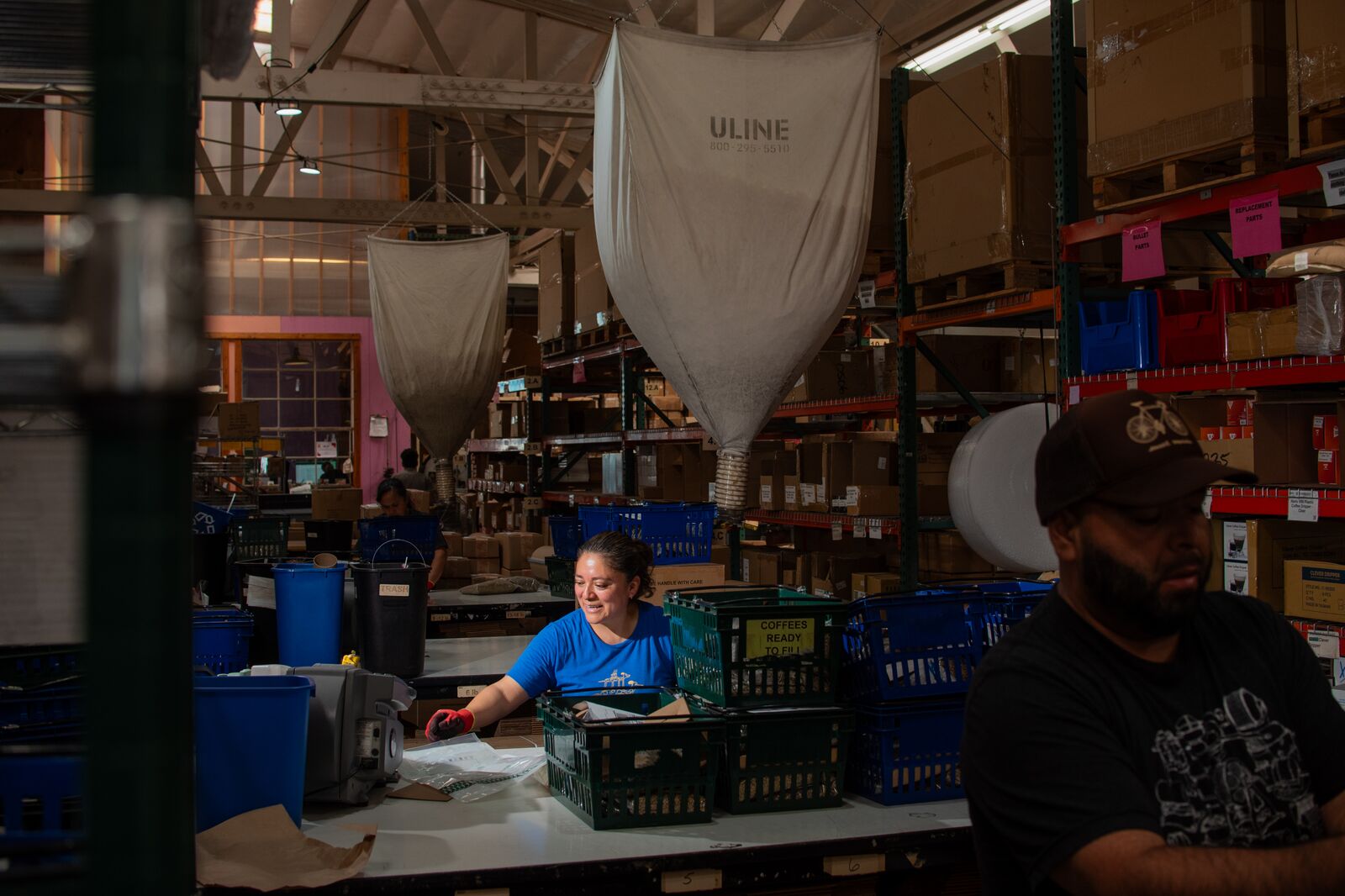 Sweet Maria’s employees pack bags of green coffee at their Adeline Street warehouse. Credit: Ximena Natera for East Bay Nosh
After Ohio, Sweet Maria’s first landed in Emeryville before moving to Oakland in 2005. In the early days, the full staff was just a handful of people. Today, Sweet Maria’s employs more than 30, and moves a staggering volume of green coffee that mostly goes out in one- and two-pound bags to home roasters around the U.S. and Canada, plus 50-pound sacks to micro-roasteries and cafes. But Sweet Maria’s doesn’t feel like a logistics hub.
“We’re mail order, but we really wanted to have the store,” Owen said. “… I think if we were just kind of like a fulfillment business in a warehouse park somewhere, and you could never come in to talk with us, that would be a horrible experience … to just be like an Amazon worker or something. So, we want to be the opposite of that.”
Every roaster has their own reasons … and recipe
Like most hobbies, home coffee roasting will take as much time, money and energy as you allow it.
Many people start with modified popcorn poppers, or basic machines for less than $100; they roast one pound of beans a week, saving some money along the way.
“People bought the popcorn popper and then came in a few years later and upgraded,” Owen said. “What’s the word for that with drugs? The gateway, the gateway popper. It’s the gateway roaster.”
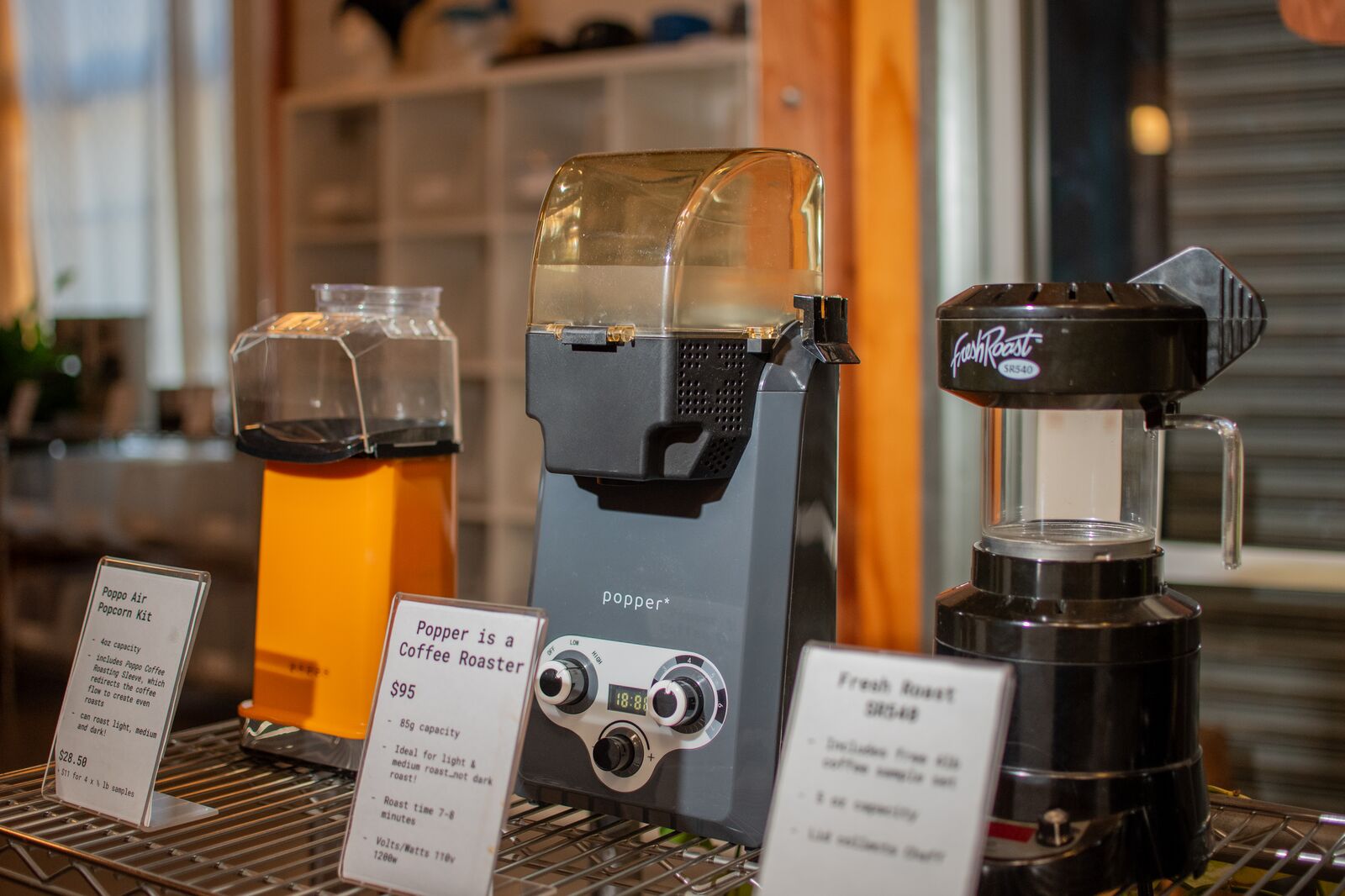 A wide range of home roasting machines is available today, with entry-level roasters sold for less than $100. Credit: Ximena Natera for East Bay Nosh
There are $10,000 machines that deploy artificial intelligence to determine the right recipe of time and temperature, but, to Owen, a fully automated machine would defeat the purpose.
“When they first made one‑box cake mixes, you just added water, and they were rejected — people didn’t feel they were doing anything,” Owen said. “When they changed it so you had to add an egg, the whole thing took off.”
The early days of the pandemic found many people with time on their hands and space to develop new hobbies. Home coffee roasting, like sourdough baking, gardening and other at-home activities, exploded. In 2020, Sweet Maria’s sales of the entry-level Fresh Roast machine almost doubled, with an 83% increase in sales from 2019.
So you want to try home coffee roasting? Here are the things tips Sweet Maria’s staff and customer wish they had known before they fired up their first batch of beans.
Scale up: Batch size matters and weighing green coffee with a low-cost gram scale will produce more consistent results. Don’t eyeball it or trust the scoop.
Check the weather: Air roasters pull in surrounding air. If it’s cold it takes longer to roast, and it goes faster if the weather is warm.
Roast your coffee, not your home: Stay with your roaster when in operation. Roasting starts slow but advances quickly at the end. In the final stage, 10 seconds can make a big difference.
What’s that sound?: First crack sounds more like a kernel of popcorn popping, but second crack is a softer snap, like Rice Krispies in milk. The cracks can sometimes blend together but if you learn the difference in sound it helps a lot.
Power play: A simple-to-use watt meter tells you how many volts you have, and how many watts the roaster is using. Lower volts/watts can help explain under-roasts or other inconsistencies.
Don’t over extend: Sweet Maria’s advises against using extension cords, but if one is needed, use a thick, high-rated extension cord at the shortest length possible.
Cool off: Slow cooling means darker roast flavors. Ideally, the roasted beans should be cool to the touch in 3-5 minutes. Electric fans, colanders, and cookie sheets are all commonly used to cool coffee.
Smoke: Roasting produces some smoke. Large batches and darker roasts produce more smoke. Roast under a vented hood, or in an open area.
Don’t go back-to-back: Let the roaster cool between batches. Once heated, the machine roasts faster. The first batch won’t match the second without proper cooling, and allow the machine to rest between batches will prolong its lifespan.
Give it a rest: Coffee should rest 12-24 hours after roasting. When it’s too fresh, water can’t infuse or extract all the compounds. This is especially true for espressos.
Keep it clean: Using a vacuum every few roasts is ideal to pull chaff out of the roast chamber and roaster base. This will help the roaster’s lifespan.
These days, according to store manager Jarrett Allen, Sweet Maria’s averages roughly 1.75 million pounds in green coffee sales per year, up from approximately 1.41 million pounds in 2021. Between 2019 and 2021, the amount jumped 15%.
“We are still seeing consistent year-over-year growth in green coffee volume, but not at the same level as that large jump during the pandemic,” Allen said.
The trend in home roasting has also been driven by expanded interest in coffee varietals propelled by the third-wave movement, which began right around the time Sweet Maria’s relocated from Ohio to Oakland, and the rapid increase in coffee prices. In April 2026, according to data from the U.S. Bureau of Labor Statistics, the price of standard ground coffee hit an all-time high of $9.72 per pound. Green, unroasted beans can be anywhere from 50% to 75% cheaper than the roasted, finished product.
Just like the sourdough slingers that sprung up during the pandemic, every coffee roaster has their own strategy and style they’ve developed through many, many rounds of trial and error and burnt beans.
Oakland resident Liam O’Sullivan is one of those people. He has a strong do-it-yourself streak, gardening, tinkering with bicycles and regularly roasting coffee on the deck of his Glenview home.
He started roasting with a basic machine in 2018 before his wife’s colleague passed down a more advanced one. During the early trial-and-error phase, he set the deck at his previous home on fire, but he kept experimenting and developing his roasting instincts (and safety protocols).
O’Sullivan listens, looks and smells. As the beans get up to temperature, they start to make a distinct sound known as the “first crack.” O’Sullivan wraps his knuckles on a wooden table to replicate it. Most light roasts are stopped before or around the first crack. There is also a “second crack,” more like the “snap of Rice Krispies,” O’Sullivan says, signaling the transition into a dark roast.
O’Sullivan checks in on his Behmor roaster throughout the roughly 30-minute process. As smoke starts to waft from the back of the machine and the temperature ramps up, he pays closer attention to make sure he doesn’t miss the moment to stop.
“For me, coffee roasting occupies time,” O’Sullivan said. “I like playing with different types of roasts. What’s nice about roasting is that I like variety; I like trying out different things. I really enjoy trying out a new bean, trying out different roasts, seeing what flavors it has and where it’s coming from.”
While O’Sullivan operates more on feel, others keep meticulous notes on each roast, working to dial in just the right combination of heat and time, and building a database that they return to for reference.
Marty Mulvihill, co-founder and partner at Safer Made, a company that works on reducing toxic chemicals in products, has been roasting since shortly after his daughter was born 10 years ago.
Mulvihill’s passion for coffee has also spilled into his professional life. He has joined a startup, with a partner based in Brazil, that is working to use CRISPR gene-editing technology to edit coffee plants so they produce decaffeinated beans — an environmental boon because the standard process for decaffeinating coffee uses a considerable amount of water and energy.
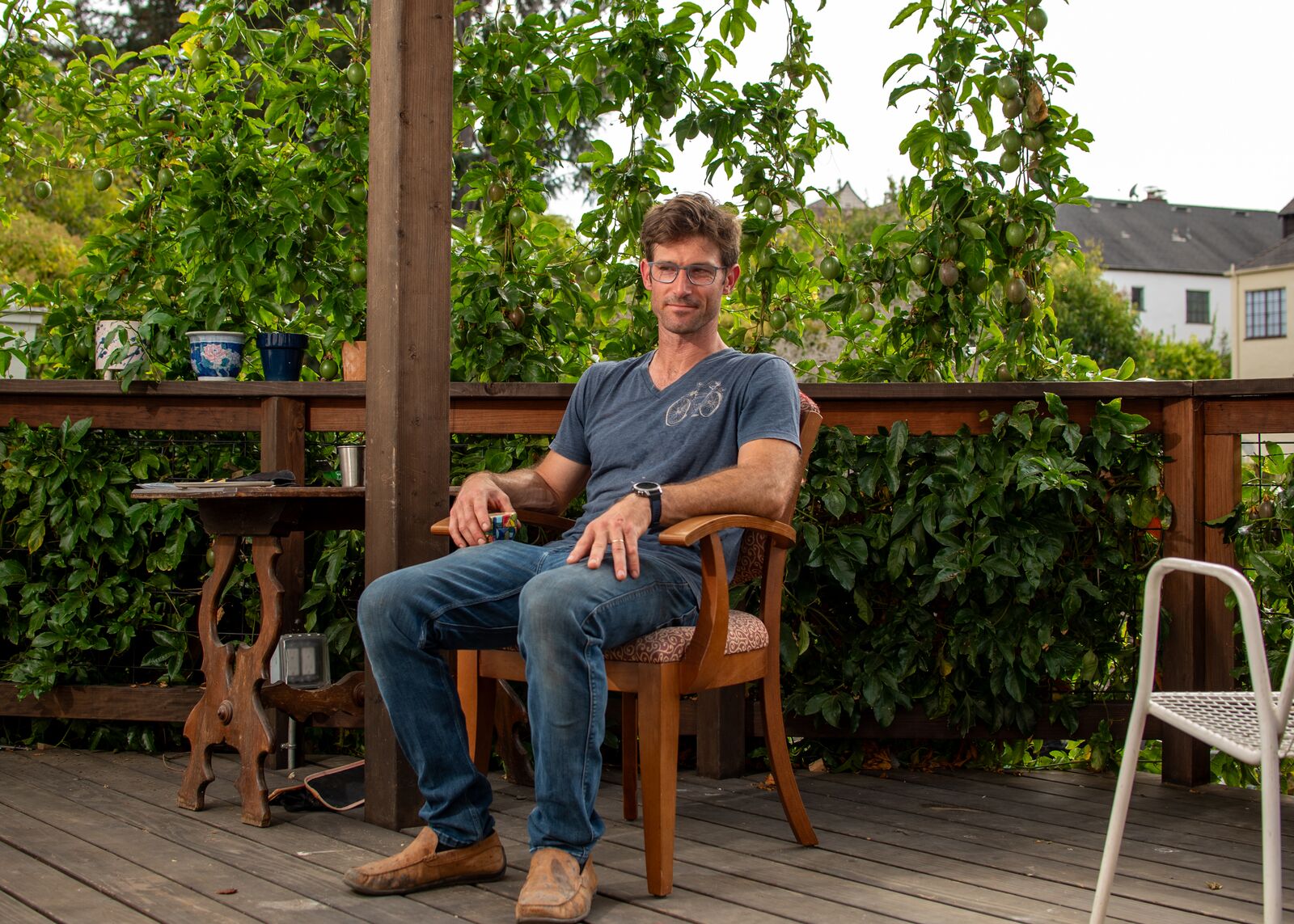 For Oakland resident Liam O’Sullivan, roasting coffee at home aligns with his general do-it-yourself ethos. Credit: Ximena Natera for East Bay Nosh
Mulvihill keeps notebooks where he charts each batch of coffee, the varietal, the roasting time and temperature, and notes on the process and taste.
“I’m a chemist by training, but these days I don’t get to do very much actual chemistry,” he said. “I enjoy getting to something that is like an experiment with test results; you make adjustments, and there is a sense of discovery. Keeping a record helps me progress by adjusting one variable at a time.”
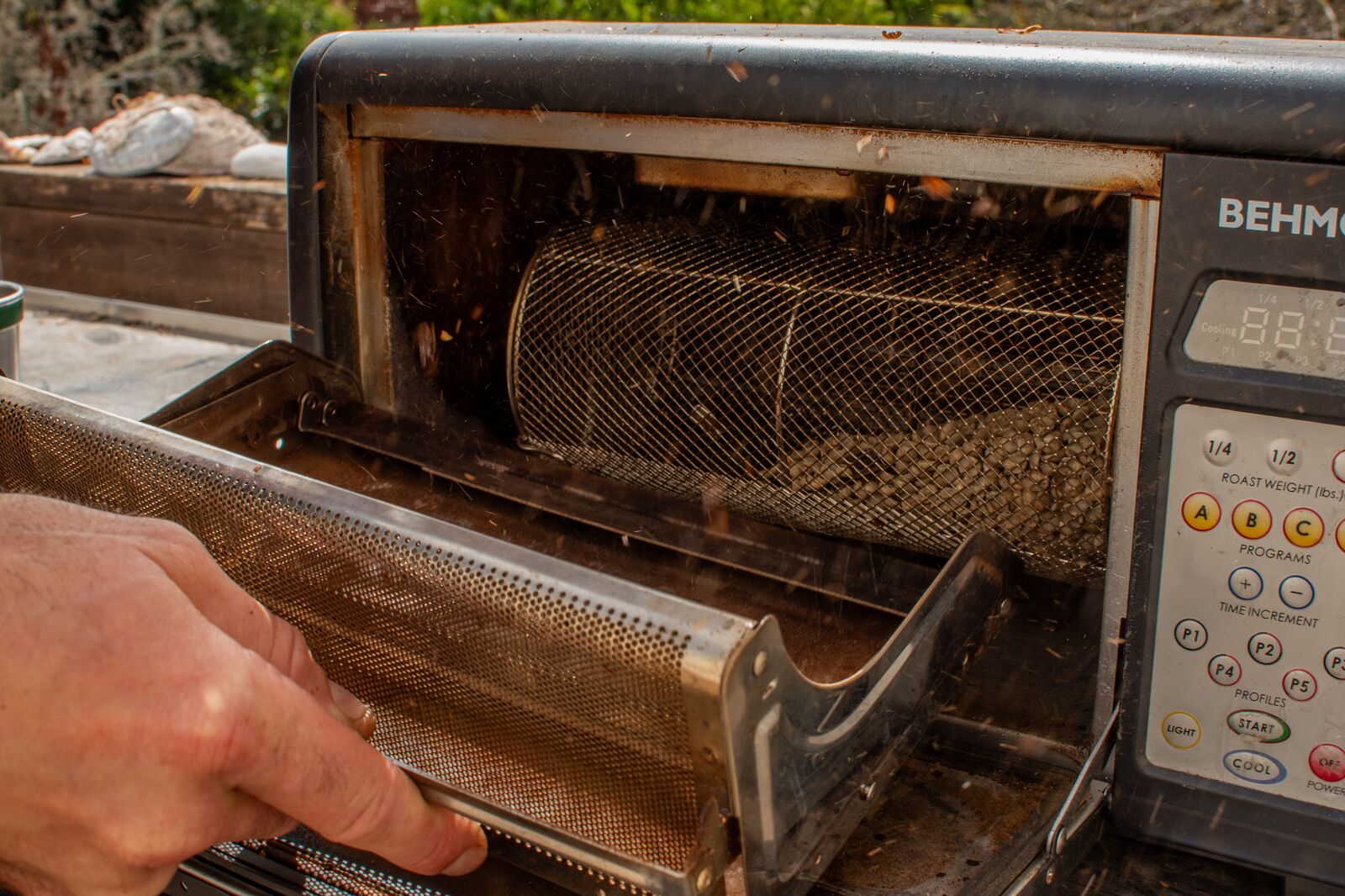
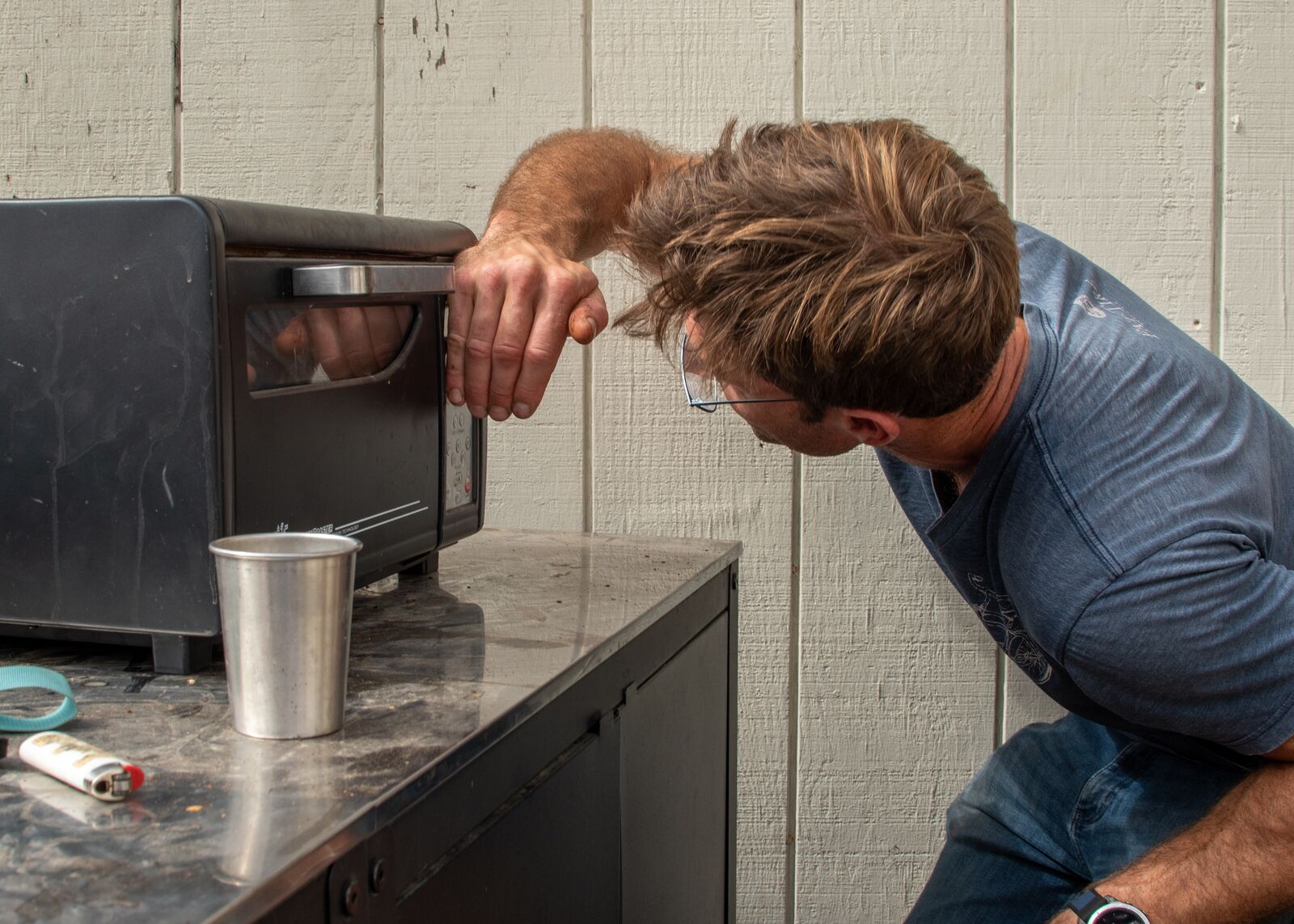
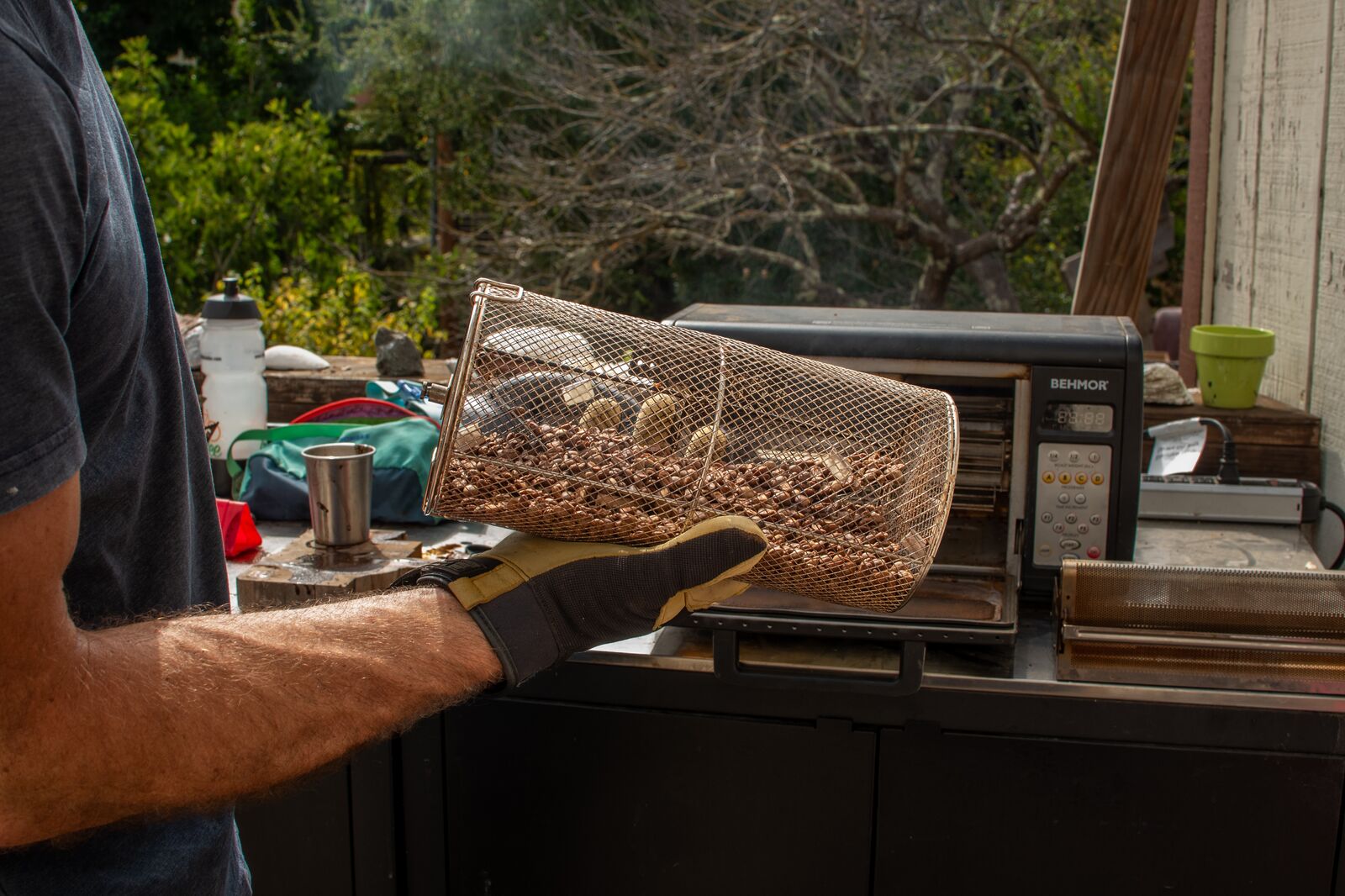
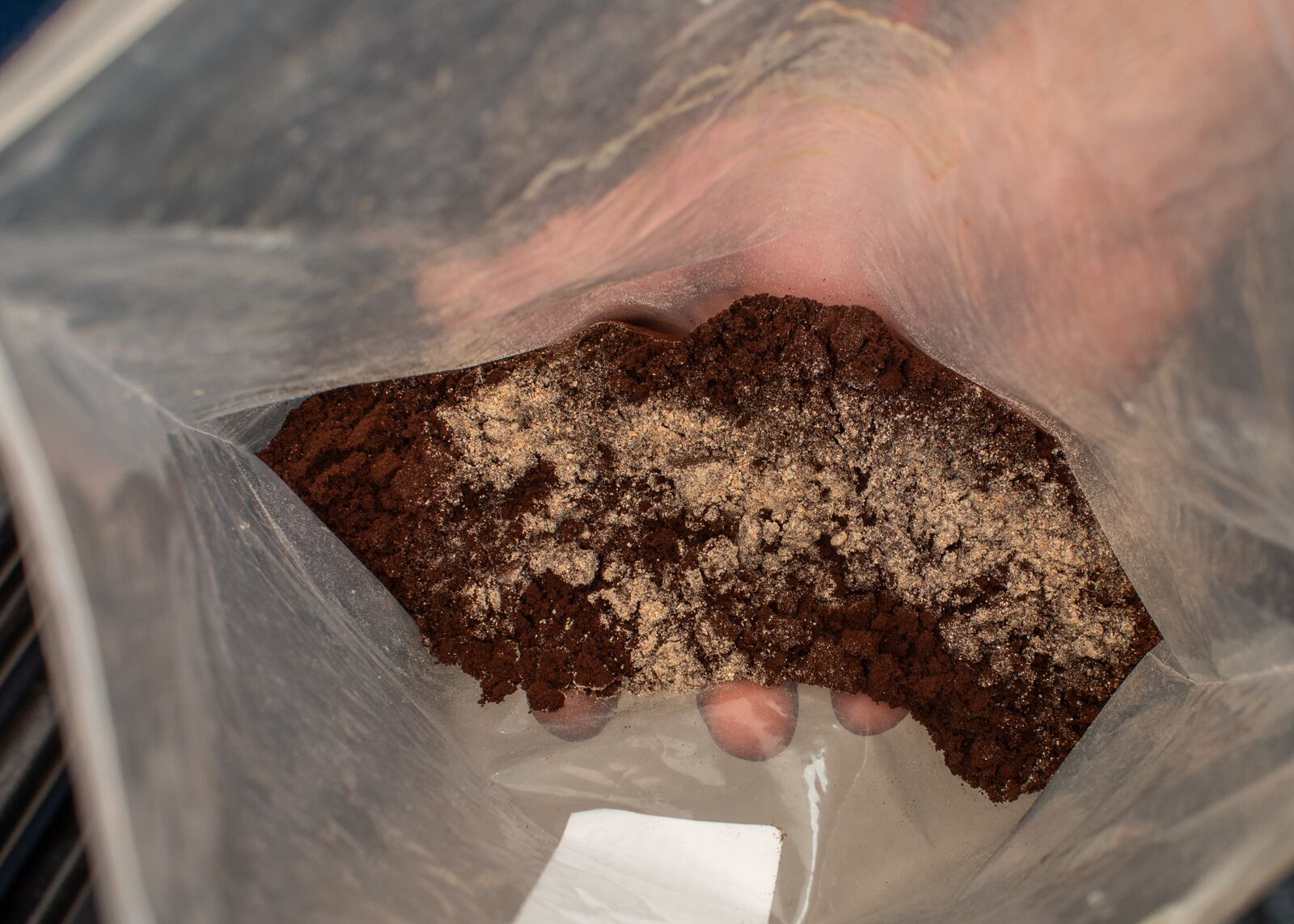
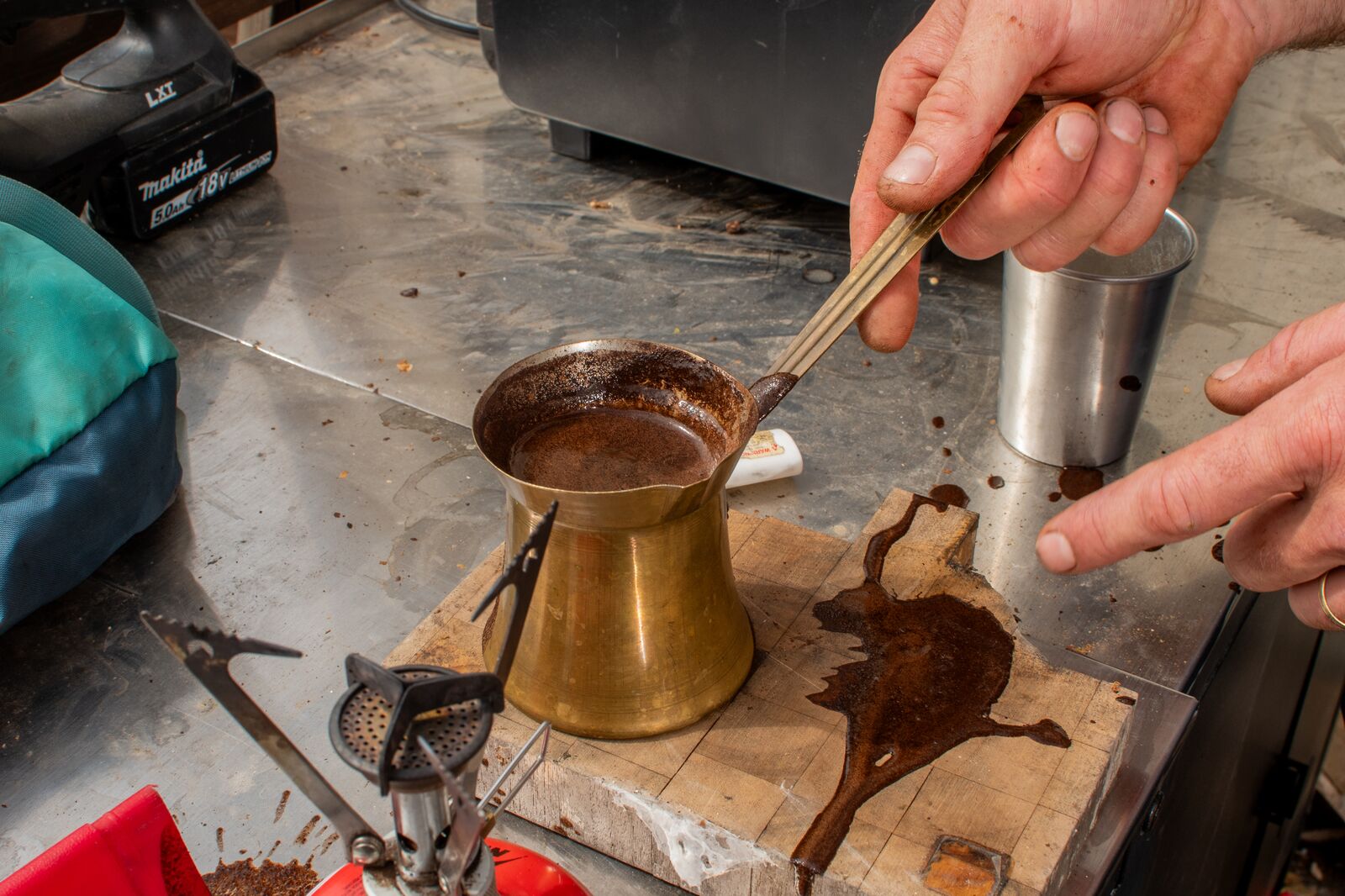 O’Sullivan roasts green beans in his Behmor machine which is shaped like a toaster oven. He watches and listens closely to track the roast. He pulls the beans to let them cool, then, after grinding, mixes the coffee with cardamom to make a Turkish-style cup of coffee. Credit: Ximena Natera for East Bay Nosh
Mulvihill, who goes to Sweet Maria’s once a month for five to six pounds of coffee, still has his mishaps with the hobby.
“I think I’ve burned through the motor in my roaster three times. I’ve lost whole batches. I get distracted, and if you miss 30 seconds, that can be all it takes,” he said.
More than 15 years ago, Chris Jordan-Bloch was on his first day on the job as a multimedia producer at Earth Justice when a colleague promised the best coffee of his life for half the price. At lunch, the coworker took him to Sweet Maria’s; he bought a $500 kit with several pounds of green beans and a basic roaster, and has been roasting at home multiple times a week ever since.
“I like to dial in my roast of a particular variety, to chase the best expression of the coffee. That’s the most enjoyable part for me,” Jordan-Bloch said. “If you can pop popcorn, you can get into coffee roasting. I’m always encouraging people to try it out. Once they get a starter kit and try the coffee, they’re hooked.”
O’Sullivan, Mulvihill and Jordan-Bloch are all members of a bicycle group dubbed the Glenview Cycling Collective. The group meets for sunrise rides into Joaquin Miller Park. At the peak of their ascent, the riders stop to make personal cups of coffee. The roasters in the riding group share notes and sample each other’s latest batches. O’Sullivan has taken to making Turkish-style coffee, Mulvihill uses a MokaPot, and others break out AeroPresses.
“It really happens a lot where people step up to the higher‑level machines not because they’re drinking more coffee, but because they keep taking it to their office and everyone wants it,” Owen said. “It’s also kind of a social thing — you can connect with your family and the people you work with through coffee, which I think a lot of people are missing lately.”
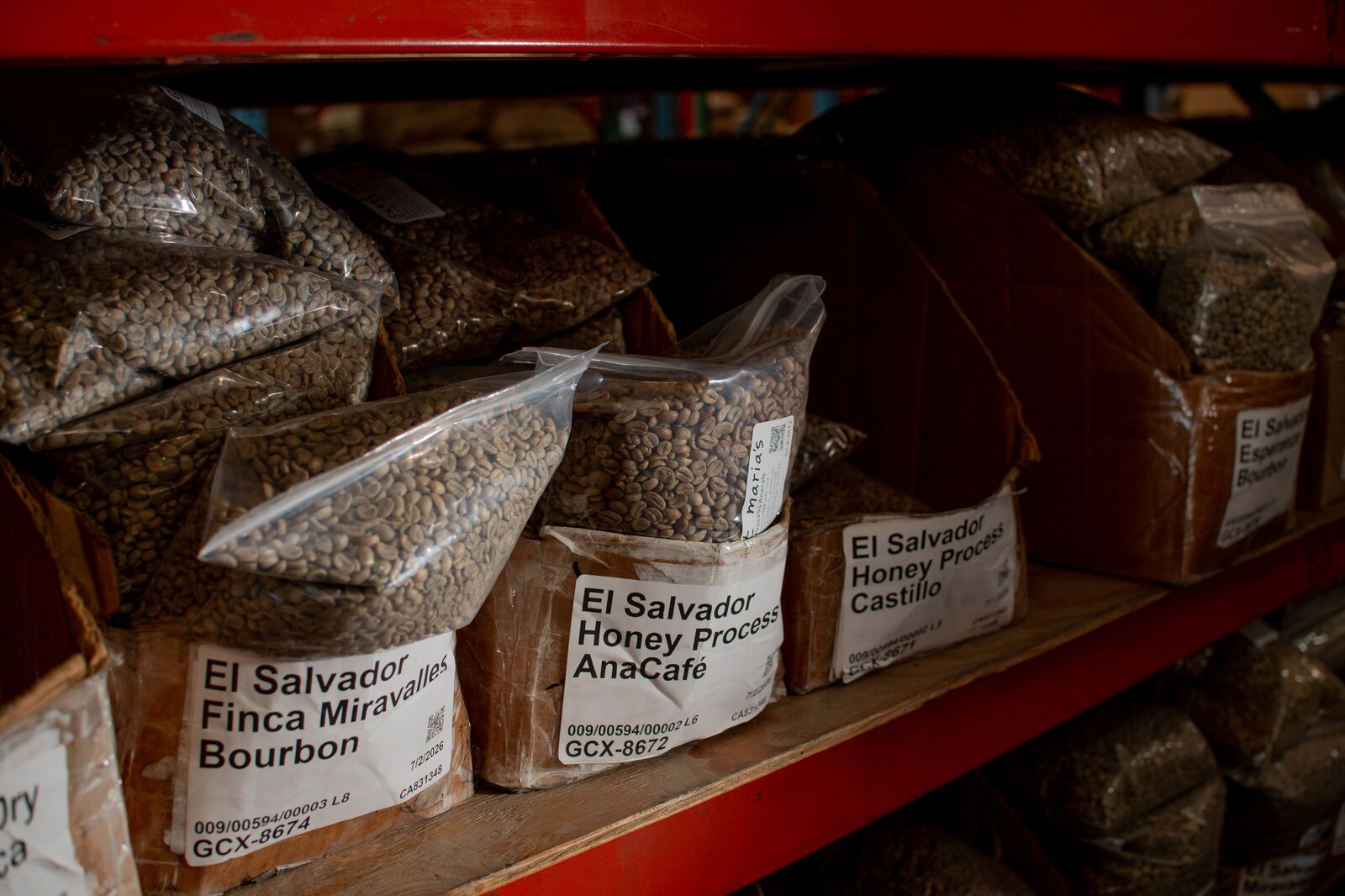 Different varieties of green coffee beans from El Salvador sit on a shelf at the Sweet Maria’s warehouse. The business sells a wide variety of beans from farms of all sizes that use a range of cultivation methods. Credit: Ximena Natera for East Bay Nosh
William “Smitty” Smith Ovitt has been home roasting for a quarter century and gave O’Sullivan his first Behmor roaster. Ovitt, 73, has been purchasing beans from Sweet Maria’s since his time living in Seattle, and has a highly organized approach to roasting.
He roasts every two to three weeks, doing a regular roast, an espresso roast and a “wild card” of something new. A retired engineer, Ovitt modified his Quest M6 with thermocouples to better monitor temperature and uses the computer program Artisan to chart every roast he conducts on the balcony of his Oakland Chinatown condo.
“I have hundreds of graphs,” Ovitt said. “I like to dial in the roast to the particular coffee I have. In general, I don’t like light roasts. I like a good, rich body. I’m a body guy. I also enjoy the gear. I’m a gear guy. I enjoy getting down to the basics of things. I like the process.”
Taste the world from West Oakland
While Ovitt and the trio of cycling coffee fanatics are all examples of Sweet Maria’s East Bay customer base, that segment still remains a small fraction of the company’s business.
On a given day, Sweet Maria’s might see 25 to 30 pick-up orders while shipping out 300 mail orders. In the warehouse behind Sweet Maria’s retail shop, there are towering rows of shelves stacked high with burlap bags filled with beans from Sumatra, Yemen, Colombia, Guatemala, Ethiopia … all over the globe, from farms small and large using a range of cultivation techniques . The burlap bags have designs like swamp creatures, surfers and cartoon dogs, drawn by Owen, putting that fine arts degree to work.
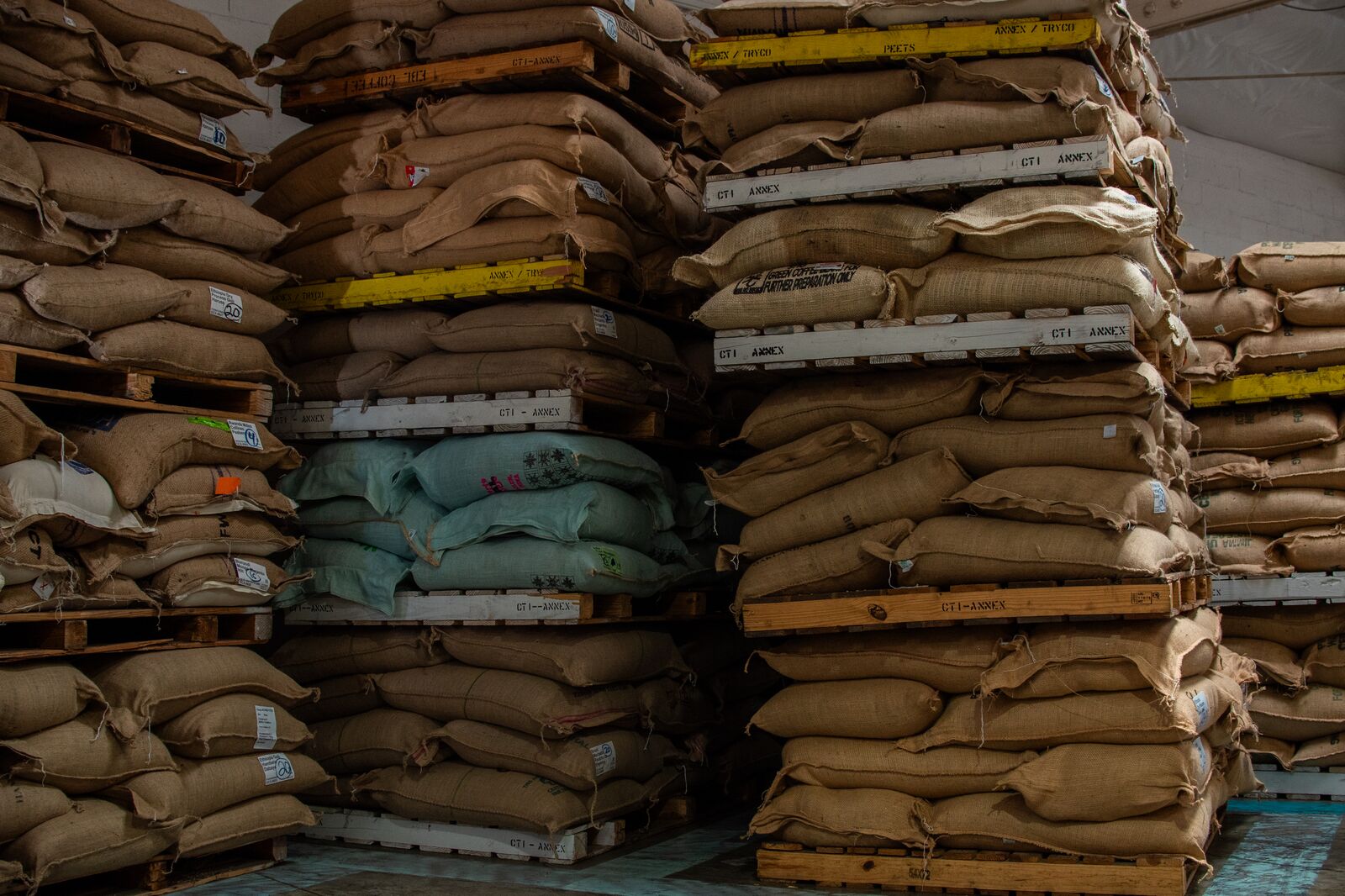
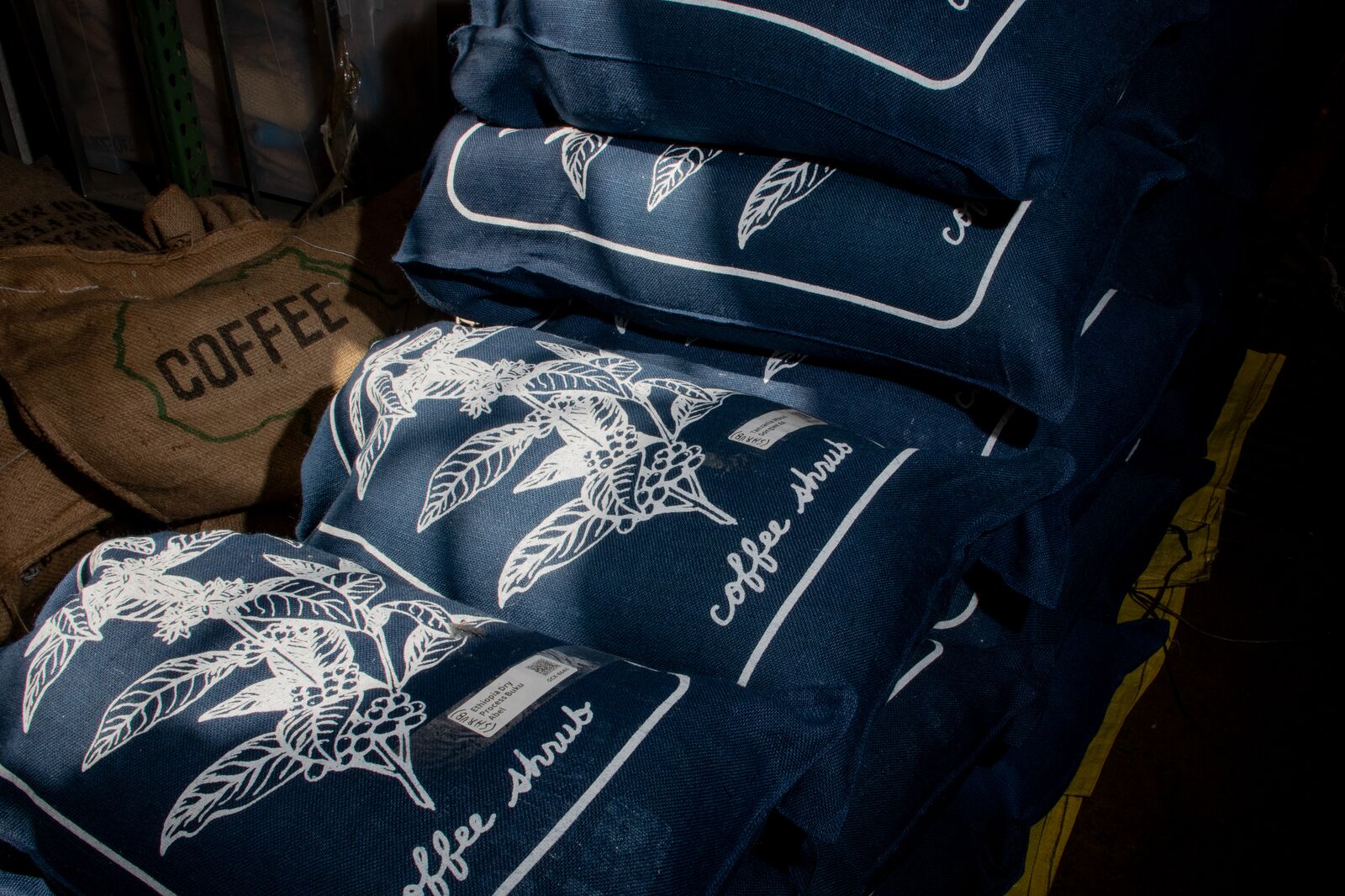
Sweet Maria’s sell roughly 1.75 million pounds of green coffee annually, and Owen taps into his art background to do the graphic design for the sacks of coffee. Credit: Ximena Natera for East Bay Nosh
Owen and the Sweet Maria’s team will converse coffee all day, and they see value in it all, from the most basic roasters and “low-grade” beans to the high-tech machines and carefully curated varietals.
“We imported five bags of real low‑grade commercial coffee … It’s like the evil twin, the Dr. Jekyll side of coffee, and yet you roast it fresh and you’re kind of like, damn, this is complex. We cupped it next to this anaerobic natural geisha that checked every box — $40 a pound, third‑wave darling — and the geisha was disgusting … Next to it, the commercial coffee was the one you could engage with.”
Owen came to the business through his love of coffee, and Sweet Maria’s is his conduit to share that with whoever walks through the door or reaches out through the website.
“We just want people to keep trying home roasting,” he said. “It’s not for everyone, but it is fun and cool and cheap, really.”
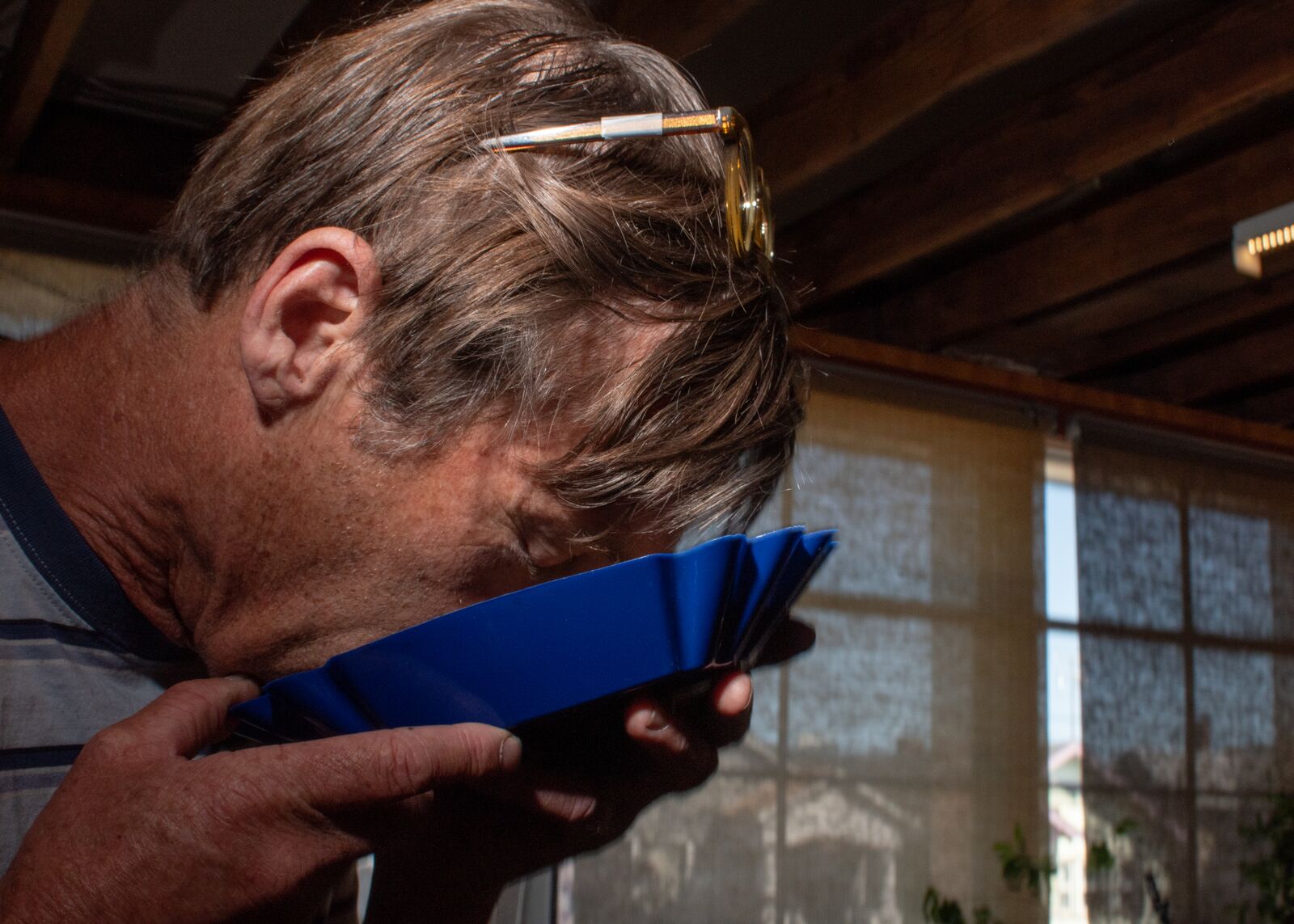 Inside his second floor office at Sweet Maria’s, Owen dives nose first into some freshly roasted coffee. Credit: Ximena Natera for East Bay Nosh
Related stories
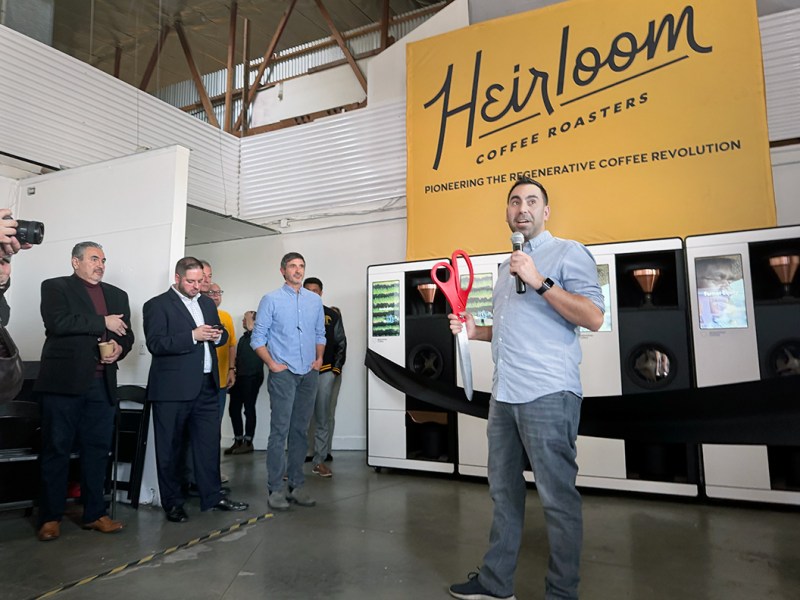
Coffee roasting is bad for the environment. This Oakland company is trying a bold new way
November 17, 2023Nov. 17, 2023, 5:07 p.m.
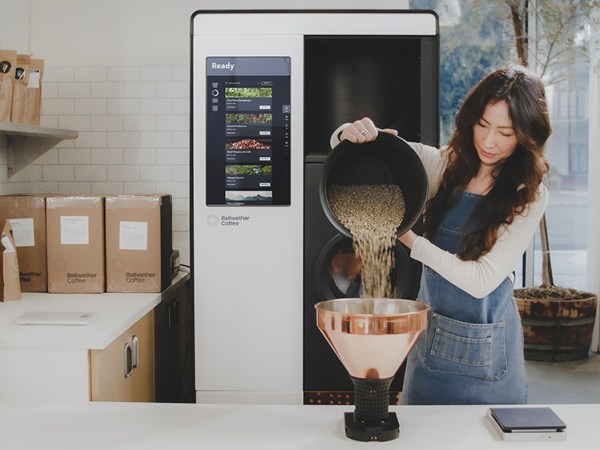
Berkeley company shakes up coffee industry with new, zero-emission roaster
September 20, 2023Sept. 22, 2023, 9:11 a.m.
The East Bay bakeries that spawned a new generation of Asian American pastry chefs
September 3, 2026Sept. 5, 2026, 8:14 a.m.
“*” indicates required fields