
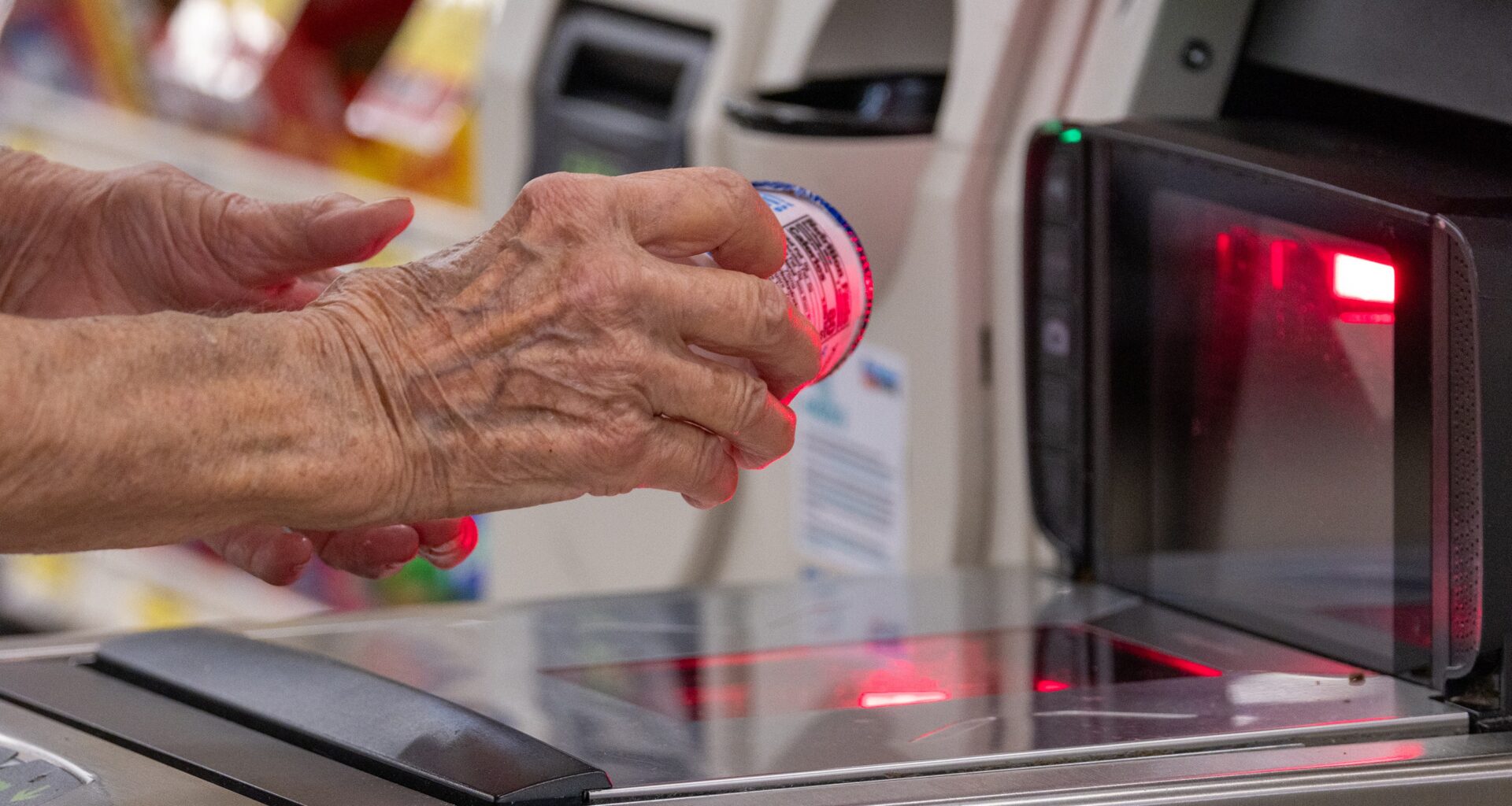
With the aim of improving working conditions, enhancing public convenience, and curbing retail theft amounting to hundreds of thousands in lost tax revenue, San Jose could become the first Bay Area city to regulate self-checkout kiosks at grocery stores and pharmacies.
The City Council’s rules committee agreed Wednesday to study the proposal and return to the council with potential regulations that could mandate a ratio of one employee for every three kiosks, require at least one human-staffed lane to remain open while self-checkout is active, and limit transactions to 15 items.
Other proposed rules include prohibiting self-checkout for tobacco and locked merchandise, require self-checkout zones to remain in clear view of staff and law enforcement, mandate public signage informing customers of their rights and reporting procedures, and establish a partnership with Santa Clara County’s Office of Labor Standards Enforcement.
If passed, San Jose would become the first city in the Bay Area to enact such rules. So far, Long Beach, Costa Mesa and Santa Ana in Southern California are among the few California cities to have similar self-checkout regulations.
Addressing the local measure, Nate Rose, spokesperson for the California Grocers Association, argued the rules would raise grocery prices, create longer lines, and put workers in danger without stopping crime.
City officials say retail theft costs San Jose up to $400,000 in lost sales tax revenue each year, while understaffed self-checkout zones may degrade working conditions and heighten safety risks for store employees.
Councilmembers Domingo Candelas and David Cohen co-authored the memo.
“In my district, I represent a lot of seniors, and they ultimately feel like shopping is no longer an easy task,” Candelas said during the committee hearing. “They find themselves having to confront technology with little to no support, and it’s become a growing challenge just to get groceries.”
The memo notes that the expansion of self-checkout technology should “complement retail workers,” but should not come at the expense of “adequate staffing or place unreasonable responsibilities on a single employee tasked with simultaneously assisting customers, monitoring multiple checkout stations, responding to locked merchandise, and addressing potential theft.”
“Establishing reasonable staffing and operational standards can help ensure that technological convenience is paired with the human presence necessary for a safe, efficient, and accessible retail environment,” the memo states.
The United Food and Commercial Workers union is backing the proposal as part of a broader push for similar local measures across California. John Frahm, president of the union’s Local 5 chapter, clarified that labor advocates are not anti-technology, but “pro-staffing.”
“We want to make sure that technology works for us and we don’t work for technology,” Frahm said.
The union points to data showing self-checkout loss rates reach 3.5% — compared to just 0.21% in cashier-staffed lanes — driven by administrative errors, damages and tactics like “short-ringing” items. Frahm also warned that understaffing heightens safety risks for employees stretched thin by reduced hours or due to fewer workers on duty because employee hours have been reduced.
“It leads to very uncomfortable situations for our checkers,” Frahm said. “There have been cases we’ve had to deal with throughout the Bay Area where those situations have actually led to violence.”
Statewide efforts to regulate self-checkout have stalled or stumbled in recent years.
A 2024 California Senate bill sought to mandate a ratio of one employee for every two self-checkout kiosks, require staff assigned to self-checkout areas to be relieved of other duties, and keep at least one traditional checkout lane open whenever self-checkout was operational. That effort failed, as did a 2025 follow-up proposal that required dedicated employees to oversee kiosks without setting a specific ratio.
Both state measures were opposed by retail giants and trade groups such as the California Retailers Association, California Grocers Association, and California Chamber of Commerce.
In San Francisco, without government intervention, some Safeway and Target stores have quietly disabled self-checkout, due to retail theft.
Rose noted that average grocer profit margins sit at just 1.7%, meaning higher operational costs will immediately drive up prices on store shelves. He added that checkout workers are neither trained nor allowed to intervene in retail theft. Pointing to a study out of Long Beach, Rose noted that similar regulations prompted 10 out of 13 surveyed stores to close self-checkout lanes altogether, increasing wait times for shoppers.
“We want grocery store professionals running grocery stores — we don’t want elected officials to be making staffing decisions,” Rose said. “Where does that end?”
Yvonne Saavedra, a Lucky’s employee and union member who has worked at the grocery chain for 35 years, isn’t against self-checkout — she just wants safeguards in place. Managing four kiosks alongside return counters and monitoring theft routinely leaves workers overwhelmed, she said, while confronting shoppers over unscanned items poses growing personal safety risks.
“Trying to do four registers plus returns, plus checking thefts, plus checking everything else — it becomes overwhelming,” Saavedra said. “For our own safety, people are getting crazier nowadays… I wonder every day, am I going to come home?”