
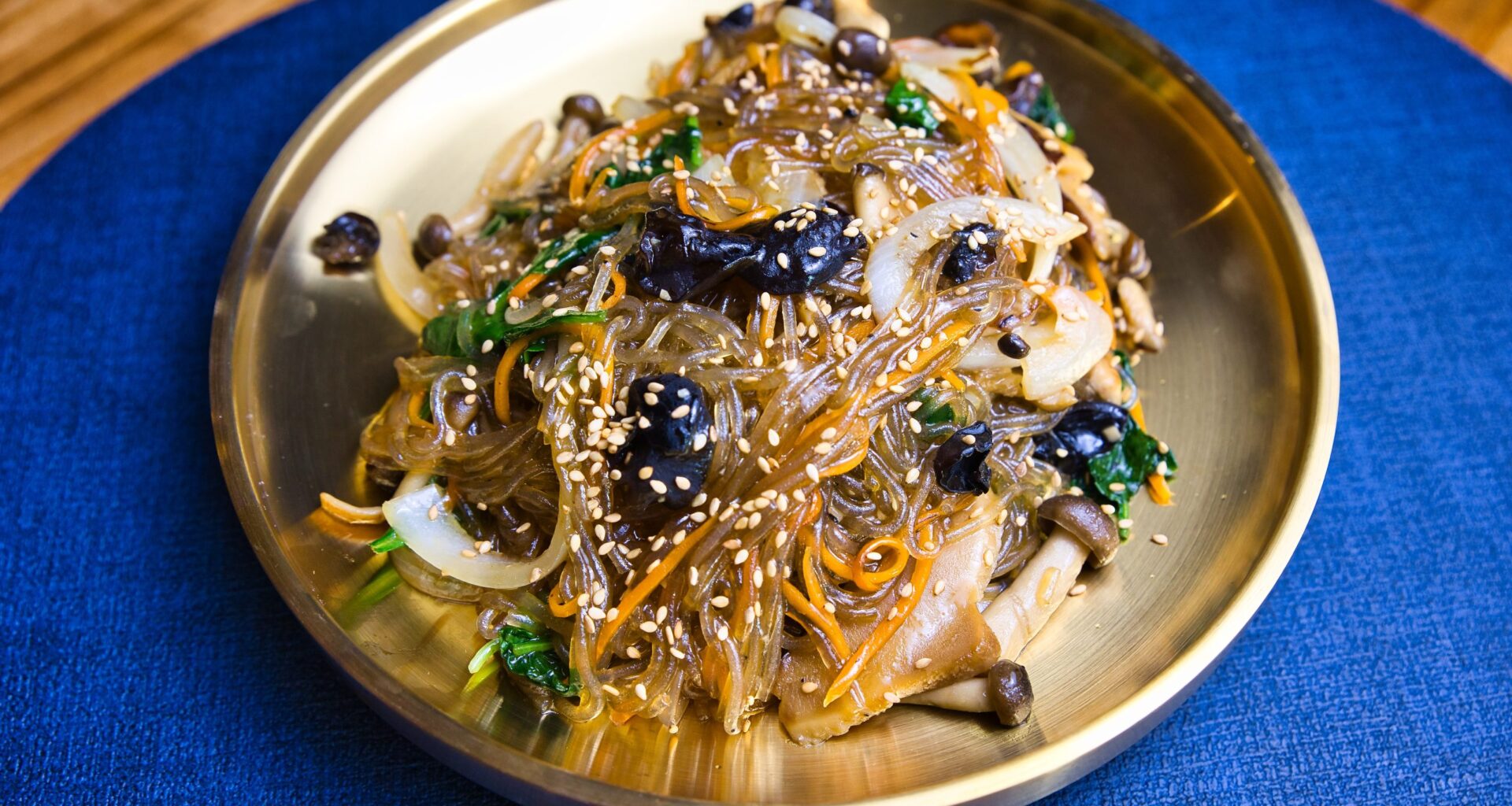
There’s no shortage of great Korean restaurants in the East Bay, where you can easily find a steaming bowl of sundubu-jjigae (silken tofu stew), or grilled beef bulgogi. But there’s a much shorter list of sit-down spots where you can score some gejang (raw marinated crab) — a centuries-old Korean delicacy that dates back as far as the Joseon Dynasty. There are only two places in fact, with both residing in the Temescal neighborhood: Tuum and Don Blanc. Now, there are three.
6200 Claremont Ave., Oakland; chezmaeju.com
Hours: Sunday, Monday, Wednesday, and Thursday, 5 to 9 p.m.; Friday and Saturday
5-10 p.m.; closed Tuesdays
Sitting at a small wooden table inside a blue building in Rockridge, I stared down a plate of ganjang-gejang. A large crab, topped with green onion and thin red sprigs of sil-gochu (Korean chili threads), sitting on a savory bed of soy sauce infused with pears, garlic, ginger and onion. It was slightly intimidating to a first-timer like myself who had yet to try raw marinated crab.
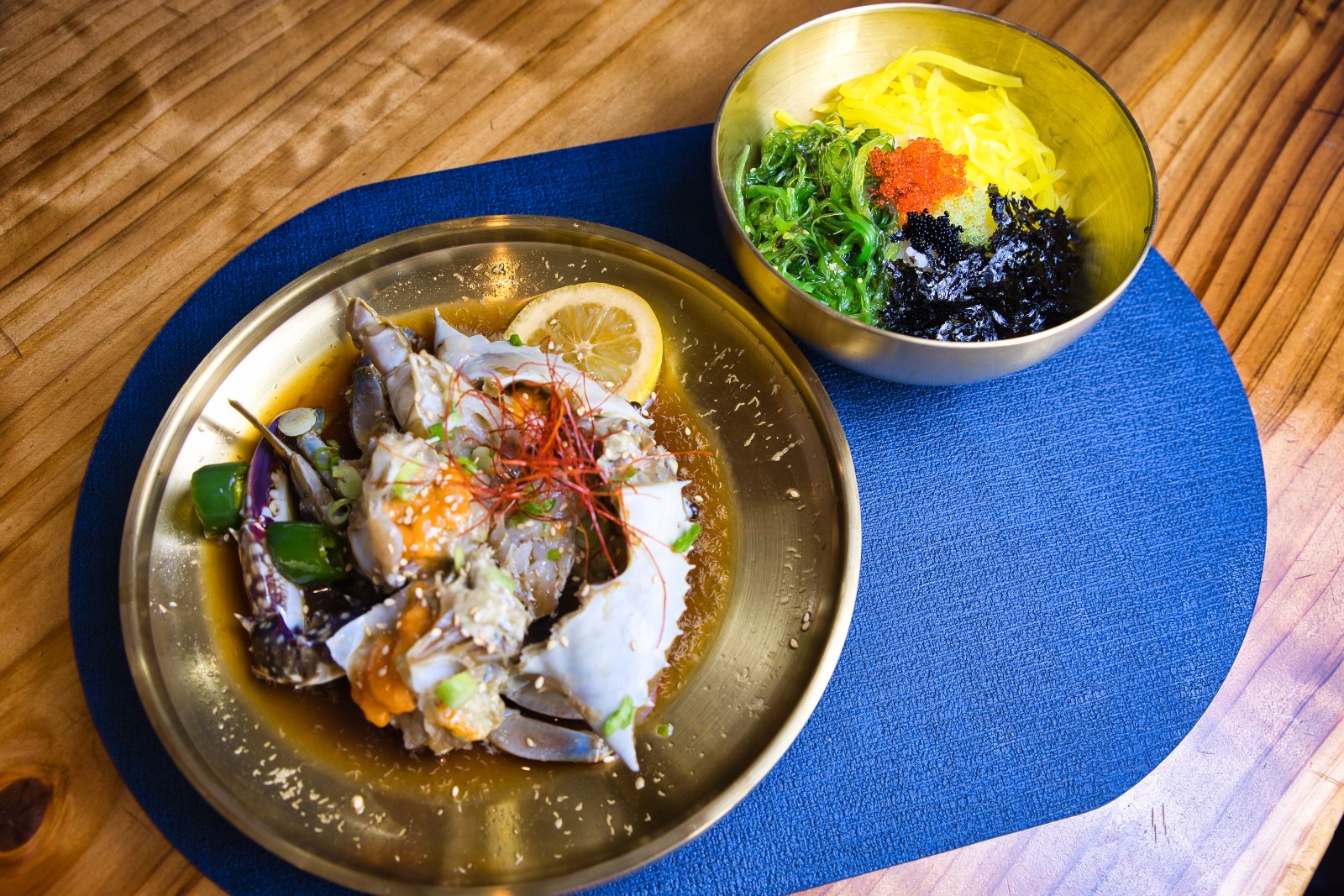 Chez Maeju’s ganjang gejang crab is served with fish roe rice, which is topped with crushed dried seaweed and other vegetables. Credit: Courtesy of Sujin Kim
But once I dug my spoon into the sweet crab meat, scooped up its roe and chased it all with the briny soy sauce, the hesitation quickly melted away. Soon, more dishes came out, from smaller bowls of kimchi and dried anchovies, to braised pork belly and vanilla ice cream topped with red bean and a fried honey pastry, the meal offered a taste of chef-owner Sujin Kim’s approach to Korean cuisine, one rooted in the flavors and traditions she grew up with in Seoul.
At Chez Maeju, those traditions start with fermentation.
The word “chez” is a nod to Kim’s training and technical ability, while “maeju” represents the dried fermented soybeans that are used to create jang, or the collection of fermented soybean sauces at the heart of Korean cuisine. Jang is responsible for the spicy, sweet, umami taste profiles that define Korean cooking, flavors that marked Kim’s childhood.
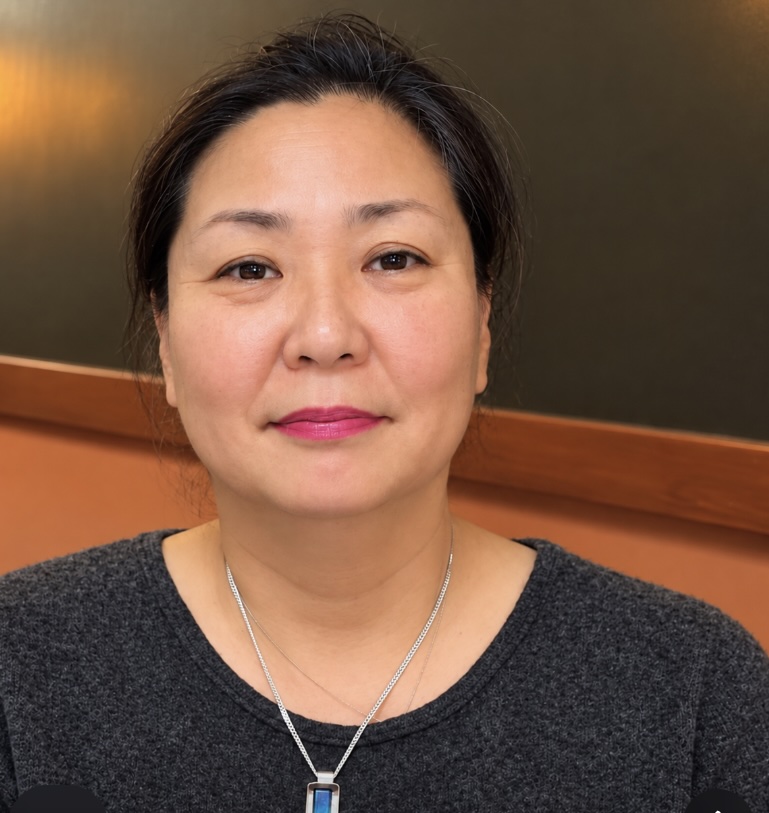 Chez Maeju chef and owner Sujin Kim moved to the United States when she was 27 and attended San Francisco’s branch of Le Cordon Bleu. Credit: Courtesy of Sujin Kim
Kim grew up in a large family that would regularly gather at her grandparents’ house for meals and special occasions. There, her grandmother and mother prepared each meal from scratch — from grilled meats and tofu stews to traditional side dishes of jangajji, an assortment of crunchy pickled vegetables and alliums.
“In Seoul the cuisine is very clean, defined, and finished,” Kim explained. “I never cooked because my mom was an awesome cook and I grew up eating my mom’s and grandma’s food. That’s why my whole family, even my mother’s father’s, is like 80 years old or over that. None of them have any sickness since because we always had homemade, fresh food. It’s nothing fancy. The most important thing is good ingredients and good healthy nutrition.”
In 1998, Kim moved to San Francisco, and, at the encouragement of friends and her now-husband Brian, attended culinary school at the city’s Le Cordon Bleu branch. This led to job opportunities in restaurants, hotels like the Sofitel in Redwood City (which was renamed to the Grand Bay Hotel San Francisco), and corporate dining through companies like mobile-game developer Zynga and Kojima Productions, where she worked for five years. In 2013, Kim founded her own catering and meal-kit business that she named Chez Maejoo, where she catered for major companies like Apple, Netflix, Google, Airbnb, Samsung and Dell.
“Every day, you’re cooking for like 600 people. Then after that, I got tired. I’m not happy anymore because I want to do something challenging. So I just closed, and then I opened my own restaurant, which was in San Leandro,” Kim said.
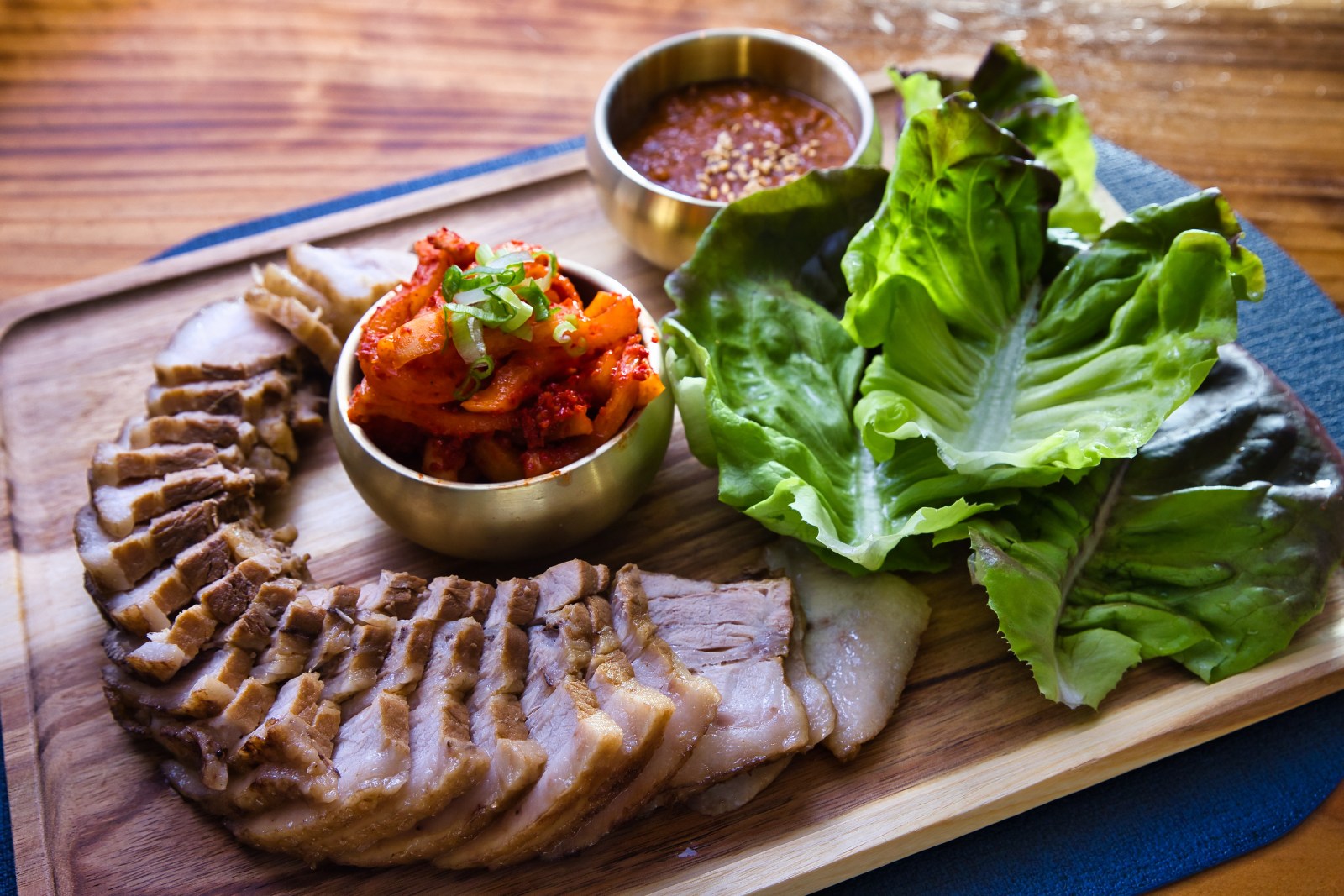 Bossam, or slow cooked pork belly with lettuce wraps, is served with radish kimchi and house-made ssamjang at Chez Maeju. Credit: Courtesy of Sujin Kim
Kim opened Maejoo Korean Restaurant in 2018 in San Leandro’s Pelton Center, and quickly gained popularity for her Korean fried chicken and bibimbap. She successfully maintained her spot through the pandemic, but grew tired of the demands that came with maintaining a restaurant and shuttered in 2022, returning to her Chez Maejoo roots by jumping back into her meal-kit business. Then, when those similar feelings of physical and creative fatigue crept back up, she took a hiatus and traveled home to visit family in South Korea and plan her next move. When she returned, she got a call from a friend — Micah Oh.
Oh is a prominent fixture in the Bay Area Korean cuisine landscape, who San Francisco Chronicle restaurant critic Cesar Hernandez has dubbed the East Bay’s “godmother of Korean restaurants.” Oh is the founder of OMC Hospitality Group, and has been opening and operating restaurants in the Bay for over 20 years, having opened well-known Korean barbecue spots like Koryo Wooden Charcoal BBQ and Ohgane, and backed other ventures like fast casual rice bowl chain Bowl’d, and Oken, a popular Korean fusion restaurant that shuttered in May.
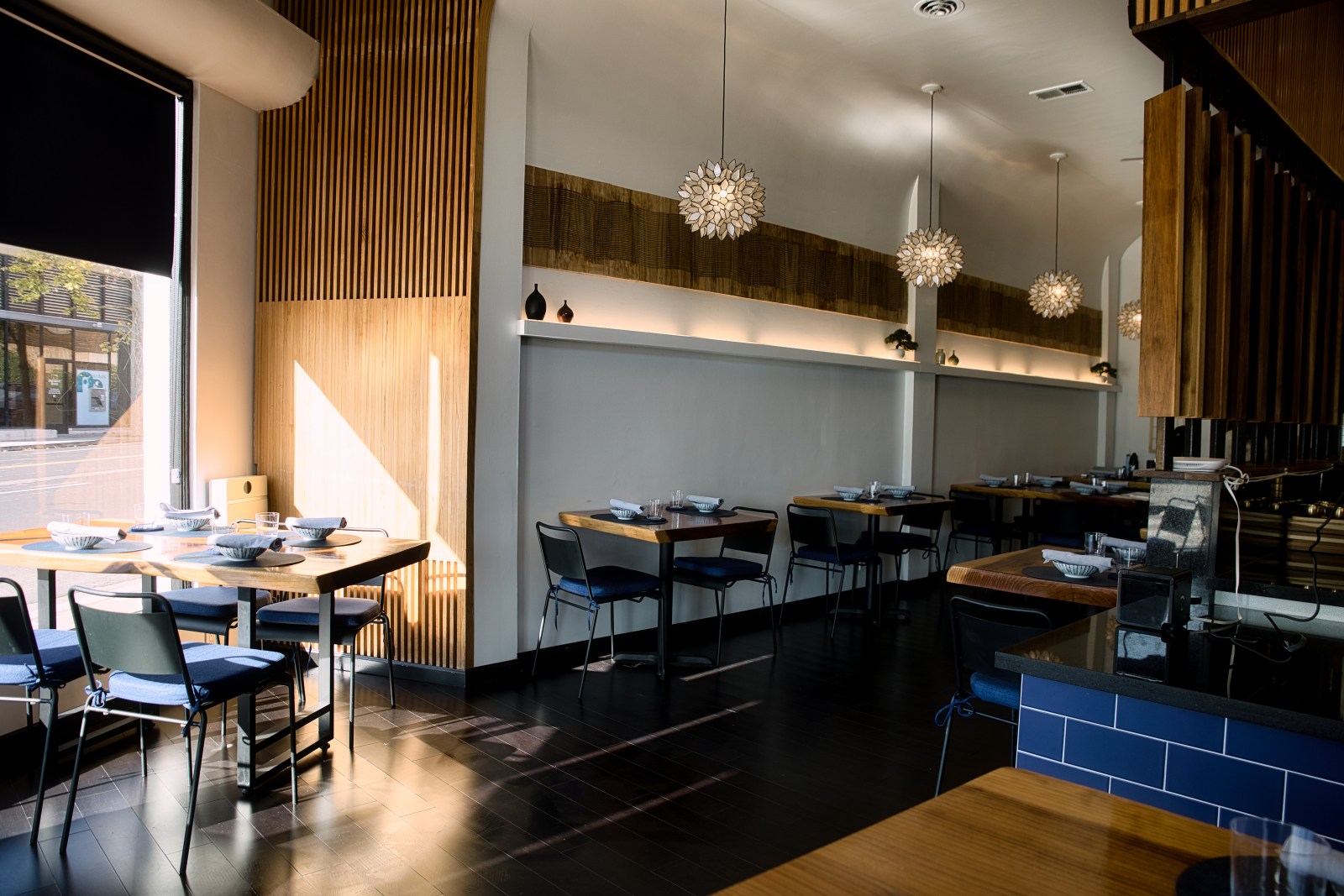 Chez Maeju is a new Korean fermentation kitchen that opened in the Rockridge neighborhood in September 2026. Credit: Courtesy of Sujin Kim
“We’ve known each other for over 15 years, and she always wanted me to work with her, like a partnership, but then I’m a very independent person,” Kim said. “So I say ‘no, thank you, no thank you.’ But then I moved from Korea, and all of a sudden she called me, and said ‘can you meet me?’ “
Oh convinced Kim to take over Oken’s former space at 6200 Claremont Avenue, proposing a partnership that would allow Kim to focus on what she loves most: cooking. OMC would handle the business side of the restaurant, handling operations, staffing and setup, while Kim maintains the kitchen. Donghyuk “Dustin” Lee, director of operations for OMC, understands the gamble of opening a new restaurant, especially in a space that held a popular one that closed, but he notes that the satisfaction of watching diners connect with a concept makes those risks worthwhile. During Chez Maeju’s soft opening, Lee saw customers from Kim’s previous San Leandro restaurant come in to eat her cooking again.
“So the first two days, I was actually at the restaurant for the whole shift. But I noticed quite a few customers that came from her previous restaurant. They all told her that they’ve been waiting for her food for years,” Lee said. “It just kind of felt like she built a relationship, more than being like customer and a restaurant owner perspective. It just felt like a friend reunion. It was really cool.”
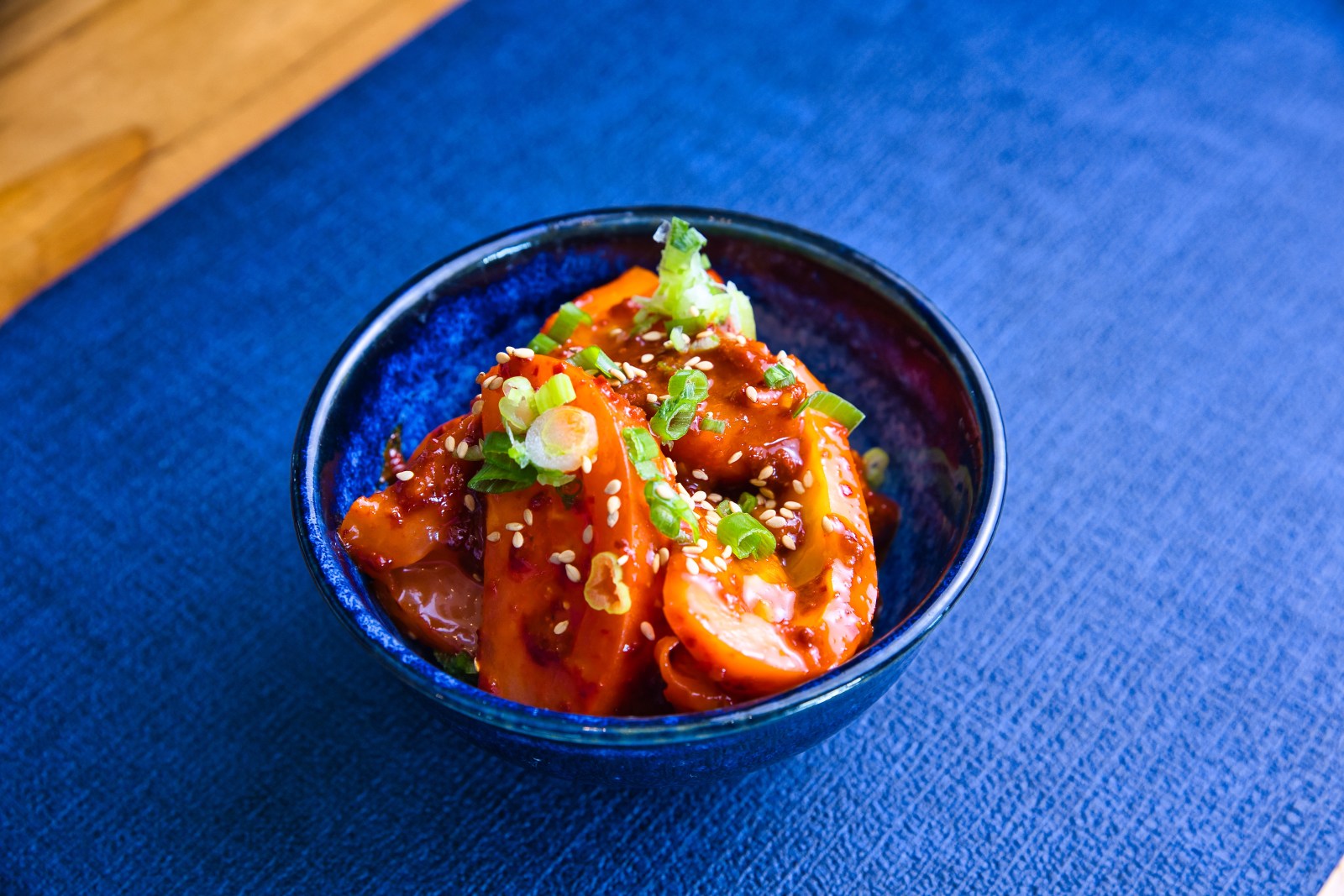 Credit: Courtesy of Sujin Kim
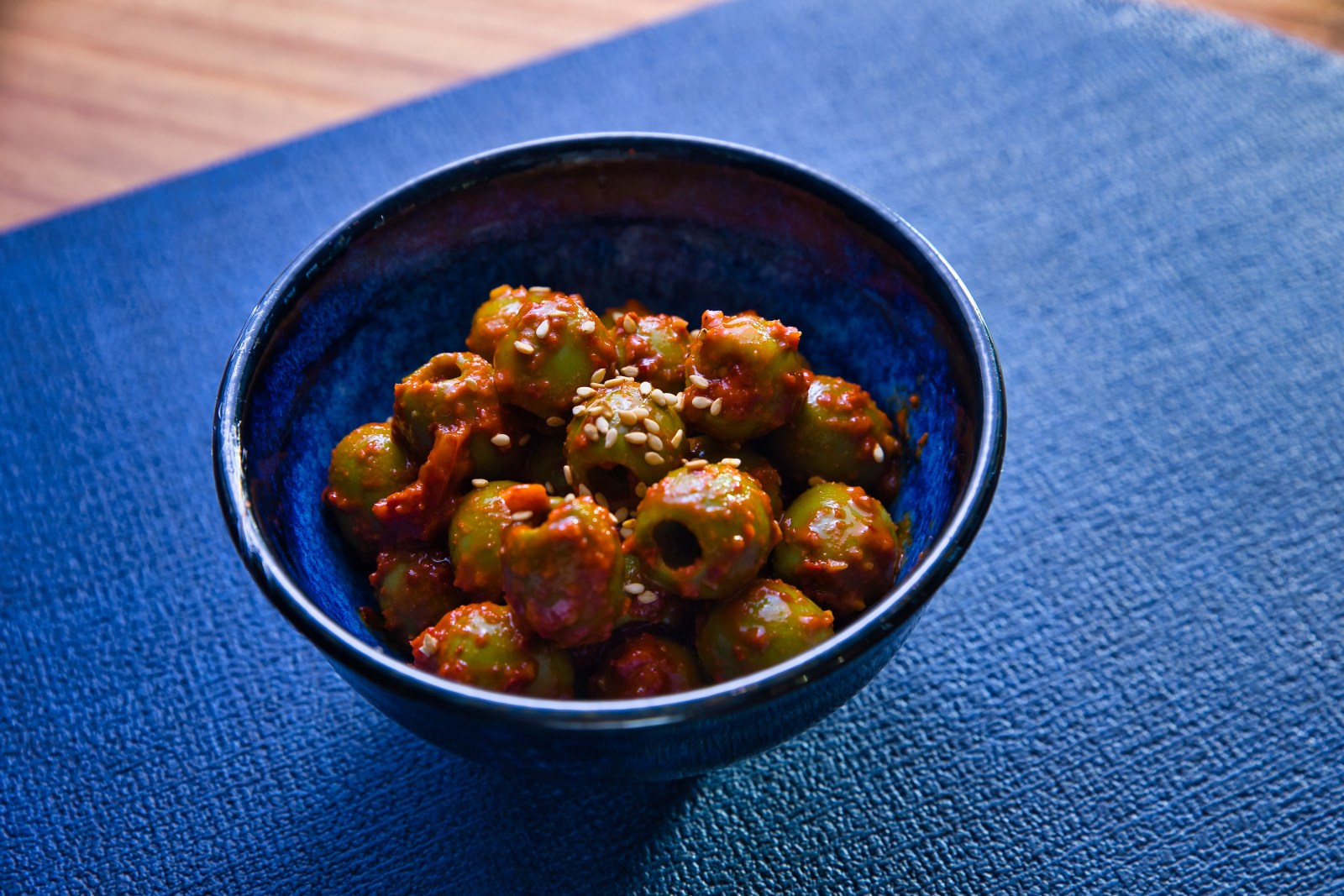 Chef Kim’s menu offers more traditional kimchi made from Napa cabbage or radish, as well as olive and tomato kimchi. Credit: Courtesy of Sujin Kim
What sets Chez Meju’s menu apart from Kim’s previous concept is her focused approach. Maejoo, like most Korean restaurants in the East Bay, had a lengthy menu that mainly consisted of Korean comfort foods like glazed fried chicken, barbecued meats, tteokbokki, stews and rice bowls. Kim’s intention with Chez Maeju was to take a different route, and feature a smaller menu of elevated, classic Korean fare that highlights her technique and puts fermentation at the forefront.
“When I see Bay Area Korean food, it’s really good. But then the concept of the menu is just decent. It’s just comfort, just easy good food. But there’s no character or any special things, so I don’t want to start like that,” Kim explained. “But pretty much in the Bay Area, compared to like New York in LA, we need more growing up than Korean food.”
True to its namesake, a majority of items on Chez Maeju’s menu are seasoned or paired with three housemade jang: ganjang (soy sauce), doenjang (soybean paste) and gochujang (chili paste). Kim’s jang is made with minimal ingredients and is carefully aged and stored in 41 degree Fahrenheit refrigeration. While she appreciates the convenience of ready-made jang, Kim notes that due to rising costs, pre-packaged sauces, like gochujang, utilize additional ingredients outside of the core recipe, such as adding more flour over gochugaru (korean chili flakes), to stretch the product and save money.
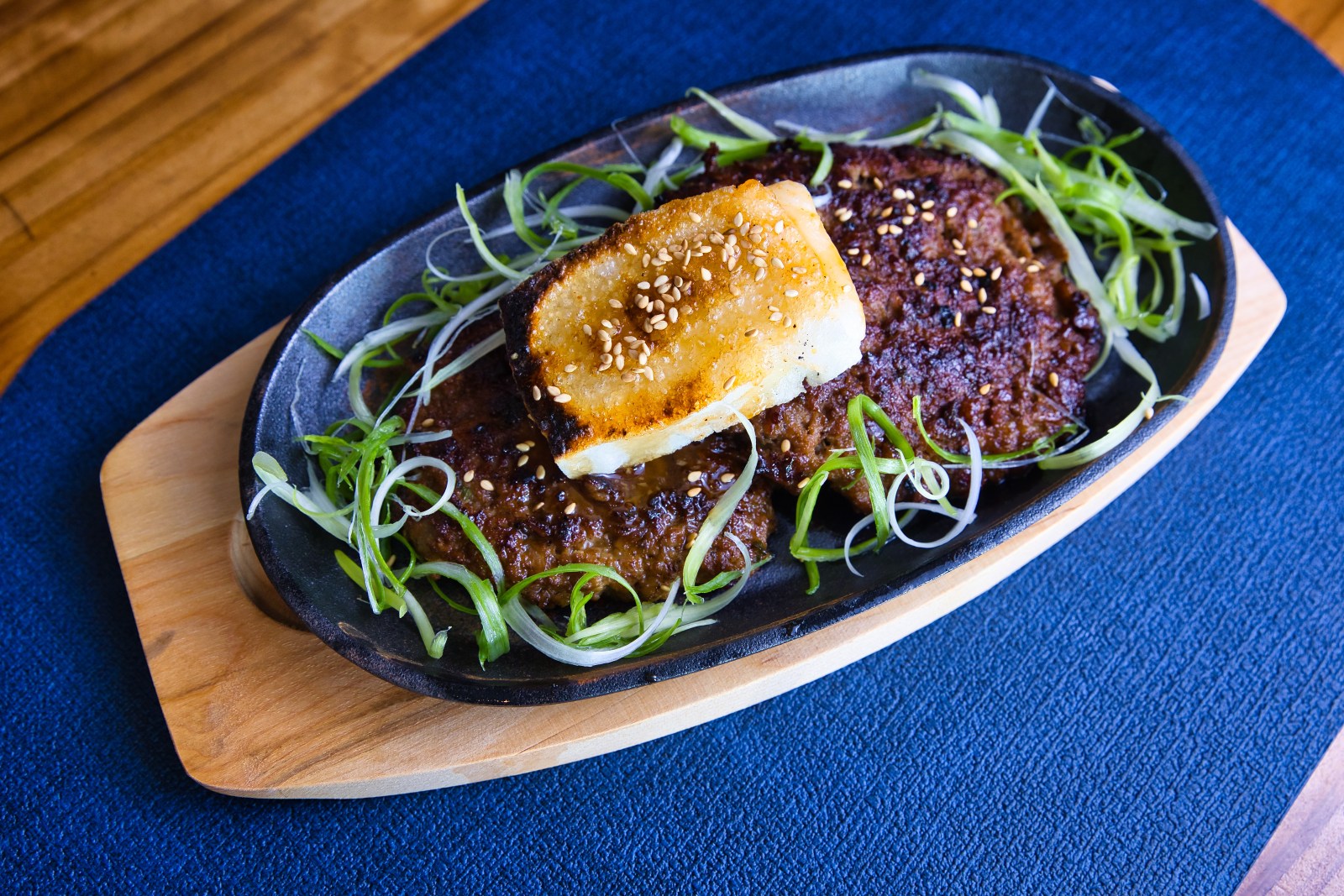 Kim’s tteokgalbi and grilled rice cake pairs grilled beef patties seasoned in a savory ganjang marinade with grilled mochi topped with sesame seeds. Credit: Courtesy of Sujin Kim
“Younger generation of Koreans don’t make any kimchis or jang, which is gochujang, doenjang, ganjang. Yeah, they don’t make it. They just buy it,” Kim said. “We make gochujang, doenjang, ganjang. We make everything.”
Most of Kim’s menu is gluten-free, and she notes that she is willing to adjust most dishes upon request for those with food allergies and dietary restrictions. Popular appetizers include the mung bean pancake, a thin, crispy gluten-free pancake filled with pork and kimchi, and the garden crudite and jang trio, which pairs organic vegetables and peppers with caramelized apple gochujang, tahini doenjang cream, and perilla ssamjang.
Staple Korean dishes are also offered like beef bulgogi, crispy shrimp and pork dumplings, and bossam, which pairs thinly sliced pork belly boiled in spices and aromatics, with lettuce wraps and ssamjang (a combination of doenjang and gochujang) for dipping. For dessert, Kim keeps it simple with her Yakgawa ice cream sundae, which comes with vanilla ice cream topped with red bean paste and a deep fried Korean honey pastry, and sujeonggwa, a spiced Korean cinnamon ginger punch with walnut filled persimmon rolls and pine nuts.
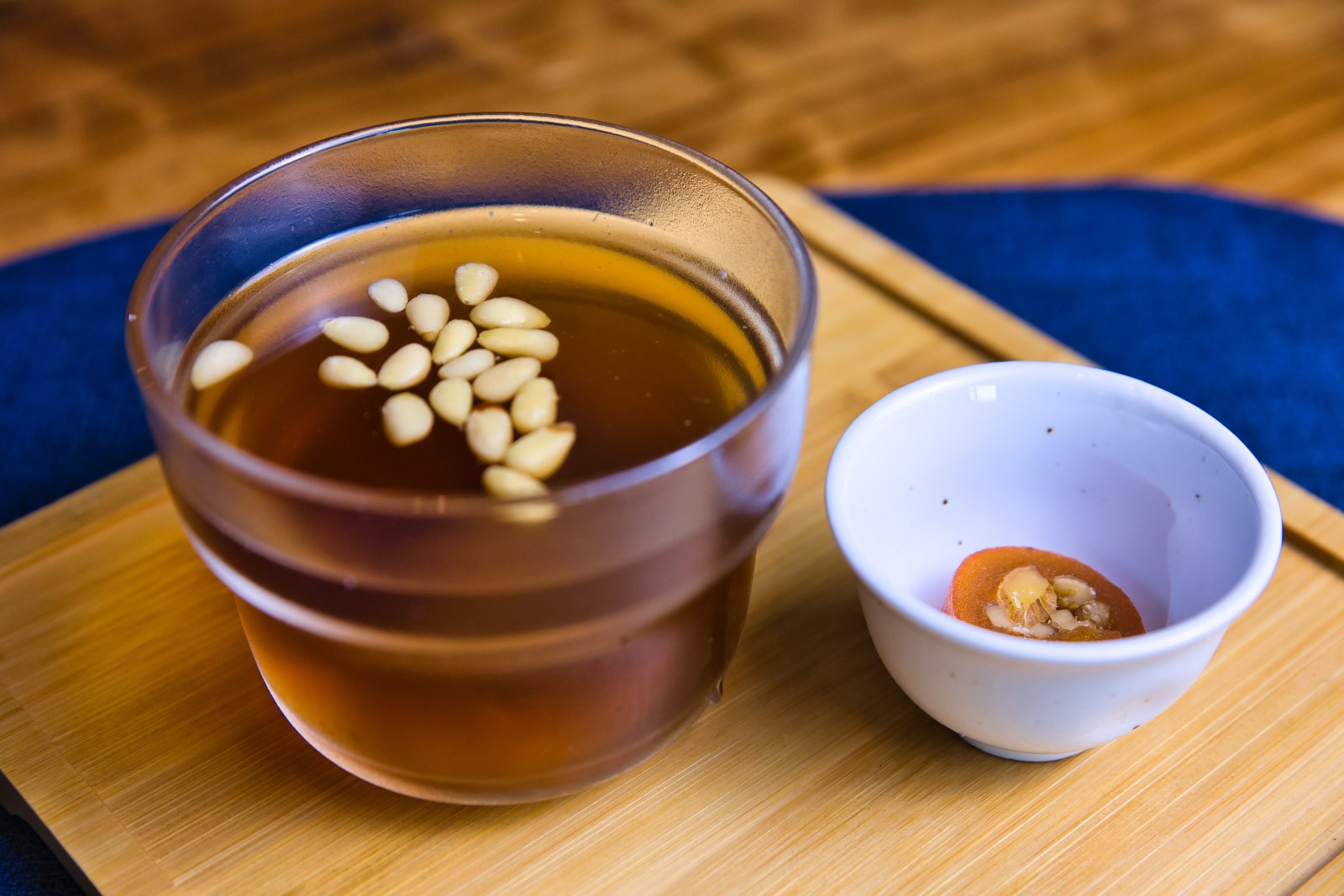 Chez Maeju’s sujeonggwa, or Korean cinnamon punch, is made with chilled cinnamon-ginger punch with a side of walnut-filled persimmon rolls and pine nuts. Credit: Courtesy of Sujin Kim
While kimchi is a necessary addition to any and all Korean meals, Kim goes beyond the familiar napa cabbage. Her tomato and olive kimchis are crowd favorites, offering a fun twist on a Korean staple. Both are made without fish sauce, a staple ingredient in traditional kimchi recipes, making them popular choices among vegan and vegetarian diners.
For now, Chez Maaeju is only open for dinner, giving Kim and her eight-person staff room to get their footing, but she says she intends to expand her hours in the future to include lunch service.
Related stories

Oakland airport welcomes Trader Vic’s and new market, while Berkeley gets a new sub shop
October 13, 2026Oct. 14, 2026, 9:12 a.m.
My noodle hero vanished. I tracked him down in Oakland Chinatown
October 8, 2026
October 2, 2026Oct. 6, 2026, 12:31 p.m.
“*” indicates required fields